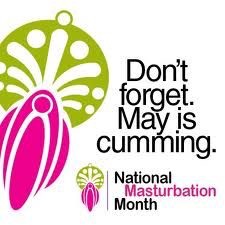
Is that a vibrator in your pocket or are you just happy to see me?


What I treasure most about blogging is the many contributions from readers whether in thoughtful or supportive comments, or suggestions of what to “gaze” at as today’s content donor put it. It makes my day when someone sends me a bit, a piece, an image, video or an article, some snippet topical to the blog’s thematic interests. Today’s gift is an article in the New York Times paying tribute to Dell Williams, former actress, advertising executive and army WAC, who started Eve’s Garden, a Manhattan sex boutique opened at a time when openly flaunting female sexuality took some daring. 

The story goes that she opened her sex shop after a humiliating experience at the hands of a young “pimply faced” clerk/interrogator when, in 1974, she purchased a vibrator. This spurred her mission to establish a place where women could purchase sex paraphernalia in peace. This kick-ass entrepreneur spent a majority of her life defending the right to open acceptance of women’s sexuality, something perhaps taken for granted today as more of a given than in her lifespan. 

Though it is still not a given even today.

While attitudes about female sexuality have progressed from denial by the patriarchal societies of Western Civilization to acknowledgment that it exists, there is still some distance to go before female sexuality is fully, openly celebrated, let alone discussed, by men and women. 

Thanks to vibrators, and women like Dell Williams who fought for freer access to them, there is an interesting history from which to start a conversation about women’s sexuality that does not seem so contrived, cliché or awkward. In fact, I used today’s research to pique the interest of my 15 year old, a sly engagement of her unsuspecting provincial sensibilities, to talk about sex, something she is loathe to do with her mother.

It turns out the vibrator is the tool that has not only traveled well through the centuries but also one that has propelled female sexuality and feminism into its current state of the question I have heard of late: Do we even need feminism any more? While the answer is yes, for many reasons, economic equality access being only one of them, that is a story for another day. The advent of the vibrator is a story of patriarchy, capitalism and power.

It begins with Hippocrates in 4th Century Greece, or at least he was the first on record to theorize that hysteria, a condition ascribed to women who displayed symptoms such as fainting, nervousness, and bad temper, more commonly known as “dry womb disease,” which seems to me as overall unhappiness most probably due to a lack of sexual excitement (read: not pumping out the lube) or fulfillment with men and the “normative” practice of penis-penetrating-vagina sex, what Rachel P. Maines in her book The Technology of Orgasm terms the “androcentric standard” of acceptable sexual practice.

The medical treatment Hippocrates and generations of physicians thereafter–until 1952 when hysteria was no longer diagnosed–for women experiencing hysteria and dry womb, was manual manipulation of the vulva by physicians to hysterical paroxysm, the medical condition better known as orgasm–in other words, getting women off. This treatment, an ongoing therapy, took up too much time for doctors to make enough money from other patients and was a routine and rote task that clearly could and should have been the work of midwives but for physicians not wanting to forego the income, prestige and power over the female body. As such, devices were developed to facilitate that “chore.”

Coupled with attitudes that women should not be touching their own bodies or have pleasure outside of marriage and what men could provide–androcentric sex–the vibrator was kept in the hands, so to speak, of the medical establishment until 1902 when Hamilton Beach patented the first take home vibrator, a large and noisy (we can heeeeaaaar you) apparatus. The hush of sexual repression quietly deposited these household objects from the hands of doctors into locked drawers, despite their popularity. According to trojanvibrations.com, these early vibrators emerged as one of the most common household electrical appliances invented even before the electric iron:


By 1917, there were more vibrators than toasters in American homes, claiming to cure everything from headaches to polio, deafness and impotence. Some ads for vibrators even claimed to be able to put a glow on your face.


In the radical feminist 70’s, the vibrator came out of the closet and into the hands of women trying to bring all things woman into the forefront, but particularly her sexuality as her power and her own.  Today, approximately half the American population uses or has used a vibrator, according to a survey of statistical findings I conducted on the web, only one of which is livescience.com.

Maine’s first chapter of her book mentioned above is available online and is a fascinating detailed history of the vibrator in context of sexual history from 4th Century B.C. through the Victorian era til modern times, citing wonderful hysteria treatment tools like horse simulators and other early curative devices designed for women’s orgasm, wickedly delightful apparatus to an unappreciative audience, my guess.

The covert manipulation (pun intended) of attitudes toward women’s sexuality–sexual pleasure that demanded more than male vaginal penetration as well as women’s ownership, participation and education (To know why, see Huffpost’s 13 Reasons Every Woman Should Masturbate Regularly)–derived from what Michel Foucault, French philosopher and author of the History of Sexuality, deemed the male medical establishment’s “hystericization of sexuality” (using their authoritative power to keep women’s sexuality as well as homosexuality in the realm of disease vis a vis the normative sexuality of the culture), patriarchy and capitalist greed.

Thank you Hippocrates for taking the time to notice, for kickstarting the vibrator’s journey to women, promoting sexual health for both men and women, and for getting all those women off, a trend that persisted even if disguised as medical treatment (wink, wink). He was hip to the truth he and his cronies kept mum, I suspect: most women, producers of the only organ designed for pure pleasure, maybe don’t need men so much to get off once they figure out what they have and how to use it.

The Only Organ for Pure Pleasure


An interesting short read accompanied by a HuffPost Love & Sex podcast, Carina Kolodny’s The Power of the Clitoris reminds us that this powerhouse of pleasure is not only often overlooked but most unfortunately misunderstood and misplaced. Hey, it was a revelation even to decades old me when I recently read how long that seemingly small pleasure piece actually is and how far it extends into another key erotic zone.

The podcast features the author, Kolodny, and Noah Michaelson, a professed gay man (even he finds this bit amazing) who advocates spreading awareness of the clitoris, the only human organ with its sole purpose as pleasure, by talking openly about if for not only sex education purposes but for reminding us sex is not purely utilitarian and circumscribed, a predisposition this organ’s mere existence challenges:  sex is not just procreation, procured exclusively for marriage, but exists for the pure enjoyment of it. 

While some may scratch their heads in puzzlement wondering why that is notable, there is still a consciousness among some and a subconsciousness among more that sex is confined to those traditional milieus: procreation and marriage.

And then there’s Freud…

A Caged Notion:  Sarcophagal Love 


When a notion, 
a flash, 
becomes flesh, 
enacted, 
the creative act animates, 
wields powerful revelation, 
a reflection of will, 
aching in wistful want, 
the small voice of a wounded child, 
more an intention to reverberate, 
ripple through others and move, 
affect or make them,
inchoate breath.


The containment you imagine me is pure pleasure palladia, 
mutual fantasy of possession and punishment, 
our sado-satisfying masochistic me in it for your admiration, 
a prize for you to paw.  
We dream that cage together, 
get off on it in our sleep, 
its bars of steely glares and grim reproach
spaced wide enough for you to grope your grapey lust, 
take what’s yours to take.  
Inside, 
the space is so small,
almost nil, 
no room to parade or pace, 
just enough to set upon all fours and wait and watch, 
captured in your gaze, 
electroreception,
anticipating your designs. 
A rectangle of caged space 
inside a rectangle of shut in space 
inside a locked staring searing eye is meta murder, 
again and again.  
You slay my spirit with suffocating enclosure, 
arms wrapped around me in my sleep, 
nowhere to avert the sarcophogal stare, 
nailed to a phone pinging and ringing your intentions, 
mind manacled to your roller-coaster moment and measurement. 
The cave of your desire, 
crated me, 
still closes out the bogey man of freedom, 
choice, 
all burden of the untied.


Like the neo-fascist caged desire, 
bully-beaten youth grown cruel, 
craving corrective counterblow, 
bursting from their cells (non-cognitive) of scarred safety, 
pummeling the impenetrable,
un-crumpled equanimous content,
our cage, 
pale to compare, 
private,
keeps out the unwanted. 
Only in those other confines, 
the downtrodden,
the losers at the starting gate 
crawling into empty spaces 
in the walls of ice-just, 
inside homes of the muddled mind-less classes, 
with Cerberus as their keeper, 
ferryman to their burning holes, 
here and there 
in courtrooms and classrooms and barbed wired buses and wanton walls. 
They are safe inside, 
terra firma, 
havens of co-caged meat, 
their fists and teeth, 
sinking in their terror, 
angst, 
despair and connection, 
conjunction, 
a merging of all the shit shared from drug-addled parents,
pimping lovers and duplicitous lawyers, 
witch doctors, 
robed wardens and baton’d judges. 


And one of them shouted at me, 
in chains, 
walking the long hall of dungeoned malice
after the debacle 
after an irreversible sentence to a life’s shackling stain, 
a broken destiny, 
“Why you cry?!! 
Why?!! 
Why you cry for?!!” 
As if shouting, 
commanding could make it so:  
one human being sharing agony with another, 
seeking consolation and empathy from parallel worlds 
sealed off from one another by impenetrable soundless walls. 
Your lips moved but blood splattered the walls of my unending walk
with utterances of the caged, 
the animals you molest and shove and grab and spit on.  
You, 
who just do your job like boot-and-bayonet-brave Nazis.
Your cage
my compassion
their circles
our cells
one DNA
dream.

Malice in the Mirror:  Through a Suburban Looking Glass


Who am I to play the ponderous observer, 
sitting here on the patio of a plush restaurant, 
having eaten an overpriced salad, 
imagining my calories sumptuously slide by 
in smug gustatory content, 
and getting buzzed on craft beer 
while watching suburban life pass, 
above the plashy roar of a flawless fountain? 
This is not LA. 
This is not a methadone withdrawal 
or a return to the streets 
after the sync of incarceration’s rhythm. 
This is a frightening freedom squandered by the free.
You are not free.  
You and I walk in tremulous chains, 
cybernetically sealed to another, 
the system, 
the great opaque that wants to nail us 
gripped to rusted metal and splintered wooden cross 
of slamming bars and broken people, 
dragged down the rabbit hole 
of small minded manicured degradation 
and gargantuan monstrous hate.  
I want to scream at them as they stroll by, 
selfies for two underneath the fountain:  
You don’t know what seethes beneath you, 
around you; 
everywhere there is misery abounding!  
The ignorance of bliss astounds me.  
I was there.  
I have returned there.  
What can I do to keep them a’wing, 
those born to suffer and cycle their lives 
through bars and pain and hurt, 
knowing nothing but blind beatings 
of bedraggled flightless wings, 
rejection and disengagement, 
love lost and forlorn, 
never gaining a step ahead of themselves?  
Desperate yowling dogs hound me, 
howling out my name–Impostor.  
I hear it and cower, 
hiding beneath the blankets of my lonely comfort 
of a solitary bed in the safety of my unkempt room 
like the mind of its inhabitant, 
overgrown wilderness, 
unattended, 
abandoned.  
I want to transcend but cannot muster it.  
I see the will in its distant form.  
I feel the stirrings.  
I smell smoke and I cave, 
whipped with carcinogenic wickedness.  
I cannot contain myself.  
And thus, 
I am not the wrong target 
for systematized paralyzed equalized 
misfortune of the sick and tired, 
the sick and poor, 
the sick of it all.

Sticks and Stones May Break my Bones… but Call Me a Cunt?


It may have been Christmas time three years ago, when, in the daze that was my shopping misery, I finally reached the cash register after a zombifyingly long wait in a Disneyland-like serpentine line. To my shock and then delight, the young ostensibly female Urban Outfitter employee asking me if I found everything “okay” was sporting a medium-sized (not too small and not overly large) white round button pinned to the left of the top of her left breast with the word in bold black capital letters, “CUNT” printed on it. 

After a bit of an eye widening, I settled into a smirk and complimented her on her pin. She said her pal, the manager, made it for her. I thought it ballsy to wear it in a store, hip as the location is–the anti-mall, a hipster haven–with commercial intent, especially one run by Conservative homophobes from what I recollected reading.


I immediately wanted one. Up to that year, my 51st, I had not encountered the word very often and it had an aura about it, something electric and taboo. The word had never been hurled at me as a weapon til then, though it has been since–by someone I could not have ever guessed would use it against me, yet neither could I have ever imagined that he and I could have ever entered into hideous combat the way he had. 


The initial admixture of discordant discomfort, alarm, and delight was titillating and intriguing. Yes, I understood the neutralizing of such terms through ironic deployment as many other terms have been similarly used:  nigger and queer, to name the two powerhouse terms of oppression that have been turned inside out by the intended targets’ co-opting these weapons. No, one cannot harm another with a word she turns on herself happily, so that the term is deflated, neutralized.


My reaction led me on the usual journey of the philologist (a title one graduate school professor knighted his class of comparative literature students with profoundly):  What is the nature of language?


Interestingly enough, I had this discussion about language with my class just yesterday. We had read Susan Allison’s, “Taking a Reading,” which is a playful essay examining the language of measurement, supposedly a very precise endeavor of linguists long ago. However, in it, Allison wryly asks how it is that her yard, the same word for a measurement of three feet, and that of her childhood–two different sized and located spaces–are both yards. Even the language of precision has so much slippage.


I asked my students:  If we woke up tomorrow and the word for cat was now “dog,” would it matter?  Language is merely a referent to something else, so does it make a difference which sounds and letters we assign to the object in mind, and how do we know the object we have in mind is the same referent for everyone using the same term anyhow? And what of the individual raised without a word for “cat” or any language?  Does a cat exist in absence of a word for it, to recall it to mind and give it form? Pretty abstract for a class during the need-for-a-tea-or-espresso hour.


My point was to consider the arbitrariness of language even as it forms and informs our very existence–makes our world. I am not alone in pondering this phenomenon way too much. Philosophy teems with such obsessing considerations.


But how is it that such words like “cunt” contain all that energy, all that power?  Does calling a man a “dick” have the same effect? No, it does not because of the real life power relations between men and women historically and contemporarily in physical, economical and political disparity of exchange. The magic of the term, however, must be steeped in a rich history of which I am not fully aware because calling a female “womb” or “vagina” or “twat” even does not have the same force or violence in my mind. 


Few females wish to be identified as one part of their bodies, I would imagine, and if they did, it probably would not be their vaginas more than their brains. Though, as the wonderful Betty White, comedic tough ass actress long enduring herself, has astutely joked, the vagina is a pretty damned tough body part for its resilience, flexibility and endurance in light of the beatings it suffers.  


For your viewing pleasure, an entertaining comic strip content of attitudes toward and reactions to the word “cunt” on the Nib entitled “Just a Word,” is offered for discussion. Is it just a word? A weapon? Is it enough to own the word, wear it on a pin to neutralize it? Breeze through the cartoon and weigh in. This inquiring mind wants to know.

Panthea’s Promise


credit:  davidcord.com


A silence in the room drags your corpse, evaporated now,
and mixed with the sand, to my fingertips as gritty smog.
Though a tomb houses bones, the air contains your will.
I will sit, Aurelius, I will sit, wilted before that skeletal house.


When you cut your hair, upon my passing words, notes,
beards having been the shadow of fear and cloaking, you,
fully armored by chest and foot, arms akimbo, wooed me.
A simple heart, won by a penetrated, vulnerable nakedness.


No flattery taken, I am a simple fate, a lover of actions true,
yours, a silent tribute speaking legions in that one cutting.
You bared your face to me, showed me my own eyes’ gaze
mirrored in more than a thousand words piled high may bless.


I will sit, Aurelius, I will sit and wait in the earth, in my recluse,
and silk touch the grapple of his hair stubbled face-memory
blown through to my skin’s reaching, yearning whispered sigh.
I will sit, Lucius, lying by, bathed in sun-dried leaves’ caress.


Married though you be, Aurelius by your side provoking state,
a heart, at Smyrna you shaved for me, seeking limbic highs,
is never buried unceasingly beaten, trampled in dusty smoke.
I will sit, Lucius, as I do and be the pulsing-pure love’s undress.   

“55 Rules for Love”

credit:  http://markhanlin.com


I appreciate this list so much I am re-printing all 55 of the 55 Rules for Love in elephantjournal.com gifted by Alex Sandra Myles. I especially love how the list is framed by 1 and 55, cherish love and don’t take it for granted or risk it for mind games, power plays and other gambles to chase love away.

Some of these rules confirm the successful moments of my own daily practices and disposition toward not only loving another or others but self, such as being grateful, aiming for open communication, disagreement as healthy for cherishing and appreciating difference, forgiving easily, admitting fault and accepting criticism.

So many of them, however, are challenges, ones I know I must practice daily but forget, struggle with or get lazy, like 5, 8, 13, 16, 22, 23, 26, 30, 37, 41, 43 and 45. The rest are either instinctual or hard earned by practice or subsumed in other rules: cherishing love is also being grateful and appreciative.

I hope you enjoy this list as much as I do as gentle reminders how to love yourself too.


1. When it arrives, cherish it.

2. Whatever you accept, you will get

3. Understand that love is a mirror—it will show us who we are if we allow it to.

4. Only we can make ourselves happy, it is not the other person’s responsibility.

5. Don’t say words with the intent to hurt.

6. Accept and forgive easily.

7. Don’t be scared to disagree, it is healthy.

8. Never be too busy for each other.

9. Do not punish.

10. Accept honest criticism, it is good for us.

11. Admit when you are wrong, quickly.

12. Support each other when the going gets tough.

13. Live in the moment—be present.

14. Leave the past where it belongs.

15. Leave drama out of it.

16. Don’t try to control.

17. Allow a small amount of jealousy.

18. Don’t use comparisons.

19. Celebrate differences.

20. Communicate openly and honestly.

21. Listen very carefully.

22. Don’t judge.

23. Don’t manipulate to get results.

24. Learn and grow.

25. Don’t try to change each other.

26. Don’t condemn each other’s family and friends.

27. Lines, flaws and imperfections are beautiful.

28. Trust your instincts, but don’t be paranoid.

29. Don’t compromise your morals and values and don’t expect them to either.

30. Instead of power, aim for balance.

31. Space is needed to breathe and to grow.

32. Accept that you are both unique—never compare.

33. Have fun, laugh and play—a lot.

34. Be each other’s best friend.

35. Don’t play mind games.

36. Do not carelessly throw away love.

37. Don’t waste energy with negative thoughts.

38. Compliment often.

39. Discover each other.

40. Be attentive and understand what’s not said.

41. Do at least one romantic and thoughtful thing every day.

42. Take picnics and sleep under the stars.

43. Don’t just speak about it, show love.

44. Walk together, cook together, bathe together, read together.

45. Do not be afraid, love requires surrender.

46. Be loyal and faithful.

47. Trust.

48. Be grateful.

49. Fluidity is good, accept change.

50. Don’t sleep on a fight.

51. Don’t cling to it, know when to let go.

52. Discover what turns you both on and explore it.

53. Make love, but also f*ck (regularly).

54. Give and receive without measure.

55. Never gamble with what you can’t afford to lose.

On this International Women’s Day, a Dedication to My Beloved Women


Buckets of Love
And yet another bucket of sanitized water to pour splashingly into the machine. I do this two days out of seven:  clean 14 frozen yogurt machines. The other part of my newly-acquired minimum wage job is serving up frozen yogurt desserts to smiling patrons. It sure beats slinging hash to less than thrilled customers in Mel’s Diner.


Having served my time as a stay-at-home mom, I recently decided to venture into the working world after a 15 year hiatus unarmed with updated certifications or skills. So an opening, a relative, and a few training sessions later, I work five days a week with my oldest daughter, cousins and sister-in-law at a frozen yogurt shop where almost everyone is happy to see me–a clear departure from serving up three meals a day to the takers-for-granted at home.


Working at a store stocked with food items, most of them perishable, cleanliness is more than godliness:  it’s health inspection proof. As such, machines that pump out dairy products all day need serious rinsing, not the kind my kids do on those rare occasions–meant to shock more than help–when they “rinse” their crumb and goo-filled dishes before putting them in the dishwasher. I’m talking serious wet-downs and wash-throughs with two-gallon buckets of water coursing through two, three, sometimes four times each machine. It’s a laborious task, one that has allowed me to eliminate the tricep/bicep machine from my gym workout as well as sufficiently drenched me in plashy carelessness.


The labor of pouring water or yogurt into the top of machines parked behind the store front only to pump those liquids out through the faceplates levers of those machines in the store remind me of more than a few clichés hatched from Disney movies my growing daughters gaped at, rewinding the videos repeatedly until I could recite every line in perfectly imitated voices and gestures, the circle of life being only one of them. But seriously, this mindless seemingly endless exercise reminds me of how life moves.


When I stayed home with my children, I thought of the endless cycle of food in–food out with diapers and toilet training, washing dishes and clothes, making and cleaning up meals. It seemed like child-rearing was an endless cycle of buckets poured in, through and out–just like my children themselves, the buckets of little lives running around me, seemingly mine to scoop up, fill up with love, wisdom and knowledge, only to have them pour into life, equipped, ready and strong.


But in the end, as I stare at another empty bucket, just having poured all I had into the machine, I realize that is all we are: buckets to be filled so we can fill someone/thing else. My children are nearly grown adults now. I’ve poured all I can into them to set them on their paths, hopefully with powerful liquid love they can pour into others.

December 21, 2014
6 Comments

A Misty Mother’s Winter Birth Song

/home/wpcom/public_html/wp-content/blogs.dir/e19/64332962/files/2014/12/img_0297.jpg

On a Winter Solstice morning I carry wood to the fire
and stoke the arcing flame’s urge to obliterate night.
Borean breath burns those bones of trees slant ways
fueling gulps of scorching air borne to the sun’s rays.

Mother-child squats and stares her eyes pierced red
wondering where the winds have taken off the dead.
Her child-mother speaks no more of willow branches.
A baby gone old too, a sooty, sallow skinned witness.

Sheltering arms of her wisdom’s rock a bye morrows
I miss, her torch words of smoked images we chose.
Mother mine of childlike mind your birth was foretold.
Alit on Winter’s day, a searing blame to mothers cold.

With spoken mind’s hibernation, a wintry song is nigh.
Buried deep in fiery sleep is sensor twitching sunrise.
Yet a love surrounds her misty eyed daylight slumber
as Elven sprites spark shards shot of ember’d lumber.

She is my meadow lullaby cracking the icy pines now,
a cataract covered window pane framing a faint brow.
The pitter patterned words of incantations made flesh
are a witch’s brood of progeny, a sweep of stony ash. 

The shortest light of the longest night brightens a sky
she never sees anymore in wheel chaired walk a bye.
Maternal flickers of the northern lights in babies’ arms
is left the love encircling a stormy eye’s chaos calmed.

Pinched Green 

 Where is my kelly green, my fern? You have moved back to the pines, and I cannot feel your colors visibly, not distinctly, only slippery shades melding one into the other, making my mind yearn for the malachite forest scene of your coming.
Lately, I hunger green, artichoke, asparagus and avocado, even the one that makes you shudder, olive. I walk hunter, drip sap, and smooth moss, the living greens. I ooze.
Last time, when I stuffed you in a box, you danced me among the seething slits and asses, the indecipherable bodies of flickering light, smoke and sweat, and yours in my mouth, on my tongue, salty and sweet scent of yellow-green sea, the hungering hiss of breath on my lips. We shone, our sheen emerald and gyrated hips of jade.
Those were extraordinary days, that caged time down south, when I watched you walk down the city street beside me, clasping the crook of my arm, or scraping your toes against the heat of the ocean smooth sand and then coming to me in your easeful stride and thin-lipped tolerance. The glint in your eye, teasing out desire, was utterly teal and mint tea.
We have traveled deep in the green of your grass, your trees, you in mine.
In moments like today, when either of us lulls and listens, when your mind is dark smoked with bedeviling thoughts of the other who sometimes sits in that bar stool beside me, the burning that bricks up your walls, dug in deep, show me Harlequin, rifle and army green. I hear silent Screamin’ green. Gut green.
There are places that curve around our minds and make your palms moisten in remembrance of lines drawn with your fingers pressed deep past muscle to bone, firing synapses of wince and grin. Back then, in a commercial cocoon waiting, you cradled the pulsing organ that once belonged to me but now rests full, bleeding warm vital viscous tears of soothing dreams and sighs, painfully powerful pounding love in your hands, your hands that I watched unfold my flesh, uncover the beating mass before my eyes. I crushed down in you, myrtle mine, ensavored, enslaved and succumbed, pinched green.
Mantis, Castleton, India, Persia, Russia and Pakistan, paint the air green, tinting the lens in my favorite hue, you. Courage me green to laurel the winter time til spring, the color of you.

An Acceptance Speech

I accept that inheritance is limiting regardless of the exhortation to exceed expectations by will and drive.
I accept that I am a piecemeal of genetic bits and cultural creep all coursing through my veins without complete conscious adaptation of my ideas, opinions and “norms.”
I accept that “my” ideas, opinions and beliefs are not wholly mine.
I accept that I am mostly reactionary and adaptive to survival.
I accept that I am fortunate that I was not born elsewhere to other parents in a different era.
I accept that I am both capable of change and unchanging, and that I will spend a lifetime learning which changes are possible.
I accept that I have made choices that have and will change the trajectory of my life irreparably.
I accept that it is easier to live than to die.
I accept that I know a far greater number of truths than I am willing to accept.
I accept that I am a human animal with unused and underutilized potential.
I accept that I have greater desire than will, greater intention than action and greater invention than motivation.
I accept that the attempts are all that I have sometimes.
I accept that 99 percent of the time there is nothing wrong in the exact moment of any given moment I take inventory of all that I am.
I accept that I can tolerate nearly anything for 15 minutes.
I accept that I live completely in faith that I am not going to die any time soon.
I accept that every exhale is one expired breath closer to my death.
I accept that I experience life as do-over opportunities each awakening.
I accept that I have my mother’s optimism.
I accept that I have my father’s temper.
I accept that I am not the same person I was ten years ago, or even yesterday.
I accept that I have far fewer fears as I get older but far greater ones.
I accept that I am to blame for something in someone’s mind somewhere.
I accept that I am indebted to someone for something somewhere.
I accept that someone is grateful for my having been born.
I accept that acceptance is not merely writing the words but a knowing practice.


Credit:  https://robmaness-psyclone.netdna-ssl.com

Freud’s Immature Orgasm and Other Myths and Truths

image

credit:  http://i.huffpost.com

Every day is a thrill to be alive, to be human–even when it’s not. Nothing pleases me more than settling into my writing routine each day with nothing on my mind. Reading around the Internet, then, is an adventure:  wide open. 

My day’s journey may start with poking around Facebook or Twitter to see what’s shaking in the world, immediate and distant, and then end with a question sparked by something I read, which then drives me to Google or some other engine, and so on until a shaped idea forms.
 
Today’s Facebook scan brought me to elephantjournal.com’s The Top 3 Secrets Women Tell Their Sex Coach. The word “sex” in the title did not pique my interest as I have read enough intolerably reductive “3 ways” articles about sex to last a lifetime. No, I was drawn to the idea of a sex coach.  My first thought:  “How much do they get paid and for doing what?”  All I could think of was my daughter’s soccer coaches yelling on the sidelines, “Move forward!!!  Now move back!!! Cross it, cross it!!” I recall paying them more than I could afford to yell at my kids. So is that what a sex coach does and what type of degree or schooling does that require? Are the final exams practicals? The possibilities are endless.
 
Goofball wise cracks aside, I read with an open curious mind and found the article while yes, reductive, not simplified. The three observations gathered from listening to hundreds of clients (wow, and I never even heard of a sex coach before this except for Masters & Johnson) were, in paraphrase, that women have difficulty having orgasm, they don’t like their partners’ touch but don’t know what to ask for and want to want sex more than they do. These three observations alone are not earth shattering news but the expansion upon each is worth the five minutes’ read.  
 
Summer Engman cites the porn industry, cultural dictates, women and men, the usual suspects, for  women’s lack of orgasm and realistic expectations. Again, none of this is revelatory to me so much as confirmation that my own intuition and vague recall of books I have read and lectures I have attended have not steered me wrong.
 
But the nagging thought persisted after reading this article:  It’s Freud’s fault. And I Googled just that. Aside from some hits I knew would appear, scrolling past Wikipedia and other usual fare with phrases “the immature orgasm”, I landed on Meghan Murphy’s It Happened To Me:  I Don’t Masturbate (But That Doesn’t Make Me a Bad Feminist) on xojane.com. While the title is intriguing enough, her insight and wit make this a worthy read and a nice counterpoint, sort of, to the tonal apogee, elephant journal’s serious arrival at sexual advice.  
 
Murphy’s take is she does not masturbate, does not feel the need, not wired that way, and to each her own. She is not offering advice so much as perspective. And not just that women are all different–duh–with different needs–duh–and different bodies and upbringing and anatomy, yadda, yadda…duh. She includes nod-your-head-in-an-amen tidbits like we know so much more about female anatomy now, i.e., the clitoris is not where and what you think it is because it’s way longer and probably parked in the vagina too, so Freud was operating in a clear deficit of information. He was mistaken. Women can and do have vaginal orgasms. 
 
I blame Freud for ruining everything for feminists who have vaginal orgasms (they’re the “mature, feminine” orgasms, he said, causing us all to rebel by only having “immature” clitoral orgasms).
 
Murphy’s saying so–vaginal dick-initiated orgasm is her thing–is neither proof nor an epiphany. But it is refreshing to read. Women (Hey, what do you know?) are diverse beings with a variety of pathways to orgasm. (Hey, what else do you know?) We don’t hear enough about that diversity.  
 
I am not disagreeing with Engman’s canvas of women’s sexual experience. I believe women of my era, specifically, have inherited a defensive posture toward sex from un or ill informed mothers and surrogate foremothers of second wave feminism, who were just trying to change the course of history, a tidal wave of oppression and missing or mis-information, kind of like steering a cruise liner’s direction with a wooden rowboat oar.  
 
So, I am content with my morning adventure into the too-often disappointing and disgruntling cyber world (maybe it’s just the ebb and flow of my moods) for today’s sea treasures I uncovered for my readers. I hope there is a tasty morsel there to savor (apologies to the non-pescatarian vegans) or something shiny to admire, at least.
 
Peace,
 
Gaze
image