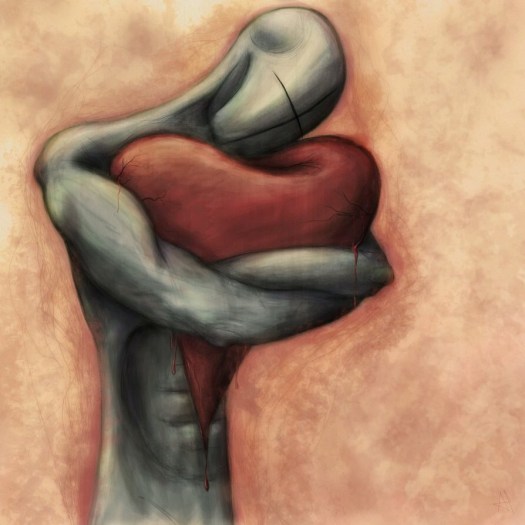
Prayer to Persephone

IMG_0341
Credit: http://www.polyvore.com/mythology/zabani

Help me live true in sight-full eyes not a blunted mind.
Force my face in cold hands to peer at towering truth.
Bring blackness and death to my skin soliciting sense.
Let me taste the seeds of sweet dread of the unknown.

For only the darkest night can steer the walks in light.
And bury bones in bottom sight risen up in flesh again.
When you left the sky-day to tend the night of the lord
Against your will in fright you un-shuttered mortal bind.

But how I love a tragedy’s turn, a rape to forest virtue,
Your serving grace hosting loss to death’s uncertainty.
Transformed beauty to daunting wisdom’s cool stares
Staggers all who chase visions glancing at their backs.

You, my sweet, eat pomegranate seeds to stay awhile
And leave behind a trace despair in lingering’s icy airs
For morrow’s bring and future’s care is set upon a fate
And you, my queen, have sat a’wait, a sceptered palm.

We of daylight’s blinding glare refuse her biting touch.
Only withdraw in sunny despair of leaving ever known,
A delusion of patterned brains on rickety stacks of lies.
In truth, we suck in rotted meat and vomit chaos’ dust.

Only she may opportune a chance at confusion’s toss
And whisk away the smoke that clouds nature’s burn.
For goddess glory engraves her image etched in sigh
A night’s shadowy beam she confers to all who yearn.

Ode to Having a Day

2015/01/img_0338.jpg
Credit: http://www.infinite-beyond.com

Dread of the day,
nerves riotous with din
banging pots to pans
shot up in shrieking whelps
foul curs whipped in vicious plea,
I want to peel off the skin
relieve the abominable itchiness
a laceration of seconds too soon.
Of a morning departed the plan
I awoke ablaze in palpable bliss
womb-like in submersion
in a warm Caribbean sea
effortlessly afloat
holding your hand,
you who I love like my sight,
all was nothing wrong with us.
The morning ripped you from me
howl of desperation,
grasping the air
as if I could hold the leaving back.
Later the roach fell from the sky
next to my plate
while the high-whine complaint
grated of nothing so bad
in metronomic persistence,
accelerating the urge
cutting ears from my head
ceasing the catatonic shrill
the dog whistle blasts
that only I could hear.
And but for the crowding
penetrating roots of teeth
clamping my jaw shut
I would have uttered seethe.
But then, when the printer
my last hope and hoop
and step through
to meet deadline
broke down,
so did I
just as
the sky
fell rain.

First and Lasting Love

2015/01/img_0337.jpg

Social Science Says Lasting Relationships Come Down to 2 Basic Traits, one of today’s The Mind Unleashed selections gave me a warm feel-good flicker of recognition in resonating truth, though so simple and time-worn as to appear trite. The article”s review of a study on long-term marriages concludes:

In most marriages, levels of satisfaction drop dramatically within the first few years together. But among couples who not only endure, but live happily together for years and years, the spirit of kindness and generosity guides them forward.

Sure, kindness and generosity make the world go round, so this makes sense. Now, I cannot say that I have always remembered this prescript in my own lengthy marriage, but the daily practice is important to better the odds of not forgetting.

If I were to give my daughters advice on choosing a life partner, I would tell them to love someone kind and generous–to them as well as others. Hopefully, my daughters won’t need such advice in earnest for a while, though they inch along nearing that precipice of desire.

My soon-to-be-19 year old daughter is falling in love, probably for the first time. I assume both in light of her uncharacteristic giddiness over today’s “date” and the missing catalyst to such annoying behavior previously. Unlike her mother, she is starting out on her love life journey later. She is probably better off for that.

The challenge for me, for any mother, is what to say when. Does today’s second date provide the opportunity to donate wisdom, the benefit of my years? Unsolicited, yes, but shouldn’t a mother do that for her charges, give without being asked or even being appreciated for the offering? So many hats a mother wears, teacher is certainly one of them. A teacher instructs and shares, gracing her students with the benefit of her education, training and life experience, whether the course is English or Accounting and whether the education is received and utilized.

I took the chance, risked rebuff and spoke. An “in” presented itself after a simple line of questioning of plans and whereabouts.
She answered, “I told him I like surprises, so he is picking me up and taking me somewhere. He hasn’t said where.”
“So, he seems interested in you, since he paid attention to what you said you liked.”
“Yeah, I can’t figure out why he does,” she shrugged with a cynical but glowing smile.

I bristled at her statement and wondered why it had to be this way for young women, skepticism and self-doubt, insecurity. Was she being coy or humble? Considering her audience, she didn’t need to make a showing of such virtues or strategies. The mother bear in me overreacted immediately.

“Don’t say that. It’s demeaning to someone I love.”

But then, backing off, I monologued a bit, and she was gracious to listen. I pondered before her attentive eyes: Is it possible for us to develop a healthy love at all with what we are fed by our parents, our culture? I explained to her what my mother told me about sex: Don’t do it until you’re married, boys are only after one thing, and your life will be ruined if you get pregnant. Did I communicate that same defensive posture to her?

I told her the early impression of sex I inherited, one I wrote about on this blog before: women are fortresses and men the invading armies. While the aim of it–precaution–is sensible, especially to young girls of little reference or information from ages 10 to 17, the attitude engendered is one of suspicion and so sex and love are regarded as dangerous.

“The trick is somehow to balance self-preservation and good sense with wonder and openness to some of the best of what life offers. That takes believing in your own worth and risking hurt in exchange for an opportunity to experience euphoric connection with another.”

That was the best I could offer. Fortunately, she is a solidly emerging woman, smart and selective. She has often chosen to be alone rather than be with others who add too little to her life or too much, those toxic relations. But this is new territory, one that tests the mettle of anyone’s constitution to keep one’s head and heart in proper alignment. Generally it takes the burns and bruises of time to calibrate the right give and take, how much and what to sacrifice in exchange for what is gained: the typical cost-benefit analysis applied to almost everything.

She is embarking on this heart adventure much older than I entered the love arena. I was always ready to jump into love and sensuality often and early. My first kiss was in first grade by Artie with the big ears, and even then I felt special. By fourth grade, I developed breasts and the teasing attention of boys. By sixth grade, I longed for the attention of the popular girls who had boys’ silly antics surrounding them and landed my first kiss with a spin the bottle birthday party.

The melt into soft fleshy lips and the scent of another’s closeness, was all it was cracked up to be in my imagination infused with popular lore and far too many books.

By 7th grade, I was going steady with a French kisser and it wasn’t long after that sex entered my life–as both war and weapon. A painful void of information with which to frame a comfortable sexual identity invaded my vision of love up to that time, one concocted from my parents, television, books, songs and neighbors, and fractured it.

Desire and the lure of divinely natural impulses battled fear of heartbreak, exploitation and pregnancy. Sex and love became divorced. And I think it stayed that way for far too many years until I navigated enough relationships to negotiate a re-integration–refashioned and reformulated.

I found that sex and love could be a continuum and an extension of one another. But, ultimately, all winds back to me, my understanding of self in conjunction with others. And not just self-love=ability to love others. That formula glosses over the details, the delicate balance of a hundred or more moving parts, only a few of the major ones being acceptance of humans as largely immutable, education through books and life experience to understand the human condition through behaviors and underlying motivations, and a brave belief in and awe of mystery.

With that in mind, I gave her my best advice–leap, but look both ways before doing so and keep your eyes and ears open. Whether that means something to her or not, I may never know. I still think, however, she has a leg up on me in having waited longer, farther down the life timeline for more brain, body and heart growth. She will have had a longer time living with herself and so a better sense to deal with inevitable disappointment and hurt.

But today will be about exploring and the exhilaration of learning about another–and herself. There will be assessments, inventory taking, chuckling, maybe hard laughs, anxiety and curiosity. There will be self-doubt toying with confidence. The heart will burn apace in the heat of desire and the speed of wonder. And possibly the deep surrender to the womb of the unknown.

It makes me hold my breath and bite my nails for the possibility of the story’s unfolding. I know for certain I will be there for the fallout, great or small. Such is a mother’s love of a daughter, which is nothing if not a devoted practice of kindness and generosity.


Wind-Swept Day’s Percipience

2015/01/img_0336.jpg
Credit: images.fineartamerica.com

Outside my window, thick stubborn leaves
of the hardy, overgrown orange tree’s
sturdy branches shudder and sway
in the sweeping wind of mid-winter cool
on a sunny Southern California day.
Turbulent travel of the upturned earth
make me wince in trepidation,
my eyes burning with a pasty silt
swimming in the tears welled to protect.
Sighs whine, escaping through
too poorly insulated window linings.

This house, soaked with life, is weathered
worn as are most of its inhabitants:
fifty, seventy and eighty somethings.
It creaks and moans in wind and swells
sighs in the rain, arthritic in its painful joints.
Like us, it is in need of repair, extra care
reflecting the love above the strife inside.
We patch it along of necessity;
it shelters us from the cold in gratitude.

Weather like this, near tempestuous
yet mild all the same, mirrors the mood
of a sleepy house after a full night’s slumber.
The question lingers the hours with wonder–
why am I adrift despite a bountiful sleep?
Vexing, the answer weighs in abeyance
mid-way between the poles: acute curiosity
at one end, and the other, impalpable aplomb.
The clime of an indecision, windy-cool-sun,
thrusts itchy thoughts at my scalp like
“When will that email be answered?” and
“When will I know if my request is approved?”

A day like today, gasping and groaning,
agitatedly in disarray, is hospitable
to scalpel-probing limitless presence–
of each period on the page or dust mote
in the sun’s slender dusty ray laser’d on the sill
hedging that testy tree so peevish and pinched
with heat-worn unseasonal, dirty-drawn,
dotted orange orbits a’ring its edges.
The world is edgy and requires a long look
in the hurricane’s eye, fluttering relief
where calming pellucid perceptions lie.
Peace, my restive gusty sense, peace.

Writing Your LIfe

2015/01/img_0335.jpg

During the early 2000s, I taught a course called “Writing Your Life” at a few senior citizen centers in Riverside County, California. I was an English Composition instructor at the local community college when the call for a teacher came up through the community education division. I was happy to embark on something unknown–teaching folks much older than I how to write their life stories.

After a few rough starts, including a crabby ex-English teacher rolling her eyes at me, I got into the rhythm of helping my students tell their stories, rich in textures from worlds I imagined only through history texts, like hopping a train or tears for receiving a sandwich from a stranger during the Great Depression. There were some talented writers among the group, but most were there to listen and write to share their joys and sorrows–to be heard and seen. It was therapy.

Freud and those that came before him knew that talking about one’s life is therapeutic healing. Narrating the self gives the speaker the opportunity to frame her life with a beginning, middle and end for others to understand the point of the story, the meaning of one’s life in specific scenes or on the whole.

Writing has the same therapeutic qualities according to an article in The New York Times entitled Writing Your Way to Happiness. The article examines a study documenting the effects of students who wrote and re-wrote versions of themselves with respect to school performance and other aspects of their lives. The results were interesting, reflecting the importance of controlling perceptions–of others and of self. Students who re-framed their stories improved their performance in school.

“The idea here is getting people to come to terms with who they are, where they want to go,” said Dr. Pennebaker. “I think of expressive writing as a life course correction.”

I agree. The creative urge is the same in writing and living–insight and projection.

Sex Through the Ages

2015/01/img_0334.jpg

This week I came upon two features that spanned the age spectrum of the sex timeline. One was by an older teenager complaining, My Boyfriend Broke up with me Because I Wanted to Have Sex in The Huffington Post and the other a podcast by Senior Sexpert (Don’t you just love that jargony term?) Joan Price on polyweekly.com.

The obvious draw to the first title is its immediate incongruence. Isn’t it usually the other way around–girl breaks up with boyfriend because HE wants sex? That is the stereotype of sexual lore in American culture anyhow. But the writer, Nadia, has this to say about stereotyping:

Let me start my rant by saying stereotypes suck. We all know it, but we still take part in it, even parents. Mine told me to be careful when I started dating and not to feel pressured by all the sex-crazy boys. Little did they know, the very things they told me to make me feel “not pressured” fueled the fire of inappropriate generalizations and damaged concepts in society.

She is referring here to the pressure her boyfriend felt from peers and his brother to “go for it”, which caused the break up; he felt he was not ready.

This passage in particular struck me not so much for the irony as much as my own position sandwiched between caretaker of two teenage daughters, one of whom is 18, and of aging parents, one of whom told me the same about pressure and boys from early on in my youth. If my daughters were amenable to a frank discussion about sex (they are not–“Mom, please, no”), I often think what I would tell them. And I yearn to tell them.

I have so much insight to offer them from my own experience as someone who explored sex in my teens despite hearing the age old warnings and typecasting that all boys want is to get in your pants. While that may be true for most teenage boys, saying so is merely a dismissive attempt at preventing pregnancy, a parent doing the minimum to safeguard her daughter.

Posturing boys and girls as enemies or boys as invading armies and girls as defenders of the fortress, sex is framed from a vacuum of reliable information that is only later legitimately informed through actual intimate experience, and therefore distorted. Sex in this opaque light then becomes more a vehicle for rebelliousness than to satiate curiosity and hormonal insistence. It is fraught with youthful daring, irresistible attraction and yet unrealized trepidation.

My mother’s intention was to protect me, shortcutted without giving me the entire picture of sex, through an acquired perspective that comes with time and growth in love and familiarity. Looking now at her frail remnants of a former warrior woman and wife, I realize she did not have the information herself, having married knocked up at 16 by the first or second boy she ever knew. What could she offer her four daughters about sex?

To add to my mother’s advice to fend off the boys and save it for marriage, I grew up in the heat of Second Wave Feminism when of necessity women were also framing sex and womanhood against men and their patriarchy. Capitulating to sex seemed to me like ceding the war. And at the same time, the 70s of my teen years were also a time of free love and sex, a hangover from the 60s revolution.

The cluster of contradictions did nothing for my sex life. I rebelled, had sex young, had lousy sex, felt lousy about sex, like I had unwittingly given up something valuable of myself to the undeserving, all of which led me to the conclusion Nadia came to:

Sex is just sex. It’s an act we perform. Whether this performance is considered sacred or fun, whether you wait until marriage or do it every night, whether you do it as a profession or some kind of proclamation to God doesn’t matter. If it’s your body, your mind, it’s your choice. No one else matters. So if you’re confused about this subject or worried about the choices you make, I’m on your side. Regardless of how you decide, if you make the best decision for you, I’m proud of that. You should be proud of that as well.

While the obvious is true–sex is just sex–the obvious is also not true. Sex is an act, but it is also so much more. It is a reflection of self, an identity, a connection, an oasis, a weapon, a tool, a livelihood, a happiness, an expression, a biological urge, and much, much more. To say that no one else matters in your choice is to deny that we all grow up with voices in our head that become us, parentally and culturally derived. Our attitudes about sex–a force so powerfully destructive or healing–are derived from a variety of sources and so are complex and not wholly our own until fermented experience kicks in to weed out the garbage.

And it changes in time. Sex at 18 is far different from sex at 68. Take it from Joan Price, who enjoys sex in her 70s and is comfortable with herself–her body, her ability to love and her age. The benefit of good physical and mental health cannot be undervalued. Sexual enjoyment is holistically entwined with physical and mental health. I know that once I felt at ease with and knowledgeable about my body correspondingly with accepting others as theirs, I enjoyed sex a whole lot more than in the confusion of unsorted out slogans and untested values of others.

If I could give my teens advice they would listen to, I would tell them to learn their own bodies so well that they do not have to rely on anyone else to figure out how to pleasure them. In that way, they could be both informed and empowered as well as compassionate by helping their partners. Bodies do come with instruction manuals–owners’. Sex, at its best, is sharing in the heights of intimate pleasure.

I would also teach them to consider their own boundaries, where they end and the next person begins, so as not to lose themselves within the borders of someone else’s need and expectation. Sex is a meeting of minds and bodies in mutual satisfaction. Though sometimes, it is a purely giving act even as it is sometimes a pure taking, both fine in the trust between people performing loving acts, or, at minimum, in mutual understanding of those acts.

Sometimes sex is just sex. For me, whose history is largely long-term monogamy, it is release. If I want to use it to cry or scream or slap, I express and decompress upon the foundation of commitment and mutual caring–for that time, that day, that decade or lifetime, whomever the case may be. Even the same person shows up to the act differently day to day.

Cultural expectations particularly of marriage and monogamy, stress the painted picture of procured bliss through intensely connected oneness and love, a romantic notion that puts a lot of pressure on the act, specifically for youth. And sometimes it is that bliss while at other times it is sacrifice and uneventful working out the strategy of keeping things going, in peace. Sex is part and parcel of being, multifarious as hell. All I know is, it is not what I was told it was.

The Formula to Falling in Love?

2015/01/img_0333.jpg

A lovely essay, Mandy Len Catron writes with reverie in The New York Times about how she fell in love with someone by testing out somewhat cynically and curiously Dr. Arthur Aron’s laboratory formulated prescription for falling love.

Arthur took two strangers who answered 36 questions (which can be found through Catron’s link in the last pages of Aron’s long study narrative) and then stared into each others’ eyes for four minutes. After that, they fell in love.

Arthur’s questions range from philosophical and reflective to revealing. Catron describes them as probing:

They began innocuously: “Would you like to be famous? In what way?” And “When did you last sing to yourself? To someone else?”

But they quickly became probing.

In response to the prompt, “Name three things you and your partner appear to have in common,” he looked at me and said, “I think we’re both interested in each other.”

Now if you want to know the formula to falling out of love, then read Susanna Wolff’s amusing, snarky rebuttal in The New Yorker.

“Women Orgasm While Reading…For the Sake of Art, Of Course (NSFW)”

The Huffington Post exposé of this “art” exhibit is all in the title. The installation is called “Hysterical Literature,” by artist Clayton Cubitt who will show this piece next month in Mass MoCA’s “Bibliotecaphilia.” The article features videos of five women who read while, unbeknownst to the audience, being stimulated to orgasm. Interesting results that bring a new meaning to bibliophilia. What more could I add?  See for yourself.