Prison of Names

Credit: http://www.sightswithin.com – Evelyn De Morgan “Hope in the Prison of Despair”

How does it feel to be stuffed in a box
un-Houdini-like in chain-full eye locks?
How does it feel when you try to get out,
to be sealed up despite all your shouts?
How do you see shred of light in a crack
when dignity shards slice into your back?

For pain is a powerful dictator and names
are but words with swords slain too true.

How does it feel to be told to be enough,
to be more so you become the right stuff?
How does it feel to be typecast as a “girl”
when desire opens as ship sails unfurled?
How does it feel to be set up in the scene,
your role cast as the naif of ever green?

For prison is the picture someone holds
whether true or false that can’t be denied.

How does it feel to forfeit claim to the self,
your skin adorn-worn like an animal pelt?
How does it feel to be stripped naked down,
a number-tattoo name on all that you own?
How does it feel to be absorbed in an idea
not who you are nor what you hold dear?

For murder is the mayhem of false claims
and stolen names and imagery of a body.

How does it feel? How can you feel? How?

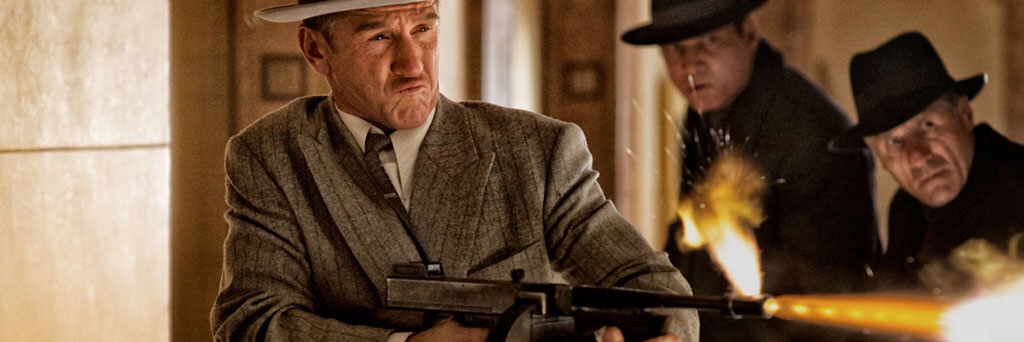
Mr. Mafioso’s Madcap Mistress Myth

image

Two plus two always equals four, right? Well, except when things don’t add up. Take, for instance, an article I read the other day. I am aware that Mr. Mafioso, on a website entitled askmen.com, writes “Get Yourself a Sexy Mistress” half in jest. I get that the article is meant for entertainment–and it is entertaining–for savvy readers who recognize farce or irony. The caricature of a mafioso with his Italian/Sicilian Brooklynese appears in words like “dames” and “goomas” and his over the top machismo is both amusing and revealing that this author does not wholeheartedly advocate what he advises–to get a mistress with all boobs and no brains who poses no threats. Or does he? Of course, the writer knows that he is endorsing an “illicit” and “immoral” relationship without compunction and one with the criteria that the woman or women, as he recommends a circle of mistresses, be the receptacle of every man’s desires: to be used and disrespected willingly, i.e., cum on face, thrown money at for sex and secrecy, though not too expensive to thumb her nose at cheap motels and backs of Cadillacs. He depends on the everyman’s dream to have a beautiful woman with big boobs and no self respect to make the proposition.

Mr. Mafioso does not really mean it. The exaggerated caricature combined with his manifesto and disclaimer about his own lack of credibility–a convicted criminal–coupled with his good grammar and writing skills clearly show that he is not who he claims to be. He is not seriously a mafioso, a criminal nor an insecure man that needs to demean women to make himself feel better about himself, to make himself feel like a man. No, he is a writer utilizing a persona clearly satiric to pose behaviors that are recognizably socially unacceptable in the guise of a familiar reprehensible figure. He knows that all men are not that extremely macho type, but most men are in some part. There is partial truth that some men are excessively insecure about their manhood and need a certain type of woman, submissive with lower self esteem than he has, to make such a man feel whole, to give him an ego adjustment. To have that beautiful woman on his arm, one desired by other men, allows him to think he impresses as a big man, lover, and spender. How else could he get the girl? And if others perceive that, it makes it true. He works the outside appearance in hopes of installing some inside assurance of adequacy, whether consciously or unconsciously.

Mr. Mafioso works the stereotypes well. I read an article today on Mayor Betsy Hodge’s (Minneapolis) blog that stated this about stereotyping: it “blunts the humanity of the person making the judgment and creates unnecessary separation between two people in a world where more, rather than less, human connection is needed for us to move forward as a community.” She was referring to the unfounded accusation by some political figures that she was using gang signs in a photo that captured her and an African American get-out-the-vote street stomper pointing at each other, in an article satirically called “Pointergate.” She thought African Americans were being stereotyped in assuming the pointing was a gang sign.

I “point” this out not to get sensitive and politically correct minded about those who are stereotyped in Mr. Mafioso’s article–bimbos, machismos and mistresses–but to point to the truth about how we fall into stereotypes, not just make them. Stereotypes exist for reason of people practicing patterned behaviors over time, generations. If people are overexposed through media or in lived experience to African Americans making gang signs or being in gangs, they will use that patterned behavior to make conclusions about all African Americans. Not only that, they will look for confirmation that those behaviors exist even when they don’t just to make the stereotype true. It’s human nature.

Stereotypes are assigned by gender, ethnicity, race and age, mostly. While they are shortcuts that help in certain situations, to avoid dangerous people or for police investigative work, for example, they are so subtly a part of us that they are imperceptibly abusive. Stereotypes tap into the familiar, something most are drawn to like promise of the pillow and sleep. We want to be as comfortable as the somnambulant. It is difficult to take things not at face value but at examined value, actually having to pay attention, look closely, and withhold judgment until enough facts or evidence is present to make a determination after assessment of worth, trust, and/or truth. The sheer thought of the endeavor to be open and informed and equanimous is overwhelming. That’s why people are not so, generally. That’s why we rather stereotype. It’s the lazy person’s way of handling people and appeases our yearning for order and familiarity, for our egos. “See, I told you he was an asshole.” Stereotyping also makes for good jokes.

But let’s be good readers. Mr. Mafioso wants us to see that his persona is a jerk, that men should not merely use women as human toilets to cum into or for the sad scaffolding of their own nearly absent thin, weak egos. However, he is also showing us that his satire would not work if not based on certain truths about the human condition: there are men and women who treat each other the way he describes–using each other for sex, money and status–and we recognize and relate or recognize and hate that kind of behavior or both. Mr. Mafioso starts off with accepted notions of the mistress–having one is wrong/immoral–and builds on that idea that so long as you are going down the road of socially unacceptable behaviors, let’s go all the way. Here are some things that respectable citizens would not approve of: men who use women as their sperm banks and credit them with no self-respect and esteem and women who fuck for money and status and like those guys.

We laugh at ourselves. A friend texts me the other day with a screen shot of a man-filled sports bar with a dozen or so television screens transporting live or prerecorded football games, maybe a half dozen or more of them, where women with serving wench boob-filled bustiers serve the ever flowing beer. I text back, “When men fall lovingly into the arms of their mistresses–their own self-caricatures meta narratively.” He was mocking his own stereotypical picture of himself doing something he loves to do–watch a ton of football on a Sunday with a buddy in a boob bar. He is both amused at himself enjoying the actual entertainment and the entertainment of himself as stereotypically enjoying what men are stereotyped to like. I suppose I could counter with a snapshot of my teenaged daughters and I at the nail shop getting mani-pedis or our brows threaded. Except, we don’t do that. My daughters are smelly athletes with neglected nails, as am I. Perhaps we are stereotypes of the anti-stereotypical females.

Judith Butler tells us we should fight stereotypes with anti-stereotypes. I say, “Help! We cannot get out of the stereotype game!!” Because aren’t we merely instating new stereotypes that way? The anti-femme type becomes the stereotype of the butch type, even if only exercising a modicum of “boy-ish” behavior because just a hint will do for eager minds and attitudes. There is no way to escape that binary that stereotyping forces.

I am neither a psychologist nor a sociologist. I claim my stake as a close observer of human behavior and a superior note taker. I say the key to breaking the mold is for people to think, to stop depending on stereotypes and do the work of patience, of having an open mind and being informed. Look at Mr. Mafioso. He is a stereotype in service of exposing stereotypical behavior. He expects the majority of his readers to sheepishly identify with or bristle at what he portrays and advises. That’s called irony.

Poor readers may not pick up on that. Un-exercised minds, ones not disciplined in the rigor of observant examination, of continual curiosity and vulnerability to wonder and awe, will lazily confirm their beliefs by the existing patterns without question–for their own security. It’s unkind as well as it deepens fear and separation as the good mayor states. Here’s a close cousin of the stereotype, a cliche: A mind is a terrible thing to waste. Here’s another: think before you leap. No, feel compassion before you “blunt the humanity” in you and imprison your victim with a stereotype. Thanks for the reminder Mr. Mafioso that we should get ourselves a sexy mistress–and she is our own beautiful human capacity and desire to love. Unfortunately, she is still just the side chick.

Love Song

credit: uploads6.wikiart.org – odd-nerdrum

Come to me
Be in me
Lie by my side
Thumbnail my spine
Soft-brush my face
Look in my eyes
Finger-loop my curls
Ear-breathe my sighs
Toe-touch my heels
Elbow my side
Arm-snuggle my neck
Chest pound my breath
Come to me
Be in me
Lie by my side

Guest Post by L.C. Miller: “Mistress to the Show”

The concept of “Mistress” is interesting to me because even though I’m a faithfully married woman, I am one. It’s not that my relationship with my husband is unsatisfying. It’s not that we’ve lost interest in each other or that the intimacy between us has tarnished over the last 16 years. I haven’t even fallen into the arms of another as a means of escape to a place where I feel desirable, sexy… wanted.

Nevertheless, when I chose to be with my husband, I don’t think I fully realized that I wouldn’t just be taking on the role of partner, wife, mother, or caretaker, but the primary role I would play when I said ‘I do’ was that of mistress.

Everybody knows the famous expression, ‘the show must go on’. No matter what happens, the show will take priority. The people need their entertainment. You will find even movie theaters are open 365 days a year. I am mistress to the show.

Before I met Mike, I too worked in entertainment. I played keyboards in a band but I was no musician. I sang backup but I was no singer. I pushed paper at various record labels and management companies, which is how I met my husband when he was carrying on his love affair with the show. A road guy for the likes of Metallica and Queensryche, he was a metal head now in charge of the latest and greatest grunge band my company discovered during the high surf of the Seattle sound. And even though they couldn’t survive the first tour of the show, Mike and I bonded by speaking over the telephone every day while he was on the road. We laughed and joked and I enjoyed flirting with him during innocent business conversations; and he was drawn to me the same way a man who’s spoken for is lured by the mere dulcet tones of a woman’s voice. He enjoyed escaping into something new but he was obviously in a committed relationship with the show.

Years later, after wanting more from my personal connection with her, I thought perhaps if I moved from Los Angeles to New York, we could take it to the next level and get closer than we ever had. My friend Andrea was relating a funny story how our friend Mike had gotten off the rock tour and was now the sound designer for this show all about tango now on Broadway. I couldn’t help but laugh, imagining him being in such a long committed relationship with a long haired, head banging wife to something much more seductive, classic, lusty. Boy, did his relationship with the show change! I decided to call him and ask if it was okay to stay with him while I tried to relocate, setting up interviews to continue pushing paper for ‘my girl’. Unfortunately, I was just pursuing the same bitch on a different coast.

Mike was all alone in New York, only having to deal with his wife three hours a day, with matinees Wednesday afternoons and weekends. I was attracted to him, but I tried to tell myself he was already committed. He invited me to meet his wife, and something totally unexpected happened. I fell in love with her too.

I no longer cared about my own wife. All she ever did was cross T’s and dot I’s in the name of pop music. She wasn’t very interesting. But this lady my husband was with; she was a knock out. I could see during the show that Mike acted just like a complacent husband with her. I gasped at her every touch, her dress and her shoes as she ran them up and down the back of that handsome dancer’s leg, beckoning me to watch, to follow. I was mesmerized by the show and so was every other ticket holder. But Mike was already more than comfortable with her because when two ladies came up after the curtain dropped and commented how one dancer whipped her hair around so much, his response was, “That’s so you won’t notice how fat she is.”

I didn’t care. It was love at first sight.

I started sleeping with Mike and going to the show every night. Just to watch. He would ask me, “Don’t you ever get tired of seeing this over and over again?” And my answer was always, “Hell no!”

I think this is when Mike fell in love with me; because I loved the show… maybe more than he did… and it seemed my passion for her renewed his interest in their marriage. He took it as a sign that I could handle his commitment and be okay waiting in the side wings until their time together was over. Clearly I was very happy being the voyeur to their romance and I did love every minute of it.

We were married right after the show left Broadway and started a world tour. We spent more than a year in this blissful triangle, experiencing the world, life and love together. And like any mistress, I relished our private time and began to resent the demands of his wife more and more. Here he seemed interested in me and bored with her, but he’d never leave her. He looked at me with love and desire and her with disinterest. Sometimes I thought, “She could do better. She should be with someone who’s really in love with her.” But she doesn’t want anyone else either.

While we were on tour, my mother was diagnosed with stomach cancer and needed me to come back to Southern California to take care of her. I wanted my husband to come with me, but I had to accept he was already married and no matter what happened, the curtain would always rise and fall on his first wife first.

I buried my mother alone, without either love by my side. I was able to share my grief with my husband over the telephone during a layover at Heathrow Airport on his way from Portugal to South Korea. He was very sorry but he and his wife couldn’t chat. After all, she must go on, right?

Two years later, my husband’s marriage would change and for a while they would stay together at the House of Blues in Anaheim so I could be near family to have Mike’s baby. I still wore a ring on my finger, but while I went back to work in a law office, my husband split his time trading child care responsibilities with me and then would run off to be with her all night, having fun, dancing to Etta James and bringing me home bootleg recordings of their torrid evening together.

For years we still went wherever Mike’s first wife took us, but we finally settled down in Seattle to raise our child all together; Mike, me, our son and the show. Again, Mike and I became lovers who passed in the night. I would fall asleep and he would wake me. He would do and say all the right things, sending me back to a blissful sleep, only to wake again to an empty bed. Was it all a dream? Whatever it was, I knew what he was doing. He was dressing her up in something new. My husband was off creating his love into something special for all to see, leaving me to raise our boy on my own.

She beckoned. She demanded. She must go on.

I would start to hate her and tell Mike I’ve had enough. I wanted to threaten him by demanding he choose between us, but I was too afraid of his choice. And at my breaking point, he would bring me to see her in her new outfit, dressed up in Hairspray, Young Frankenstein, Shrek, Memphis, Aladdin… the list goes on. Every time I’d show up resentful, the show would seductively lift her curtain, share her magic and leave me swooning. Can you deny a relationship that has thousands of people moved to a standing ovation night after night? How can I not stand and clap too? I love her every time and it makes me look at Mike and admire his commitment. Sure he looks tired and maybe he might look bored, but the love he has for what he does shows in every performance. I can’t break them up.

I surrender.

I know my husband loves me and our son, but he is still fully committed to his first wife. She puts a roof over our heads. She makes our son and I laugh, cry and experience wonder while Mike merely looks like a dutiful husband, holding his wife’s purse and twisting her knobs in the back of the room, so everyone can hear how beautiful or funny or sad she is. Whether she’s Beauty and the Beast, Miss Saigon or the Phantom of the Opera, I don’t care. It doesn’t matter what she puts on, there I am, fully in love with her from the twenty second row.

As long as I’m married, I’m mistress to the show.

Mistress: Woman or Whore?

image
Alexander Buxton of The New Statesman discusses and excerpts Dr. Amy Erickson’s history of the title mistress in a September, 2014 article entitled Mistress, Miss, Mrs. or Ms: untangling the shifting of women’s titles. A fascinating and quick read, Buxton’s article manages to tease out the gist of Erickson’s work: that women were once mistresses of their own domain…until they weren’t.

The author gives a brief history of the term Mistress, Mrs. and Miss, citing Samuel Johnson, known writer and author of an early English language dictionary, who provides the following 18th Century definition of the term Mistress:

Neither “mistress” nor “Mrs” bore any marital connotation whatsoever for Dr Johnson. When in 1784 he wrote about having dinner with his friends “Mrs Carter, Miss Hannah More and Miss Fanny Burney”, all three women were unmarried. Elizabeth Carter, a distinguished scholar and lifelong friend of Johnson’s, was his own age and was invariably known as Mrs Carter; Hannah More and Fanny Burney were much younger and used the new style Miss.

Citing Erickson, Buxton writes that the title Mrs. and Miss contain the word Mistress and Mrs. was the female equivalent of Master, merely a term of address that delineated class or profession and not marital status. A woman of status or business profession was a Mrs. whereas a scullery maid was addressed by her first name or some man’s wife. How the term Mrs. became a distinction from Miss and the advent of Ms. are not covered in depth, but I suppose the more curious of us will have to peruse Dr. Erickson’s “Misresses and Marriage” in the autumn edition of the History Workshop Journal to find out.

Mistress Glinda (Witch of Zen)

image

Where were you when the middle aged woman in the Suburban cut me off on the freeway, and I beat my fists on the steering wheel in adrenaline-filled rage, bruising my fingers?
Where were you when I ached to go home after a long, late work day and night, and the customers, a mom and her teenagers, came in five minutes before closing and stayed in the store for 20 minutes after the doors were conspicuously locked and the dishes loudly clanged and banged in the sink so the world could hear my irritation and exasperation to no avail?
Where were you when the barista totally screwed up my order and had to re-do it after making me wait for 10 minutes, resulting in my risking my life and others’ on the road as I drove like a mad woman to get to work on time, my head pounding from raised blood pressure when I got there?
Where were you when my adult daughter forgot to pick up the dinner I asked her to bring me three hours prior, even as I was working her shift for her so she could get her homework done, the indignity and betrayal that boiled my blood and caused me to cut her down with cruelty in words and knife of guilt?
And where were you when the clearly guilty ones unabashedly told lies under oath about me, causing me to gasp in horror and dismay and anger and disbelief and dread and angst and wrath and despair…?
Where were you, my good witch, to remind me how much power I give the powerless? Where was your wave of the wand over the glass we peer into, showing me how much I fight the familiar profile of the masochistic female who takes up as little space as possible, accepts suffering inflicted by others with rage then resignation, and doubts her own truths in deference to others’, only to flay those efforts in a flip of the switch–unravel reality–when ceding my grace and acceptance of what is, where I am, who they are, with knowledge of my own powerlessness over others, and the gratitude and equanimity to bear that accession?
I needed you those times to tell me, “You’ve had the power all along, girl. The rubies are the moments of opportunity, of power properly placed. Now take it on home.”

Comet Love

CNN

What’s it like to land on a comet with its flaming tail at the speed of night? The fantastical imaginary of the ordinary citizen can only know a breath of it. If only such a landed probe could take pictures of all of the people looking up in awe and wonderment at its passing. That would be the ideal outcome, to capture the best of the human spirit as it is not in the human capacity to reach beyond our galaxy as we sit on the earth now, but it is in our capacity to dream and imagine and reach with our minds.

Perhaps that is what space travel will be eventually, a cosmic astral projection of minds to other minds in distant galaxies and that the stuff of television shows and NASA or other space agency attempts are mere clumsy limitations of the mind. The physical transport is an outdated mis-read of where humans should be directing their efforts–not at transporting the body to other galaxies with improved technology for craft life but transporting the mind through developed improvements in using more of the human brain, much more than the ten percent we do. If scientists can figure out the workings of the brain and how to use more of it, we would go farther in all of our feeble attempts, due to lack of imagination and physical ability, to space travel the verses–uni or multi. That’s my dark matter hope. As grand as our meager steps are in proportion to who we are, I can only speculate that more brain is better for bigger steps toward human survival–if that is even worth it. My limited brain cannot imagine what could be more important.

Philae successfully landed on Comet 67P. The scientists in news-flash photos, mostly men, and I seem to be the only ones excited about that. Though the landing did not go entirely to plan, that didn’t dent the jubilation of the paunchy breath-holding middle aged scientists who hopped, jumped and hugged in high-five glee and release at its touchdown. The love and pride for their cyber child was bounded only by the liquid vision of the for-once unshielded tears of these utilitarian fathers of the brave foundling. One of her thrusters did not thrust, but she is safe and is useful nevertheless. If she does what she is programmed to do, take pictures and collect other data, she will bless her human makers with information unknown about the travels of a lone comet that circles the sun of its destruction, succumbing to the irresistible force of suicide, desire and heat.

So long as there is an infinite unknown, I anthropomorphically will it to be so: that she brings back an ancient love story beyond comprehension for its pre-dating and surpassing human imagination. That way we can continue to wonder and strive, which is the best humans have to offer.

She will give us imagery to parse and dream about, analyze the pre-solar system traces so that we may sniff the scent of our own origins–even just a hint. The human mind will take it from there. And if those paunchy old and young science-saddled men and women get nothing more than a glimpse into the relationship of a comet with a blustery sun that blasts and winds like the litany of a curmudgeon whose cranky rant on a rainy arthritic day thunders and grates, then humans will be that much more edified. They only need new clues to edge ever nearer to the ever elusive answers to the age old questions that echo in the ignorant blackness of the deep-of-darkness matter: How did we come to be? Are we alone? Why does that even matter?

Stewing Storm

image

I stew, seethe and sorrow. I am a woman.
I love.

There is a yearning. It penetrates the wall of silenced fear.
A slow ache, amorphous yet round all at once.
Closed circle.

I am broken. I was never really fixed.
It’s just that I feel the lack of a whole now.
I age.

No longer I bear the one way pouring.
What goes out must have a coming in.
I am sere.

My mind teases out strands of sense.
They float above my pavement feet.
I waver.

It is time to be honest, let it seep in.
Some people must die and go home.
To free me.

Guest Post by MPM

The Child As Mistress

This blog focuses on the mistress (and ‘mister’) we have, we are, or we become, whether the mistress is a person, an activity, a modality of thought, a cultural norm, or any of a million other possibilities. Today’s quote by Dumas and accompanying picture imply the traditional concept of the mistress – that of a woman on the outside of the marriage that the husband is involved with clandestinely. But I am an example of a mistress withIN a marriage. And I am not alone. My brother is as well, as are millions of us without ever imagining ourselves so. In fact we are mistresses that have the full, ahem, ‘blessing’ of no less than the Catholic Church.
Perhaps a little background is in order. My parents were married in the middle of the Baby Boomer decade of the 1950’s. My father was in his mid-30s and had never been married before. From stories my mother told me about him after their divorce 20+ years later he did not have the best reputation around town. He wasn’t a criminal, he was just someone that was difficult to like closer than an arms-length friendship. He was blue collar WW II veteran with a ‘C-‘reputation and the social graces of a venomous desert insect. He was also cheap, opinionated, and a Republican in a sea of Democrats.
My mother was one of five sisters who were all well liked, well mannered, and, ahem, well endowed. She had been married before to ‘the love of her life’, as she would later tell me along with the stories of my father. Tragically, he was a gunner in the last American bomber shot down over Japan before Hiroshima and Nagasaki, killing all aboard. Rather ironically, as this would not be possible here in the US due to the circumstances, there is a memorial in the city where the plane crashed commemorating the event. For the next decade mom was lost in grief, certain she would never ever find a man that matched up to the standards established by Charles. Their togetherness had been established in high school before the war and was intended to continue long after till death did them part. And of course this relationship was going to produce an abundance of children as did all Irish relationships in those days. With the sadly abrupt passing of Charles this plan, this dream, passed with him.
Enter my father some ten years later. He began pursuing mom with all aplomb of a drunken dancer. Mom, mindful of his ‘C-‘reputation, held him somewhat at bay. However his continuous pursuit finally wore her down enough to allow for a benign and tepid relationship. She had no intention of marrying this man. But being in her late 30s, and since it had been a decade since her last enduring relationship, she eventually allowed herself to get close enough to him to enable the relationship to continue its natural upward course. My father was in his mid-30s and determined to take their pairing to the logical conclusion of the day – marriage. Their opposing stances eventually caused a standoff. Mom began to pull further away from him to distance herself from ‘C-‘to seek a ‘C+’ or better partner.
In those days a woman in her late 30s could not conceive of having children. Mom’s dream and desire of lining the nest with rug rats had crashed with Charles’ plane. The medical arts of the time were not prepared for the complications that could arise from a pregnancy so late in a woman’s life. It was accepted by society and culture that mom was ‘too old’ to be a safe and reliable contributor to the boom of babies that generation provided to the nation. And so, seeing mom begin to slip away and certain she was his last chance at the legitimacy and rise in stature a marriage would bestow upon him, dad made a bold and strategic move. With the precision of a championship archer he aimed Cupid’s arrow directly at mom’s heart. He said to her, ‘We can always adopt kids.’ The arrow had found its mark. Mom set aside the reservations she had over dad’s ‘C-‘ character. She immediately raised his grade, albeit on a curve and due to his extra-credit essay on adoption, to the lofty status of ‘C’. They married soon after and began a life together that would provide each with what they wanted. She was going to receive children and he was going to receive marital legitimacy.
Until it didn’t. Soon after the consummation of their alliance, dad, living up to his ‘C-‘reputation, reneged on his promise to adopt. Naturally this caused a breach of contract dispute. Their union began to develop cracks and seemed about to crumble. Somehow they agreed to a mediation. They jointly decided to seek the counsel of the precursor to modern psychiatry, the Catholic Church.
The Father they selected as their confessor and whose penance they agreed to abide by was a kind and genial man each of them respected and admired. They each knew his wise and wonderful wisdom would apply the mortar to repair the cracks that had developed between them. After several sessions of listening and head nodding by the good Father he pronounced himself ready to rule. His decision was simple and direct. He admonished my father for breaking his contractual agreement with my mother and ordered him to fulfill its original terms. They were to adopt a baby. The role of this child would be to repair the damage caused by the breach. My father reluctantly and resentfully accepted his penance and set about the task of choosing a child off the rack that would be able to assume the required role. Indeed, what else could an Irish Catholic do when a pronouncement was delivered by the sagest of the sage, the wisest of the wise, a representative of the respectable and all-knowing (insert booming and echoing voice from above) CATHOLIC CHURCH?
Enter me. They decided to baby shop at the orphanage where I had been on display since I had been born a mere three months prior. This made me the latest and greatest model. I still possessed that new baby smell so desired by adopting couples seeking their first human purchase together. I was featured in my crib in which I had been placed and had not budged from except for the occasional diaper change and attendant hosing down. After a series of paper signing (more contracts) and counseling by the (holy shit!) representative of the Catholic Church present at the orphanage, a stern nun, I was whisked away to begin my new life and new duties as the bastard marriage savior.
For a few years into toddler-hood I fulfilled my role dutifully. My father surprised himself by actually enjoying having a little bastard around. He genuinely took to the situation he had once avoided. But my mother was ecstatic. I was the first born son (ok, first adopted son) she had always wanted. Over time, I later learned, I received all the love and attention she was supposed to divide between me and my father. I had become her little bastard mistress son. I was now the third person in the marriage Dumas spoke of. (Well, he didn’t actually mean a child but work with me here.)
My father soon tired of his relegated role and began to resent the little bastard. This, of course, renewed the cracking and crumbling that the advice of the CATHOLIC CHURCH had repaired a few short years ago. Duty bound by their allegiance to the earthly representative of the guy in the sky they returned to the counsel chambers of the good Father. After a suitably perfunctory and long enough listening period the good Father prescribed the same mood altering substance he had last time: adopt another child. And so another little bastard entered the fray of our ménage a matrimony and began sharing the role I had originally been enlisted to perform as a solo act.
I’ll spare the reader and refrain from detailing the years of acrimony, repression, resentment, frustration, anger, bitterness, abuse, and bad days that ensued. Instead I’ll wind this missive down by stating that the open inclusion of little bastard mistresses into the marriage failed. In my teenage years (and my brother’s) mother and father divorced and he moved out, never to be seen or heard from again. The remaining trio of mom and her two little bastard mistresses were relieved immeasurably. But life from then on was no picnic and the requisite emotional scars and attempted surgical removal of them by an unending stream of psychiatrists, psychologists, drugs (legal and sometimes accessible only via cavity search), alcohol, shamans, and voodoo practitioners some 40+ years later and continuing is testament to that. This example of mistress insertion may not prove Dumas right or wrong. But hopefully it is a cautionary tale that forewarns the reader to choose a mistress wisely and not off the rack.

“Why I Date Married Men”

image

Heather L. Hughes, a freelance writer, contributes to Salon.com “Why I Date Married Men” and lends light insight into her choice of dating partners, a kind of liberation for a sexual late bloomer (a virgin until 29), when she concludes:

Affairs with married men offer controlled companionship — there’s warmth and there’s space, there’s intimacy and there’s distance. I can’t control growing older. But as the other woman, I’ll always have an element of mystery, an invitation to a different narrative, like that lit-up window in the darkness.

The “lit-up window in the darkness” refers to her ignorance of and outsider status to the married man’s family life, his other life, about which she admits to being curious and even fantasizes.
The “controlled companionship” concept certainly appeals to the more introverted of us. Hughes doesn’t say so, but adding up the facts of her nerdy entertainment choices, her lack of sex and her lauding “controlled companionship” aka I love you now get out and give me my space, she is probably an introvert. Introverts need battery-recharging alone time, something marriage doesn’t always afford.

The best and worst part of any long-term relationship is the daily living together, the friction and resentment that builds up by the large and small stuff, disliking a mother in law or snoring. Space, one’s own space, could help relieve some of that tension. When my husband and I were separated, it was the first time I had ever had my own room. I was delighted, covetous of that space to call my own, clean as I wished, decorated as I wished. That ownership of space alone improved my disposition. That separateness also allowed me to see my then estranged husband when I wanted to and not when I had to, which improved our relationship. In sum, controlled companionship is not only convenient but a high recommendation to the relationship that allows for that. Of course, married couples can and do afford each other space, but unless one of the couple travels a lot, there is not that completely divided space that one owns and occupies like a room of one’s own.

I suppose the element of mystery in being the other woman that Hughes refers to is also tied into that controlled and convenient aspect of the dating a married man relationship–parts of the other are left private and unknown. A couple does not kill the mystery and one another with familiarity. How often have I heard, “I know you only too well”? That is not only a mood killer, an instant irritation, but is an accusation that the accused is a pattern predictable and boring, and can be no other way. Ironically, the accuser both desires and despises that kind of predictability that produces comfort and boredom too.

The most interesting part of Hughes statement, however, is that the other woman is “an invitation to a different narrative.” The assumption is the different refers to different from the man’s wife and family, the life he has set up in the daily display of the house he lives in, perhaps, the wife, kids and job he has, community he is part of and the like. His story. Perhaps it is the story of the suburban upper middle class man with money to buy nice cars, house and toys for himself and his family–the lucky guy who has everything story on the outside from society’s point of view, the very same one who keeps another woman on the side, immoral from society’s point of view. Perhaps that is the draw: look like a good boy while being a bad boy.

However, I take issue slightly with Hughes “invitation.” The assumption, though imperceptible, is that one narrative is more legitimate than the other, i.e., the married narrative is the acceptable one and the one with the other woman is “different”, weakly argued as mysterious to make the invitation more inviting. However, invitation could be bridging the territory of its silent rhymed reminder of temptation, which, of course, suggests the illicit nature of the “affair.” Hughes takes the cautious self-repudiating approach even as she defends–lightly–her choice of lifestyle. It’s weak.

Her mention of narratives reminds me of something unacknowledged. I am reminded of an old studied philosopher from school years back, one who baffled me more than enlightened except in intermittent glimmers. But now as I am older and wider read, I realize he is a writer who has covertly influenced my way of thinking and viewing the world more than any other philosopher or writer. Jean Francois Lyotard, the French philosopher who describes the postmodern condition (post WWII) as one without universals or generalities that work any longer, lured me in with his anti-establishment thought. He exposes the overarching theories and philosophies (meta narratives) that historically govern thought and behavior since the Enlightenment, for example the notion of absolute freedom or justice, as no longer tenable to order an ethical, legal, philosophical or moral structure of societies made of individuals with such an acknowledged immeasurable degree of variety.

Lyotard argues that reality is created by and social structure consists of micro narratives that we all speak and act on, engage in on the local level in discrete situations of daily life, which show how different and diverse we all are in our beliefs, desires, and actions. So even though we may say we subscribe to the belief that all humans are born free and freedom is the ultimate right and happiness, the way we live daily from situation to situation negates that actuality. Each day I work, drive kids around, eat, sleep and speak at the dictates of others. Freedom is negotiated within the pockets of time and allowance of others, not some overarching principle that governs thought and behavior.

Extrapolating from Lyotard, the way we think and act should not be proscribed, encouraged or naturalized by broad moral banners that wave the monogamy narrative or the marriage narrative as THE narrative. It is painfully obvious that we actually operate within the language and rules of private, small group situations, and specifically with respect to Hughes’ dating: man, woman, children, other woman. What is justified behavior is applicable to and determined by each individual, i.e., this man needs newness to keep him alive and happy, while this woman needs the security of a marriage to keep her free to do what she needs to do, etc, in conjunction with another or others. The agreements and socio-ethical rules are local to the participants. And they are agreements. It’s only when we start believing the grand narratives of right or wrong for everyone is where we fall into fantasy land, wanting to believe there is one right for everyone.

Some may say this is merely relativism, which may be regarded as chaotic, unstructured and anarchy (I can hear a friend say, “If you stand for nothing, you’ll fall for anything”). I don’t believe that is true. It is simply an acknowledgment that people actually operate on the level of their one on one or small group interactions relative to their lives, and their behavioral ethics are determined within that local climate.

So, Hughes, relax. This works for you. You’re different from others. Celebrate difference. It’s what we all are anyhow.