
"My mistress' eyes are nothing…"
Please enjoy my article on Rebelle Society, a wonderful, impeccably professional and delightful site full of creativity and practical information as well. I have been a fan even before the editors accepted my first submitted essay on February 7th of this year. Good fortune visited me the day I happened upon them in a search for something compelling to write about on a lackluster day creatively speaking. I go there often now just to get a lift.
I hope you, my dear readers and happen-to-drop-by visitors, take some pleasure from momentary ananda my words may inspirit.
Peace,
the Gaze
Ananda
A lover of poetry and yoga, sex and wine, and family and friends, I, like the rest of humanity, yearn for blissful moments. And though I am not a scholar of Sanskrit or the Vedantas with its Hindu terms in metes and measures, I sometimes look to their words for understanding bliss–and for creativity.
On a particularly grey day of dreary weather and woe in the face of loss–my mother’s withering mind, my oldest daughter’s going off to college next month, the recent loss of my second career in the kind of misstep that leaves me in awe of how close we all are always to falling into the margins–I contemplate bliss and its countless manifestations just to cheer me up.
However, more often I catalogue my gifts to inspire longer-term goals like grateful living and daily writing.
We–my lingual species–take for granted words like bliss, happiness, joy and even sadness, depression or despair, the ready words to capture nuances of feeling. Yet, as a complexly feeling people, we enjoy labeling the colors of our moods, one of the many inheritances that distinguishes us from other earthly creatures.
Bliss, with its thick, rich history and vibrancy steers us through that complexity as it soaks us with recognition, sense and order. The feathered tendrils of meaning that touch upon its neighboring moods captured in “pleasure” and “delight” create extensions that reach down and through our lives.
Whether we search the Oxford English Dictionary or the Vedas and the Dictionary for Spoken Sanskrit, Ananda–the Sanskrit word for bliss–wholly resonates the thought-emotion from the eternal to the local. I often write on it for poetic inspiration, especially when my mood and writing discipline falters. Its order and principles cure writer’s block.
When I am stuck, I, like the Sanskrit Dictionary, begin with Pleasure, a term with associations ranging from the simple, like the tickle of childhood in watching the mercury bubble gurgle to and fro inside the glass of an old-time thermometer, to the ecstatic, like orgasm from an in-love-with lover or the runner’s high amid the stillness of a solitary crisp morning run along a cow-lined country lane in the heather of Central France.
Pleasure alone is not enough, however, for the distinct flavors of bliss parsed from the Sanskrit. Thinly sliced from Pleasure is Sensual Pleasure, which I must confess drives my daily experiences. Lure by all that teases the senses, I can close my eyes and smell the house-filled aroma of garlicky tomato sauce simmering and feel the headiness of inhaling the sweet, milky scent of my infant’s skin.
Poetry writes itself to the earliest memories of my mother’s fingernails stroking the scalp beneath the thick curls framing my resting head in her lap.
Two others related to Sensual Pleasure are Sensual Joy, found in a late Friday afternoon nap, unclothed and entwined with a lover, and a Kind of Flute, an instrument hollow and wooden or a vessel for champagne, both soothing and stimulating the ears and mind. The memory sounds of dancing to South American pan flutes puffed outside the market in downtown Caracas and toasting in the new year floats in the buzz of the bubbles and sway.
Which is a different high from Delight, a sharper edged bliss compared to the roundness of pleasure. I find it in placing that last piece into that one perfectly matched squiggly space left in the 1000-piece jigsaw puzzle or the twenty dollar bill pulled from the pocket of my jeans one unsuspecting morning.
It’s the imagined lightswitch on when it all makes sense.
Happiness strikes me as less spiky than the sparkle and shine of Delight, deeper set and sustained: the mood makes us skip down the path just because…it is a lightness in the step, in the being. But turn happiness up a notch to a swelling sustenance to the heart and you have joy.
Joy catches us unawares, say, when a mother turns from her busy-ness to spy her infant’s gaze following her every movement. However, Joy’s cousin Enjoyment is quieter, less a beaming and more a warmth, though no less satisfying. For me, it’s a book to live in for a while; the first bite of deep, dark, smoky chocolate; or the silent spell of a Shakespearean sonnet.
But Pure Happiness is seeing the fruits of our efforts to help others ripen and blossom or the awe of creating another human being through unimaginable struggle.
Yet another bliss, Cheerfulness is not so much a mood as a temperament that drifts between internal and external space: the unforced mental smile naturally unfolding at the thought of another day as another opportunity to get something right or the gleam in the eyes of the genuine gift giver.
Some types of bliss follow strife, a sort of relief as in the contrast of high pressure to low. I imagine this sensation in Sanskrit as End of the Drama. I think of it as resolution after the struggle, war, riot, tussle, or tragedy and in another bliss–a Thing Wished For–the triumph of acceptance, often a satisfactory ending to a poor beginning.
Reaching to the sublime, Beatitude anticipates the first spring blossom clearing the snow face, break-through acts of kindness, a helping hand when all hope is lost, a miracle, and nature’s whisper. Somehow related in my mind, One of the Three Attributes of Atman or Brahman in the VedAnta Philosophy means a sort of holy, the oneness at the tip of the final exhale concluding meditation.
And in all things comes the contentment in order: Name of the Forty-Eighth year of the cycle of Jupiter intuits that human comfort in prediction and patterns and the recognition of the unknowable vastness, the multiverse, of which we are merely particles from planetary bursts—as well as the burden that knowledge relieves.
And finally earthbound and encircling ourselves, bliss is a Kind of House like all shelters that provide the safety and security that we imagined as children gleefully building blanket forts in the living room.
A trick of the mind or a daily devotion, inventorying all that makes us happy not only soundly defeats the writing doldrums but potentially pulls us from a slump, maybe even depression. The habit balances us–if not as an antidote, at least as a partial cure for the ills of a day or a life–and improves health.
A day when even the sun seems to let us down is perfect for cataloguing gifts and counting bliss-ings. Let us begin with Ananda.
Note: Classifications of Ananda are in the Dictionary for Spoken Sanskrit; definitions are in the mind of this star gazing poet.
In America, we have socialism for the rich and capitalism for the poor (Keith Ellison).
I saw the video of the Texas officer who pulled guns on teens during a pool party raid and thrust his body weight on to the back of an unarmed 14 year old girl in a bathing suit. The imagery is nothing short of violent and hateful. Granted, there were many people and possibly too few police officers, a common story of police officers going into impossibly overcrowded underemployed neighborhoods of the disenfranchised from society. However, the dehumanizing behavior of the officer appeared deeply ingrained, rote, and unthinking.
The systematic dismissal and disposal of the poor, disproportionately black, in this country bespeaks a sick nation.
We created our ghettos from slavery through Jim Crow laws to decades of de-funding programs to help create jobs in poor neighborhoods, and then turned away from the aftermath. The destruction continues to grow like weeds that strangle the manicured lawn. The “problem” only gets addressed when enough people turn out in the streets (in numbers and with cameras/phones), on the internet and in the voting booths–or when important white people are affected.
Nearly 1.5m African American men are in prison and missing from society due, in large part, to a criminal justice system that locks them up and limits their options upon release (Keith Ellison).
And then the overwhelming outcry of handwringing lamenters begins when the videos of violence appear, “Where are black fathers for the proper raising of their children? Aren’t they partly to blame for the perpetuation of generations of poverty, gangs and crime?” society asks when weighing in on the current war between black men and cops that sent hordes of the outraged in the streets, in riots and throughout the media.
Leaders in Washington and around the country should have responded to the growing crisis in African American neighborhoods by creating jobs, repairing infrastructure, avoiding bad trade deals that offshored good-paying jobs in many urban areas and investing in our kids. Instead Congress and state legislatures built prisons, passed trade agreements that sent jobs overseas, gave police weapons designed for warzones and passed laws that increased de facto segregation (Keith Ellison).
Instead, leaders in Wasingon give tax breaks to the wealthy to repay their candidacy debts, enter into trade agreements that send jobs overseas, build prisons that are big business money makers on the backs of the poor and arm police with wartime weaponry.
Race is myth. When we stop talking about race, stop believing in race, it will disappear. Except for its career historically and in people’s memories as the antithesis of human freedom, the embodiment of inequality and injustice that remained far too long a toxic, unresolved paradox in nations proclaiming themselves free. In a raceless society color wouldn’t disappear. Difference wouldn’t disappear. Africa wouldn’t disappear. In post-race America “white” people would disappear. That is, no group could assume as birth-right and identity a privileged, supernaturally ordained superiority at the top of a hierarchy of other groups, a supremacy that bestows upon their particular kind the right perpetually to rule and regulate the lives of all other kinds. This idea, this belief in “whiteness,” whether the belief is expressed in terms of color, ethnicity, nationality, gender, tribe, etc., constitutes the founding principle of race, its appeal and its discontents (John Edgar Wideman–“Fatheralong”).
Slavery no longer exists–not in the grossly overt economic commonplace. But the toxic residue appears far more insidious. Wide scale racial prejudice and disdain for the poor incorporated into policy and procedures that permeate every governing institution, every manner of economic operation and opportunity, and every social organizing principle will topple a nation from its bloated top down.
A country is only as strong as its weakest members. Investment starts from the ground up–in people not dollars. The news of cops killing the disporportionately poor and weak will disappear when the majority vote for those who are willing to pay for alleviating the agony of a neglected segment of the population, deciding #Black Lives Matter.
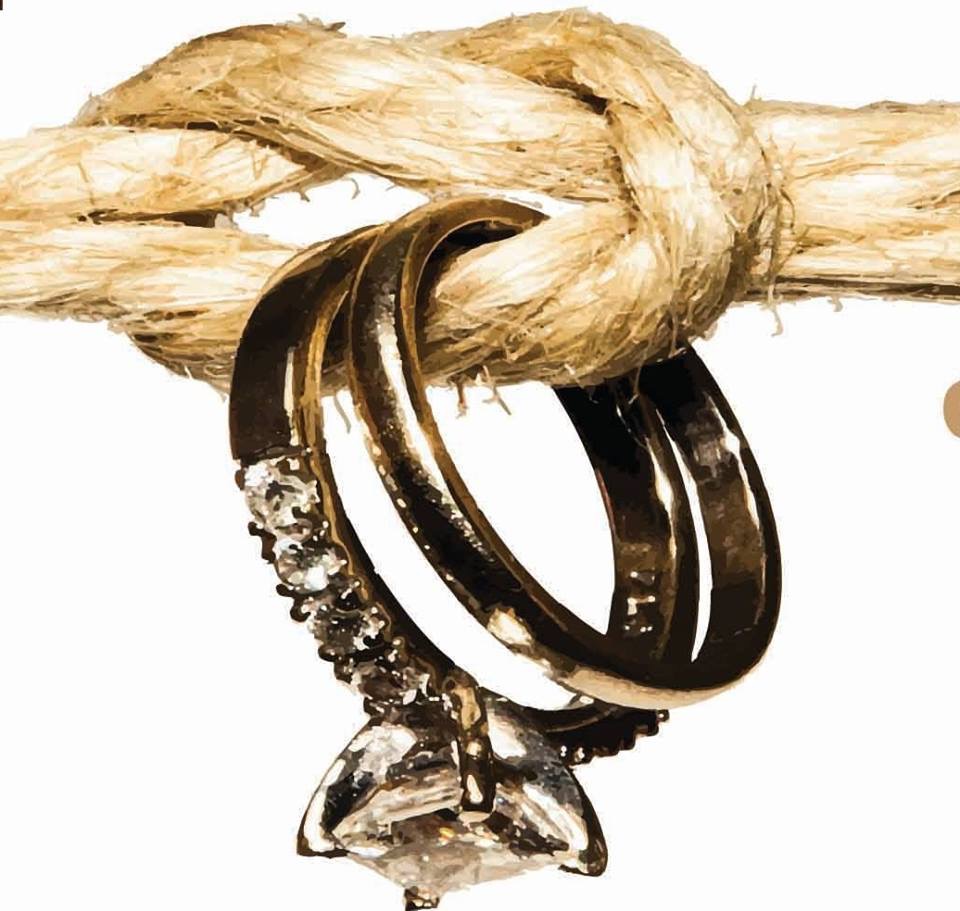
credit: https://polysingleish.files.wordpress.com/2014/01/1003954_1423682221182522_1247773358_n.jpg
This time by Salon.com’s Anna Pulley in the article 4 Reasons Humans are so Bad at Sexual Monogamy, which faults our natural proclivities and our ancestors. According to Pulley’s resources, we humans crave variety, get bored easily (especially women with sex) and hear the call of our collectivist primal ancestors who lived, parented and copulated communally. Her cited resources are a few notable books on the topic, including Chris Ryan’s Sex at Dawn, a synopsis of which you can find at Ryan’s site among other of his projects, to bolster her brief scan of the huge monogamy balliwick.
In the end she echoes a call to action I myself have made on this site–more tolerance and less dysfunctional belief when it comes to sex and marraige.
To say we are bad at monogamy isn’t an indictment of monogamy in general. Of course, people can and do succeed at life-long monogamous arrangements. Non-monogamous arrangements aren’t inherently better or worse than monogamous ones. And yet, just because we are monogamous with one person doesn’t negate the fact that many of us are still and always will be attracted to other people. As German philosopher Arthur Schopenhauer put it: “One can choose what to do, but not what to want.” We’d do better as a culture if we could exercise a little more tolerance, acceptance and honest discussions around sex, desire and marriage, and try to be less rigid in our idealistic views of monogamy.
It’s a reminder that sex scandals are always harder on the women, tainting their career achievements if not outright erasing them.

In case you missed it a couple of weeks ago, the Washington Post write up of David Letterman’s farewell episode of the Late Show noted the glaring omission of Stephanie Burkitt from not only the farewell show but any of the episodes available on Youtube–none of the nearly 300 Burkitt appearances on the show are available to the public–and concluded with the unacknowleged, unspoken epitaph of the mistress: she was an evil temptress.
Maybe because I was not a Late Show fan–not for lack of appreciation as much as lack of a later bed-time–but I think that’s horse crap.
According to Argetsinger, the author of the WP article, the successful chemistry and therefore appeal of the Burkitt-Letterman on-air rapport in the short skits they performed and personae they adopted was most probably based on their behind-the-scenes affair. But as his mistress and therefore THE stain on Letterman’s not so much stellar as sentimentally-preserved reputation, Burkitt has been erased from the Late Show history. Boom. Missing, as if she never existed–and soon she will disappear from the fickle and short memory of adoring, gushing late-night television fans.
Maybe Burkitt, an established attorney now, wants it that way. I hope so. Otherwise, the celebrity worship culture strikes again like the mafia of the lottery of who gets fame/recognition and who gets persona non grata in show business. It’s who you know, right? Just not how you know who you know.
Blech! American society’s sexual dysfunction and the war on women combine as complicit culprits in Burkitt’s on-air erasure of a significant portion, I’m guessing, of her history. It’s just part of the biz.

Can anyone resist such a title? Fond of history, I enjoy reading articles such as these, especially enjoy the visuals, that memorialize the enduring human qualities and behaviors associated with attraction, sexuality, lust, desire, power and manipulation, the give and take of the human condition.
The soft portraits of these women round the textures of the stories out nicely. Enjoy on this last Friday of May, Menstrual Hygiene Day (no, not making that up).
The Huffington Post featured four women confessing masturbation misshaps in delightfully amusing stories of cringing embarassment, shock and humiliation. The real treat, however, lies in the frank delivery of the details by these clearly bold, tickled yet slightly discomposed young women relating early masturbation experiences. A study in rich human expression, the video reveals not just fodder for the prurient interests of some ill-intent viewers nor merely a sensationalism meant to draw readership, but a display of complex emotion evoked by the age old pastime–storytelling.
To boot, this video joins the growing dissemination of women’s sexuality imagery in the media, a necessary deployment in the continuing project of feminism’s de-sculpting (a chip at a time) the sedimented profile of and attitudes toward women in American society–all the while Huffpost gets points for edginess and the interviewees for bravery. It’s a win-win for all (except for those cynical ones who chalk it all up to exhibitionist tendencies of a selfie population and the marketing ploy of a savvy for-profit journalistic enterprise).

war on the poor–
locked in jails for traffic tickets
to feed the coffers of the insatiable
county that fines
and collects debt
by killing the despicable poor.
Crime of poverty cannot be borne,
not even if born into it.
No excuse.
Don’t be poor.
Don’t be spawn of indigents
downtrodden
drug-addled
ignorant
uneducated
outcast
hated.
Don’t do it.
It may be your life
–or death.
It’s hard to believe there are still debtor’s prisons that people die in. Had I not seen it with my own eyes, I would have thought the story in today’s Guardian a lie.

“Balls!” said the Queen. “If I had them, I’d be King.”
Reading my daily dose of pop fodder in the Guardian, one of several publications I read daily, I, of course, was drawn to the titles that aim to lure cheesy-lover readers like me: When it comes to sexual desirability, balls are often treated as an afterthought. Mike Barry has my admiration for a good writer’s trick–making something from nothing.
Yes, it is interesting that testicles are often overlooked in the sexual realm. Most regard them as unlovely, on the modest side, to gross, on the other end of the spectrum of ball aesthetics. But really, what’s the point? They still get all the privileges and priorities that the patriarchy has offered their owners for all of recent history, which I consider since prehistoric times: power.
As Barry points out, balls are associated with guts and strength, ironically enough given their sensitivity and vulnerability; in fact, they are notoriously the target of anyone’s defense in warding off a male attacker or downing an opponent in a fight. Betty White (at least according to Facebook “facts”) publicly defended the vagina’s replacement for the myth of tough balls since the vag “takes a licking and keeps on ticking,” (pun intended) to steal a phrase from an old Timex commercial. With all the pounding of penises (real or replaced) and punishment of birthing its built for, female genitalia more appropriately earns the accolade, “She’s got vagina!”, to praise an individual’s chutzpah.
However, one paragraph gave me pause in Barry’s article:
I certainly never thought I could feel sexually empowered by my entire package until I met my now-husband: he was the first person to celebrate all parts of my body rather than avoid or ignore some of them. Being with someone who didn’t view half of my sex organs as extraneous to our sex life forced me to reevaluate my own view of my anatomy. As gay men, our sex life was already considered transgressive; without the pressure to conform to a “normal”, heterosexual view of male sexuality as defined by my ability to penetrate a partner, I could allow my entire self to become a source of sexual self-confidence.
The intrigue lies not in the observation that a loved one can appreciate all of his beloved’s parts, even the socially stigmatized or ignored ones–a banal truth, in my mind–but in exposing the underlying assumption of the socially constructed male: his genitalia is defined and evaluated in terms of its heterosexual penetrative utility, i.e., big penis=big satisfaction (vaginally speaking).
How freeing not to be heterosexual just for loosing that construction, opening up the space to heart-see a man’s body parts in light of how two people enjoy–actually experience–their relationship.
Sigh. Is it ever possible to free ourselves from the prison of preconceived notions grown from lazy, unconscious pattern makers, our predecessors?
Nope, it’s too nice outside on a Saturday of a three-day weekend to get my panties wadded up over long-standing social ills. I’d rather spend the time with my daughter succumbing to ad-men/women pitching holiday sales at us, like Victoria Secrets’ 7 for $27 panty sale (buys me another day ignoring the pile of laundry in my bathroom).
Seriously, I found this piece, Thirteen Problems with Balls in Cosmo, though not current, timeless and informative (yes, Cosmo!), far more balls up entertaining than Barry’s piece, despite the poignant heart-felt human connective moment referred to above.
Enjoy!

Do we really need feminism any more? I mean, women work outside the home when they choose to, are protected by laws against discrimination in the work place and other places, and can vote. Isn’t feminism more about choice now–for both men and women–and the freedom that comes with choosing each his or her own happiness?
Just last week I brainstormed with my college student daughter for her speech class presentation over this very question. Together we offered instances beyond the blatant: sex trade and slavery, genital mutilation and pornography. Yes, we concluded, right here in the U.S., where genital mutilation and a thriving sex trade do not lurk in every corner of the country, feminism has work to do. Sure, equal pay for equal work slogans, body image and slut shaming come to mind as battlegrounds for feminism, but the more insidious poisons that preserve patriarchal prejudices work more subtly.
Take language, for instance. Something as simple as “Hey, you guys!” may seem harmless as an expression. But most unconsciously respond to that call without thinking how the phrase beckons males and females alike while there is no feminine counterpart. “Hey, you gals!” would not turn a single male head.
And then there are high heels. Given that most anyone can merely look at a pair of high heels and foresee the long-term damage of daily wear or even the short-term calamity that could befall a novice wearer, forcing women to wear them to suit the tastes of a few male gatekeepers smacks of sadism let alone sexism. That such footwear would be prerequisite to female attendees of such a prestigious event as the Cannes Film Festival, upon which some fates and finances depend, can be perceived no other way but sexist–wittingly or unwittingly.
However, I cannot imagine the headline, “high-heels gate”, to a BBC news story about flat-wearing females turned away at Cannes a few days ago–even if one of the refused flat-wearers (though later admitted entry) had a partially amputated foot too unstable for heels.
Ironically, one of the headliners of this year’s Cannes festival was ‘Carol’ the story of a 50-something lesbian.
Although the festival director denied a “ban on flats,” apparently the festival has a history of ‘partiality.’
The festival opened with a female-directed film for the first time since 1987, and organisers have endorsed a series of “Women in Motion” talks by stars such as Isabella Rossellini and Salma Hayek.
One former attendee noted the fashion bias existing for decades:
Wendy Constance, a children’s author who attended Cannes in the 1970s, tweeted the festival had a less than stellar reputation when it came to women’s clothes.
“Back in 1971, when I started work I asked for [the] rule about women not wearing trousers to be changed. It was. Forty-four years later.”
“It’s ridiculous that women are still being expected to conform,” she added.
Those subtler forms of sexism perniciously pervade, permeate a society and motivate conscious or unconscious acts of sexism that may seem small but, in their accumulation, grow large in the long-term consequences. Sexist attitudes have been known to influence the line of questioning by a male detective to a female rape victim or a male judge’s sentencing (two positions empowered with a great deal of discretion within a realm of rules), actions with far-reaching effects to that victim and women generally.
So what if Cannes bans flats? Aren’t we being too sensitive? Nothing to get our undies in a bunch over, right? Wrong.
Conduct of a nation, including its laws and commerce–daily practices–are predicated on the stuff fed to our brains sometimes in blasts of shocking information and trauma, sometimes in long steady courses of study and living, but mostly in imperceptible increments–like subtly sexist language, pictures, and gestures, such as silly dress codes at Cannes.
Feminism means freedom; freedom means choice. We cannot choose if the knee-jerk reactions of our conduct are pre-programmed, unconscious and unchanging. We must question our behaviors, the reasons for rules we set and how they are enforced, not take accepted practices for granted. A simple start? Ban the arbitrary bans on women’s fashion choices.
 In the gaze of the other