Ban it

  
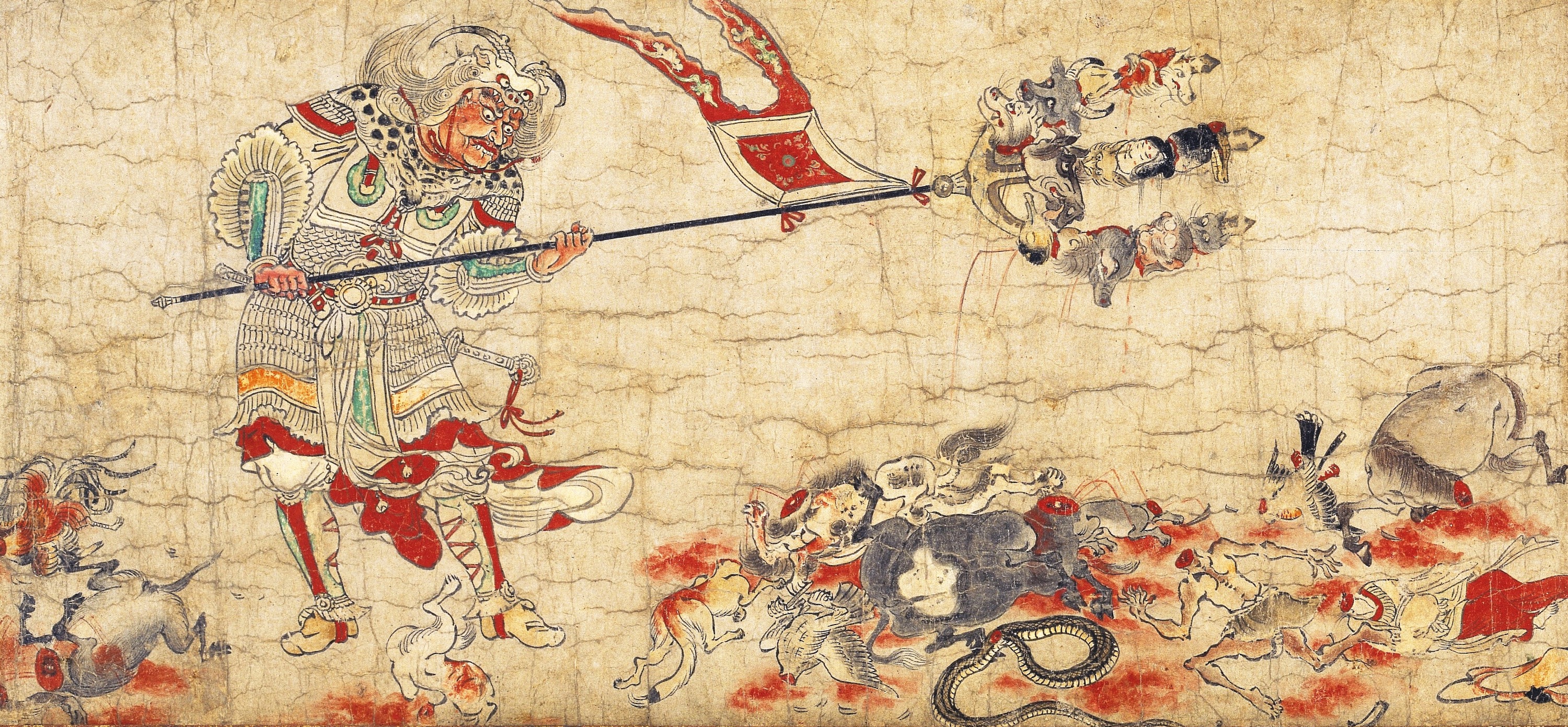
The California plastic ban that will be before voters in California next general election has been on my mind. Since I live in the only city that has repealed the ban after two years, I thought I would investigate the city council’s doings to earn such an honored historic distinction.

As usual, the war between environmentalists and big business wages. Environmentalists claim the plastic bags pollute and harm marine life. Big plastic says not so, and people will lose jobs if the ban is instituted.

No surprises in the world of politics. Both sides accuse one another of cheating, irresponsibility, and undue influence by monied folk, special interests. And so it goes.

In the end, it matters little the motivations–money or environment–behind the law so long as the law does what it is purported to do and people support it. The larger matter lies in individual responsibility to others, and not just with plastic.

When do we cross the line between a seemingly innocuous lack of consciousness of those around us–say, like my forgetting recycling bags–and conscious disregard of others? The “rugged individualism” (pride of this country’s founding generation and their progeny), pitted against the social contract based on a benevolence toward others with whom we live in society–an agreement to let live–always calls up that question. And not only for people.

Philosopher Peter Singer, in an interview with the New York Times opinionator blogger, George Yancy, earlier this year defined human disregard of animals’ as “speciesism,” when humans give “less weight to the interests of nonhuman animals than they give to the similar interests of human beings.”
Interests like survival in clean oceans, I imagine.
Whether we consider ourselves the shepherds of other species, a posture of assumed superiority, or we consider ourselves on par with other species and posit survival as the burden of each species, there is still a path that is neither too philosophical nor too patriotic. 
When we teach ourselves good habits, the correlative benefits to all society reverberate small and large. And we are such trainable creatures, we humans, if we have the will, both personal and political.
 

credit: http://vsknow1.com

Shhhh…

  
Shhh…don’t tell anyone.

I have a long, torrid relationship with her, my mistress and master both. I submit to her daily, as she owns me now. Though it was not always that way. She once hurt me badly, my heart and body, which caused us to part ways for many years, close to twenty, in fact. But I realize now that she had something to teach me, a lesson I needed to learn about myself–and her–before we could be together, merge our lives seamlessly into the desire and need we are about today.

I met her as a teen with big ideas. I was sixteen then and drawn to everything and everyone I measured as cool, earthy, and spiritual. I read about her in a book I purchased second hand from a used bookstore, and I was immediately lured to her mystique. There was something there I did not understand but wanted to know more about. So I read and learned about her, imitated her every move to earn me my cool. Until one day, I met her.

She was all she was cracked up to be at that first meeting: sexy, lithe, strong and flexible. Muscular and compact, she appeared the picture of youth, while she breathed ancient wisdom, emitted it from her pores. I was astounded and flustered in love.

And though our meeting ended then, we met again, and then again…for awhile…until the pain. 

I had to learn the hard way, as I always have. I was arrogant and needy. Not one to be forced and taken, controlled and overpowered, she left me howling, bedridden for months, depressed and injured. The love affair ended in the slow drip of time it takes to heal a body and mind.

When we later met again, I had changed. She had not. But my approach to her differed then from the earlier times. I did not need her, merely wanted her. I penetrated her eye to eye, then bowed. That made all the difference between us.

We co-exist now, as one. Since our reunion five or six years ago, she has never left me. We live with and through one another.

When I am down, face down to the ground but hips high to the sky, she takes me, makes my breath grow steady and strong; she makes me weep sometimes like this, too much to hold, my arms arrested for the weight of my body. She buckles my knees sometimes, how she holds me in her grasp, in her heart and her embrace, me and all who love her, whom she loves. And she loves.

 
credit:  http://ih1.redbubble.net

Writing Empathy

  
Eternal seekers, humans are also time travelers. Separated by comforting (but illusory) shelters–houses and skin–they journey among others and through others. A simple word, a name called out in a crowd, suddenly connects the speaker and the unsuspecting, in-his-own-world hearer in a moment of communal recognition. This is the magic of language. 

But beyond the word, driving the journey of sentences, is the uncoded language neither spoken or written: the language of compassion. Compassion is the foundation of every act of communion, not merely writing. We ‘read’ others with a willingness to believe them if they are true, paint the real of our experiences. Moreover, we empathize in reading and writing, experiencing or anticipating an other’s suffering or success. A story character we have grown to love falters, missteps and fails, and we grieve.

“The state of reading consists in the complete elimination of the ego,” Virginia Woolf wrote, and it is true. To be in the story, we must suspend ourselves to be others for a while.


credit: https://betterwritingnow.files.wordpress.com

On Writing as Suffering

  
Joyce Carol Oates claims, “The effort of memorable art is to evoke in the reader or spectator emotions appropriate to that effort.” And the effort is worth it. When our writing moves others, we affect, share and connect, thus confirming our oneness or perhaps experiencing that oneness as an ancient forgotten memory.

To reach out is to remember. The writer in all of us struggles to be understood through the code of language, a tricky bridge that requires constant constructing, honing, and refining to support the weight of ideas and experiences by which we convey ourselves to others. 

Writing is recursive, ever moving us backward and forward in thought and word–and in time.

Circling, it is an ever circling around the precise words to capture a specific piece of us we so desperately want to convey without misconstruction–that piece of the self we share using only the meager writing tools at our disposal. We search for words. Will this one mean exactly the same for my reader?
 
And the process of building sentences that flow into paragraphs, paragraphs into essays, is tedious. It takes patience. We must persist. Like herding wild horses, we must gather our unruly thoughts breaking wild in a hundred directions per second and corral them into the pen of ordered, confined blocks of coherent patterns. 

We must be painters and logicians both, fighting spirits within us.

credit: wikimedia

The zen of shop mopping

  
Nope, I will not write yet another wax-on-wax-off tale of patience and fortitude–not exactly. I can declare neither hate nor love for mopping to wring a lesson from the chore. And it is a chore, one that ends the night at the frozen yogurt shop after a long or short shift late at night. 

After turning off the “open” sign, I commence the real work of the night: twenty or thirty large and small tasks, including bagging trash, counting money, wiping counters, refrigerating perishables and washing dishes. 

There are tables, chairs, sinks, counters and machines to be wiped down; trash cans to be emptied, collected and dumped; and monitors, lights and signs to be turned off. Food needs to be collected, capped and stored. Money needs counting, sometimes re-counting, and the morning’s drawer calculating. Each of these tasks is not difficult or time-consuming but the sum total of task-to-task and back-to-front activity wears a body down, certainly sucks a mind’s attention down the drain with the dirty dishwasher. On auto-pilot.

So by the time the final chore of the hour before locking the door behind me to the other side where the cool, nearly-midnight air refreshes my sweaty face and tired bones, I am both excited and exhausted at the thought of mopping the entire store, the longest, most arduous chore of the clean up. 

Nearing the finish line, the mind takes the bloodiest beating in a marathon run. Roughed up for miles but patiently ticking the feet and hours away, the mind waits while the body mindlessly erodes. And just when the body gives out, its last shred of fuel expended, grindingly painful, the mind kicks in hard to turn the cogs, shovel the coal of the engine by sheer might and will so the machine will turn and one foot wil continue to be placed in front of the other to inch away toward the most beautiful words ever sported on a banner: “Finish Line.”

The most dangerous place, finish line in sight, is the likeliest place for injury. I want to get it done, sprint past the pain to grab the sweet god-like goal of stopping–to be done actually, not the mental done-ness of being over the whole run, race, challenge, training, preparation and completion thing that occured miles before then. 

But sprinting is foolish. Mistakes are made: a tired sloshy ankle gives way, dizziness or nausea may end the race at the medical tent, or longer recovery time incited by even more ligament and tendon strain than has already been inflicted by the previous 26 miles.

No, the better choice is to keep steady, rein in the mind’s anticipation and body’s blind adrenaline. When I have resisted the lurch–the mad dash to freedom–and kept my pace even and weary-strong, lifting my agonized thighs just a tad higher to lighten my cement feet for a slight spring to my chugging trot, I feel better, less miserable, and more attentive to the faces and cheers around me (a thinned crowd by then). Relishing the moments, I call it.

I do not relish mopping, especially after the mind stultifying hours of lulls and frenzies of retail that leave me aching to go home, actually anywhere far from slung frozen dessert. 

But mopping has its up side. 

Surprisingly, mopping involves a bit of know-how, technique, and physicality. Without a bit of coordination, the mop does not swirl, curl and swoop rhythmically and capaciously. Without the meditative steadiness of pace, space and motion in a dance of short-stepping, weight shifting, forearm tension and bicep propulsion, all in a swivel and sway of calculated spatial coverage, mopping feels and probably looks more like a wrestling match with an unwieldy, dead-weighted dragging opponent. 

Mopping too quickly expends too much energy, produces too much perspiration and inevitably leads to missed spots, besmirching reputation, calling workmanship and thereby a worker’s integrity into question–no pride in her work.

More importantly, however, rushing a mop across a ceramic tile floor deprives the mopper a pleasingly measured assessment of work in progress, a confident chipping away at an expanse, the satisfying glide of wet cloth strands across a slick surface and focused scrutiny of tile by tile smudges. Moreover, the muscle and dance of the mopping, a duet of synchronized synapse and lead-and-follow, is also lost. 

Attention to detail, to each inch of the mop’s path, unfolds appreciation for disappearing dirt slid to clear clean, and the running catalog of muscles fired in the process from wrist, ankles, balls of the feet, toes, calves, thighs, upper and lower back, buttocks, fingers and neck. 

All mindful movement yields connections to the eternal, a presence of doing and being. The deep listening of notice, of attuned awareness tricks time, averts the mind’s eye from pain to stillness–a sort of suspension–suffering to studied observation, a diversion ending in momentary neutrality and connection to the sideways slanting of life. 

Mopping–when the mood is right–takes me there.

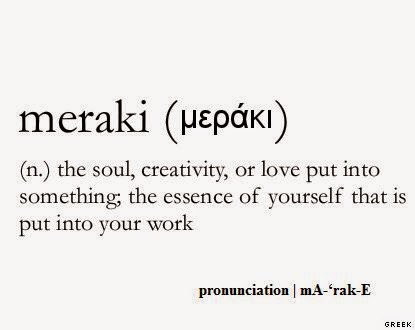
Meraki

  
The therapeutic rewards of writing have long been touted even before Freud and “the talking cure.” Writers write endlessly about writing as compulsion, art, creativity, release, documentation, imitation, recording, reporting and life. But my scouring of the web today yielded very little about writing as a gift. Correction, writing as a gift to the reader. I read plenty advice to write as a gift to the self.

I teach writing. I have often wondered not only what every teacher has wondered (and Kurt Vonnegut wrote about in one smart anecdote he told in the New York Times “Writers on Writing” series), if writing can in fact be taught (which I think it can), but what can teaching writing teach about relationships. 

Just like all roads in creative nonfiction lead home to the writer writing about writing, all teaching should lead to life, and what is life but relationships? We live in the world with other people–most of us. Relationships are relevant. Teachers should teach relevant skills, especially in classes teaching craft.

So, I try to impress upon students that grammar is life and writing is a gift, if you write consciously and conscientiously. 

Grammar is life. The eight parts of speech comprise the basic elements, the core of the English language. However, what something is, changes in relation to what that something is next to. For instance, when is a noun not a noun? When it is up against another noun, side by side, in a sentence. Often the first noun acts like an adjective such as in the phrase “road runner” or “nurse maid.” 

Similarly, a student sits in my class as a human being, perhaps a particular gender identified to that human. Sitting in my class, that human is a student, an enrollee and a peer. At home, he or she may be a sibling, a daughter or son, or spouse. People are defined by their relationships, where they are in the world–just like grammar.

And grammar is the coded order of our language, how we make sense of things. When we write–even for our own health or need–we write to be read by ourselves and others. To be understood is to write for someone else, to paint pictures, to explain something, to teach how to do something or vent, to name a few purposes of writing.

The act of writing is a giving. To do it well, to make it beautiful, clear, precise or illustrative, we must turn our eyes from ourselves to others, see like an other. What will my reader understand? What will it mean for the reader? My great gut-wrenching desire to get “it” right–just the right word–is the desire not only to create something worthy of respect, not merely catering to compulsion, but to connect a mind to another mind in a shared moment of thought or experience.

  
Wanting to transport something from inside the self to another self is a longing to merge with another. The writer and reader are lovers, always longing for being one.

credit: 

jarretfuller.com and illuminology.tumblir.com

Traveling OnĀ 

  
Emerging from the mountain forests, Dunsmuir.
 
A few hours’ sleep at a rest stop north of Eugene and we rise early to greet the day bleary-eyed. Hard travel brings back the days of recent college graduate pals taking a road trip across country on $300.00, Michael Jackson’s Thriller playing on cassette the whole way. It was the 80s. 

Passing through Redding, CA, I thought of you Holly and wondered how you fare. I saw your telephone listing for a massage therapist in the Redding White Pages a long time ago, which has not changed–no email address, no Facebook or Twitter listing. Maybe you no longer exist except in a journey I dreamed. 

That trip marked me, the wonder and adventure of freedom: two young girls setting off to see beauty up and down the west coast and across the Rockies to DC where Holly’s pastry chef boyfriend awaited and our fabulous meal at the Watergate Hotel with chef Jean Louis pulling out the culinary stops to impress him. Best meal of my life up til then (not hard given my humble beginnings). The VolksWagen bug Don had us drive, the one built by a friend, gave us hell, but I would not have it any other way. That VW thematizes the adventures and misadventures of youth without plans or time to savor–just doing. 
  
We laughed getting high and chasing deer in the Rockies until Holly got altitude sickness and I was tasked to figure out how I was going to get her out of the field and back to the car. I was so thin then, her too, which was unusual for her. She tended toward the thick. Her green eyes were fierce cat eyes, her brows perpetually shaped in perfect arches, a gift of her mother’s singing praises of electrolysis. 

I still see her putting on lipstick, covering the thin bottom lip and then using that lip to coat the nearly non-existent upper lip. I watched that so many times. I coat my lips the same way, when I wear lipstick, which is not often. And I think of her doing that each time. Amazing how time sticks to the bones of memory, especially from youth. I recall reading that those early incipient memories recall to mind the clearest due to their being memory-etching first-timers, before much clutter dulls a mind to narrowing newness.

  
The green of Holly’s eyes are unmatched to the green everywhere outside Southern California, which refreshes always. Flying into LAX continually reminds me that I live on a desert, brown and brimming in short scrubby smatterings of life thrust. The effusion of greenery near Portland contrasts starkly. Of course the cloudy skies also remind me of why. 

We search for breakfast. Driver’s choice so I prepare myself for sweet, blanched flour French fine pastry.

I have married my father, someone always looking for the next meal, the gourmand’s preoccupation. Only my father feasts at the other end of the culinary spectrum: Burger King hamburgers and fries.
   
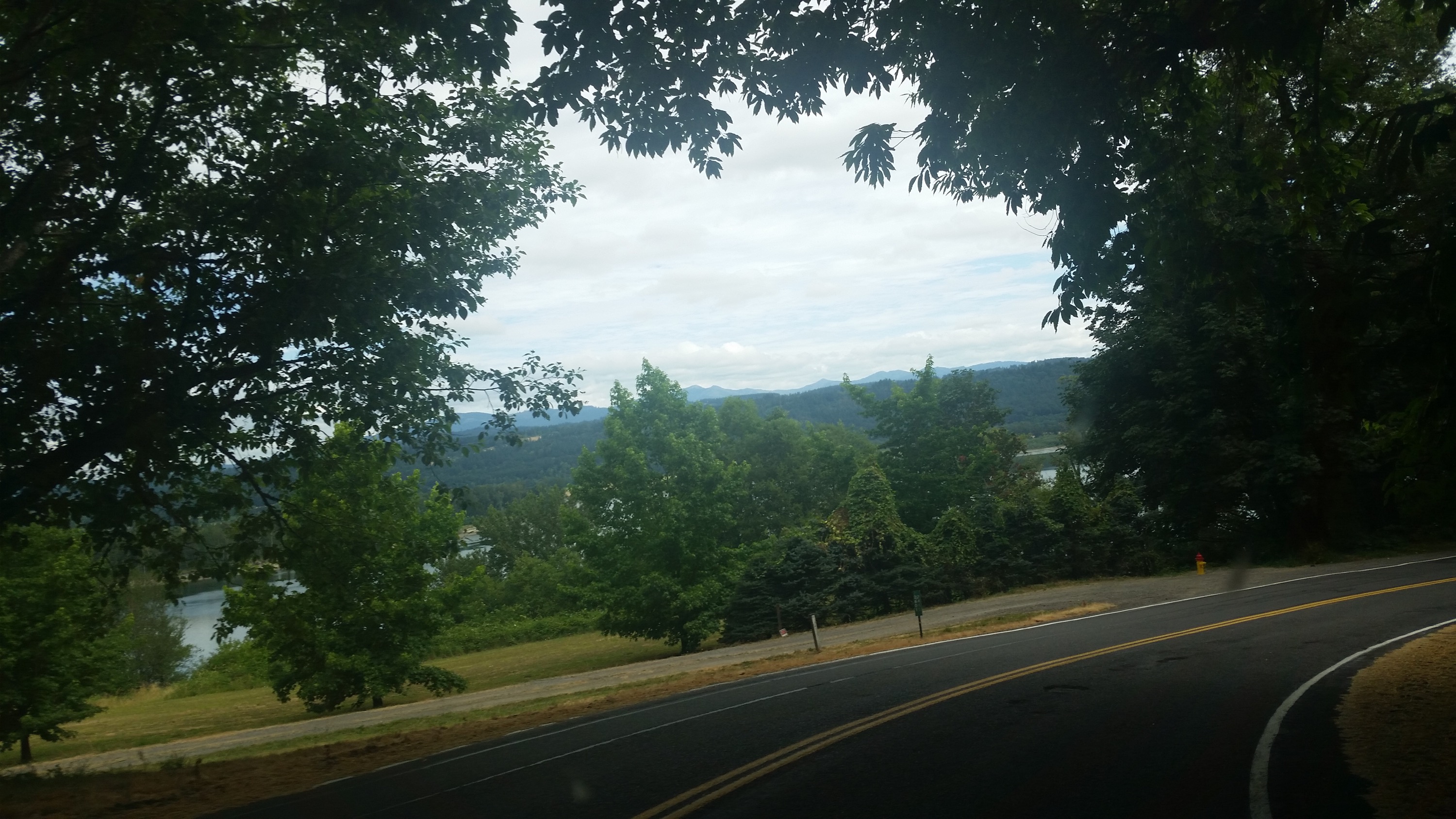
The Columbia River pours by in majestic pines, thick lush Douglas fir lined highways guided magisterially by the Cascade mountain range overlooking its charges. Keep green. Between the Dalles and Hood River, the sun bathes the trees, big leaf maples, Ponderosa pine, cottonwood and Oregon white oak, green glossy frost. The heaviness of the dense foliage leans in to the road with a threatening call. 

Crossing Bonneville dam, the daisies line the road spotty white among the tall wheatland grass and Western hemlock. Mountain crags, humps of black rock jutting through the pines decorating its crown like liberty, pop from nowhwere. Stone walls line a country road nearing the cobblestone bridge. And the clouds hover and stare.

  
Deforestation scars the mountain tops, golden grass exposed through the sparse trees, soldiers left standing in the war against industry, disrespect for the land, chunks of the grab gone for timber. Small vineyards orderly tucked behind a hill also pen the hand of man on nature’s back.

Hairy rocks, like my old man’s shoulders. What grows there on the spiny rocks fungus stained hard knocks of geological story?

4 hours outside Spokane.  

The four hour rest at the truck stop outside of Eugene refreshed what little remains of our spunk and patience. Traveling with two teens and their corny-humored father wears the patience of even saints. I am no saint. I am not remotely patient.

The mugs and the fire burnished hills, repaired by time and patience, sprigs determined to fulfill their seeded destinies. 

The Columbia Gorge, a myriad of textures and vertical measures, scrubbed to ethereal. 
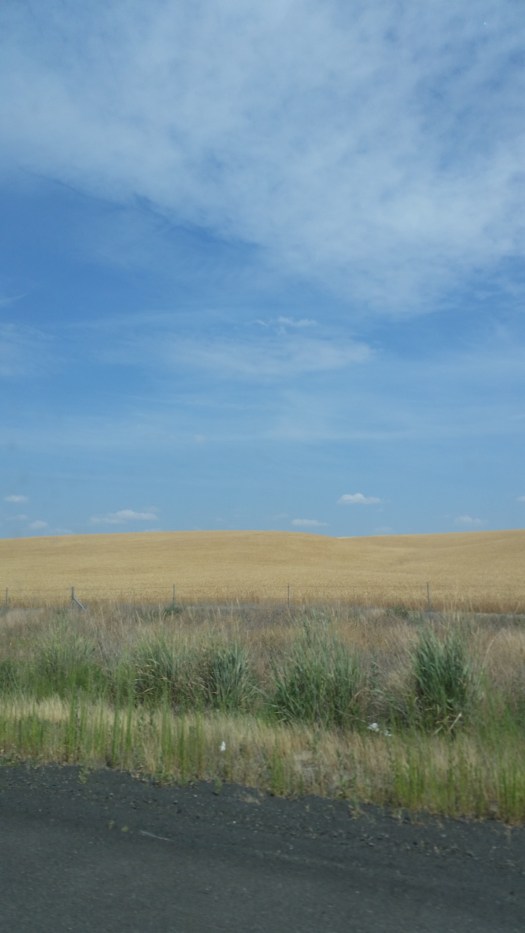
  
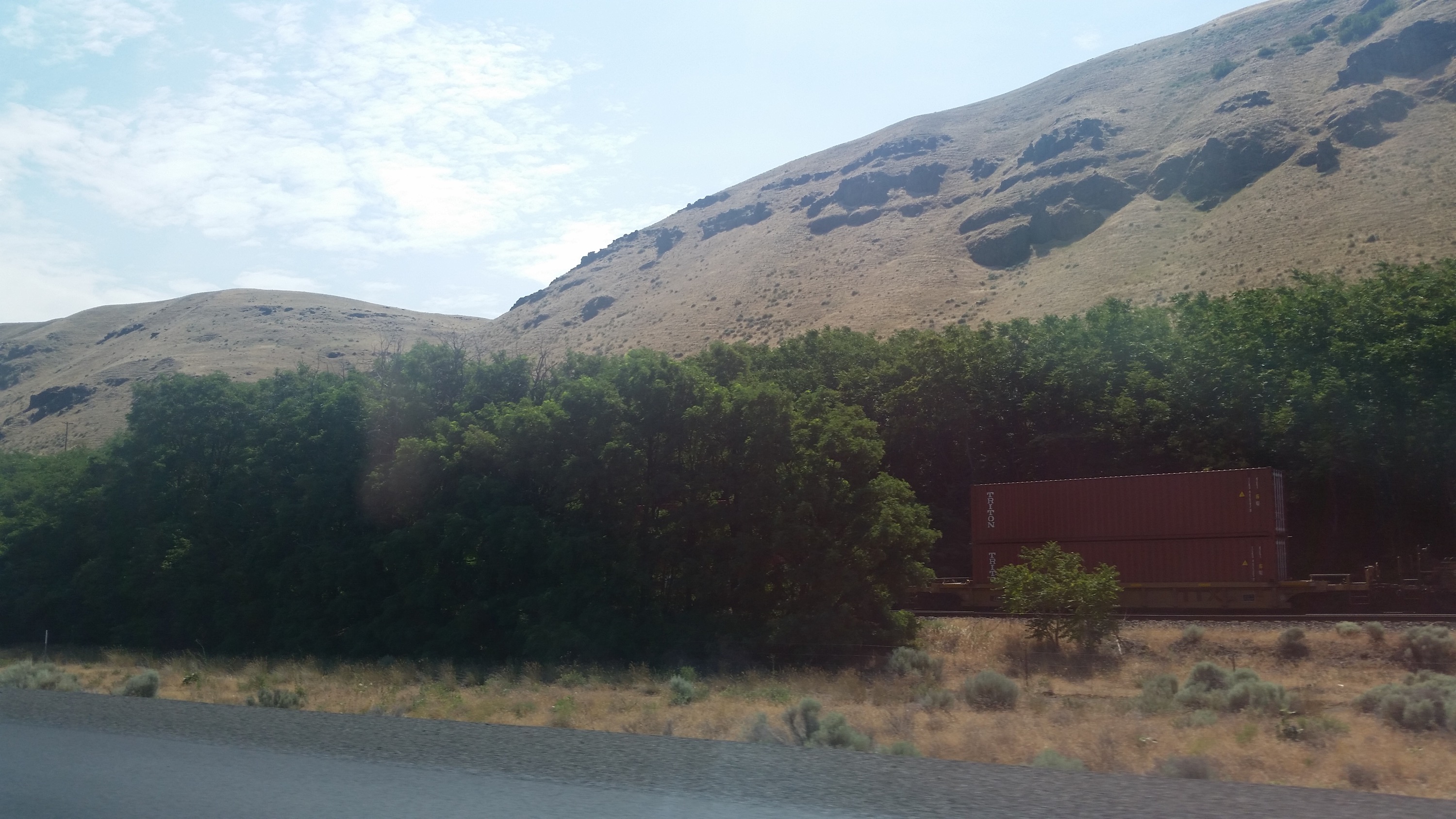
And the sterile blanched wheat colored hills remind us that altitude changes flora. The high desert provides stark contrast to the lush landscape of the Gorge. We must be headed to Spokane soon. 

A huge expanse of farmland and chaparral heading east to Spokane peppered with silos and green houses on near barren landscapes under a great polka dot open sky. The clouds form cotton balls. Water sprinklers look like sin here in a drought. Perhaps Oregon has forgotten our drought. California certainly has not. Water will drive the next world or civil war, I am reminded.
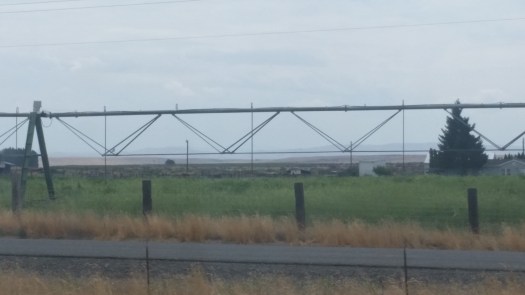
  
And the car ahead contains my two daughters speeding up and leaving us behind. Somehow that seems destined.

The hills are dusted with aqueous green scrub, mid-high interspersed with deep forest greens and kelly greens, hunter and sage too. The nature paint protrays delightful. Somehow I think artifical irrigation is the cause.

Umatilla Irrigon region.

And she is gone. Her sister will wean her these two weeks before returning as the lone twin of upstairs living.

  
He complains of the enormity of it, the lack of planning, the endless driving non-stop, sleepless roadside napping round the clock and the expense of renting a van with its out of state costs, yet the real vastness of disbelief is in her leaving. While nothing is ever permanent and kids go off to college and come back, live back at home, the leaving and living on her own is an indelible shift forever away from the cocoon years that stretched from conception to that first departure. 

She has left her childhood behind for good as the step back in will always be from a distance, a retrospect. Like unringing a bell, she cannot ever live the purity of those flexed years of growing up seamless from birth to first steps, first walking away to another’s hands in school, first kisses, first heartbreaks, and first flights of freedom. Thoughts of self, identity and independence color a life once only colored in coloring books, backyard swimming pools, trips to the candy store or tear-stained shoe box coffins for small beloved hamsters named Hammie. 

  
No, your beef, man, is not with us, our slap dash, rag tag impromptu impossible road trip, the one with endless miles of road bearing insights among the natural sights and blights of countryside and cityscapes of the northwest, sorely needed respite from the daily doldrums of grinding work hours and spatial deprivation you also complain about as likely to kill you. 

And here we are speaking lightly of the shame of it all, the clear cutting demoralizing the Oregon hills along the Columbia, deforestation in the Amazon rain forest and water wasted on the open expanses of thirsty crops along the Washington thoroughfare while our first born worries about being good enough to last, to make it under the pressure of intense competition and her own perceived weaknesses. 

  
Struggle coats our innards, the outside world only the mirror and consequence. 

But I caught a glimpse of wince in you yesterday, the pinched frown of devastating knowledge held in check–but not enough. Despair leaked from your downward cast lower lip and fallen eyes, a momentary slip of the heart spill. 

“You okay?”

“Yeah, it’s just Jordyn leaving.”

“I know.”

And we each look to our respective windows for escape into the landscape upon which we hurl our pain masked in observation, a costume of the fearful. Tears haunt us. Afraid to unleash the avalanche of suffocating cold loneliness threatening to smother us.

She’s Leaving Home

Not the right lyrics but the refrain is the same. We live like clichƩs: daughter leaving for college, we weep, we anguish, and we sever ourselves from ourselves to get past the pain. We cheer ourselves with thoughts of new beginnings and circle of life and metamorphoses, butterflies growing beautiful, upward flight past us.

It feels trite and real at the same time. Our lives have been captured in too many Hallmark poem-lets for sale.

I have anticipated this moment in my dreams (nightmares) since she was born, different shapes and scenery, but all the same theme: leaving.

She’s leaving home. Off to college, which will be her new temporary home in a new state. Whether the leaving is temporary or permanent is yet unknown.

In the meantime, I will be shoring up for the next one’s departure, estimated time of departure, two years or twenty.

Published on #RebelleSociety: Learning How to Shift Our Anger Out of Overdrive and Into Freedom

image


Please visit RebelleSociety.com and read the complete version of an essay I sketched on the blog a few days ago: Read itĀ here.

Blogging has been a fruitful enterprise for me creatively speaking, and I am happy to have maintained my initial pursuit and purpose for it as a sort of notebook of ideas and writings, both complete and incomplete, wholly raw or somewhat polished.

When I find myself in mid-spasm of angry spume, I calm myself with a gratitude checklist, one item being the opportunity to write. This blog has facilitated that.

Thank you all for reading. Ā Here is a treat: