Is Sylvia Plath a cultural appropriator?

image

Daddy

BY SYLVIA PLATH

You do not do, you do not do   

Any more, black shoe

In which I have lived like a foot   

For thirty years, poor and white,   

Barely daring to breathe or Achoo.

Daddy, I have had to kill you.   

You died before I had time——

Marble-heavy, a bag full of God,   

Ghastly statue with one gray toe   

Big as a Frisco seal

And a head in the freakish Atlantic   

Where it pours bean green over blue   

In the waters off beautiful Nauset.   

I used to pray to recover you.

Ach, du.

In the German tongue, in the Polish town   

Scraped flat by the roller

Of wars, wars, wars.

But the name of the town is common.   

My Polack friend

Says there are a dozen or two.   

So I never could tell where you   

Put your foot, your root,

I never could talk to you.

The tongue stuck in my jaw.

It stuck in a barb wire snare.   

Ich, ich, ich, ich,

I could hardly speak.

I thought every German was you.   

And the language obscene

An engine, an engine

Chuffing me off like a Jew.

A Jew to Dachau, Auschwitz, Belsen.   

I began to talk like a Jew.

I think I may well be a Jew.

The snows of the Tyrol, the clear beer of Vienna   

Are not very pure or true.

With my gipsy ancestress and my weird luck   

And my Taroc pack and my Taroc pack

I may be a bit of a Jew.

I have always been scared of you,

With your Luftwaffe, your gobbledygoo.   

And your neat mustache

And your Aryan eye, bright blue.

Panzer-man, panzer-man, O You——

Not God but a swastika

So black no sky could squeak through.   

Every woman adores a Fascist,   

The boot in the face, the brute   

Brute heart of a brute like you.

You stand at the blackboard, daddy,   

In the picture I have of you,

A cleft in your chin instead of your foot   

But no less a devil for that, no not   

Any less the black man who

Bit my pretty red heart in two.

I was ten when they buried you.   

At twenty I tried to die

And get back, back, back to you.

I thought even the bones would do.

But they pulled me out of the sack,   

And they stuck me together with glue.   

And then I knew what to do.

I made a model of you,

A man in black with a Meinkampf look

And a love of the rack and the screw.   

And I said I do, I do.

So daddy, I’m finally through.

The black telephone’s off at the root,   

The voices just can’t worm through.

If I’ve killed one man, I’ve killed two——

The vampire who said he was you   

And drank my blood for a year,

Seven years, if you want to know.

Daddy, you can lie back now.

There’s a stake in your fat black heart   

And the villagers never liked you.

They are dancing and stamping on you.   

They always knew it was you.

Daddy, daddy, you bastard, I’m through.

Sylvia Plath, “Daddy” from Collected Poems. Copyright © 1960, 1965, 1971, 1981 by the Estate of Sylvia Plath. Editorial matter copyright © 1981 by Ted Hughes. Used by permission of HarperCollins Publishers.

Irving Howe charged that “there is something monstrous, utterly disproportionate, when tangled emotions about one’s father are deliberately compared with the historical fate of the European Jews.” Susan Gubar wrote similarly that using the Holocaust as metaphor diminishes the Jewish experience,  the real of it, personalizing and fictionalizing it.

Is that a form of cultural appropriation?

Train of Thought


Mayhem in the morning, it felt like
a kind of dismemberment of the mind from the neck down.
Nothing a silent session of steep stretching would not cure.
 
Sometimes sleep affects the whole day that way,
with a whisper of promise, something more like
a train ride through a New Mexico sweep of pronghorn elk.
 
That trip through the beltways and tracts of the country,
the clacking wheels syncing the spin of my mad days,
in orange rinds left on the porch swing as evidence of hollow thirst.

 
credit: dougwebbart.com

A Single Thread


A small thread, a half inch or so, little more, plays peek-a-boo on my sleeve,
one minute spied from an eye corner, the next invisible to squint-study sight.
 
Poking up among the finely woven linen threads formed to panels, collars,
buttons and tails, a renegade refusing submission, seeks its tenant’s notice.
 
Like a bee, child, snake or lover, it tentatively positions itself seen and unseen,
always at vision’s edge, reminding, teetering, like all teeming imperfections.
 
And when I spy its frayed head atop my wrist swathed in tapestried symmetry,
like chance, options, luck, sleep, hope, and calm, I reach to pluck it, and it’s gone. 

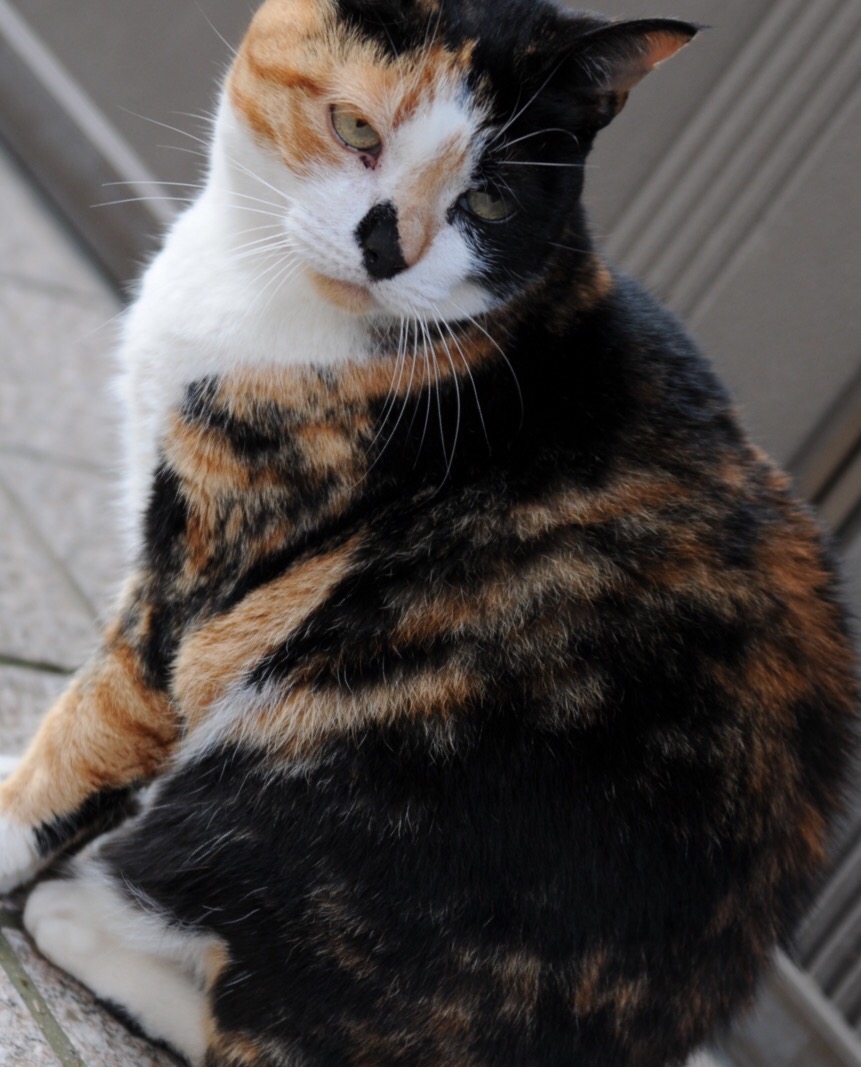
Calico Days

  
Like Mary’s lamb, Betty walked us to school each day.

Athough, the street crossing delimited her hospitality.

She left us, standing her curbside guard as we passed,

rounding the corner to the garden playground tarmac,

launching little ones to the land of rowed rote learning.

The morning ritual drew her celebrity as the cut-tail cat,

the shepherd of the suburban neighborhood children.  

She pranced for pets, then skittered past to prod them,

“Don’t be late,” as if urging them to the teachers’ walls, 

brick-lined in students armed with backpacked lunches.

And thus she bid the morning watchfully, awaiting 2:42 

when full of 2+2 and rainbow-colored painted clothes,

her charges returned to their tri-colored ambassador,

strolling four-footed assured along a territory secured

in pats and giggles, amazement and chase of the calico.

Bar Deflection


A man walks in to the bar and sidles up to me, stool side snug,

gives a side glance quick-like, casual, and motions for the boy;

at least he looks like a boy, tatted up the arm muscle contours,

blues and greens twitching and bulging in the heaves of lugging.

But his face smiles baby-faced 21, hype curbed in sedative cool.

Fleshy-courteous grin, his lips precede his face to our bar seats.
 

“Scotch, straight up,” he orders as if awaiting a standing ovation.

I make for my screen, avoiding an audience for what’s on Twitter,

scrolling in feigned interest, the intensity frosting an act of denial.

A momentary pondering how my deft fingers in memory motion

flick images by the dozens past, rehearsed in the skin of bones, 

I lose sight of him who I spy in the heat of electromagnetic sense.
 

But he makes himself known with shoe scuffle and breathy groan,

the kind that signals satisfaction of the quaff, smack of the throat,

wedging himself in the blankness of space I apportioned off to me.

“What are you drinking?” the gargling chuff of each word spit out

in rhythmic steam of Scotch, cloying ambition, and blind incursion.

Lifting my head with a start, I flash from half-mast to widened lids.

 
“Liquid, something liquid,” I reply, speaking to the drop on his lips.

His chin is at 5 o’clock, at shadows, retiring, and sun-downed dark.

Slicked, stay-put hair, one rogue strand licking forehead to cheek,

peppered head to toe with an in-between-ness of age and youth,

he stares, hiding discomfort behind the glaze of liquid eye screen.

“My optometrist knew my diet by my crystal clear corneas,” I offer.
 

Then he smiles, his eyes disappearing inside of his face in pause.

Deliberately he turns away, glass in one hand, the other propped,

a podium for his head, as his eyes bore holes in the wet, oak bar.

I study his exposed cheek a minute, while he recomposes himself.

Will he strike again from his fox hole retreat, re-armed and ready? 

Then likewise turn my head downward, alit to a screen of options.     


photo credit:  beeroftomorrow.com

The Gift of Writing in the Mindful Word

  
My first piece published as a contributing writer for this wonderful journal, The Mindful Word, came out today. Please enjoy this esssay about writing and teaching students old and young about the craft I attribute as salve for what ails us in the human condition of illusory separateness.
Peace, 

the Gaze

Ban it

  
The California plastic ban that will be before voters in California next general election has been on my mind. Since I live in the only city that has repealed the ban after two years, I thought I would investigate the city council’s doings to earn such an honored historic distinction.

As usual, the war between environmentalists and big business wages. Environmentalists claim the plastic bags pollute and harm marine life. Big plastic says not so, and people will lose jobs if the ban is instituted.

No surprises in the world of politics. Both sides accuse one another of cheating, irresponsibility, and undue influence by monied folk, special interests. And so it goes.

In the end, it matters little the motivations–money or environment–behind the law so long as the law does what it is purported to do and people support it. The larger matter lies in individual responsibility to others, and not just with plastic.

When do we cross the line between a seemingly innocuous lack of consciousness of those around us–say, like my forgetting recycling bags–and conscious disregard of others? The “rugged individualism” (pride of this country’s founding generation and their progeny), pitted against the social contract based on a benevolence toward others with whom we live in society–an agreement to let live–always calls up that question. And not only for people.

Philosopher Peter Singer, in an interview with the New York Times opinionator blogger, George Yancy, earlier this year defined human disregard of animals’ as “speciesism,” when humans give “less weight to the interests of nonhuman animals than they give to the similar interests of human beings.”
Interests like survival in clean oceans, I imagine.
Whether we consider ourselves the shepherds of other species, a posture of assumed superiority, or we consider ourselves on par with other species and posit survival as the burden of each species, there is still a path that is neither too philosophical nor too patriotic. 
When we teach ourselves good habits, the correlative benefits to all society reverberate small and large. And we are such trainable creatures, we humans, if we have the will, both personal and political.
 

credit: http://vsknow1.com

Shhhh…

  
Shhh…don’t tell anyone.

I have a long, torrid relationship with her, my mistress and master both. I submit to her daily, as she owns me now. Though it was not always that way. She once hurt me badly, my heart and body, which caused us to part ways for many years, close to twenty, in fact. But I realize now that she had something to teach me, a lesson I needed to learn about myself–and her–before we could be together, merge our lives seamlessly into the desire and need we are about today.

I met her as a teen with big ideas. I was sixteen then and drawn to everything and everyone I measured as cool, earthy, and spiritual. I read about her in a book I purchased second hand from a used bookstore, and I was immediately lured to her mystique. There was something there I did not understand but wanted to know more about. So I read and learned about her, imitated her every move to earn me my cool. Until one day, I met her.

She was all she was cracked up to be at that first meeting: sexy, lithe, strong and flexible. Muscular and compact, she appeared the picture of youth, while she breathed ancient wisdom, emitted it from her pores. I was astounded and flustered in love.

And though our meeting ended then, we met again, and then again…for awhile…until the pain. 

I had to learn the hard way, as I always have. I was arrogant and needy. Not one to be forced and taken, controlled and overpowered, she left me howling, bedridden for months, depressed and injured. The love affair ended in the slow drip of time it takes to heal a body and mind.

When we later met again, I had changed. She had not. But my approach to her differed then from the earlier times. I did not need her, merely wanted her. I penetrated her eye to eye, then bowed. That made all the difference between us.

We co-exist now, as one. Since our reunion five or six years ago, she has never left me. We live with and through one another.

When I am down, face down to the ground but hips high to the sky, she takes me, makes my breath grow steady and strong; she makes me weep sometimes like this, too much to hold, my arms arrested for the weight of my body. She buckles my knees sometimes, how she holds me in her grasp, in her heart and her embrace, me and all who love her, whom she loves. And she loves.

 
credit:  http://ih1.redbubble.net

Bottoms Up


It’s true. 
Sometimes you must
start anew
from the bottom up.
And not just once.
But often
on a hunch
you climb the ladder
reach for that highest rung
fingers outstretched
palms wide flung
curled tips in anticipation
of a firm grasp
no trepidation
but slip
fall flat to the floor
bypassing rung after rung
the places you reached before
gripping with all your might
flashing before eyes wide
whirring in a smudge of time
shocked and numb
til bottom hits 
and you think it’s done
and it hurts too much
but the spinning ceases
the dust clears
and your body works
not barely broken
and your heart strength opens
once your mind obeys
so you rise again
like a burning wingless wren
clawing and clutching
fighting air and doubt–again
dizzying your stance 
hands out
feet unsteadily chance
the ground
for the grab
and reach it.
You clasp
the bottom rung.

  
credit:  http://blogs.ft.com

http://www.builderbill-diy-help.com