Technology Ticks

  
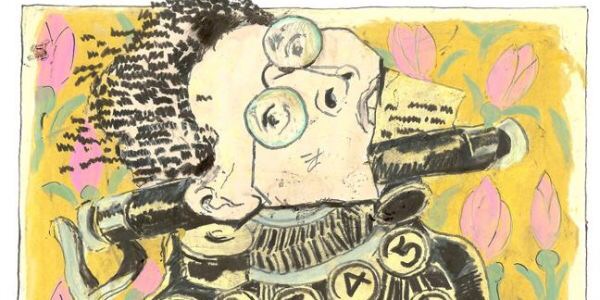
Technology ticks like hiccups gone mad
torment a novice’s grip on poetry’s feast
when mind’s immersion in patterned plaid
yeans unleashed growls of a gnarly beast
 
Screaming primal tones blasted in bleeps
a machine shunts me into mental mayhem
one along shattered nerves a fault creeps
and cracks open wide calm’s cool diadem.
 
Clicking across railway ties’ smooth sound
the wood of imagination settles a twitching
and rust scented bark draws images round
deep strung in a tapestry’d poem’s stitching.

 
photo credit:  mediadpublicbroadcasting.com

The Morning After


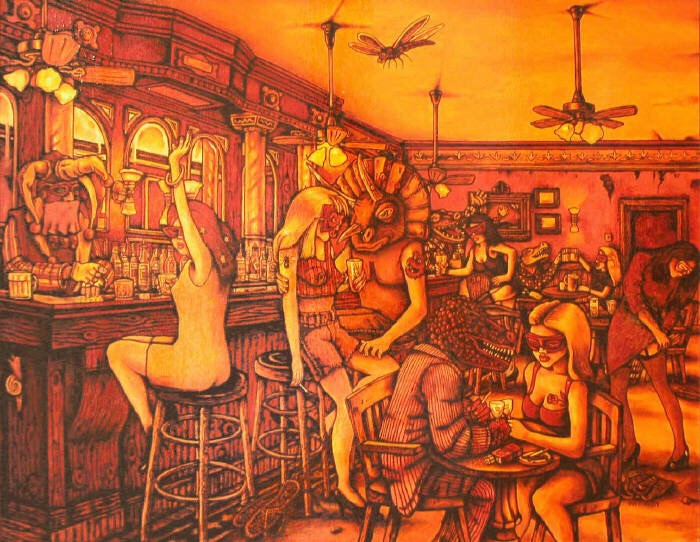
“He was such a creeper, he made my skin crawl.”
She spoke with squinted nose and eyes sucked in tightly drawn to the center of deep disgust.
“Where did you meet him?” I sipped lemon water.
“A place called ‘After Hours’ on Beach near Central.”
She shuffled the boot leather sole of her left foot underneath the quaint table dressed for two.
Its mate was folded up underneath the back pockets of her 501 Levi’s firmly squat into the padded seat.
We used to meet at this corner cafe often; she was married then.
“He spit when he talked too close to me and had a dripping smile, loose grin spun widely–and loud.”
I conjured up with a shudder the stale beer, punishing electronic drum beats and the glint of a greasy stare too close up inside the parameters of my circle of heated breath.
“He thought he was hilariously funny wishing me ‘good morning’ at 9:30 at night with a wink as if he could make it happen just by saying it.”
Sinking inside with an outward sympathetic half smile, I inwardly groaned at the enormity of it, like Sisyphus’ burden this giant gap of want, need, ties we seek just to sever, never have and don’t even want.
photo credit:  http://media.brainz.org/willmon

Late Awakening (Haiku)

  
I awoke too late.
The alarm clock in my dreams
Dripped down a table.


Photo Credit:  Salvadordaliclocks.com

I took the poetry half marathon (thepoetrymarathon.com) challenge yesterday, which started at 6 a.m. The object was to write one poem an hour for 12 hours. I underestimated the difficulty of the task, especially with so much life interfering, but did end up finishing and producing 12 poems, which I will post for the next 12 days.

The day did not start out auspiciously with a late awakening after a tough time falling asleep the night before (might have been the late night chocolate bar–just a guess). So I had to start off with a bit of a cheat as I was pressed for time (Haiku is still poetry, no?).

The Hunger


Silent morning crashed by knuckled knocking–

“Do you want breakfast?” he asks like clockwork.

A man who eats to fuel his quest for the next meal.
 

I remember the bed and breakfast crawl we made

visiting New England in late fall of the festival trees

the first snow of Vermont outside a barn-turned pub.

 
The magic peppered with the strafing questions like

“Do you want pizza? Are we getting soft serve?”

And we just finished breakfast not even an hour ago.
 

We laughed and sighed heavily too mocking the man.

Mom was herself then and could join in the jeering.

This man she married from birth delivering herself too.

 
Broken windows, airless in vomitous heat of rat breath

this sweat shop he worked in nearly all of his adulthood

feeding too many mouths that barely spoke to his image.
 

He convinced himself from so fateful a day–stay boxed

when only he tripped on the rug pulled under his feet

by friends joy riding days to sweet steals, jobs or dying.

 
A mind goes empty in the cabin of fear dank and dark

communing with foreign tongues, solemn shells of skin.

Like solitary confinement for 48 years, no one remains.

 
So we dwell on the asking, the feeding, breaking bread

we two who watch our center fold in on herself slowly

eking death out slow-steady for lack of a conversation.

 
“No, I already ate,” he hears expectantly but undaunted.

“Come on. You’re too skinny and you need to eat more.”

Words endlessly cut and pasted on a screen of our lives.

 
Other words fly scatter shot red-orange like those trees

the ones in New Hampshire that year we traveled miles

from my rage-ful grimace, head banging steering wheel.

 
Remind me of a father’s daughter teetered on seesaws

lifted by the weighted desire dreamed in obedient love

and grounded earth bound to shackled birthright chains.

 
Invisible strands heated like electric coils of metallic sin

knit our knotted ties seemingly eternal yet dust shallow

as we journey the branches we are and make complete.

 
The insatiable consumption of air heats the moving parts,

wills an engine movement to carry bodies across lands  

upon which fathers and daughters feed the mime of time.


Late Afternoon Blank


Late afternoon, she asks the silence, “How many nows do we get?”

Infinite, as time slips past the moment always–no one answers.

Must be the caffeine under load, the crash after so many hours awake.

“These particular seconds feel dry, in need of plumping,” she adds,

sucking dew-lipped petals in bloom while sprig leaves turn in shame.

Amid the giants slashed beaming rays the sun dust coats the light

pastels of the sky drooped through the branches spill chestnut 

splattering solid pane of an ever adulterated blue, one poison pale.

Arc of the illusion, placid rivulets dribble past plastic encased feet,

“I know I will never pass here again, this earth, this sky, these trees

at this time of day.” And the hiss at the tail of the “yes” lingers a little.

The crackle of vinyl absorbed whistles becalms the watching birds–now.

An empty canvas missing minutes lies blank, only us inside at the edges.

 
photo credit:  http://frothmagazine.com

Camping Inside Out

 
The world as colors and shapes, moving forms

a distance, silent mouths forming wordlessness

a seat at the window safely piggy backs society

the vitrine protection dividing in from out unreal

keeping clicks where they belong, in finger flight

and pad ticks, far away from the tongue stealers 

those who would en-web you in their sale spells.
 

Where I finger thrum on wood thin counter tops,

jittering quick shot the espresso electrical shorts

and spy on the unconscious pacing and dodging

the bots with electronic ears in elephantine slog

they drift and separate, crawl inside their spaces

cocooned til the spring of their dawning moment

the one where memory reaches the track’s end.
 

Those mouth dropping shock seconds of where-?

When did the wall of puzzle pieces appear and

how long ago did the trash can cut music notes

while the airbus busied itself as a kids’ toy store?

The pajama’d trees passed me by while I sped

past birch beads encircling a neck slip into brew

dipped in twenty true coffee grains indissoluble.
 

No matter for the mindless masses none notice

but for their double exposure, shadows on glass

juxtaposed on a manicured verdure hip and free.

Brown on black, olive on pale, face to facing skin

empty gestures mock and mime the cruel illusion,

one that paints them imperfectly distinctive matter.

This art breathes no reason splayed and kneeling. 


Published on Rebelle Society: Ananda–Count Your Bliss-ings Not Your Troubles


Please enjoy my article on Rebelle Society, a wonderful, impeccably professional and delightful site full of creativity and practical information as well. I have been a fan even before the editors accepted my first submitted essay on February 7th of this year. Good fortune visited me the day I happened upon them in a search for something compelling to write about on a lackluster day creatively speaking. I go there often now just to get a lift.

I hope you, my dear readers and happen-to-drop-by visitors, take some pleasure from momentary ananda my words may inspirit.

Peace, 

the Gaze

Ananda

A lover of poetry and yoga, sex and wine, and family and friends, I, like the rest of humanity, yearn for blissful moments. And though I am not a scholar of Sanskrit or the Vedantas with its Hindu terms in metes and measures, I sometimes look to their words for understanding bliss–and for creativity.

On a particularly grey day of dreary weather and woe in the face of loss–my mother’s withering mind, my oldest daughter’s going off to college next month, the recent loss of my second career in the kind of misstep that leaves me in awe of how close we all are always to falling into the margins–I contemplate bliss and its countless manifestations just to cheer me up.

However, more often I catalogue my gifts to inspire longer-term goals like grateful living and daily writing.

We–my lingual species–take for granted words like bliss, happiness, joy and even sadness, depression or despair, the ready words to capture nuances of feeling. Yet, as a complexly feeling people, we enjoy labeling the colors of our moods, one of the many inheritances that distinguishes us from other earthly creatures.

Bliss, with its thick, rich history and vibrancy steers us through that complexity as it soaks us with recognition, sense and order. The feathered tendrils of meaning that touch upon its neighboring moods captured in “pleasure” and “delight” create extensions that reach down and through our lives.

Whether we search the Oxford English Dictionary or the Vedas and the Dictionary for Spoken Sanskrit, Ananda–the Sanskrit word for bliss–wholly resonates the thought-emotion from the eternal to the local. I often write on it for poetic inspiration, especially when my mood and writing discipline falters. Its order and principles cure writer’s block.

When I am stuck, I, like the Sanskrit Dictionary, begin with Pleasure, a term with associations ranging from the simple, like the tickle of childhood in watching the mercury bubble gurgle to and fro inside the glass of an old-time thermometer, to the ecstatic, like orgasm from an in-love-with lover or the runner’s high amid the stillness of a solitary crisp morning run along a cow-lined country lane in the heather of Central France.

Pleasure alone is not enough, however, for the distinct flavors of bliss parsed from the Sanskrit. Thinly sliced from Pleasure is Sensual Pleasure, which I must confess drives my daily experiences. Lure by all that teases the senses, I can close my eyes and smell the house-filled aroma of garlicky tomato sauce simmering and feel the headiness of inhaling the sweet, milky scent of my infant’s skin.

Poetry writes itself to the earliest memories of my mother’s fingernails stroking the scalp beneath the thick curls framing my resting head in her lap.

Two others related to Sensual Pleasure are Sensual Joy, found in a late Friday afternoon nap, unclothed and entwined with a lover, and a Kind of Flute, an instrument hollow and wooden or a vessel for champagne, both soothing and stimulating the ears and mind. The memory sounds of dancing to South American pan flutes puffed outside the market in downtown Caracas and toasting in the new year floats in the buzz of the bubbles and sway.

Which is a different high from Delight, a sharper edged bliss compared to the roundness of pleasure. I find it in placing that last piece into that one perfectly matched squiggly space left in the 1000-piece jigsaw puzzle or the twenty dollar bill pulled from the pocket of my jeans one unsuspecting morning.

It’s the imagined lightswitch on when it all makes sense.

Happiness strikes me as less spiky than the sparkle and shine of Delight, deeper set and sustained: the mood makes us skip down the path just because…it is a lightness in the step, in the being. But turn happiness up a notch to a swelling sustenance to the heart and you have joy.

Joy catches us unawares, say, when a mother turns from her busy-ness to spy her infant’s gaze following her every movement. However, Joy’s cousin Enjoyment is quieter, less a beaming and more a warmth, though no less satisfying. For me, it’s a book to live in for a while; the first bite of deep, dark, smoky chocolate; or the silent spell of a Shakespearean sonnet.
But Pure Happiness is seeing the fruits of our efforts to help others ripen and blossom or the awe of creating another human being through unimaginable struggle.

Yet another bliss, Cheerfulness is not so much a mood as a temperament that drifts between internal and external space: the unforced mental smile naturally unfolding at the thought of another day as another opportunity to get something right or the gleam in the eyes of the genuine gift giver.

Some types of bliss follow strife, a sort of relief as in the contrast of high pressure to low. I imagine this sensation in Sanskrit as End of the Drama. I think of it as resolution after the struggle, war, riot, tussle, or tragedy and in another bliss–a Thing Wished For–the triumph of acceptance, often a satisfactory ending to a poor beginning.

Reaching to the sublime, Beatitude anticipates the first spring blossom clearing the snow face, break-through acts of kindness, a helping hand when all hope is lost, a miracle, and nature’s whisper. Somehow related in my mind, One of the Three Attributes of Atman or Brahman in the VedAnta Philosophy means a sort of holy, the oneness at the tip of the final exhale concluding meditation.

And in all things comes the contentment in order: Name of the Forty-Eighth year of the cycle of Jupiter intuits that human comfort in prediction and patterns and the recognition of the unknowable vastness, the multiverse, of which we are merely particles from planetary bursts—as well as the burden that knowledge relieves.

And finally earthbound and encircling ourselves, bliss is a Kind of House like all shelters that provide the safety and security that we imagined as children gleefully building blanket forts in the living room.

A trick of the mind or a daily devotion, inventorying all that makes us happy not only soundly defeats the writing doldrums but potentially pulls us from a slump, maybe even depression. The habit balances us–if not as an antidote, at least as a partial cure for the ills of a day or a life–and improves health.

A day when even the sun seems to let us down is perfect for cataloguing gifts and counting bliss-ings. Let us begin with Ananda.

Note: Classifications of Ananda are in the Dictionary for Spoken Sanskrit; definitions are in the mind of this star gazing poet.

Offering

  
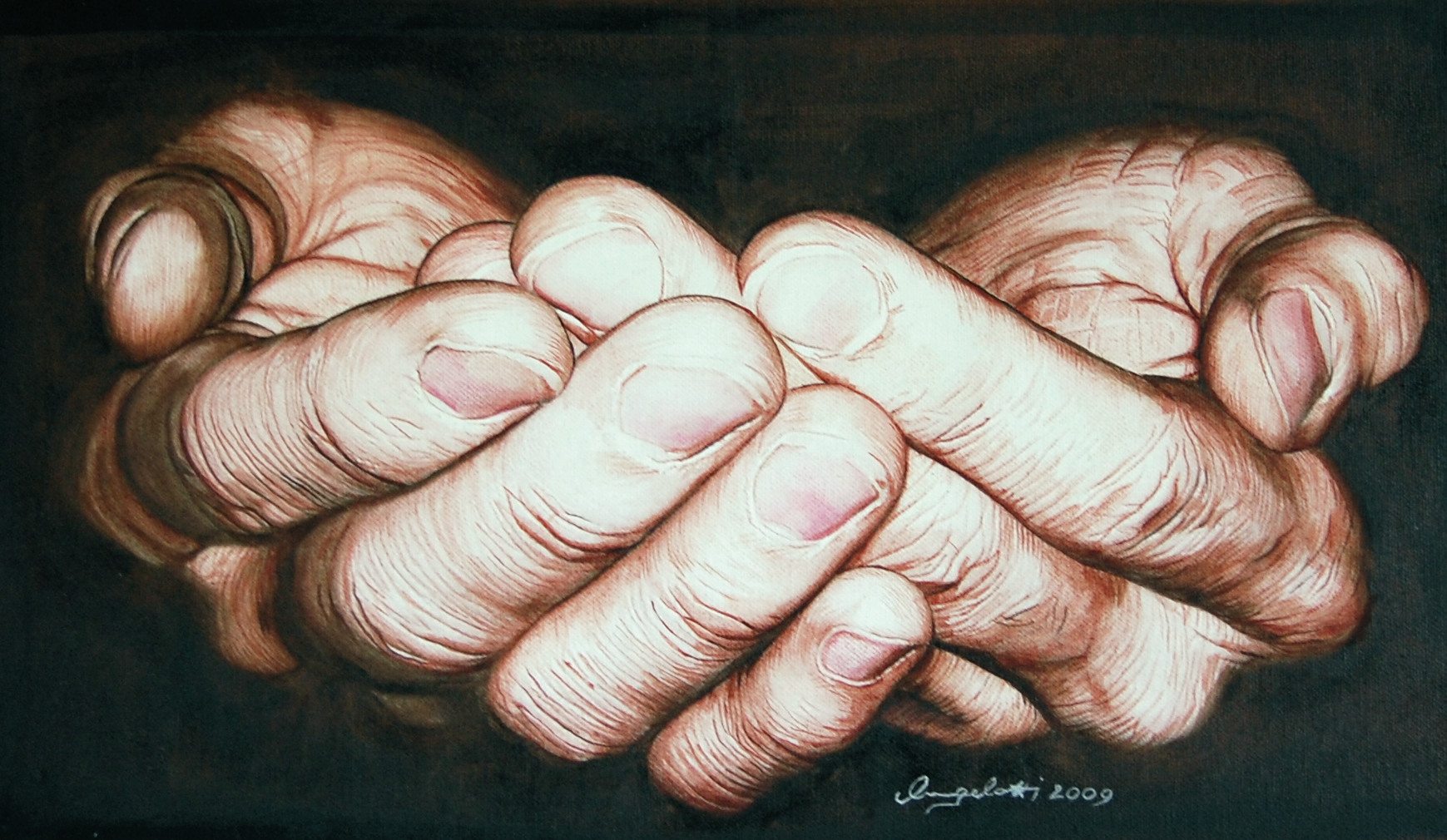
In up turned palms of prayerful offering, 

soft words cupped like baby talc 

coated thighs on which a solitary salty drop 

lands lifting feathery mist of dusty scent, 

I hand precious sense without language. 

No vessel to contain this thing, 

cradle this wordless um, huh, uh…

hum of tremble, soundless sigh, 

flicker of static sinking into swollen thick 

wall linings, padded and mucid 

in dank uterine hospitality clinging

bound for blastocystic burgeoning drift.


photo credit:  http://wp.production.patheos.com/blogs/spiritchatter/files/2013/11/offering-hands.jpg

Just–in time

She barreled through the classroom because she was a barrel, as wide as she was tall, and she was tall. Young, vibrant and cheery with an obvious eye for the boys in the classroom so much so that even I knew at a sullen and cynical 14 that she craved attention. Perhaps her size measured her insecurity.

She had ink black straight hair, long, parted in the middle falling down her back. Her thick black eyeliner matched the color of her hair and framed her deep brown crinkling eyes. She smiled a lot, teasingly–especially with the boys.

I resented her flirting in slight sexual innuendo, all for male attention, just like I disliked my mother’s constant catering to my father who, in return, called her “fat ass” or “sumbitch.” An adolescent of the woman warrior seventies,  I believed in taking no shit. Miss Hill’s pandering to the scarcely post-pubescent boys was shit; it annoyed me, which conflicted with the attraction to her enthusiasm for my favorite subject, English.

I wanted not only to like her, to take her seriously, but for her to notice me, despite the quiet and unprepossessing persona I wore at the time. An ‘A’ student, I yearned to be recognized for my smarts–my perceived strength.

“This is a wonderful piece, something I can see Janis Ian or Carole King singing,” she scrawled in large, deep-ink flourishes in my journal. She had assigned a journal at the beginning of the year, instructing us, the class, to write our thoughts–whatever we wanted–just to incent us to write. With such loose parameters, I wrote poems, cherished song lyrics, doodles and observations, all of which added up to my solitary, dark, introverted teenager dreams and drama.

Music–all kinds–made my world back then: everything from hard rock/metal to folk to classical. Before that sophomore year, I was a cellist. The local elementary school offered music lessons to third graders and so I learned the cello (after the music teacher grabbed my hand, looked at my long fingers and decided cello it would be instead of the violin I and everyone else pleaded for). I played second or third chair in the orchestra throughout my school years up to 9th or 10th grade when I perfected a full time recreational weed and boys pastime.

I especially loved fine lyrics: the poetry of Joni Mitchell, Neil Young and Dylan. That year Phoebe Snow sprung on the scene with Poetry Man, which prompted me to buy a couple of her albums. Her warbling jazz-soul sound, intoned from a space between her nose and throat in the register of a deep tenor or high alto, intrigued me. And some of her lyrics spoke bitter-sweetly about disappointment, fear and inadequacy. I felt her.

One song in particular consumed me so that I memorized the lyrics after too many spins of the vinyl. The title described my life–as I felt it: “Inspired Insanity.” The piece still holds a foundational place in my music history more for its statuesque placement from an impressionable youth and sentimentality than for its musical appeal.

In fact, a friend recently asked me to name a favorite song–seemingly impossible–but for the qualification that it somehow represent me. Instinctively, I named “Inspired Insanity” more likely from habit or history than actuality, but it was the first song that came to mind.

I’ve since moved across ample fields of genres and artists to add much more sophistication and style than her simple folk-jazz temperament into my listening repertoire occasionally moving back again to folk, where music returns time and time again: think Tracy Chapman in the 90s, Iron and Wine a few years back and some of the ballads of current bands like the Weepies of the Indie folk rock genre.

It must have been what I was going through at the time as a moody self exiled 14 year old in a New York winter hibernation, either loneliness, disconnection or generalized angst about me in the world. But the song spoke the yearning inside: “Help yourself to my new clothes. Borrow some of my daydreams too…You can call me hung up but when I call you, don’t hang up the phone…Come visit me, inspired insanity.”

Perhaps I felt taken for granted. Or simply taken. My mind did not register quickly enough all the outside motivations, what strangers or acquaintances wanted of me, and so I created misunderstanding. My intuition absorbed into analytical musings always. Books not people amused me, made me feel lucky, desired, understood…made me feel. People were not my strong suit. But 14 year olds generally don’t do people well.

I only knew I craved attention for what I could master, and I excelled at school. I had cracked the code of teachers and books long before, so I kept my eye on the coveted ‘A,’ did what I had to while enjoying some of it along the way. My ‘A’s’ were the teacher nods that validated me.

So at mid-year, when I read her praise, replete with exclamation points, next to the journal entry containing the entire neatly penned Snow song, I silently shrieked, panicked with the horror of the mistake.

“She thought I wrote this?! Oh no!!”

Instant shame, embarrassment, fear and flattery combined to redden my face, flushing heat all the way down to my ankles.

It had been painful enough to deliver my thoughts and poems to her, a stranger reading my creations, my penned pretties, not just the usual rote academic scribblings, but I consoled myself in safety of the teacher-student relationship. I trusted she would never ask me to bare my soul only to betray me by reading my work to the class. She may have even given such assurance in assigning it.

Not like in 9th grade when Mr. Rowe announced to the class that the creative project would be performed or read to the class. Back then, I combined my two loves, writing and music, and somehow mustered the courage to play a recording of a song I wrote and performed on the guitar. The ballad told the story of an assigned text, A Single Pebble, the Yangtze River Chinese gold miner who braved the forces of society and the river and lost (unless you count the immortalization by John Hersey). The image of my reserved former self does not comport with that project choice, but the certainty of the recollection cannot be denied. I can still sing some of the song.

But the song in 9th grade spelled pure victory in an earned ‘A’ for work performed, finished and collected. If memory serves, mention of using the song to accompany the reading for future classes echoes proudly (whether real or imagined) in my mind’s ears.

Not so this mistaken praise. Though mortified, my ego beamed with the attributed talent of writing such a song, which translated into the belief in me as a poet–or a songwriter, at the very least. I could not help but conclude that the other poems in the journal led her to believe so. Otherwise, how could she not detect the difference in style, the clear polished finish of the one song compared to the other driblets of word leakage (the estimated worth of my creative endeavors)?

So, though I feared she would discover the song some day and judge me a fraud–burned with the humiliation of that thought–I did round back to the idea that she presumed; I did not misrepresent. I assumed she would figure it all out, while simultaneously dreading she would not. I had little faith in human capability or not enough experience to realize that she most probably would not even remember the whole incident. She, a 22 year old, teaching her first job probably, had more to do and think about than one song in one journal of her dozens of students in several classes.

However, the scene often played out in my mind of her buying the album and hearing the song, so familiar in some way, and not knowing why. Or, the flash of recognition coupled with memory of first reading the song would conjure up my image before her eyes: the quiet student who dressed in coveralls, flannel shirts and construction boots (the original Doc Martens) and wrote poetry. Would she color that image with respect for my musical tastes or disappointment in the assumed attempted fraud perpetrated on her–even if the assignment was ungraded?

It doesn’t matter. I know. The minuscule moment magnified in my mind from teen hood speaks louder to the undigested lesson, the latent effect of that experience. Somehow I registered (or chose to) that someone recognized me as capable of producing publishable work, something as good as Phoebe Snow lyrics (which in hindsight proves less poetry than song, raw and unpolished; I mean her lyrics without the voice through them fell short of spectacular). The 14 year old me sensed the twinge of an inkling of a promise: perhaps I too could create something worthwhile, a source of another’s delight or ease of sorrow.

If only I could withstand the collective gaze of others.

Eventually, I did adapt to scrutiny. Inspired by past small successes and fleeting acts of bravery, I pushed myself through the paralysis of stage fright, figuratively for me but very real for Phoebe Snow (and Joe Cocker), and performed, wrote and occasionally sang for my living and others’ entertainment.

Real inspired insanity–sometimes frenetically and other times serenely–produces beauty, wisdom, advice or instruction. Its seeds can be found in frozen undetected time tucked in between the blinks that flutter chaos and creativity, and sway a life to the left or right. Perhaps the heat of a blush imprinted a dormant notion that unlocked itself in time, just at the right time, when I began to write–without fear.


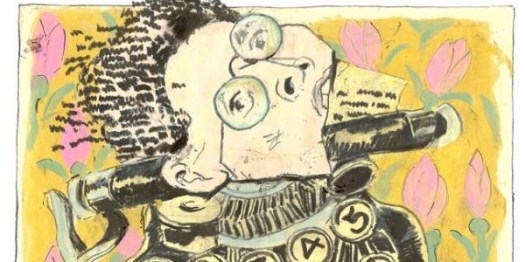
image credit:  http://wewantedtobewriters.com/wp-content/uploads/2012/05/Chron-Higher-Ed.jpg