Bar Flight


credit: http://images.fineartamerica.com/saulnier


Sitting at the corner bar, satisfying the urge for a beer and relieving the boredom jitters, I’m tormented by indiscriminate shouting of barflies and distant diners lining the walls of the dark, decor of seafaring ships, anchors and fish. Sea legs. Clearly this place lacks intelligent acoustic design, much to the chagrin of the owners who honestly tried to reduce the clamor crawling the high ceilings, especially with a yoga studio above it. I once heard the story, sitting at this bar with M many months before.

My girlfriend’s already signed off for the night, so I am unconcerned about my phone’s rings, dings and buzzes. I am wherever for whatever. Thinking about the last time we met at the hotel for a quick grope and a tickle, sneaking a hurried sigh and a fierce kiss, my mind smiles, my face impassive.

The pretend-lover is off somewhere in the night, leaving town for the week tomorrow, as the story goes still smoldering in the musk stains left in my hair, emitted in the toss of my head as I spy the inhabitants of this sultry Thursday crowd. At least we got to do the fuck-and-lie before the morning’s 8 a.m. departure. What’s the weather like in the Southeast?

Often it’s the simplest moment that lingers on the tongue of my thoughts, savored in sensorial bites: a shy side glance of the twenty-something deeply brown-eyed half of the pair sitting on the stools next to me sends static up my spine, an imperceptible eye-twitch, my senses on electricity. What does it mean?

I crave quiet corners most of the time, am in love with intimate spaces with or without another. In an unsuspecting moment, memory flashes the scent of heat rushing from a wall heater mixed with bleach and sweat in a dark room in mid-afternoon while we nap, your arm dead over my hips and belly. 

Though the time is so little, so simple, it stays. Maybe that’s the draw, the beauty of it, it’s simplicity and freedom to be whatever we need it to be, something of our own creation without the stress of trying to make it be too much, like living and planning and being together, which is complicated and full of friction. Our island is tiny and sporadic, though well-timed. Maybe it’s the island that is the draw more so than I. 

His wife hates him as much as she loves him, that’s what the bar fly kitty corner to me yells over the blaring music to his companions. I wonder why. Perhaps she cannot stand the way he mispronounces the names of her favorite artist, or his snoring, explosive anger, criticism, taken-for-granted use of her body for his release coupled with the inability to fulfill her because she never figured out how that could be, relied on him to figure it out, but could not relax enough to let him, guide him or even try.

Nat King Cole croons “Unforgettable.”

Filling out a daily diary of calories in my phone app is tedious, a task I assigned myself as consciousness raising more than dieting but it has, like so many other healthy exercises enthusiastically commenced, deteriorated to an obsession. 

The same guy three stools down shouting over the next song, a 70s favorite I recognize but will have to focus on more if I want to remember the artist and title, whinnying really in a high tinny voice, about his divorce and how his wife regrets the divorce being the way it was. Also, his daughter and plans for spring break to be with her and her friends, Abbey her name, is really shaping up. Oh, so a divorce has permanently taken up residence in his conversation. The ex hates and loves him.

The divorce story’s addressees are a big bald dude and his Asian-looking companion, petite and smartly dressed with discreet cleavage, smooth-skinned soft peaks demurely and tastefully displayed below a string of pearl-like gems. She speaks with an unidentifiable accent. Like her, I am only half listening. The divorce story seems to be aimed at her, a polite, captive audience, while her boyfriend baldy winks at her looking away from the divorce tale-teller. Divorce guy wants to be heard. Baldy stays quiet, polite agreement here and there. He wants to be home fucking pearl girl. “That’s the way God meant it to be in some ways,” Divorce says. I missed the context of that statement.

Brings me back to a lover and his week of agony, strife with the wife, severe enough for him to act deflated, distracted passion, wildly unusual, so that I had to ask, as he collapsed away from me and sunk into the mattress, fists fretted together, face pinched in deep furrows, what was the matter. Did he expect me to sense his grief and ask? He is not as mysterious as I once thought. 

In our fifth year he took up confession; home life was bad, stressful, not good for the kids, he told me, the emailed story unfolding in exclamatory bursts, philosophical resignation, religious retreat and cautionary reminders. I did nothing to provoke the last so have to conjecture: it crossed his mind, the thought of leaving, running to me, but he got scared or sober or logical. He tasted the bitterness and stinging hate of hurt and revenge, the loss of power, prestige and pleasure, time spent with his children, too soon gone. 

Imagined scenarios of our making are the engine of creation, the mechanics of our story trotted out for each other to admire and merge into on cue.

Hate, vengeance and righteousness of god, fashioned to her fundamental beliefs in a church that spreads the selective word of a deity who manifested love, she believes he must be the man she wants him to be. The wont of their ilk is to toss sacred words to trump one over the other.

An ancient story repeated, their love grown in children and the grace of goods bought and sold, possession of a union, a house, a garden, two cars and a dog, they loved and rubbed each other right until it was wrong. Humans are pattern makers. God chuckles.

But he was clearly jarred, sorrowed, repentant, and seeking comfort in a resolve to improve, surrender, endure and abide, a solution time tested. Biding time is what we do. Some call it the journey. With attention, it is often referred to as presence, the fullness of time and the conjoint spirit of one. I am content. 

I prefer small pockets of pleasure disturbed by the occasional deep, destructive pothole in the roads I travel. So many lovely beings reach me, their intentions like silk tendrils of touch-full caressing care and wonder like Debussy’s Bergamasque piano silently accompanying the undulating drift of bar meanderings.  

“I will be unavailable to you that week of your return.” I told him that, and he let me go.
 
Divorce boy just informed baldy’s girl that he is going to finish his bottle of wine, though he apparently has had enough, and try his luck picking up on some girls situated elsewhere in the bar. The incongruence of girls in a bar strikes me. 

I have seen divorce boy passively sitting at the bar before–beak-nosed and paunchy with a deceptively young face, not unpleasing. He tries. I am not here often–eight or nine times a year–and the last time I was here he was too. Look at us, the lonely people. 

The two women to my left are pouring the remainder of their wine from their glasses back into the bottle. All neighboring eyes are turned to the task, like a netted tightrope walk to safety, the risk not too terrible but for the stains. The two young women have been sharing a small space, huddled in the corner of the bar, phones in hand illuminating the luster of their eyes and lipstick, checking social media, I presume, and speaking in tones reserved only for them.

Big baldy says, “I’d have to kill the guy.” Clearly man talk. I cannot imagine the stool mates to my left saying that kind of shit, defending their territory. Like R. He would do that, kick someone’s ass who looked at me had we been daylight lovers, out of the bedroom partners in a real life relationship. But I speculate.

How far can a fantasy stretch? What does anyone need beyond a little relief, some tenderness to ease the strain of survival? Maybe nothing. A will to bend, a neck crook for a weary head, an arm flung over a curled-up thigh and those who know your name may be the sum substantial of existence.  

The Good, the Ugly and the Human: a Tuesday Musing


Credit: http://m1.i.pbase.com


To be a good human being is to have a kind of openness to the world, an ability to trust uncertain things beyond your own control, that can lead you to be shattered in very extreme circumstances for which you were not to blame. That says something very important about the human condition of the ethical life: that it is based on a trust in the uncertain and on a willingness to be exposed; it’s based on being more like a plant than like a jewel, something rather fragile, but whose very particular beauty is inseparable from its fragility.
Martha Nussbaum, philosopher

Ruminating about abandoned love lately, I wonder how humans, a number of them anyhow, can open and shut their hearts with such certainty in such an uncertain world. How does one end a relationship, long and loving hard, and thereafter eviscerate the heart-memory of the once cherished object of his or her love, the light in his heart, the heat in her loins, never to speak or think of the other? Where, precisely, sleeps the graveyard of deep emotional attachment?

No one can control another to the degree necessary to keep and savor that other, to anticipate fear and resentment, illness and death–no way to squeeze answers to the riddles of human behavior.

To be exposed is to be vulnerable, open to danger, criticism, injury or death, whether physical or emotional. Who does not fear the ending of a relationship that houses everything, one that contains all of the self thrown into it?

Dedication to the notion that love means giving all to another bears some responsibility for the resulting grief and betrayal after the end. A piece, some important part must be held back, some core or foundation must be withheld in order to keep the self and the other intact. To invest all is to have everything to lose in life’s uncertainty: love’s cessation, life’s leaking despair, disability and death. 

The burden of possessing every morsel of another being trumps pleasure, smothers desire. 

Many believe the heart cannot survive loss, a conviction that obstructs the happiness that inclines a good human. To withdraw from others, from a lover or society that disappoints, having been badly burned, merely reduces risk of exposure; it does not prevent calamity or inevitability and so a doomed attempt to control a world in hopes of preventing further hurt and loss. 

Humans cannot surrender their frailty without losing their humanity–or their beauty, according to Nussbaum. The good and happy human is unafraid. The tremulous unhappy merely encircle the tenderness and delicate skin of being with armored excuses and persistent tasks that disengage and anesthetize the will to enter the fray of the raw and unknowable–the human circus of flight, fancy and faith–forever locking doors behind them.

If I Could Savor…


If I could savor all the bits and pieces of love I have shared

–with or without someone else–
and store them in a capacious safe place 
such as a warehouse, 
a bank vault 
and my heart, 
all in one, 
to draw upon on days like these after a night of angst and tremor, 
there would never be a moment of worry, 
of terror or dread, 
no steam of regret or anger, 
for all would be washed away in the oceanic amour reservoir. 
I have loved so much so often, 
it is a wonder there is any room for other invaders to besiege my mood, 
disrupt my sleep or daytime dreaming, 
none to spare for jealousy and greed, 
envy and hate. 
Love has filled all the cracks, 
poured off in excess to inundate the floor of my soul, 
completely submerged in pooled good will and heart offerings that bind. 
Or so it would seem on sheer mathematical principles alone. 
So many loves, so many times.

Is there any fiercer love in so fragile a bundle than the adoring eyes of an infant 
following and studying her mother’s face? 
No matter the need, 
there is brimming love un poisoned by desire 
and machinations of how to get that in my pocket, 
in my bedroom, 
or in my bank account.
No matter the illusion, 
the source is there in wide open hazy eyes 
studying the mystery of the powerful impulse 
to forego sustenance in order to drive nearer the object of an overwrought mind 
and wretched will to be in the presence of the beloved. 
The road is endless until a fluid destiny culminates. 

I asked a friend, 
and me, 
on occasion: 
How could there ever be a lonely-cold day of wondering where she’s gone, 
who she loves now, 
when she gave up so much of her herself, 
her ambition and freedom, 
the dream job and impassioned call to the city’s illuminating sights, 
to be with you those many years? 
Did you not collect those trillions of minutes and safe-keep them in your house, 
hidden in the darkest corner of your room, 
the moments of her bottom lip brushing yours in tender, 
have-spilled surrender to the night, 
your heat enveloping her breath, 
deepening her sleep to the pallor of death’s neighborhood? 
Where did you send those beats’ resounding 
if not through that mighty pump thrusting it off 
to venture through the veins of your mind’s nettings? 
Draw them now; 
paint the joy of that brush of your mother’s thin fingers through your hair, 
your grandfather’s whistling from the smokey yard, 
giant barbecue tongs in hand, 
your toddler’s honey sticky fat thumbs on your cheeks, 
your lover’s call in the late night longing, 
your sister’s tearful embrace, 
the memories of moving childhood laughter pinched in her arm’s muscular grip, 
and the first step in the door of the home and hearth 
you have craved for trillions of minutes endured away.  

Love is strong. 
I have heard of her lifting a car to save her baby 
and her loss heavier than the bloated body at the bottom of the lake. 
It does not dissipate for the air cannot carry such weight. 
The heart cannot contain it all, 
and the mind cannot grasp it. 
Love must reside in the thick rubbery green of the rubber plant 
hanging above my porch, 
or in the orange of the sky at dusk, 
or in the olive and pink sheen of my daughter’s freshly showered skin, 
or the ancient brown of the spots on my mother’s cheeks 
or the muffled sound of my father’s cough from the other room, 
or the musk of the classroom still lingering even after long summer months  
or the squeeze of my hand just before I approach the podium for my closing argument, 
or the earth of an emerging bordeaux on my tongue, 
and the thought of growing old with the world.

Sentimental Morning

Yesterday I read in the Huffington Post the story of A.J.’s 25 year affair with a married man, her divorce lawyer, on whom she had grown dependent for love, money and herself. Her story is familiar. She filled a space that was her, missing most probably due to the abandonment she felt in childhood, with him, but came to realize after two and a half decades that only she could fill that gaping hole.
 
The hole in my heart couldn’t be filled by anyone but me. I had to love myself more than I loved anyone else. Even him. Finally, I understood.


We walked out of the hotel onto Park Avenue, and without another word to him, I turned and walked away.
 
This morning I awoke from a dream the last vision of which was the face of my husband of nearly 35 years, smiling, his head leaning on someone else’s shoulders, completely content. 
 
No one has made me weep more in my dreams than he has.
 
Though we are no longer intimate, we share a connection deeper and more profound than the silence we keep about what went wrong and what is right.
 
Love is more than dependency, but its shape and character are dependent upon lovers. There is no doubt that we fall in love with love and all we imagine it to be, including that leaning, literally and figuratively, on another. Our hearts resound solitarily in our chests, but the primal urge to sync our rhythms to the beats of those hearts walking beside us is unimaginably fierce. We don’t want to be–alone.


Graham Nash — A Simple Man


I am a simple man
So I sing a simple song
Never been so much in love
And never hurt so bad at the same time.
I am a simple man
And I play a simple tune
I wish that I could see you once again
Across the room like the first time.
I just want to hold you I don’t want to hold you down
I hear what you’re saying and you’re spinning my head around
And I can’t make it alone.
The ending of the tale
Is the singing of the song
Make me proud to be your man only you can make me strong
Like the last time.
I just want to hold you I don’t want to hold you down
I hear what you’re saying and you’re spinning my head around
And I can’t make it alone.

Speaking for the Bees


“It’s not about what it is, it’s about what it can become.” 
― Dr. SeussThe Lorax


Workhorses of a seething-bustling, 
strange, 
misunderstood 
and alien world that we barely see
its glory and gore
acidic stew of swallow
and cilia claws 
burrowed below
but for the infrequent frightful protrusion,
intrusion,
extrusion, 
threatening a sting, 
a bite 
or a siphon
sipping the living juices of us,
savagery in the encounter.
 
And yet they sustain those who would crush them,
self-defense or not, 
fill the undergirding of our world with germinating life, 
exchange and commerce in wildflowers of the fields, 
manicured gardens of urban rooftops 
and edges of the sand dunes. 
They nourish us with sweet meats 
of the trees 
and gifts of the earth’s panoply of gallant beauties
pageantry of roses, peonies and daffodils,
and green godly goodness of cabbage cool,
beans of the vine
and broccoli floret 
walnuts
almonds
Brazils
the browns of nutty seas.


You, pinpoint friend, swap the day away, 
flitting from one sweet hollow to the next 
wearing, 
ingesting, 
carrying 
and dusting yourself with your wares, 
plying your trade 
and all we breathe better for it
and eat 
and expire
respire by your daily toil, 
though your armies are micro
populated,
though thinning, 
smallest of the small, 
and most benign. 
Some will warn
look away
not to watch,
not to near 
or interfere
or swat 
our swelling flesh worse for the encounter.


Carpenters of the Carribbean, 
homed amid the yuccas 
and woods 
while others gnaw at our backyard decks right here. 
Crow swims in sunflowers and black-eyed Susans, 
carpeting himself the golden sun, 
while sumptuous sand specialists 
hang in the hills of North Carolina 
or the Eastern Shore dunes, 
skimming the edges for life. 
Affable-bliss, 
drunkard, 
drinks from his nose of a tongue, 
buzzing about the Badlands, 
sucking up sweets from the wells of bells, 
trumpet trollops of honey delight, 
a piña colada of rum and pineapple pollen bits.  
But big old bombus and Metallica and modest-us, 
modest in size, 
half a rice grain wide, 
who carries her goods inside, 
a vomitous gift 
her babies survive
or they die
too sick
sparse
poisoned
murdered
by un-notice
unseen
unheard
unfelt
turnaway.


Health of heart, 
health of earth, 
home to hordes
4000 kinds strong
all native North American
only 40 left home
to honeycomb here
home to homo-cides
ignorants
polluters
stung-greedy
core-less
suicides
who
deny
if they are we are.

Spring Reprise

image

Credit: https://www.google.com/search?q=finch&client/

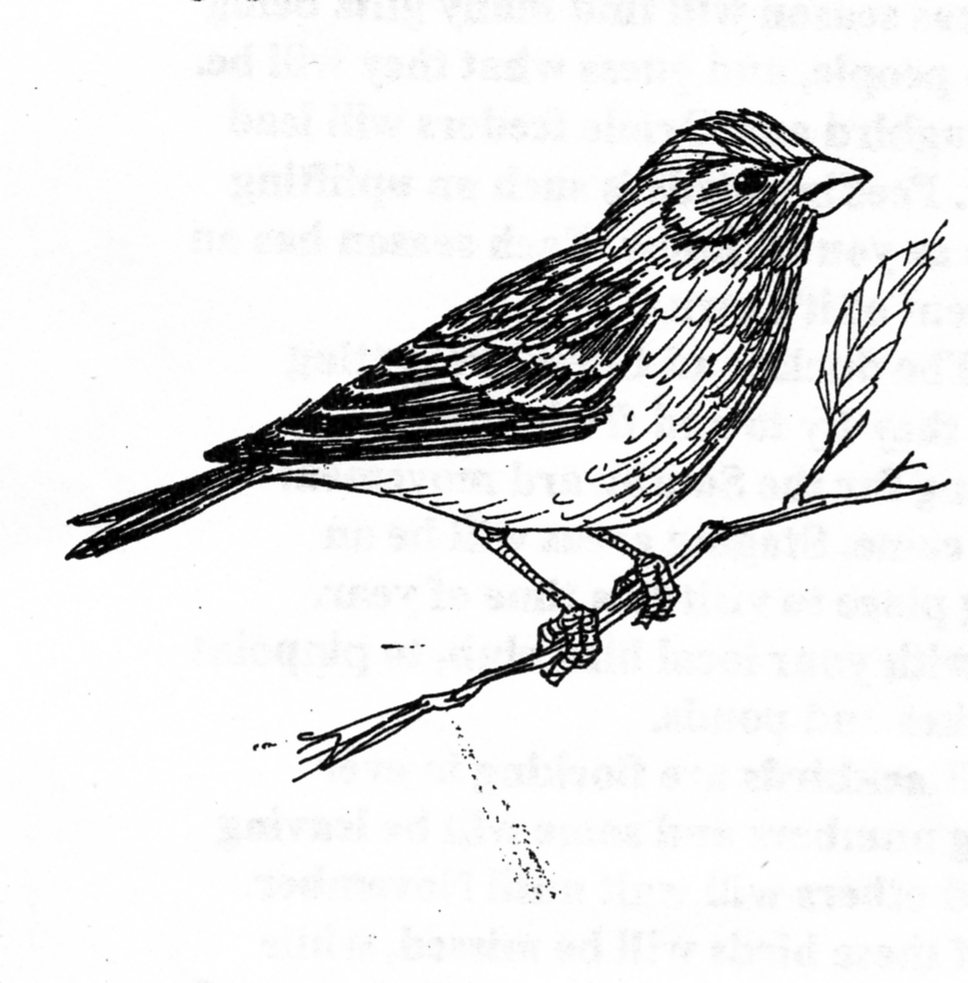
Who stirred the flock of tittering, flit-footed finch flecked in winter’s burrowed stains brown and beige, a creamy crown distinct among peers assembled among the weedy fields and woodland edges?

A rogue among them, dressed in greedy golden coats of late summer’s stolen glints, gallantly arrogant in his per-chic-oree to a frenetic furrow of mad foragers, frowns from inky brow.

His nest–in spring–already fit, his queen awaiting, while the others peck among the thistle and dream to nestle golden wheat for seed-ful warmth when the heat of late season pairing in pale blue-egg tender caring lingers in hazy heat’s beckoning, he circles once in condescending flutter atop the crowd and darts in great goodbye to lazy longing of life to come.

A single black blink of an upturned unctuous eye winks in return, his bony beak enclosed upon a woody pea, exposing shriveled tongue in willed withdraw.

Greater gold yields edge; straw blown fire burns quickly.

A milky corona hangs crookedly, askew, among the feathery reeds on the skull unseen from heights  among the dun of an earthen sky.

March, her equinox anew, changes everything–again.

Nature’s Nature

image

Cedit: bhaktifest.com

Barren landscapes whooshing by in the night give eerie silk to headlights passing blindingly by.

In a sun bleached desert morning, the dew dissipates in an hour’s half, measured in pinches, wet epitaph.

Does the rocky sand ache for the sea?
Does the Joshua tree lean west in search of company, no grassy wheat washed field at its feet?

A star-speckled spread of sky edged upon the mountains’ shadow imbues the blue of night in echoed song sung in endless open muse:

The ocean’s deep remembers me. I am complete.

A Touching Tale of Healing Touch


Evan was not my first love. My heart framed in poetry books, I sought love early. By fourteen I had had my first heartbreak and by sixteen, I was initiated to the world of embattled sex my mother fear-burned into me:  woman as fortress and men as invaders.  


It was the 70s and free love was the slogan but not the practice. I was not the only young woman who paid the bodily price of losing what I did not understand I had–self-love, real love. 


So when I fell in love with and married a French man a few years later, love was permeated with heady visions of Romantics like Byron and Wordsworth, but sex was informed by the attitudes of Plath and Sexton, hardened and cynical. 


In my mind, love and sex were distinct and only the former was indispensable.


I loved Jean-Marc, but we were not so much “in love” as we were good friends. To me, that was more important. 


Besides, it was clear I was not his physical type. He had had a girlfriend when I met him in college, a French goddess of natural beauty, as if she emerged from the heather, golden smooth skin delightfully coating her delicate bones and showcasing her eyes of sea blue. 


She was the essence of what I deemed poetic femininity at the time. And I was nothing like her, not delicate, soft, supple, petite or graceful. I wasn’t French. I was New York, bookish and big. 


But several years into our marriage, I grew thinner, more athletic. I struck a lean, tall figure with improved grace and balance from running and tennis. I had transformed the book worm smoker of pubs and diners around New York to an outdoorsy athletic competitor in California.


When I separated from my husband, I was in the best shape of my life, 28 years old with a hard body everyone noticed but me. 


That is when I met Evan.


Evan taught me to love my body. I met him after my husband confessed that he was in love with someone else, a friend he had grown up with in France. Even though that relationship did not pan out, both of us needed time to sort things out. 


In reality, the separation between us occurred long before, had been growing inside me. Jean-Marc’s vision of me affected my own. I was a rebound, the consoler and good friend when the goddess dumped him one New Year’s eve. 


I was no beauty, but I was comfort.


His eye for aesthetics and style were distinguishing features of my attraction to him but also the very features that attracted him to others, beautiful, lean, olive-complected men I later came to find out. 


So why did I choose someone who could not love my body? Over the years, I have considered that question. 


Perhaps the body-mind division I fixed early on, prioritizing the intellectual over the physical sublimated my bodily emotions–etched the picture of an unlovely woman in my mind.


But I imagine, poor body image grew out of many seeds: my parents’ relationship, genetics, cultural dictates, social influences and my own love relationships. 


Though Jean-Marc and I shared a love that made us grow in the comfort and safety of that umbrella love of young adults, he could not love me intimately, the way a lover sighs at the sight of his beloved’s nakedness. And we couldn’t talk about it for the pain and the guilt. But the elephant in the room nearly crushed me. 


Eventually, I was flattened. I no longer had desire–until Evan. 


I fell in love with him in a cafe in New York. He spoke soothingly about presence–being present in each moment–and though I had read my zen and Heidegger, I was witnessing the words rather than thinking about them. 


He warned me beforehand and then he touched my hand and said, “You’re a writer; describe the experience of my hand.” Of course I didn’t know what he meant; I only said I wanted to be a writer, and I was off balance with his touch.  


So I described how I felt uneasy with a near stranger’s touch. To which he asked, “Does it feel warm? soft? rough? Can you feel the arced tips of the nails unforgiving yet pleasantly smooth?”


I hadn’t even thought of the physical sensation. I never did. All passed through my mind first and the physical was always sublimated, denied or ignored. Probably why I rarely saw a doctor, going about my business trying not to think of what ailed me.


Later, his first touch of studied tenderness opened my eyes and aroused passion I buried long before I knew its heat, its colorful flavors. He touched me, what was before his eyes, not a projection of me. 


And then he took me on a tour of the secret vales and rich verdure of my body. It blazed real love.  


Love–true love–is presence in touch; it needs no longing, fantasy, style, grace or poise–merely acceptance in being. 


When I embraced my own beauty, uniquely my biological experience, replete with singular angles and curves, scars and splotches, I learned to be heart-wise loved by someone who could love me–all of me–and confirm I was worthy of another’s hand softly sweeping the hair off my brow. 


My feminine, I learned, was desire—being—in touch.  


How can we ever know how others sense the world? The question should evoke a yearning to find out without the hope of ever doing so. However, it is the practice–the focused being of and with others–that matters. It’s how we connect, avoid loneliness, while maintaining our own integrity.


It is how we find love, real love.


Touch led me from interpreting the world to experiencing it. Getting out of my mind, possessed with others’ formulations of love and sex, and into the moment–breathing presence; it brought me the fullness of acceptance, as a body, my body, with someone else’s.  


No, Evan did not teach me acceptance by his touch; eventually, I was able to receive his touch by my own clarity–of space, moment, nearness of another’s presence becoming my own.  


He taught me to “see” like the scientists and philosophers and lovers we are–empirically, intellectually and emotionally.  


I wasn’t rushing headlong into someone else’s story for me. I had learned to better integrate my body and mind, which took examining inherited perceptions: those of my mother, husband, authors, and culture.  


It took practice to own my body. It still does.


And being in the precise moment recalled by someone’s touch–healing in its grounding.


Evan lies next to me now, his pillowed head in the shadow of mine. I am reading, elbow-propped, turned away. 

We are prone, bare, having just settled into bed for the night. Humid heat of a New England summer makes flannel impossible and silk torturously sticky. We sleep this way most nights four seasons long.

His body is serpent shape mirror of mine with inches of space between us, creating the comfort of a cooling air canal. We are art in symmetry.

His hand, open palmed, smooths across the contours of my hip, waist and shoulder, smearing heat like oil upon the line of curvy seas in the imagination of his hand–port to starboard to port again. The slow rhythm of his caress lulls my lids to half mast as the warmth and tingling skin sensors combine, dance me to lullaby languor. These are the moments.

I stop reading to softly lower my head to the pillow, ever so slowly, avoiding the slightest ripple in the water of his soliloquy wave. I hold my breath the whole way down.

Releasing, exhaling in measured silent wisps of warm air through my teeth and the pebble O my lips make, anchor hits bottom, the sync of his hypnotic oar undisturbed; it continues to brush the still of my anatomy’s ebb and flow.

I breathe just enough air to live, causing not so much as a flutter-by in the sheets. If I fill my lungs too deeply, selfishly, I will signal sleep’s onslaught, killer of this powerfully peaceful moment of breath, body and hand. No dream could be better than this. I own it–to the coral depths of fibrous memory. 

Hearing to the Heart of What Matters


Tripping on sounds of birds outside my window, I can hear them over the swish-throb of my own heartbeat sounding in my ears, a pulsing slightly alarming and soothing all the same. I can also hear the clanking of a dish outside the closed door of my room emanating from the kitchen where I imagine my mother is sitting, skeletal and serene, in her wheelchair, gazing off through the filmy stare that inhabits her face now, the cataracts of her mind’s eye reaching some unknown space outside or inside her head that swirls and lulls the cerebral juices to twitching stillness, her jerking to and from that space in seconds like recognition of a face, an idea, a musical slice of song, a voice…. 
I imagine her waiting like the baby bird with beak wide open in anticipation of its mother’s nurturing tongue, depositing the meaty worm of egg or pear.  

Where are you, Mom?  I miss you hard like a crowbar to the back of the head. 

My thoughts cannot stay on task. My self-imposed inspiration today is directed to my ears. Listen. It is nearly impossible to hear the murmur of soft utterings spoken outside my closed door, cooings enmeshed with frenetic blather-blurbs of television banter of I know not what over the din in my brain. 

I hear her dully, though. She calls my mother’s name over again sweetly, as if to a child, “Doris…Doris…Are you hungry?” The answer is unintelligible, but of course she is hungry. Her mind does not remember satiation. She, who ate more for comfort than survival, dieted constantly, losing hundreds of pounds over her lifetime, and is now, ironically, the weight her doctor claims befits her small frame no one knew was there. She always felt fat, was fat because she said so, and my father confirmed, except for the time she lost fifty pounds and he said she was too skinny so brought donuts and candy home for her to eat, the very same items he would chide her for eating when he reminded her that she was a “fat ass.” His love was always a savage love.

You are a saint. I cannot blame you for checking out, Mom. I want to be where you are only too often, though I am afraid of dementia’s detritus. You are braver than I ever will be.

But back to my exercise of listening to the sounds, right here, right now, this moment. It’s no use. I cannot hear distinctly above the rhythmic swoosh in my head. It’s my heart. The sound of a moving dish slid across a wooden table, rumbling and ceramic shrill, draws me to her again and again, outside my cave haven door, tended to by caring voices and hands that are not mine, sitting alone with feet, arms and hands moving about her, tending to her every need in studious care, while her husband sleeps off the night’s numerous calls to relieve himself of the plaguing piss of the swollen prostate that stems the flow of sleep and slows his 82 year life ever so much more, each pace a step from bed to toilet to table to television. 

The soft pings of my electronic devices notify me that someone has me in mind, has read something I wrote and appreciates or takes issue with it. The whistle of “hey, answer me” has sounded also from my phone and I know that I must answer that one, feeling it in my bones and the back of my neck, even though it is just playful pointless slinging ping pong balls of inanities. I somehow believe I need the nonsense, like my bread and butter banter, countering the angst of imagined life sentences I carry submerged like an atomic sub awaiting the directive to fire.

But now I can hear the dogs bark outside in the distance, loud enough to distract me from the door bell ringing  from my phone–simple email notification of stuff like yoga newsletters or soccer updates that can wait–and the murmur of my heartbeat in my ears, backdrop to the dish washing, sing song lullaby caress of Mom’s caretaker and the chirping tree creatures and the people’s pets next door and the insensate stream of yak yak from the tube and my mother’s babble, my father’s snore and my daughter’s running out, late for school, clomping down the stairs and slamming the door. I don’t actually hear but the anticipation of that last sound because her noise is not announced yet and should be–a human-made ping in the nerves from a mother’s consciousness of time, responsibilities and household goings on.

I am told it may be high blood pressure or blocked ear canals that cause that murmuring metronome reminding me that I am seething flesh, a mere mechanism of pumps and cogs and wheels of spongy muscle and sinew. I pay the tellers no mind. I like my heart beating and so the sound comforts me, synchronizing my outers and inners, recalling the always-at-hand task of staying here now with me, with us, with it all, embracing what is: the fauna and flora, birds, dogs, people I love, strangers, trees, leaves, sky, wind, vibration of the telephone and the sky, the stirring of creaking beds and limbs that dash above my head in squeaking pain of wood stretched to capacity by age, use and disrepair, this old house of ours, in our circle of suburban secret burrow and peek, safe seclusion of sound and stare. 

I hear the circle of my heart. And it hears me. The world begins and ends in the heart of creation, imagination, the bonds that tie and break, the ebb and flow of living matter, all in a day’s work, in a disciplined moment of timeless listening–to life living me, us.


“To All the Girls I’ve Loved Before…” 

 
The women who have unfolded life to me, staid songs all,
mother, grandmother, sisters, neighbors, friends, “some girl”  
and poets with words that floated my time through trouble.
Some few I obeyed, with others I played, and others still
I listened to, cried with, cried over, watched, watched over,
dreamed with or about in silent admiration but under cover.
All were so much more women or girls than me in all ways
But how to compare? An endless envy I kept hush in place, 
and sometimes in pure pleasure of the witness and stare.
My sisters, blood, life and ancestral lines laid open, bare,
for a life time, bonded by parents, their words and deeds,
a clan of ever entry, acceptance, toil, care, planted seeds.
Unlike them at all yet so much part of them, nonetheless, 
a neighbor calling my sister’s name at me, all dark brows
sparse thick hair embracing eyes hazel gold, hazel brown
and deep chocolate of our mother and father’s x’s and y’s.
We share a lingo and secret codes, a joke, heirloom ties
but not our dreams or destinations, only occasional days
lunch together for birthdays, breaking bread on holidays
and our parents’ care til they disappear from days above
our visions so carefully cultivated in long despair and love.
Each carries a piece of them in a glance, a coiled up tress,
a corner of a smile, a glint in the eye, a gait, the gawkiness,
an agility or stomp, a chuckle or optimistic smile or a frown 
dart of the shooting lookaway or a shuffle in the step down.
We laughed together at each other, appearing like friends.
Boyfriends and husbands have come and gone, bookends, 
children were born who had children who we all adore too 
as us, part of our tribe, our lineage of so strong women who
love, are loved and are love, the kind through a mother flows
who showed it in her doting cleanliness of spotless clothes
and insistence on politeness, disciplining by guilt imposed  
savagery we practiced among us, the untidiness of a home .
We were wild weeds growing among the crab grass alone,
the trees that our mother planted alongside shrubs in rows 
and the lawn she lay so many years ago seeded still grows.
Our destinies are tied though we drift ever apart as we age
and memory and the loss of connection as we disengage
remove to the space of living within as we live out carrying
out the business of breathing and working and soon dying
just like our foremothers behind us staring with thick brows
watching us dance, fret, forget lines, and take our final bows.