Ahimsa

/home/wpcom/public_html/wp-content/blogs.dir/e19/64332962/files/2014/12/img_0305.jpg
credit: image.slidesharecdn.com

Dinner table discussions around the holidays are always enlightening. The boisterous clashing of personalities of all who chime in on politics and religion, especially liven up any table, even if not recommended for ease of digestion.

Inevitably, when the shouts die down and civil conversation resumes, family members ask me about the latest on the blog. My preoccupation of yesterday I have to admit was the sticky issue of mistress morality, and how I may have mis-represented myself as rather heartless or conscience-less with respect to the cheated on wife. I have maintained that though I have felt guilt, sorrow and empathy for the wife of my married lover, I have not felt as if I cheated her.

She is not mine to betray, the wife of the married man I have loved. I have made no promises to her.

Yes, we all owe others the duty of non-harm. Ahimsa. I came across this term several years ago when I renewed my yoga practice, probably in a yoga journal. In my readings over the years, I have come to understand that the Vedic meaning is non-violence, though it has been modernly used as a wider term embracing all non-harm, whether in word, deed or thought. While I embrace non-harm as a measure of ethics, I confess I find the practice challenging, perplexing at times.

How far does that duty of non-harm/non–violence extend? Some say as far as the improbable. There is no Sanskrit exception to the rule. I would hope the love thy neighbor biblical axiom would likewise have no exception clause. But I am neither a Sanskrit or a biblical scholar, just an ordinary person trying to live well among others.

How far does my duty to others extend? Am I obligated to stay home when I have the sniffles in order to prevent someone I may come in contact with in the street, on the bus, or at work from contracting my cold? Or is my higher duty to go to work, the grocery store and the pharmacy in order to keep my life, and those whose lives depend upon me–children, husband, parents–from suffering damage, i.e., jeopardize my job, feed my children or medicate my father’s diabetes. Whose harm do I avoid? In this hypothetical, I would do what I could to protect others in a compromise position: keep my distance from others and protect them from my coughing and sneezing by directing my germs away from them and wash my hands frequently. But I would go out.

We always weigh our priorities, and often, we hurt others in picking one priority over others. Okay, I am not equating the possibility of spreading a cold to hurting a wife in the event she finds out her husband is cheating. I am simply stating that our choices are relative to circumstances, and we are often forced to choose the lesser of evils. I’m also concluding that there is no way to completely forego harm to others.

The mistress to a married man risks injuring his wife, that the wife will find out and the fallout from the discovery will unleash the untold misery of hurt and immeasurably blasted trust. I have suffered it. And I also have caused it. Neither end of it escapes the scarring.

There is nothing equal to the hurt that comes from betrayal. It overturns the world of belief most adhere to just to get by, feel safe and experience love and peace day to day.

My children betrayed me recently. In light of the depth and length of our relationship, betrayal is the appropriate word. I felt betrayed. The predominant emotion was hurt, not anger.

I raised my daughters under the banner of honesty is the best policy. I reminded them frequently since they were born that honesty and trust go a long way to buying freedom. As they approached teen hood, I spelled out more concretely the concept: the leash is longer if you follow the rules of checking in and answering your phone, telling me where you are when I ask. I’ve explained the consequences of lying and deceit, that it causes all parties to suffer from constant vigilance: verification of the whereabouts and alibis and lockdown when verification isn’t a possibility.

I depend a lot on trust. I relax my vigilance some in faith that they will do what’s right, that I raised them with a good guiding inner voice. I depend on their bond with me as the cradle of their freely confessing their fears, hopes and mistakes, knowing that my love overcomes disappointment or disapproval to rescue and forgive. I depend on that bond.

But they are kids. My 15 year old crawled into my bed early the other morning like she hadn’t done since she was little, complaining of a stomach ache. She slept uneasily by my side for an hour or so. I let her stay home from school, something I am loathe to do unless fevers, broken limbs or other severe maladies present. A teenager will want to stay home from school for a ripped cuticle. Concerned and questioning her symptoms and possible alleviation, I determined to let her stay home.

Later, I went off to work but came home mid-shift to pick up some lunch, something I hadn’t done before. On the way home, I called the older, my 18 year old, asking if she had seen her sister, was she okay, and did she think she was faking. She said she had seen her but didn’t know if she was faking. She seemed a bit stuttering and cagey. When I arrived home, I went up to see the infirmed one, who was nowhere to be found. Checking in with my father, I found that she went out with her sister somewhere.

Now the rule in my house is that if you are too sick to go to school, you stay home. Even if you have a miraculous recovery, you stay home to convalesce or catch up on missed school work, work ahead if you have to. So, this was not only a clear violation of rules, but a deception maybe even from the start on the part of the supposed ill daughter. However, the cover up of the older was just as if not more culpable. She defended herself by saying it wasn’t she who broke the rules; she just provided the ride. However, I found her lack of responsibility to advise her sister about the consequences and to consider the choice, to be disappointing, but to lie by omission to me was the worse of the two indiscretions.

She had broken the trust between us that she would not sever the bonds of faith built upon her good character.

My younger daughter was contrite, desperately apologetic. However, I countered to her apology and explanation that I did not know whether she was sincere or just telling me what I wanted to hear, that that is the real tragedy of deceit. It puts all actions, all words, in a new light, suspicion.
As to the older, I finally got through to her about her part in deception by offering her insight into my misgivings going forward.

My daughters are close and enjoy spending time with each other. I allow the younger to go places and do things, like concerts and late night movies, that I did not allow the older to do or go to due to safety concerns. The younger, however, is permitted to do what her sister could not at her age, when she is accompanied by her older sister.

Now, however, I explained to my older daughter, I did not feel comfortable allowing her to be the guardian of her younger sister, given that she does not have the moral compass I entrust her sister to. If she cannot be a guide to her good choices and her safety, cannot make her sister consider her actions in light of what the consequences might be at minimum with her own mother, I cannot entrust her with a minor for whom I am responsible. She got the point.

We are all on lockdown when trust is broken. The suspicion is taxing on mental space and energy. The process of verification, of having my daughters prove their whereabouts or my confirming their stories by others or checking up myself physically, is not only fatiguing physically but psychically. It’s a lot of negative energy.

So how much more is the bond of spouses severed when one person cheats and deceives the other? Similarly, the faith that each operates on daily, the one that feels like a guarantee that the other will not do injury to his or her loved one, gets shattered. He thinks: “She really does not have my back but is only out for herself.” Not only is that faith gone, permanently or temporarily, but in its place is the pain of betrayal: “I gave her my body, my secrets, my love, my all, and she gave the same to me. That was our bond, something we silently swore is what makes us, us. When she gave her body, shared intimate pleasure with another, shared her secrets, maybe, gave her heart, even for that moment of orgasm, she severed what was our bond of sole sharing. Now I cannot trust her to protect me for my safe keeping, not of my body nor of my mind and heart.”

The injury slices deeply. It is a death. One person kills trust which is the root of allowing the self to deeply connect and surrender. It is a promise between two, to love and be loved.

So when one strays, and the other finds out, trust is broken and the suspicions turn what was once sailing on the calm seas of faith in doing no harm, into the turbulent waters of where is he and what is he doing, feeling, thinking? It is the difference between the peace to pursue one’s own dreams supported by another and the anchor of watchfulness in keeping another.

Most, I suspect, opt not to keep the trust breaker after that wounding and aftermath of recovery. The one I cheated on chose not to keep me. Others learn to trust again after determining that there is a good chance that it won’t happen again and believing in time as healer. Some may also remember that there was something good enough in the first place to keep that person (their others) so close, to let him/her in that far.

When my husband told me early on in our marriage that he loved someone else, a purported friend that he had just gone camping with for a few days, I was devastated. He hadn’t had sex with this person as the friend would not engage, but I believed the love was reciprocated. No matter, the fact that my husband was in love with someone else was the hurt.

The circles of suspicion kept my mind imprisoned. It rolled back to days and months past. Was he anywhere he said he was when he was not with me? What had been said between them to make this happen? He must not love me, and here I was loving him, giving him all I had. It hurt so much that I could not stand to be near him as it felt like the Promethean stab to the liver time after time. I moved out.

I forgave him eventually. I think I did. I accepted that it happened. I also accepted that he wanted to be with me and would get over the other, the outsider. I accepted the risk that he would do it again. There was and still is no guarantee. My heart wanted him, and I accepted that too.

In the 32 years after, he did stray again. However, there were still more practical and impractical reasons to stay together than not, and not only children, despite those others who were in the woodwork, crawling about the gaps in our marriage.

Jealousy, isolation and hurt, large and small, is part of the history of our marriage. If it wasn’t another person, it was his dedication and love for other things he spent so much time and energy on to the exclusion of me: his job, his sport, his music, his friends, his family, his depression. I learned to adapt. I learned about him, and me, how I could not make him something he was not. I took inventory constantly. I weighed priorities.

As long as I could be sure that I was physically protected by my own measures in addition to assurances from him, I had to be okay with the way things were or leave.

Our marriage has morphed over the many years to adapt to the changing individuals that comprise it. As our needs have changed, so has our marriage. What was once the passion of two young people is now the mature steady support and backbone of each of our lives, which also forms the silent sturdy scaffold of many other people’s lives: his, mine, our children, our parents and siblings, our employers.

We are able to perform our life duties and pleasures by virtue of knowing there is someone in each our separate corners. Someone to defend us and pick us up when we feel no strength to get up on our own volition. Someone who will defend us even when we are not deserving, not judge us when we judge ourselves more than anyone else could, make us feel like something when we feel like nothing, love us when we cannot love ourselves and love us even as we are not loving in return. Each does that for the other. Those doings are more important to me than sexual fidelity. But for some, it is all or nothing. And that is theirs to negotiate.

When I carried on an affair with Wayne, I could have contributed to his wife’s injury, only because it would have been me and not someone else that facilitated his infidelity had she found out. And only now I realize just how much. Did I intend to harm her by being kissed that first time so unexpectedly? No. And neither did my kids when they conspired to flout the rules, nor my husband when he fell in love with another. No one declared, “Let’s hurt mom/my wife today.” Did I intend to harm her when I accepted his invitation to meet a second time knowing that it was to continue a clandestine act? No, but the probability of injury was higher. If his wife has not found out to this day, have I harmed her? No. If I had not found out about my kids’ or my husband’s actions, would I have been harmed? No, not then. And I believe that the greater responsibility for her hurt goes to the one who specifically promised not to hurt her in the very manner he would have–by loving another–whether explicitly or implicitly by the marriage contract.

Did I hurt Wayne in carrying on an affair? I did not help him to stay faithful to his wife if that was what he wanted to do. I did not help him if he suffered a bad conscience. Did I cause his suffering of bad conscience or infidelity? Indirectly, I suppose, as catalyst. Had I rejected his advances, I would have protected him from the injury of conscience he may have suffered.

With respect to his wife, I believe I did no harm–in actuality. In fact, I may have even done her a good turn as I have maintained before by causing him to stay in his marriage when all was said and done–if that is indeed a good place for her. It’s all speculation just as much as if she had found out is speculation.

But rules of conduct and the practice of non-harm only make sense as rules and practice in view of potential harm, even if ahimsa was not originally meant to address possibility. Otherwise, rules are not rules but relative applications of labels after the fact. And what of self harm? Did I cause myself injury in engaging an affair? Yes. I suffered the injury of bad conscience and dishonesty. I forewent my principles that structure how I live and how I expect others to live. I did not support monogamy or fidelity, even though I was a believer in them both at the time. In fact, I contributed in some fractional way, to the erosion of those principles.

In light of my use of ahimsa–non-harm–I did harm in engaging in affair, as did my children and my husband to me, though the degree and duration of each specific instance of suffering may differ. And just as I have taken inventory of harm, I could take inventory of the blessings I bestowed and were bestowed upon me, especially if I follow the cause and effect chain far enough. Is it a blessing to love someone and cause him to feel loved and worthy of love? Yes, and more so when he feels unworthy and unloved. Did my children’s awareness of my hurt change them for the better, gear them to be better people, and strengthen our relationship? I believe so. Did my husband’s affairs teach me about myself, make me wiser and stronger? Yes.

Some would judge me as justifying for even considering the benefits since avoidance of harm should be the first principle. Perhaps they are right. I weigh costs and benefits and assess risk in much of what I do by examining facts and the principle of cause and effect. I don’t always believe in that method but I do it, nevertheless. I also aim to behave with compassion and empathy as a general rule. It’s a practice, never finished or achieved as a constant.

Though the tendency is strong to generalize about marriage, cheating, betrayal and hurt, to pay attention to what is universal in the human condition, the specific promises each person makes to another is made upon the particular intentions of the person making the promise, the intentions of the person receiving it and the bits and pieces of their lives coming into the relationship and living their relationship together. Each bond between two minds is unique. It cannot be parsed and judged except on knowing the story of each case. My life as an attorney, teacher, wife, lover, mother, daughter, sibling, friend and citizen has taught me so.

The mistress blog contains many stories. Each who weighs in on the moral, ethical and experiential of her own or another’s story, does so to tell, teach and entertain others–to share. Judging, urgent and unconscious as it is in all of us, curtails or stifles the conversation and may snuff out someone else’s story. Who wouldn’t recoil after being labeled a cheater or having her motives or morals questioned?

While judgment is necessary to a citizenry, to curb behaviors that break down social bonds, there is a time to listen and learn without judgment. There is also a time to judge (discern?) in order to act within one’s own conscience with respect to others, i.e., I won’t date a married man because I don’t want to risk hurt to his wife and me, inevitable with a man who cannot be trusted to be faithful. But too many judge others to silence or control them, using judgment as a weapon rather than as a tool, i.e., if you date a married man, you are as bad as the cheater.

I harp on this point about judging. Without restraint, the importance of the human condition generally and particular human choices specifically do not get revealed and discussed, not only on this blog but in the market place of ideas upon which the American democracy has any chance of survival.

So let’s be scientists or possibilians with respect to stories of love and marriage and mistresses, and suspend judgment until we can definitely rule out certain possibilities. An open mind that does the work of understanding from study, listening, and paying attention, and not knee jerk reaction or bandwagon mimicry (yes, I’m judging) is crucial to preserving awe and wonderment in the world and democracy over militancy and violence in our country. It is not a plea for tolerance as much as for cogent consideration. Ahimsa.
Have a Heart Throb Xmas

To my girls:

Have a heart-throb Xmas
and a yearning yuletide too
Have a happy harry holiday
Be all you dream him to be
but so much more pursue

For tied up in ribbon’d bows
is no more nor less than show
The secrets hid in green eyes
that sparkle in innocent lost
is pain’s growling heart tossed.

Grow my geese, find the love,
the one that helps you shine
a glint sunnier than his smile
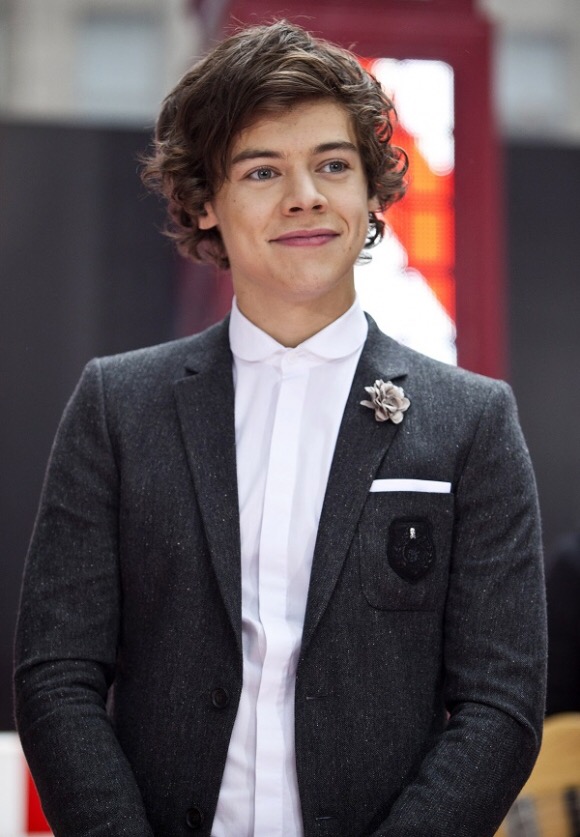
But first, here’s to Harry. Who?
Why Harry Styles, that’s who.
(duh)

Cheers and Merry, merry, merry to all!

/home/wpcom/public_html/wp-content/blogs.dir/e19/64332962/files/2014/12/img_0301.jpg

What Love Is

Love cares what becomes of you because love knows that we are all interconnected. Love is inherently compassionate and empathic. Love knows that the “other” is also oneself. This is the true nature of love and love itself can not be manipulated or restrained. Love honors the sovereignty of each soul. Love is its own law.

So says Deborah Anapol, PhD in The Seven Natural Laws of Love on exhibit in a Psychology Today article, which is a quick, worthy read. She sums up that love is mistaken as sex and marriage and many other things that couch it, but love is its own law.

On this day before Christmas Eve, I made a short list of things–not necessarily people–I like and appreciate, things that make me feel the love in the natural law of loving life.

What I like: joking with my kids, eating in restaurants that have a great variety of vegan foods, when my mother smiles while looking in my eyes, making my great nephews and nieces laugh, laughing, books that I wish would continue on after the last page, books I never want to climb out of, books, when my father says I love you to my mother, writing something with a few well-turned meaningful phrases, writing poems, time to write, making love, being a lover, being a wife, being a mother, being a daughter, being a friend, being a sister, when someone is inspired by what I write, good comments that provoke a stimulating conversation, salmon, art, photography, Stone IPA, fine pinot, a French white burgundy like a merseult or chassagne montrachet, cooking when I have time and ingredients that are exotic and fresh, organic, being home alone, quiet places, long into the night conversations about people, love and life in a car parked at the beach, watermelon on hot summer days, fresh strawberries with fresh cream, pineapples atop soft serve vanilla ice cream, yoga, smoking with a beer, wax, running with Kiah, the ache of loving someone so hard, orgasm, the unobtainable, P’s laughter, my daughters’ laughter, watching my daughters play soccer, being out on a soccer field on a dewy summer morning, snowboarding, swimming in the Caribbean, being a friend, looking at love in someone’s eyes, slow bicycle rides along the water at dusk, finishing a marathon or half marathon, when playing soccer was fun, when playing tennis was fun, when running was fun, when swimming was fun, floating on a waveless warm sea with my ears immersed and eyes closed, Samasati, snorkeling in Tobago Cays, summer camp when I was a kid, warm feet when it’s cold, unexpected gifts in the mail, good strong flavorful coffee, when I was friends with M, Louis CK, movies that make me think about them or feel them for a long time afterward, Joni Mitchell songs from Blue and Court & Spark that I can sing every word to, long movies that go by quickly, teaching, a tender kiss, a strong character, passion, being invisible in a crowd, crossword puzzles, Halloween teen night high at the cemetery that was really Mordar, the pleasant surprise of not being disappointed after seeing The Lord of the Rings, not being afraid, the idea of love at first sight, book stores, people in heroics, the scent of an infant’s head, the epiphany of understanding that the earth, stars, space and humans are made of the same stuff, randomness, that the components and shape of DNA molecules in plants, animals and humans are the same.

The mountain woman sleeps in the forest green.
A mountain of a woman, she is the sleeping green of the forest.
Oh, mountain of my dreams, oh womankind, you are the green of my forest sleep.

/home/wpcom/public_html/wp-content/blogs.dir/e19/64332962/files/2014/12/img_0292.jpg
caption: vuing.com

A Misty Mother’s Winter Birth Song

/home/wpcom/public_html/wp-content/blogs.dir/e19/64332962/files/2014/12/img_0297.jpg

On a Winter Solstice morning I carry wood to the fire
and stoke the arcing flame’s urge to obliterate night.
Borean breath burns those bones of trees slant ways
fueling gulps of scorching air borne to the sun’s rays.

Mother-child squats and stares her eyes pierced red
wondering where the winds have taken off the dead.
Her child-mother speaks no more of willow branches.
A baby gone old too, a sooty, sallow skinned witness.

Sheltering arms of her wisdom’s rock a bye morrows
I miss, her torch words of smoked images we chose.
Mother mine of childlike mind your birth was foretold.
Alit on Winter’s day, a searing blame to mothers cold.

With spoken mind’s hibernation, a wintry song is nigh.
Buried deep in fiery sleep is sensor twitching sunrise.
Yet a love surrounds her misty eyed daylight slumber
as Elven sprites spark shards shot of ember’d lumber.

She is my meadow lullaby cracking the icy pines now,
a cataract covered window pane framing a faint brow.
The pitter patterned words of incantations made flesh
are a witch’s brood of progeny, a sweep of stony ash.

The shortest light of the longest night brightens a sky
she never sees anymore in wheel chaired walk a bye.
Maternal flickers of the northern lights in babies’ arms
is left the love encircling a stormy eye’s chaos calmed.

On This Winter Solstice Morning

On this Winter Solstice morning, wishing you and yours powerful peace in the short sunlight hours and a good, long winter’s night sleep.

There’s a Certain Slant of Light – Emily Dickinson

There’s a certain Slant of light,
Winter Afternoons —
That oppresses, like the Heft
Of Cathedral Tunes —

Heavenly Hurt, it gives us —
We can find no scar,
But internal difference,
Where the Meanings, are —

None may teach it — Any —
’Tis the Seal Despair —
An imperial affliction
Sent us of the Air —

When it comes, the Landscape listens —
Shadows — hold their breath —
When it goes, ’tis like the Distance
On the look of Death —

Oscar Wilde on Confession

image

There is a luxury in self-reproach. When we blame ourselves, we feel that no one else has a right to blame us. It is the confession, not the priest, that gives us absolution.

Oscar Wilde

Letter from a Former Mistress to Her Former Lover

/home/wpcom/public_html/wp-content/blogs.dir/e19/64332962/files/2014/12/img_0291.jpg
Credit: 3.bp.blogspot.com

Dear Wayne:

You have been the ghost of the week, haunting my harried holiday mad dashes and work hour drags. As long as you are hovering above my day, I want to ask you something. Though I’m sure you have so much on your mind these days with the busy-ness of work and family, I’m curious to know if you sometimes think of me. Somehow I know you do. Although so much time, over twenty years, has passed since we were lovers, I wonder which of our moments you remember most.

I apologize if that makes you feel awkward or is inappropriate to even ask. The holidays do this to me, get me maudlin and reflective. Do you remember that about me? So much to do and so much forced cheer and obligatory reflection, it’s like being dragged to church or synagogue as a kid–an empty burdensome rote task. We’d all much rather be out playing with our friends. But I must continue the crusade, braving mazy parking lots and frenzied shopping herds synced to the mind-numbing messages of good cheer, reverential-looking reflection and commercially-convincing gratitude encoded in the music piped into my brain in every shopping mall. There is no respite from the prescribed mood of the season.

In my brainwashed holiday cheer, I am picking through the dollar section of Target trolling for knick knacks for the little ones on my gift list today. Dutifully feeling grateful for those cute little great nephews and nieces of mine, I flash on a memory of the time you and I were Christmas shopping for Jenny, who was 8 then. You held up those Mary Janes covered in ruby red glitter and recited verbatim the entire monologue of the Wicked Witch of the West flitting and flapping above her crystal ball calling upon her minions to capture Dorothy and Toto. You spoke those lines with pitch perfect voice, accent and gesture, imitating every eyebrow lift and evil sneer emblazoned on the 35 mm film cells and in the memories of everyone who watched the Wizard of Oz from childhood to their children’s childhood. I laughed so hard I cried. You remember?

Your total recall of movie lines was astounding. But I could never figure out how you could screw up song lyrics, except to make singing the lines as misheard malaprops another way to get me to laugh…Doing Gypsy, “Let me just disdain you…let me make you smile…” I was more amused at your thinking you were funny than at some of the lines you tortured.

That’s what came to me. I flashed on the glint in your eyes first, the impish grin and twinkle when you had just made a funny. Probably the most prominent feature of yours etched in my memory is that smile in your eyes, proud and amused by your clever comedy. I smile inwardly (and sometimes outwardly) the most about our laughing together.

That’s the way it started. You passed that note to me in class with a cartoon drawing of a shark with a bubble above its head repeating what the professor just said about mechanics liens or subpoenas. I don’t recall the subject now, but I remember suppressing laughter not so much for the joke but for the silliness of the act itself. We were both close to or over thirty then.

You knocked me off my throne then, from the sequestration of the fearful, from proud disdain for team sports, polyester laden high school football coaches, silly songs and Republicans. I was so serious, trying so hard to be someone, while you were comfortable in your skin, your brown skin and black hair and thick lips. I never thought I would find myself in half lit rooms with thread-bare hotel sheets enwrapped in you. But I was, and it was wild and breathy and loud and sweaty sweet, your voice a soft baritone lullaby as we counted the stars imagined through the stained motel ceiling afterwards. Do you remember asking me if I could live the rest of my days like this?

Christmas gifts were a problem. You could give them to me, but I could not give them to you because they would need a convincing story of their giving. Not even chocolate bars or key chains. And I didn’t want you to give me gifts unreciprocated, felt it was not in the holiday spirit. Besides, we had to wish each other love and warmth and a Merry Christmas through a long, loving embrace in a car or in a park on the 23rd or the 27th, because the 25th was spent with silent cheers and clinking of glasses to your health for the year past and ahead while I smiled into the face of someone who was not you and while you blessed your family with your laughter and the glint in your eye that made someone who was not me smile.

Jenny is 35 now and I am buying Chanukah presents for her two little ones. You are not here with me in Target in the flesh, just as you were not with me on those six Christmases, Chanukahs, New Years, Thanksgivings, Easters, Presidents Days, Valentines Days and our birthdays. It wasn’t you who gently placed a hand on my shoulder as I lay in bed face down in my pillow in convulsed sobs the day my mother fell ill. And it wasn’t you who ran into the street with the blue tipped pee stick to shout in child-like delirious excitement to your brother at the corner that a baby was going to be born in February.

No, you’re here as you were with me so much of those years of our time: in my grin when I would hear a movie line of one of the many movies you could recite scenes from and insert into most any conversation or in the salt of my sweat when I awakened from a dream of our last love making session so real that I turned to search for your face peering into mine from the shadow on the pillow next to me. I found you in the ache of song and the edgy wonder of what it was like to have a family who needed you home, present in body and mind and not distractedly longing to be elsewhere.

Your image is ghostly now because the love that infused our veins in the thickness of syrupy desire and amnesiac release is frigidly lost to the lives of Christmases and school days past. I loved you hard as you did me. Only the threads remain of that blanket we wrapped ourselves in to keep us warm and alive, to survive the blizzard that trapped us and threatened our lives like the anger of banging heads bloody on the filthy cement walls of the prison, desperate with no way out. But we are alive and free to remember how it was.

I conjure you up today as if you were flesh and blood. I know you’re smiling too when my ghost appears. And sometimes, I know once in a while, we smile at the same exact time over the same silly note or line playing on the radio or overheard in passing conversation between friends or lovers at a cafe.

Peace and Love–

Breathing Lost

credit: http://www.foundmyself.com

/home/wpcom/public_html/wp-content/blogs.dir/e19/64332962/files/2014/12/img_0288.jpg

Silhouette drifters deliver songs to the ears of my playlist memory
some hissing in vain anger, some lilting in lusty loss, some on mute.
One such sketch of a man filtered trinklets of tuneful gemlike stars
to my eyes in naiveté, my world that had forgotten to look up in awe
at celestial showtime light o ramas for centurious eyes innumerable
and me, I owe him vision and wonder and the tickle of the unknown.

And I thought he was for me and he was mine to be so sky forever.
He lived in my skin and I breathed him spiringly in pores and lungs.
I think that is what I was looking for–someone to inhale all that I am
each morning and exhale all that I ever was at night–an airiate man.
But air was not enough and we didn’t find the child of singing songs
only the age old stories of mistrust and lies and justifications long.

And we found that out, what we wanted, what we didn’t get, what
we missed out on, only too late. Yet, we still have the time we had.
As stolen time from the unknown and unsuspecting keepers of it.
We secrete desire now, let it expire in one swift and dark, salacious
moment of ecstatic loss and losing in that space of let me out and
come with me and be mine and I will ever ache in my heart for you.

Obsessive-Compulsive Narcissism

creidt: psychassignment.weebly.com

Two terms were hurtled at me this week, one from someone who knows me fairly well in terms of years and intimacy, and the other from one who doesn’t know me at all except through what others have said or written about me or by my blog. One term was compulsive and the other was narcissistic. One I was a little puzzled by and the other made me bristle a little, both reactions triggered most probably by my disposition toward the accusers. Both terms can be seen pejoratively or neutrally. Neither seemed flattering.

Upon hearing (or reading) that a friend thought me compulsive, my first reaction was “Really? Let me think about that because it does not resonate with me.” Then I thought about certain “compulsions” I have had like running marathons, collecting educational degrees, teaching 11 classes one semester, and reading nearly every book I could possibly read in 9 months about pregnancy when I was pregnant the first time.

Then there was the training or more aptly the studying my first marathon. When I planned to run my first marathon in 1992, the L.A. Marathon, I read everything I possibly could about training, form, schedules, journaling, and nutrition. I hit Galloway on schedules and form, Fixx on mental attitude and Higdon on shoes in Running Times and Runner’s World as well as countless books, including the Loneliness of the Long Distance Runner. I read Brody on nutrition and a host of others who have ever taken to the pavement in running shoes. I read and trained for a year, from the very first step of running ever to the last step of the marathon.

When I was pregnant with my first child, I read all about schools of thought on labor and delivery from Spock to Lamaze to Bradley, physician-led births to laboring couple directed births. I read parenting books from Spock to Sears, two physicians from opposite ends of the spectrum, one advocating traditional AMA-endorsed practices and parental control/conditioning, the other advocating Attachment Parenting with child-led weaning from breastfeeding and family bed. Soon after my baby was born, sleep-deprived and shell shocked, I suffered advice–some of it was painful though I listened to it all with urgency and respect–from my mother and mother in law and other veteran moms who often advocated letting the baby cry it out (instead of picking her up) or scheduling the baby’s feedings (instead of feeding her each time she wanted).

But I was a La Leche League devotee and read everything on their and other breastfeeding websites that supported a philosophy of breastfeeding and letting the child decide when it was time to stop breastfeeding. I remember so many looking askance at my breastfeeding toddler, including those who would ask outright in obvious discomfort or barely contained disgust, “How long are you going to let her breast feed?” My smart ass reply was always, “Well, I don’t know of any college bound breast feeders…” And I ached too hard to hear my babies cry.

When my kids were growing up, I read every book mothers in mommy and me groups were recommending about behavior and parenting practices, including Raising Your Spirited Child and a book called Raising an Emotionally Intelligent Child: The Heart of Parenting. When it came time to vaccinate, I read the AMA’s stance and unofficial websites of advocates of choice, citing the connection between autism and vaccinations, plugging anyone I encountered in park groups or toddler-focused activities, relatives and friends, for information and experience. I read. I asked. I listened. And I respected others’ ways of being a parent but, in the end, quietly followed my own learning and instinct. Still do, only now flying by the seat of my pants with teenagers.

But back then, I wanted to know it all. So maybe I was compulsive. Compulsive or obsessive?
Wanting accuracy and clarity about the word ‘compulsive,’ I went to the dictionary online and found the following:

com·pul·sive
kəmˈpəlsiv/Submit
adjective
adjective: compulsive
1.
resulting from or relating to an irresistible urge, especially one that is against one’s conscious wishes.
“compulsive eating”
synonyms: irresistible, uncontrollable, compelling, overwhelming, urgent; obsessive
(of a person) acting as a result of an irresistible urge.
“a compulsive liar”
synonyms: inveterate, chronic, incorrigible, incurable, hardened, hopeless, persistent; obsessive, addicted, habitual; informal pathological
2.
irresistibly interesting or exciting; compelling.
“this play is compulsive viewing”
synonyms: fascinating, compelling, gripping, riveting, engrossing, enthralling, captivating
“it’s compulsive viewing”
Origin
late 16th century (in the sense ‘compulsory’): from medieval Latin compulsivus, from compuls- ‘driven, forced,’ from the verb compellere (see compel). Sense 1 (originally a term in psychology) dates from the early 20th century.

Okay, so obsessive is a synonym for compulsive. Obsessive may fit. Still, I don’t think the definitions of compulsive apply, though I cop to two terms, one in the synonyms offered and one in the etymology at the end: persistent and driven. Those two terms seem true. While the drive to read everything–everything–I can about a subject may be obsessive, it is not unconsciously so nor uncontrollably so. The need to be not just informed but thoroughly informed may grow from insecurity, perfectionism or thirst. But I have never felt like I had to read everything, just wanted to. I love to read and learn as a teacher and student all my life.

Teaching 11 classes in one semester, insane as that was, did not derive from an addiction or unconscious desire to destroy myself, but from the need to test limits. If there is one tag line I can ascribe to, it would be to test limits when you can. Not that I am a huge risk taker, but I do like to see what the climate will bear in many situations. And I won’t consciously do something that I know will bring unnecessary suffering to me or my loved ones, or anyone for that matter. I am a mindful and conservative risk taker, at least for the majority of my days so far. On occasion, I have gone too far and risked too much.

However, I don’t believe as a general rule that when I am healthy and in my right mind I am overrun by habits and unconscious drives, though how am I to know? It’s hard to analyze the self accurately. I do battle with tobacco, an on again off again kind of fencing with a destructive force, but again it’s limits testing. I toy with the idea of controlling the poisonous intake by measured doses, a cigarette a day phase punctuated by long stretches, months sometimes, years sometimes, of not touching a cigarette. Then one day out of the blue I will smoke a half a pack. All right, I’m not sure who or which has the control: Am I playing with tobacco or is tobacco playing me?

Maybe I have a few compulsions, but am I narcissistic? The fact that I am writing about myself in a long-winded journal entry that I may possibly publish to a blog would indicate the truth of that accusation. The very act of writing–revealing the self–for others to mirror back in some fashion whether relating to or denying the author’s words may very well be narcissistic, if I think of the term as looking for mirrors. What does narcissistic mean?

nar·cis·sis·tic
ˌnärsəˈsistik/Submit
adjective
adjective: narcissistic
having an excessive or erotic interest in oneself and one’s physical appearance.
“a narcissistic actress”
synonyms: vain, self-loving, self-admiring, self-absorbed, self-obsessed, conceited, self-centered, self-regarding, egotistic, egotistical, egoistic; informalfull of oneself
“she was never happy in the narcissistic life that her press agent and manager had crafted for her”
relating to narcissism.
“narcissistic personality disorder”

In writing about myself now am I excessively interested in myself? I have a blog, so does that count as excessive interest in the self? I guess it depends upon what I write about. If my blog were one that solely gave recipes or tips on how to get a house clean, I probably could not be accused of narcissism by the pure donative nature of the blog alone. However, my blog is not exclusively an open journal like some I have read, which are diaries of the day to day events in a life. Something in between, I say.

I don’t offer advice or tips, but gather others’ advice, experience and opinions. I offer what interests me in writing styles, art and ideas, in the hopes of providing readers enjoyment, inspiration or thought. There is no question I subscribe to some viewpoints that I push for like tolerance and compassion, and thus blog more about some subjects, i.e., labeling, than others.

On the question of the mistress in its most common or popular understanding, the woman on the side, not the expansive definition of whatever owns you or is owned by you–people, ideas, predispositions, traits, habits, desires, etc.–I simply provide all sides and viewpoints, or at least aim to do so.

The ‘mistress’ is a complicated affair and concept and makes us all focus on the nature of relationships as well as challenges our notions of fairness, honesty, ethics, love, suffering, marriage, children and sexuality. My experiences as a divorce lawyer, spouse, mistress and human permit me to offer and question the topic, which encompasses the deepest and highest of all that is human. That is why the topic interests me and hopefully interests readers.

When I teach college students how to write essays, particularly narratives of the self, identity pieces, I tell them above all to be charitable: to be generous, to give to and be considerate of the reader, to show not tell the reader what happened and who you are, show the reader what you did so the reader can decide for him or herself who you are, to write with the reader in mind so that every detail, every word is written for that reader. I tell them to ask, “Will my reader understand me given that the reader has never lived behind my eyeballs? Is this a journal entry written to myself for my own pleasure or do I have something to share with one human being from another, something that taps into the universal human need, concern or condition? That is the job of the writer: to share, to give.

Now, the writer (and I mean nothing more than someone who writes) may again sound narcissistic, egotistical, to think a writer is in a position to give anything to anyone else, but lived experience, anyone’s experience no matter what life that experience is derived from, is valuable to another by virtue of it being shared even if only to provide commiseration, understanding, connection and companionship, a momentary relief from aloneness, let alone insight or education.

Am I conceited, self-centered, self-loving, egotistical, and excessively interested in myself, erotically or otherwise? Sometimes, sure. Other times, I am under-appreciative, insecure, self-doubting, self-deprecating, self-defeating, and many other self-(supply destructive term of choice). It took me 54 years to let anyone read a poem I had written, so sure I was that it wasn’t good enough.

Am I narcissistic because I write an online blog and not in a locked journal? Some might say so. One did. Perhaps, I am. And so.

Is it compulsive to carry on about it for this long? Probably. But I will leave it to the professionals. According to one Dr. Sam Vaknin, who wrote Malignant Self Love on narcissists, in FAQ#30, “The Compulsive Acts of a Narcissist“, writing a blog post questioning others’ judgments does not appear in his list of behaviors. Certainly, the extreme familial, genetic, behavioral and environmental factors discussed in the article are inapt for my narcissist label.

Somehow, I suspect, however, if I read compulsively on the subject, I would find that I could be a compulsive narcissist or a narcissist with compulsive behaviors. But I’d much rather scour my Facebook page for cat videos.

Stop and Wonder

Sometimes you wake up and the world seems awry, like the picture on the wall is slightly askew and it has startled you into a momentary disorientation as to whether the world is tilted or the picture. This morning was such a morning. I woke up with the distinct sensation of unease like a throbbing under the seams of everything was palpable.

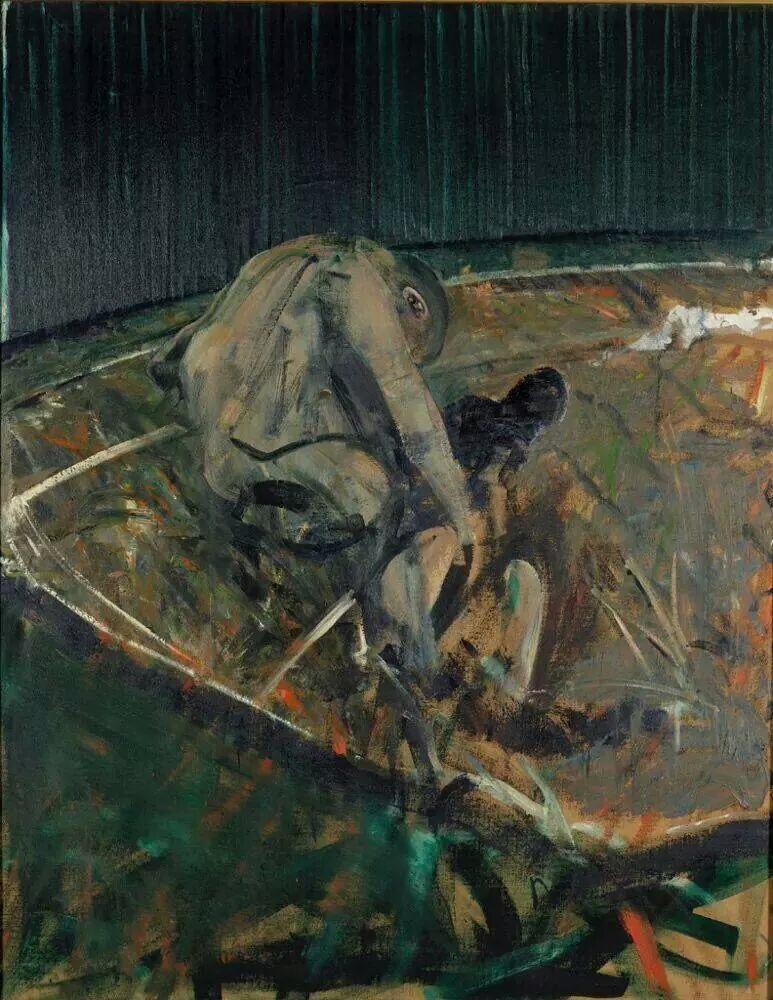
Then I saw this image, a painting by Francis Bacon, on a friend’s Facebook page:

IMG_0283-0.JPG

My first impression was of a human body with a rabbit face, the eye being the first thing that caught my attention. Perhaps it was the closer detail of the eye in comparison to the rest of the impressionistic style of slashes of drab color. The friend who posted it saw an elephant immediately, which makes sense given the grey trunk-like extension in the middle of the image. It also comports with what is on his mind according to many of his posts, which support the eradication of ivory poaching and elephant suffering globally. So why did I see the rabbit face when another side of the optical illusion is the human bent in desolation matching the dread of the colors chosen? The rabbit eye is actually an ear that draws the viewer’s eye to the hidden face obscured by the angle of the painter’s view vis a vis his subject.

Of course the greens and browns that hit me immediately may have associated nature scenes to me, evoked from the colors alone. Maybe that’s why rabbit was conjured up before human. Or maybe I am feeling more like the rabbit these days, skittish and hunted, vulnerable. But the rabbit head atop a human-like body is the original dissonance–a nauseating angst of discord–I experienced in the nano second of mis-recognition, something in accordance with the strangeness of the day, a flash of something barely seen at the periphery of vision that flies past, something threatening and ugly.

That must be why I saw the rabbit atop the man and why my friend saw an elephant. It is what we imposed on the image from each our separate mindsets at the very moment of the eye’s placement on and registering of the image.

We do that to people too, obviously. We see them for the first time or for the four hundredth time and color them with the preoccupation or mood of the moment. We coat them with our predispositions and attribute motivations and traits to them based on the colors of our own palettes instead of seeing who they are in that space of estrangement, like mistakenly seeing a rabbit head atop a human body, which causes the looker to stop, readjust her vision, and focus more closely to actually “see” who stands before her.