
I cannot read the ancient script in the above picture, but it must translate as “Blow it out your ass.”
Happy New Year, Peeps!!
credit: http://www.gotmedieval.com

"My mistress' eyes are nothing…"
I cannot read the ancient script in the above picture, but it must translate as “Blow it out your ass.”
Happy New Year, Peeps!!
credit: http://www.gotmedieval.com

A therapist once asked me why I gave myself appendicitis. I was supposed to move out of my marital home of 9 years that weekend but ended up moving my appendix out of my body instead. It was ready to burst and so was I, especially after such a farfetched question. I quit her after that session and never went back.
Since then, however, her question returns even after 20 or more years. Not exactly the question but the idea that I could induce a physiological crisis in my body in avoidance or in reaction to a psychological catastrophe. Could repression or stress so powerfully indel, cut, trigger or distress the body to rebel in disease? I know what the scientific literature says, but could I have caused appendicitis?
As I sit here with a flu, I believe such unconscious self-destruction possible. I have resisted this Christmas shopping for as long as possible and now that there is only today to shop, I am sick. I cannot remember a holiday season I have felt less jubilant about, and now layering the whole holiday experience is a Rudolph red nose and the vicious taunting of my own conscience.
The kids will be so disappointed with nothing under the tree. And so, I will trudge through the stores, sharing the sick germs of Christmas spirits past and present. T’is the season to give after all.

I am not going to say I hate the holidays because that would admit to a greater investment in the whole sketchy affair of good cheer and “gratitude” the holidays purportedly promote. I do prize genuine good cheer and gratitude, but enforced holiday spirit not so much.
It is common to hear this complaint–about the obligatory holiday gift buying and cookie baking and niceties that go with. Just look how thrilled most people look in the overcrowded parking lots to impossibly busy malls, stores and roadways. And yes, that seasonal depression thing is real.
Fortunately, I do not get depressed so much as annoyed, fatigued, exasperated and grumpy. And it is much better now that I have grown old and beaten up enough to have far fewer fucks to give (so happy for that current expression). My stress over getting everything done–shopping, baking, wrapping, shopping, cooking, tree-decorating, candle lighting, card-writing (yeah, who am I kidding there?), and shopping–is half of what it used to be when the kids were younger and I had more fuel to burn.
But there is still a lot of shit to do, much more than should be done in a two-week period, one of very few, during which the nation slows down to celebrate and appreciate the goodness of life granted us by a benevolent God or universe or both. We get an entire day off–all together.
But I do not need to mention the obvious–that the consumerist hypocrisy of the holidays exhausts a very noble idea, one of good will and graciousness toward other human beings. The lost message is as much of a shame as the squandered opportunity to wind down and rest, lost to self-induced comatose gift buying and giving many of us can neither afford nor truly relish for the sacrifice of sanity the activity steals.
I am neither a shopper nor a craft maker. Though I am a gracious gift receiver, I want for nothing that can be bought in a store or online. I am a lousy gift buyer, no imagination for it. And perhaps the traditions I have grown up with and created are far too consumer-centric.
I regret not changing the habit in my children, who I did enjoy baking cookies for and eventually with, as well as decorating trees and lighting menorah candles, when those activities were as wondrous as the gifts wrapped in expectation. Then the holidays eked out some cheer, some joy and love, despite the heightened stress of teachers’ gifts and Christmas cards and too many gifts purchased with too little money spent in far too distant and varied places among the too stressed and sick throngs.
So, as I sit here in a momentarily near vacant store two days before Christmas Eve, watching the rain, thinking about the gifts I still have to buy (have not started actually) and the dinner I have to cook in a couple of days that I have not planned yet, and the entertaining I have to do the following day and the day after, I audibly sigh the sound drowned out by the “Happy holidays!” a customer chirps as he walks out the door. Ugh!
I truly want everyone around me near and far, known and unknown, to have a happy holiday and new year, to find peace and love and happiness, but I just have to figure out another way to express it.
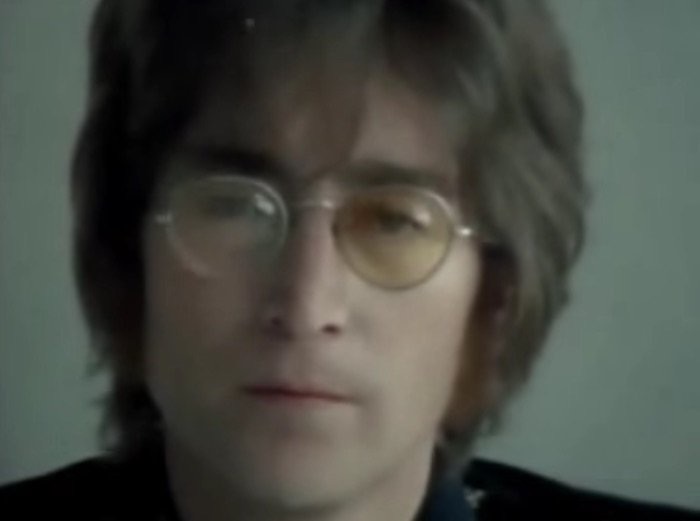
Pleasant read in Elephant Journal yesterday about the meaning of this iconic song that may surprise few but helps to remind us of something important in yet another age of crusades.
Like Heaven and Hell, countries exist only in our minds, yet we kill or die for them. Religion too is made up (imagined) by us—yet another institution that serves only to divide humans and prevent them from living life in peace. Neither are possessions real, except as a shared idea of ownership projected onto things, in turn producing yet more suffering as greed begets hunger.
When enough of us finally awaken to the fact that all of these things—religion, country, possessions—are nothing more than ideas in our minds, a world of unity, a brotherhood of man, with all the people sharing all the world, becomes possible. This may look like a dream, yet what is our current social reality but a collective delusion—a “reality” that only exists because enough people believe it? When enough “dreamers” actually see through the dream, a critical mass (what today we would call a “tipping point”) is reached “and the world live be as one.”
A simple Buddhist message to live within the reality we have, hard as it may be for many, this song also confirms the power of the imagination, whether for the highest of all achievements (Lennon’s song) or the most terrible (killing in the name of the deity of your choice). Imagine understanding and accepting the terrible beauty and destruction we create–as us. Simple and direct, less being more, the song is masterfully reiterating an ancient theme.
Peace.

“What time is your flight?”
“9:07. No actually it’s 9:55. Gates open at 9:10”
“And you land at 11 something?”
“Yes.”
“Short flight. I like short flights.”
“And long sex?”
“I wish I still smoked cigarettes. Seems like the perfect moment, the perfect accessory. I would take a long, sultry drag of a cigarette and with half lids and pouty mouth, slowly exhale smoke and say in my best Marlene Dietrich, ‘Yes, my dahling. And long sex.’ And then wink.”
Once again, just like the last ten or more years, I got to host Thanksgiving dinner for my loud, wacky family, both immediate and extended. I spend days cooking and cleaning for this event, pulling a 14 hour day of non-stop cooking, serving and cleaning today. And the clean up will not be done for another couple of days, maybe three or four dishwasher loads on top of a few sink loads of dishes by hand and dismantling the serpentine table and chair arrangements wending through the dining and living areas. This year there were thirty of us, including the usual stranger who has no place to go for Thanksgiving. I am proud of my family members for offering a spot at our table–and there is always one or two each year. I love my family. They’re good people.
I have the great good fortune to belong to a family that can gather once or twice a year like this and break bread together, catch up on lives, loves and laughs. I take great care to provide them with a memorable meal and gathering, cooking two turkeys, one barbecued and one roasted, accompanied by apple-leek stuffing and cider gravy, the butternut apple cider soup they all love and rave about all year long, and pumpkin pie from scratch. And everyone else brings the wonderful sides: mashed and sweet potatoes, fresh asparagus in butter sauce, fresh cranberry sauce, honey baked ham (Dad doesn’t care for turkey), root vegetable medley, and pies, lots of pies. We love our tradition, and these foods make up our tradition no matter who has been added or subtracted from our gathering.
Though she stays in the back room now, unaware that her entire beloved family that she grew and raised and helped raise, my mom is still with us bodily, and sometimes mentally. But I am hopeful she knows with some other part of herself that we are here, senses it deep within her neurons, some vibrations. And I am so grateful to have her, have them, and have all that I have. I truly won the lottery. I hope I never take that for granted.
Peace and love to you and yours,
Gaze

1. Dying of cancer
2. A refugee
3. Mourning the loss of a loved one
4. Unemployed
5. Incapacitated by illness or loss of limb
6. Alone
7. Childless
8. Parent-less
9. Abandoned
10. Living in a war-torn country
11. In danger of losing the safety of shelter
12. Hungry
13. Unloved
14. Empty
15. Sensorily impaired
16. Born to the hordes of un- and under-privileged
17. Devoid of wonder
18. Unable to experience beauty
19. Unable to create or feel
20. Under threat of destruction by weather, natural disaster, aliens, calamity or death by natural causes.
…and so, I have already won the lottery.
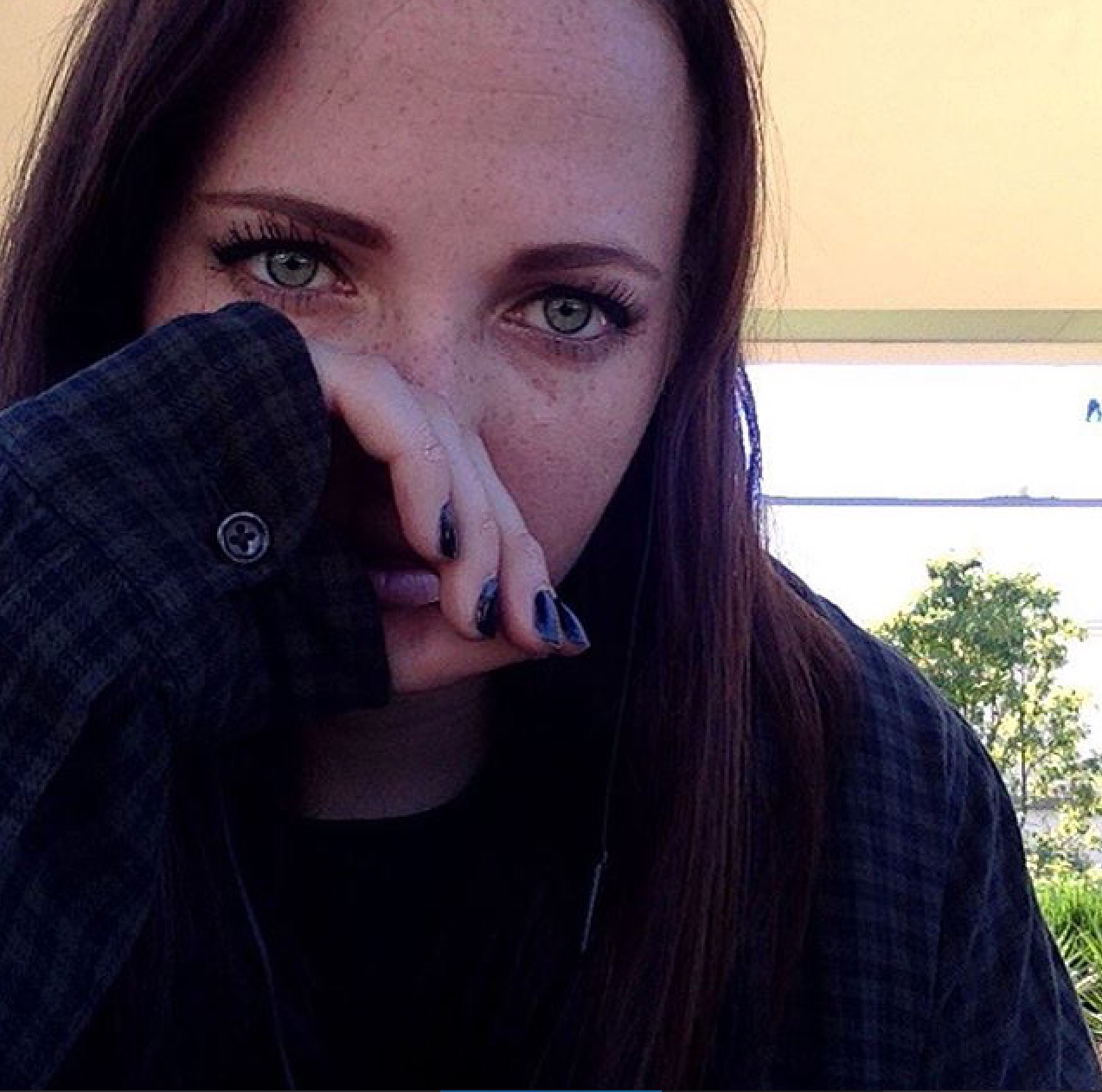
I’ve looked into the eyes of this movingly tender and beautiful photo of my daughter fifty or more times since discovering it. She allows me a glimpse of her social media life in but one place: Instagram. I am grateful for it. There I can peek just a little to see what others see of her, what she allows to leak. I know her and don’t know her.
But this picture is poignant for several reasons. It is the one picture I believe I have a leg up on all of her friends, acquaintances and public, maybe even a significant other. I know the look in her eyes. I have been fully immersed in the practice of recognizing what lies behind the surface of her expression since she was born. It was a method of survival for both of us. Is she hungry? afraid? frustrated? Anger was always obvious. But differentiating between shy and reserved took some deciphering, some investigative study, and close observation on my part.
I had to discern between what I read–over-read really–in books about personality traits and behaviors from what my gut told me silently, wordlessly. Motherhood is the scariest ride at Disneyland times 100. It’s often a matter of life and death. The twists and unexpected turns cannot always be calculated or anticipated.
I have grown to recognize by an unconscious alarm in my head when my daughter is sad or slightly afraid or both by nuances. Her veneer always seems collected, polished plain and emotionless when she is settled into herself. When she is playing or performing, her face is a farcical mask of glee or humor or goof. She lets it out all hang out.
But this subtle look behind her eyes is sad sorrowing pain, one from prolonged stress of doubt and fear, standing on the edge of the fall balanced to the very brim of standing it. She abides. But she slides down into the “feels” of it sometimes.
I never set out to steer her into college sports. It took me along as it took her. One day I was her coach among all the other six year olds, trying to entertain and teach, and the next I was helping her decide whether to accept a college offer to play the game in another state. Recreation soccer blossomed into a competition that could only be sated by club ball, which always sold parent hopefuls on the steep price of a scholarship.
I cannot say that a scholarship was the lure for me. I figured out the math early on. For all the years of paying for trainers, club fees, equipment, travel and this and that peripheral fees, I could have paid her and her sister’s college by investing the money in passive income yielding ventures. But the lifestyle of soccer promotes health and the outdoors, hones the coping skills of competitors and educates the athlete to her own limitations, desires and nature.
I don’t regret the time and expense of it all. What else would have driven us as a family to places we visited–together–from hotels in deserts to hell holes to luxury digs in gorgeous cities? The drives alone provided family time we would not have scheduled otherwise. And I often ask what will bring me to lay myself down on the grass of an open field on a Saturday sunny afternoon in the breeze, imbibing the disparate smells of trees, wind and turf, when my children no longer play?
But watching my determined, ebullient, driven and light-hearted child-woman as she steps through her days of doubt and illness, waiting for her brain to heal, I wonder why I–we–wanted this. Of course, no one picks a course thinking something terrible will happen, something will go wrong. And even if we ever think about the possibilities of injury, failure, or loss, we gloss it over with a deferment and hope: think about it if it happens. Such is life lived as us.
She will survive a concussion that has driven the joy out of her first time away from home experience and exacerbated the hardship of that transition (something she has not managed too smoothly since I can remember) in school and life. But will I survive her Instagram pictures that freeze-frame the story of that grief and turmoil? Yes. With the faith and prayer of the priest and scientist, I watch.
| Assembly Bill No. 1789 |
| CHAPTER 578 |
Vote: majority Appropriation: no Fiscal Committee: yes Local Program: no
(a) The Legislature finds and declares all of the following:
Section 12838 is added to the Food and Agricultural Code, to read:
(a) On or before July 1, 2018, the department shall issue a determination with respect to its reevaluation of neonicotinoids.

In fits of nostalgia, I have bemoaned the loss of bygone items and activities. No, not 8 tracks or vinyl, but more like the bliss of ignorance. Somehow, not knowing what everyone I know ate for dinner last night or that a hit and run accident happened in some town called Smartsville hundreds of miles away is something that strikes me nostalgic. I miss the quietude of select pieces of information entering into my sphere of knowledge. I miss the word intrusion that had meaning, not like now where it will be erased from common usage given that there is nowhere to hide from anyone else in the world.
In particular, however, I will miss the bees.
Not just because I grew up with them, just like I grew up with aluminum street roller skates and homemade skateboards of wood blocks mounted atop those skates. But because our world depends on them, more than we know. I am not an alarmist. I shy away from ringing any alarm bells for a cause as I am a subscriber to the crying wolf wisdom. Save the fire alarm for what most needs sounding. The bees need a five alarm fire warning, for they are sounding bells for us in their departure. Why are the bees leaving us?
Not that they are going off for good. Most bees abandoning us are domesticated slaves to the agriculture industry, shuttled from farm to farm to pollinate crops, but it’s not only the pesticides that are killing off these slave bees. Those in the wild know better than to go where the pesticides waft in the wind through miles of wheat stalks or almond trees. It’s also the stress. The suffering, farm-raised, overworked honey bees are one of the most threatened populations–enslaved pollinators chained to their instincts and the dollars that drive their keepers and chemical companies. While the EPA as well as the world looks away.
Bees are responsible for a third of all we ingest.
Agribusiness practices include bee transportation across countries where they are released to pollinate crops: a month feeding on blueberries then another month on almonds and another month on some other fruit or vegetable plants, season to season, place to place. Keepers earn their keep.
The artificial dietary conditions and non-stop travel schedule stress these insects that vibrate to one another and radar their stress all along the colony, a highly systematized bee industrial complex inside the hive. They want out.
The smart bees have left the building–abandoned their hives, collapsed their colony. They punched their final time card in the clock.
Stress and pesticides are forcing the bees out. Their disappearance is a message to those who can decode it. I will miss the bees.
Photo: Bobby Doherty
 In the gaze of the other