The Painters of Love: Loving a Married Woman


I adore Anna Pulley’s story ache of loving the married woman, which appeared in Salon yesterday. She not only captures the essence of the thin-tissue-beauty of love, the compulsion of the affair, the ever-turn of the heart toward love, but also the crafter’s gift of the memorable passage. Like this one, for instance:

Ours was a love that hinged on possibility—what we could offer each other was infinite potential. Reality never stood a chance against that kind of promise. I loved her in a way that felt both inexplicable and inevitable. She represented a singular perfection, she had to because she contained none of the trappings of a real relationship, the awkward, the beautiful, the sweet, the ordinary, the holding hands in public, the quiet walks, the bickering at Trader Joe’s. She was perfect in part because she was an escape, she seemed always to offer more.
 
After an enticing lead-in about long-distant love and steamy encounters, she delicately moves us along the strip tease of her narrative, the movement from reflection to memory slip-sliding her narrative along with the tensile desire of an abandoned lover simmering sleight over time. She does not call herself a lesbian until two thirds in to her lovely essay. She wants to soften us to love first, to focus her reader. A concerted effort to steer her  reader’s mind from irrelevant drift she anticipates–detours like same-sex relationships, polyamory and the like, she withholds. Her story is of love, despite the title–all love. And imagery.
 
Fantasy. The addiction (cynical), the lure (soft), or the attraction (clinical) to the love of a “taken” one lies in the fantasy and the primal urge to create more compelling than procreation (fewer responsibilities to the aftermath).
 
We love to idealize love, to be in love, to make it and create it even where it does not exist. I am not suggesting that the love of a married woman ignores the woman, the being, for the objectification of love itself. People mostly fall in love with people, their features, physical or otherwise. However, the framing of love inside the circumstances of the beloved–the out of reach object–often plays a larger role in the picture of love we paint.
 
The interdiction (legal), the forbidden (moral), and the circumscribed (situational) of the affair seduces the painter in us. We who urge the perfect love, inch closer to its never realization by placing love in an outline, form or box with walls of pristine ideals and requirements. I love my lovers because they are who they are–funny, sarcastic, sensible and sexy; because they love me the way they do–with abandon; because they engage in the most intimate acts with me, thrill my very being and inspire me to create, live and aspire to contribute to humanity–go to work, raise my kids, change people’s minds. They make me feel.
 
They never sour, fall from grace before my eyes in the daily practices that make us all abject beings: ever cleaning the rotting flesh we are in the pettiness of hourly living. We belch, shit, blame and deflect responsibility. We lie, cower and deny. The human.
 
Not for the mistress of our getaways. Whether the encounter is a sleazy hotel sex hour or a week at a resort in Cancun, we project our ideal loves in that other we cannot keep, probably do not want to keep except to indulge surrender to the painful satisfaction of longing. Weaned on love stories and poetry (okay, maybe that’s just me), we grow to yearn, throb and grieve. Pain, like love, reminds us what we are. Affairs bring all of that and more.
 
I once read that our memories change each time we recall them, that we are constantly editing what happened. In the end, we can’t hold onto anything, not love, not even our own truths, because everything moves. Nothing is ever written just once.
 
Yes, we are artists, all of us. Human nature, the essence of frailty, tells the fallible story of its tellers wrapped in the egos of an imagination. We want. That is our condition. Our art is our necessity. We love to be loved in the art of love. And it is an art.

9 infidelity ‘things’ and more…

     
Salon’s  9 things you might not know about infidelity is one of those numbered titles that packages tidbits of information from the significant to the pandering. And though the author does a fine job of gathering, presenting and contextualizing (sort of) the information, there is never a question in my mind about the transparent motives of articles like these: seduce readers with and for the numbers.

It is all in the packaging. Lost leaders abound.

Opening sentences handshake the readers to the tone and subject:

Monogamy is a nice idea in theory, but in practice, humans are less adept at it than they might admit. 

Yes, so we have read. The author, Kali Holloway, then launches into the biology of two of the nine “things” such as the correlation between ovulation and frequency of infidelity as well as a lesson on spermatology: the race to the egg is a competition including beating the opponent out of the race altogether. 

Next up, sociology. Having participated in society only in the last 100 years, women surpassed previous records of infidelity running a closer race to cheater men:   

A 2010 study from the National Opinion Research Center found that over the last 20 years, the number of married women who admitted to affairs rose a staggering 40 percent. Which we can all agree is a lot. Nearly 22 percent of men copped to sex outside of marriage, a number that’s remained fairly consistent since 1991. For women, that percentage rose to 14.7 percent. A number of theories are floated for this change, including increased financial independence for women, the fact that women spend more time in co-ed working environments (most affairs begin in the workplace) and changing attitudes around women’s sexuality.

Now this next came as a surprise:

Most cheaters, across the board, don’t get caught. A recent survey found that 89 percent of spouses engaged in extramarital affairs are able to keep their infidelity on the down-low. But women are better at keeping their affairs a secret than men. 

Though it somehow does not surprise me. My theory: most spouses do not want to know (read: denial) or silently sigh a relief in the face of infidelity. I have no numbers to back up that hunch. All I know is, sex is complicated, monogamy or not. Conflicting sexual appetites, ebbing and flowing of phases of the moon as well as the decades, and a hundred and one sexual hangups originating from family, society and biology, all contribute to the complications inherent in trying to maintain interest in, let alone quality or quantity of sex in the long term relationship.

Holloway cites a Forbes interview for the following statement by a dating site CEO in item number 6: 

“You often don’t catch the women. Because women naturally think more contextually. They consider long-term vision and potential consequences much more thoroughly before acting.”

Based on which evidence: anecdotal? experiential? statistical? A CEO?

People who make $75,000 and up are 1.5 times more likely to cheat than those whose annual salaries are $30,000 or less. Those with graduate degrees are also more likely to seek sex outside of marriage, being 1.75 times more likely to have an extramarital affair than people who haven’t graduated high school. Living in a city also ups one’s chances for cheating by a factor of 1.5 times.

The take home from these statistics? The struggle to survive financially takes up too much time–none to spare for the affair. No doubt social values of a society in which the measure of an individual is in the size of his or her wallet has something to do with it. The equation of money to power weighs heavier on those with lower salaries and affects confidence, logically. 

As we near ages that end in zeroes, the chances for infidelity increase.

Mortality. Enough said.

…people who use Twitter every day tend to have shorter relationships than those who don’t, regardless of age. And not that it’s totally germane, but daily tweeters were also more likely to masturbate on a daily basis

Ok, how in the world does one measure that last info-bit and who even thought to ask?

And along the same vein (pun intended), appealing to salacious appetites for the sexual, inane, absurd and obvious:

…penis fractures and extramarital affairs may correlate according to a too-small-to-be-significant study that the author includes–just because–in an otherwise responsible gathering of information on recent infidelity findings. The study authors appear credible, at least, and if they are not as strong as the National Opinion Research Center out of the University of Chicago, the author comments upon that fact.

And while the trend for the numbered article annoys me, caters to the soundbite mentality of pop readership, I too cannot resist the draw of itemization, the buffet of tidbits of data big and small, serious and amusing, but most of all, the back story of the findings, the minds of the surveyors who seek quantification and categorization of minutae and the commonplace. 

The story, for me, breathes in the cracks of the facts, the why’s and wherefore’s.

Monogamy on the Ropes Again

  
credit:  https://polysingleish.files.wordpress.com/2014/01/1003954_1423682221182522_1247773358_n.jpg

This time by Salon.com’s Anna Pulley in the article 4 Reasons Humans are so Bad at Sexual Monogamy, which faults our natural proclivities and our ancestors. According to Pulley’s resources, we humans crave variety, get bored easily (especially women with sex) and hear the call of our collectivist primal ancestors who lived, parented and copulated communally. Her cited resources are a few notable books on the topic, including Chris Ryan’s Sex at Dawn, a synopsis of which you can find at Ryan’s site among other of his projects, to bolster her brief scan of the huge monogamy balliwick. 
In the end she echoes a call to action I myself have made on this site–more tolerance and less dysfunctional belief when it comes to sex and marraige.

To say we are bad at monogamy isn’t an indictment of monogamy in general. Of course, people can and do succeed at life-long monogamous arrangements. Non-monogamous arrangements aren’t inherently better or worse than monogamous ones. And yet, just because we are monogamous with one person doesn’t negate the fact that many of us are still and always will be attracted to other people. As German philosopher Arthur Schopenhauer put it: “One can choose what to do, but not what to want.” We’d do better as a culture if we could exercise a little more tolerance, acceptance and honest discussions around sex, desire and marriage, and try to be less rigid in our idealistic views of monogamy.

Mistress Humor

image

Credit: http://www.victorianweb.org

Two Ladies Talking in Heaven

1st woman: Hi! Carol,

2nd woman: Hi! Sylvia. How’d you die?

1st woman: I froze to death.

2nd woman: How horrible!

1st woman: It wasn’t so bad…. After I quit shaking from the cold, I began to get warm & sleepy, and finally died a peaceful death. What about you?

2nd woman: I died of a massive heart attack. I suspected that my husband was cheating, so I came home early to catch him in the act. But instead, I found him all by himself in the den watching TV.

1st woman: So, what happened?

2nd woman: I was so sure there was another woman there somewhere that I started running all over the house looking. I ran up into the attic and searched, and down into the basement. Then I went through every closet and checked under all the beds. I kept this up until I had looked everywhere, and finally I became so exhausted that I just keeled over with a heart attack and died.

1st woman: Too bad you didn’t look in the freezer—we’d both still be alive.

The Music of Ménage a Trois

In reality, it was an unusual but mutually agreeable menage a trois, whose intimacy is reflected in that extraordinary scene of the three of them, side by side in bed, sheltering from Hitler’s aerial bombardment.
Ursula was, in her own words, “fathoms deep in love”, but Williams told her he would never leave Adeline.

So she could only be the “icing on whatever cake he had, and not a disruptive influence”.

The fascinating story of poet Ursula Wood and British composer Ralph Vaughan Williams was the subject of news in 2007 when she died at age 96, having succeeded her once-lover-then-husband by 50 years. She was 38 years his junior when they met at her prompting. At the time, Vaughan Williams was married to Adeline Fisher, cousin of Virginia Woolf, and Ursula to Michael Wood, an officer in the British army. Ursula Wood’s fascination and passionate love at first sight for the composer not only flattered the composer’s naturally roving eye for pretty women, but fueled his dying spirit as caretaker for his inherently cool natured wife who was eventually rendered immobile by rheumatoid arthritis.

When Wood entered the composer’s life, it was not long before the affair between them started. Her presence at the Vaughan Williams household was first legitimated under the auspices as young assistant and caretaker, but Adeline was shrewd enough to be credited with knowing the score. Thus, the excerpt above, which is detailed in The Daily Mail’s article by John Bridcut, as depicting Wood holding the hands of both the composer and his wife during a raid in 1944 by Hitler’s army.


Indeed, on one occasion, Ralph and his wife and Ursula and her husband all met up at the opera for what must have been a most uncomfortable evening, particularly as the opera (Williams’s own Hugh The Drover) was a romantic story of rivals in love.

After Vaughan Williams’ death, then Ursula Vaughan Williams kept the affair discreetly within her memory until her death in 2007 at which time the details were revealed by her own desire to have the true story told. Wood’s biography of her husband also provided the basis of the documentary by Bridcut, released shortly after her death.

Though it is unknown how Adeline felt about the affair right under her nose, by all appearances, however, she tolerated her husband’s relationship most likely knowing that he was a man of passion that she herself could not reciprocate whether due to her own nature or her illness or both. So, it is not far fetched to assume that rather than lose her husband, she accommodated.

Of all three, the story of patience is the most magnificent human attribute fleshed from their ménage a trois: his for caring for the wife he vowed he would not leave despite his love for Ursula, Ursula’s patient caring for both while she longed to be with him, and Adeline’s patient endurance of the love affair right before her eyes that had to hurt. Of the three, I admire Adeline the most for her practical concession of her exclusive rights to her husband’s monogamy, whether that was calculating to her own advantage or wise and charitable love in consideration of her husband’s needs, or both. 

I have maintained before that the mistress role is not easily doffed off with vilified stereotypes of cheating and deception. Sometimes–oftentimes–it is far more complicated with subtleties that reveal the intricacies of human nature adapting to circumstances, a fascinating anthropological, psychological and sociological study.


Support Others Supporting Others: Infidelity Counseling Network Drive

  
Posted on Infidelity Counseling Network yesterday, Praveen Kumar’s Reasons Why Couple’s Cheat on Each Other in boldsky limitless living cites the statistic that ten percent of marriages are headed for divorce due to infidelity. Though unverified in the article, I don’t doubt that is true. Anecdotal evidence from my former practice conforms to that reality. Kumar goes on to state that most cheat before they separate and then lists the reasons for cheating in relationships: neglect, dissatisfaction and boredom, essentially. 

While these reasons are no revelation, some of the statements the author makes are rather surprising. For one, she distinguishes male from female patterns:

The cheating patterns of men tend to be a bit different than that of women. Some men would perceive cheating as just having fun outside the relationship.

And women don’t? I am curious as to the basis of the author’s conclusions. Which studies differentiate men and women’s cheating patterns on the basis of fun? Seems to me the validity of the article’s conclusions would be more compelling and interesting with some foundational support and less bias. In Kumar’s brief summation, men are presumed to be superficial weasels–of which I am sure there are plenty–and women victims. 

Some of those cheating men don’t even feel guilty unless they are cornered. When it comes to women, most of them resort to cheating when they are emotionally dissatisfied or feeling lonely in their relationships.

However, attributing dishonesty and overall bad behavior to one gender strikes me as a hasty generalization. Shortcutting the work of proof and relying on stereotypes perpetuated by cultural lore or media does no one any good. Moreover, it makes fluff of some serious consideration: the causes of infidelity and its immediate and collateral devastation to spouses and children.

One non-profit organization that focuses on those life-altering effects of infidelity is the aforementioned Infidelity Counseling Network, which is having a fundraising drive today. While I have balked at some of the articles on their website as genderist, favoring women, I have since come to realize that their services would logically benefit those who come forward to seek help from the heartbreak and trauma of cheating and resulting divorce: most prominently women. 

There is currently debate in the field of evolutionary psychology whether an innate, evolved sex difference exists between men and women in response to an act of infidelity; this is often called a “sex difference”. Those that posit a sex difference exists state that men are 60% more likely to be disturbed by an act of sexual infidelity (having one’s partner engage in sexual relations with another), whereas women are 83% more likely to be disturbed by an act of emotional infidelity (having one’s partner fall in love with another) (Buss, et al., 1992). Those against this model argue that there is no difference between men and women in their response to an act of infidelity.

This excerpt from Wikipedia citing The Journal of Personality and Social Psychology suggests there are sound reasons to believe that women are more affected by infidelity than men, and thus, it would seem, along with socially constructed beliefs men hold about confessing emotion and weakness, women are more likely to avail themselves of counseling services for their pain.

And so, I believe there is a necessity to support nonprofits like Infidelity Counseling Network, a group of professionals that inform and support those suffering from the pain borne from betrayal, loss, and rejection, some of the profound suffering resulting from any broken relationship but especially from one irreparably or remediably damaged by cheating. 

An invaluable public service focused on healing and compassion thrives only on the support of the many who believe in spreading the wealth of giving, caring and sharing.

Here is the link for this Cinco de Mayo support drive:  Infidelity Counseling Network May 5th drive.
Peace.

Mistress, a Powerful Word to Waste


Credit: http://art247.com.au/


Margaret Sullivan of the New York Times would like to see the word “mistress” retired as a term past its prime, outdated and sexist (Is ‘Mistress” a Word That Has Seen Its Best Days?). Cued by her readers’ comments, she specifically takes issue with using the term in news stories about women having extra marital affairs, i.e., the Patreus affair. 


She complains the term denotes a woman’s long-term sexual affair with a married man, and, as some readers pointed out, which also suggests financial keeping or maintenance. Sullivan believes the term should be replaced with something less gender exclusive particularly since there is no male equivalent to the term. She also notes her male editor’s response is something akin to “Yeah, it’s outdated and sexist but oh well, what else can we come up with?”

I, however, hesitate to retire a word with such a rich history and multi-faceted application.  

The Oxford English Dictionary has this to settle for the word:

HOMEUS ENGLISH MISTRESS

mistress
Syllabification: mis·tress
Pronunciation: /ˈmistris/ 
Definition of mistress in English:
noun

1A woman in a position of authority or control:
she is always mistress of the situation, coolly self-possessed
figurative work is an unforgiving, implacable mistress
MORE EXAMPLE SENTENCES
1.1A woman who is skilled in a particular subject or activity:
a mistress of the sound bite, she is famed for the acidity of her tongue
MORE EXAMPLE SENTENCES
1.2The female owner of a dog, cat, or other domesticated animal.
EXAMPLE SENTENCES
1.3 [WITH MODIFIER] chiefly British A female schoolteacher who teaches a particular subject:
a Geography mistress
MORE EXAMPLE SENTENCES
1.4 archaic A female head of a household:
he asked for the mistress of the house
MORE EXAMPLE SENTENCES
1.5(Especially formerly) a female employer of domestic staff.
EXAMPLE SENTENCES
2A woman having an extramarital sexual relationship, especially with a married man:
Elsie knew her husband had a mistress tucked away somewhere
MORE EXAMPLE SENTENCES
SYNONYMS
2.1 archaic or literary A woman loved and courted by a man.
3 (Mistress) archaic or dialect Used as a title prefixed to the name of a married woman; Mrs.
EXAMPLE SENTENCES
Origin

Middle English: from Old French maistresse, from maistre ‘master’.

So what could be wrong with a term whose first definition from a much-cited, respectable source is “a woman in authority or control”? Sullivan rebukes the term as old fashioned; a term with implied mercenary kept status should not be attributed to a modern day woman who chooses her own lifestyle and sexuality. However, the word’s true essence conflicts with what she derides, and it is her error in the term’s misconstruction. 


A mistress is self-possessed–going against the grain with her choice of sexual partner. She defies social norms, and in doing so, she carries that culturally instilled burden of shame and conscience subverted for love, power and/or sex. She is all about tough choices that expose her to herself and others, an exposure that continually challenges her control.

In addition, the wellspring of control and ownership from which the term emerges, its earliest significance being head of household, empowers the word. As queen of her castle, the mistress does have a counterpart, the master. In this equivalence, the terms both suggest not only ownership but mastery, the knowledge and competence to operate and own all of the details of a home, including the administration of her staff in running it. 

The predecessor of the modern corporate CEO, the mistress was the operations manager of the home, which may have included serving and cleaning staff in addition to family members. And for anyone running a household, even without staff, that is no menial task. 

As one who has historically taken on the role of mistress of the house, I can assuage any fears of sexism or demeaning intent in that term. Running a household of teenagers, ailing parents with caretakers, dogs and cats, is no mean feat. To keep everything running without a hitch–flawlessly–from paying bills; coordinating transportation to sports, school and other activities; financing the upkeep of the house and the people and pets in it, all while juggling work–paid or volunteer–outside and inside the home, takes the talents of an organized multi-tasker extraordinaire. It takes control.

I used to be better at it, the juggling, when my mind was sharper and my energy level higher, but even then I had to rely on spreadsheets to track everyone’s movements and whereabouts. Running a household draws on a variety of skills inborn or acquired. Though not a long-term planner, my mind is wired to work from three steps ahead backward–necessary to captain the ship. 

When the kids were pre-schoolers, I knew at the outset of any day trip that one of my daughters was going to need a series of five, three and one minute warnings of departure as she was not good with transitions. And just the mathematics involved in planning for the outing, the gear required to anticipate any probable need ordinary or extraordinary (accidents), plus the time factor to shove kids in and out of carseats in time to meet the next appointed destination on the agenda, kept my mind in continual twists and turns of addition and subtraction:  add a few minutes for Jordyn’s resistance or chase before we leave plus a few more minutes for changing Remie’s diaper, which will inevitably be an emergency by the time I round up Jordyn and get her in the car–an exercise in figuring out the smallest movements needed to achieve the greatest effect, something like understanding quantum mechanics. 

The abilities to run, round up–kids and numbers–calculate, estimate, zoom, balance, gather, recoup, resist, stay alert, maintain composure and sanity, all while wondering where pride and sleep went is spectacularly challenging and a tremendous show of competency when done without tearing hair out, my own or anyone else’s. Not a very sexy proposition but one declaring mastery of intellectual, emotional and physical strength beyond compare–power.

Power. Mastery. Sex. To Sullivan’s point about sex, sexism and subservience, I must agree with her editors that the definition nowhere includes financial maintenance, and so the term is not as sexist as she protests. In fact, the illumination cast upon the term from its etymology, derived from the French word maitresse, master, and its name for a teacher, one of the oldest, most widely recognized longstanding, respectable working roles for women (not to be confused with the oldest profession), is the domain of mastering knowledge and communication. What could be more empowering than forming the minds of a population? 

Women are distinct, singular each, work in different ways from each other and from men. Words that carry history as performances past that umbrella performances present should not be discarded lightly, especially in the case of a word that I believe furthers the cause of empowering women–for the informed and language sensitive, that is. I take issue with divorcing ourselves from our past. It is a mistake. We need the reminder, nuanced influence and acknowledgement of who we are, where we come from and where we are heading. 

Keep the mistress as master-ess of her domain.

Sentimental Morning

Yesterday I read in the Huffington Post the story of A.J.’s 25 year affair with a married man, her divorce lawyer, on whom she had grown dependent for love, money and herself. Her story is familiar. She filled a space that was her, missing most probably due to the abandonment she felt in childhood, with him, but came to realize after two and a half decades that only she could fill that gaping hole.
 
The hole in my heart couldn’t be filled by anyone but me. I had to love myself more than I loved anyone else. Even him. Finally, I understood.


We walked out of the hotel onto Park Avenue, and without another word to him, I turned and walked away.
 
This morning I awoke from a dream the last vision of which was the face of my husband of nearly 35 years, smiling, his head leaning on someone else’s shoulders, completely content. 
 
No one has made me weep more in my dreams than he has.
 
Though we are no longer intimate, we share a connection deeper and more profound than the silence we keep about what went wrong and what is right.
 
Love is more than dependency, but its shape and character are dependent upon lovers. There is no doubt that we fall in love with love and all we imagine it to be, including that leaning, literally and figuratively, on another. Our hearts resound solitarily in our chests, but the primal urge to sync our rhythms to the beats of those hearts walking beside us is unimaginably fierce. We don’t want to be–alone.


Graham Nash — A Simple Man


I am a simple man
So I sing a simple song
Never been so much in love
And never hurt so bad at the same time.
I am a simple man
And I play a simple tune
I wish that I could see you once again
Across the room like the first time.
I just want to hold you I don’t want to hold you down
I hear what you’re saying and you’re spinning my head around
And I can’t make it alone.
The ending of the tale
Is the singing of the song
Make me proud to be your man only you can make me strong
Like the last time.
I just want to hold you I don’t want to hold you down
I hear what you’re saying and you’re spinning my head around
And I can’t make it alone.

http://www.youtube.com/watch?v=pof-Jwb35b8

Who Has Affairs and Why – Dr. Peggy.com


credit:  http://assets.nydailynews.com

For a compressed (succinct but thorough) breakdown of the profile of an affair with all of its moving parts and consequences, read Who Has Affairs and Why on Dr.Peggy.com, which includes this section that I particularly appreciated because the author, Peggy Vaughn, details data I have merely passed off in summary in prior posts as the various ways we inherit our cheating disposition:

Societal factors

Affairs are glamorized in movies, soap operas, romance novels, and TV shows of all kinds. Public disclosure of public figures having affairs is headline news because we are fascinated and titillated by hearing of others’ affairs.

People are bombarded with images of women as sex objects in advertising and marketing campaigns. Over and over, the message to men is that the good life includes a parade of sexy women in their lives. Women inadvertently buy into this image and strive to achieve it.

The lack of good sex education and the existence of sexual taboos combine to make it difficult for most partners to talk honestly about sex.

As teenagers we get conditioned in deception when it comes to sex—engaging in sexual activity while hiding it from our parents.

The code of secrecy is a major factor in affairs because it provides protection for the person having affairs and leads them to believe they won’t get caught.

She concludes that there are many factors that contribute to having an affair including “pushing” and “pulling” factors, drawing to or pushing toward it.  

In addition to causes and effects of affairs, there is a brief rundown on the naturalness of monogamy–or not–as well as advice on preventions, which is…guess what?  Right.  Honesty.   

There are other similarly succint, informative articles on the site to peruse for everything affairs related, Dr. Peggy’s specialty. Most are quick reads with easy-to-read and track headings, subheadings and bold font. It took me no time to read through the site and pick up on some of the advice and factual goodies she offers.  I hope you enjoy the site as much as I did.

Mere Mortals We Cheaters Be


Of course, Anna Jorgensen’s 4 Stages of Cheating & When it’s Warranted in elephant journal grabbed my attention, but, after reading it, I feel a bit betrayed myself. First, the title is terribly misleading:  “when it’s warranted”, according to Jorgensen, is never…unless your life warrants it. In other words, it’s complicated, not surprisingly.

Second, the 4 stages of cheating she outlines are pretty obvious. No, the most interesting insights of this article are found in her off-the-cuff wisdom culled from personal experience. Mentioning her three observational points of view, conspirator, cheatee and cheater, she confesses the following about being cheated on (the cheatee):

I also don’t know if I was more bitter about the cheating or the lying. Lying makes me pretty bitter.


Lying makes most people crazy. Social brainwashing and the human tendency toward compartmentalization are partially to blame for that toss up, deciding which is more insanity-inducing. One may eventually understand the cheating, sexual urges and all (media reporting cheating is a fact of life), but the lying is almost always interpreted as conscious, decisive and lacerating. Lying is a knife in the heart of trust and often taken as a sign of a deeply flawed character. 

An insane world is one where truth and falsity are in constant flux, making for a meaningless existence. When the lying is revealed, it not only induces shame and blame, punched-in pride and cries of victimhood, none of which help to expedite healing, but turns the world upside down, leaving the “victim” paranoid about her own failure of instinct and understanding. She often becomes defensive and mistrusting. 

In truth, cheating IS lying–to self and others.


Jorgensen avers cheating is never warranted and argues an either-or fallacy:  fix it or forget it.
When Cheating is Warranted

It’s not. Cheating is never the answer; if only because it ultimately won’t make us feel good. We’re far better off to figure it out or part ways peacefully. Of course, that’s way easier said than done sometimes and all my experience and those of others will never replace your own experience. That’s how life works.

Strikes me as a rational imperative: work on the relationship or get out of it if it cannot be worked out. And yes, easier said than done, especially when children are involved. Balancing the needs of two people is incredibly challenging. Three, four or more components to the equation is far more difficult. Now add some children or parents with all-consuming special needs or a spouse with a congenital, contracted illness ten or twenty years into the relationship and see how the formula of fix it or forget it comes out. Jorgensen acknowledges the fallacy and backtracks from her hard stance to a more philosophical one.

If the issue were black and white, the conversation about cheating would be over.

The Blame Game: We Lose

Also, never blame the cheater. Or the other person. No blame, or blame both parties in the primary relationship. No matter how perfect one partner may seem to be, it’s a two way street. Ladies, if we hold out on giving our man the cookie, we’re asking him to cheat (eventually). Men have very few needs (primarily freedom, respect, appreciation, food, sex) to be content, but they will even put up with a lack of most of those to a large degree if they’re getting sex gratefully. Put out (happily) or put up with a cheater. I’m aware this will ruffle some feathers. I’m not saying we can never say no, but I am saying we’d be best off to not use sex as a weapon or bargaining chip. As a bonus, working out differences between the sheets is a lot more fun for both team mates.


Again, I like her homespun advice imbued with personal experience. My head nods when I read this excerpt, but my knee-jerk doubt scoffs at such an assurance of life operating in neat little stereotypes. If it is that easy to appease men, then there wouldn’t be much to write on cheating. Psychologists would go broke. 

Though, I have been told by many men that this is what wives must do to avoid infidelity: be an avid sex participant. However, each man defines “avid” and “participant” vastly differently: once a day? a week? smiling?  Most men, I suspect, are more complicated than “just feed, bathe and sex me.” 

Some men have emotional cheats that remain purely emotional. Others may have been drawn initially by the emotional support, recognition and respect perceived as missing from their relationship, appreciation for which they later translate into physical contact. Or some men are drawn to outsiders because they are outsiders, plain and simple. 

There are innumerable sources to the cheating complex just as there is an unlimited spectrum of flavors of men and women, combining in infinite ways. Hyperbole, maybe, but so is reducing men to primates.

Some humans are excellent comparmentalizers. They see the world in boxes and parcelize people into um-teen utile categories. The impossibility of the composite picture, of the ideal fed to a population, is culprit, in part, to infidelity. 

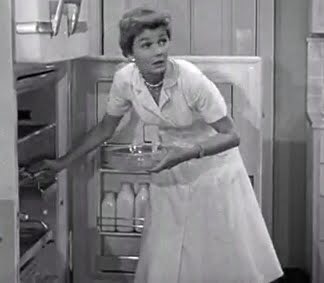
Think of June Cleaver with her clean white apron, Laura Ashley styled cotton dress, string of pearls and freshly swept up-do. She stays home all day scrubbing floors and baking cookies for the Beav, but keeps herself on-the-ready attractive with her pearls and dress for her husband’s whims and desires. She is saint and sinner. She is a symbol of the impossible ideal of an era. 

We aim too high, are fed too many fairy tales and told too many lies from birth. Thus, I say the aggregate behavior of a culture is partially to blame for cheating. We are inculcated to it. 

It is complicated. I have been beaten down from my high horse long ago. Personal responsibility, determination and justice used to be the cure-all in my mind. Judgments flew from great heights. But there is nothing like life to equalize: nothing like getting my ass kicked up and down the halls inside and outside of courthouses, by attorneys, judges, clients, business associates, trusted friends, lovers, brother, sisters, children, strangers, parents, spouse, and nature at one time or another to afford me humble perspective.  

The conversation is critical. Keep talking, observing, listening and starting anew, I silently affirm daily. Be flexibly firm, empathic and self-doubting while amused, I often think. Aspire to be the acme–saint June Cleaver–knowing the inevitable shortfall. It is all anyone can do in the face of the mystery and misfortune of mere mortality.