All Roads Lead to Anger

  
I am an asshole on the road. 

While I have never engaged in road rage, I rage plenty on the road in seething insults and strings of profanity that I cannot help but recognize as an inheritance from my father.

I always believed I was most like my mother: cheerful, determined, optimistic and rational. But that’s because my father was never around, working round the clock as he did. Come to find out after he moved in a few years ago, I am much like him.

I not only inherited my dad’s long, skinny legs and dark eyes, but also his temper. 

My Dad could be nasty. My memories soak in pools of chiding, my mother wagging her finger at her husband after yet another profanity blasted from his lips. His pet names for his wife included colorful epithets that would curdle any feminist’s blood–really any civil human being’s blood.   

My father’s vulgarity fully bloomed in a car. I drive like him: impatiently, erratically, and aggressively. All the curses I ever heard growing up fly freely from my mouth in explosions of hateful disdain on the road. I transform from human to monster. 

I know habit has a large part to do with it, but I am nevertheless surprised at the ferocity of my anger the moment I encounter a perceived slight on the road: it rises in a flash hotter and more suddenly than those that plagued me for years before menopause. It feels like a siege, as if I have no control over an acid-spewing alien cocooning inside me that bursts from my guts and spews terror. 

And when I have just spit aloud from clenched teeth the words: “You f#@*ing asshole!” with venom, I immediately catch myself, just as automatically as the words that flew out of my mouth, “What is wrong with you?!!” 

Therein lies part of the problem: not the knee-jerk flying foul language and anger triggered by insignificant, impersonal lane encroachments but the counter reaction of self-berating. It does nothing to change the reactive fury. 

Not that I condone the behavior, the lack of control in the face of something so irrational and trivial. Like any bad habit–smoking, nail biting, leg shaking (all of which I have had to beat)–the behavior masks some other neglected need, some other unattended emotion, unhealed wound, stewing conflict or ongoing unresolved problem.  

Most often, however, we seethe in separation, having polarized ourselves in opposition to those who would thwart our efforts, not only on our immediate but our larger destination–at least that is our perception.

When we lash out at the unknown ‘other’ out there in the world, someone we have reduced to a concept, a negative speed bump in our lives, whether that be the generic bad driver (or merely inattentive driver), not to mention the total road blocks–“the racist cop”, “the black thug”– or the more specifically named and reviled “woman” or “Asian” or whichever derogatorily denoted driver, we do so because we are isolated–and not just in the safety of our cars. We are closed up inside of ourselves, removed from our innate artist’s eye able to see the details of others. I know this because no one except the seriously ill or wounded cannot memorize the lines in his mother’s face as she sits paralyzed placid in her wheel chair or the dimples in her babies’ knees.  

The mind can see if allowed to.
 
The distance between us is self-imposed, learned, unconscious and/or conscious. It derives from the dis-remembrance of our primal past as cave-dwelling groups of protective survival and the ever-unfolding illusion of separateness, the change in us since those days.

Change comes from active awareness of our material being. If the scientists’ and spiritualists’ postulations resonate truth, we are all part and particle of the same star bursts, the same matter that existed eons before us, made us. Our DNA that shapes us is shaped similarly to that of the earth’s flora and fauna. Whether our individual components–genetic or nurtured–make us tall, short, dark or light skinned, good drivers or bad drivers, even-tempered or hot-tempered, we are all respiring sentient beings that matter, are matter, both divine and profane.
 
When we forget that, we other-ize, sense the loneliness of that disconnection, and get angry. And that’s okay. Eventually, we shift sight, change gears to lower breathing rpm’s, and recognize ourselves as the free-way, the one leading us all to the same exit and on ramps.

 
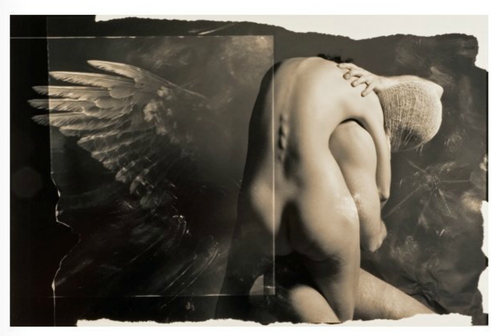
Photo credit:  wakeup-world.com

Late Afternoon Blank


Late afternoon, she asks the silence, “How many nows do we get?”

Infinite, as time slips past the moment always–no one answers.

Must be the caffeine under load, the crash after so many hours awake.

“These particular seconds feel dry, in need of plumping,” she adds,

sucking dew-lipped petals in bloom while sprig leaves turn in shame.

Amid the giants slashed beaming rays the sun dust coats the light

pastels of the sky drooped through the branches spill chestnut 

splattering solid pane of an ever adulterated blue, one poison pale.

Arc of the illusion, placid rivulets dribble past plastic encased feet,

“I know I will never pass here again, this earth, this sky, these trees

at this time of day.” And the hiss at the tail of the “yes” lingers a little.

The crackle of vinyl absorbed whistles becalms the watching birds–now.

An empty canvas missing minutes lies blank, only us inside at the edges.

 
photo credit:  http://frothmagazine.com

Camping Inside Out

 
The world as colors and shapes, moving forms

a distance, silent mouths forming wordlessness

a seat at the window safely piggy backs society

the vitrine protection dividing in from out unreal

keeping clicks where they belong, in finger flight

and pad ticks, far away from the tongue stealers 

those who would en-web you in their sale spells.
 

Where I finger thrum on wood thin counter tops,

jittering quick shot the espresso electrical shorts

and spy on the unconscious pacing and dodging

the bots with electronic ears in elephantine slog

they drift and separate, crawl inside their spaces

cocooned til the spring of their dawning moment

the one where memory reaches the track’s end.
 

Those mouth dropping shock seconds of where-?

When did the wall of puzzle pieces appear and

how long ago did the trash can cut music notes

while the airbus busied itself as a kids’ toy store?

The pajama’d trees passed me by while I sped

past birch beads encircling a neck slip into brew

dipped in twenty true coffee grains indissoluble.
 

No matter for the mindless masses none notice

but for their double exposure, shadows on glass

juxtaposed on a manicured verdure hip and free.

Brown on black, olive on pale, face to facing skin

empty gestures mock and mime the cruel illusion,

one that paints them imperfectly distinctive matter.

This art breathes no reason splayed and kneeling. 


The Science of Happiness

  
Credit: http://image.clipdealer.com

The expanse between the question mark and the period
impossibly prolonged contains the secrets of all seekers. 

The distance run between confusion and understanding
measures the precise extent of pleasure in our pursuits.

The conquest of cause and effect links us to the principle
the paradox of seeking, knowing and adapting to facticity.

And once we find it, the answer, solution, and knowledge,
our joy ends, for the tickle of the quest vibrates happiness.  


Malice in the Mirror:  Through a Suburban Looking Glass


Who am I to play the ponderous observer, 
sitting here on the patio of a plush restaurant, 
having eaten an overpriced salad, 
imagining my calories sumptuously slide by 
in smug gustatory content, 
and getting buzzed on craft beer 
while watching suburban life pass, 
above the plashy roar of a flawless fountain? 
This is not LA. 
This is not a methadone withdrawal 
or a return to the streets 
after the sync of incarceration’s rhythm. 
This is a frightening freedom squandered by the free.
You are not free.  
You and I walk in tremulous chains, 
cybernetically sealed to another, 
the system, 
the great opaque that wants to nail us 
gripped to rusted metal and splintered wooden cross 
of slamming bars and broken people, 
dragged down the rabbit hole 
of small minded manicured degradation 
and gargantuan monstrous hate.  
I want to scream at them as they stroll by, 
selfies for two underneath the fountain:  
You don’t know what seethes beneath you, 
around you; 
everywhere there is misery abounding!  
The ignorance of bliss astounds me.  
I was there.  
I have returned there.  
What can I do to keep them a’wing, 
those born to suffer and cycle their lives 
through bars and pain and hurt, 
knowing nothing but blind beatings 
of bedraggled flightless wings, 
rejection and disengagement, 
love lost and forlorn, 
never gaining a step ahead of themselves?  
Desperate yowling dogs hound me, 
howling out my name–Impostor.  
I hear it and cower, 
hiding beneath the blankets of my lonely comfort 
of a solitary bed in the safety of my unkempt room 
like the mind of its inhabitant, 
overgrown wilderness, 
unattended, 
abandoned.  
I want to transcend but cannot muster it.  
I see the will in its distant form.  
I feel the stirrings.  
I smell smoke and I cave, 
whipped with carcinogenic wickedness.  
I cannot contain myself.  
And thus, 
I am not the wrong target 
for systematized paralyzed equalized 
misfortune of the sick and tired, 
the sick and poor, 
the sick of it all.

Picture Me Picturing You

Man is the only picture-making animal in the world. He alone of all the inhabitants of the earth has the capacity and passion for pictures . . . Poets, prophets, and reformers are all picture-makers, and this ability is the secret of their power and achievementsy: they see what ought to be by the reflection of what is, and endeavor to remove the contradiction.
Frederick Douglass

/home/wpcom/public_html/wp-content/blogs.dir/e19/64332962/files/2014/12/img_0310.jpg
Edward Jean Steichen’s Gloria Swanson

In manipulating the presentation of information in a photographic negative, the Pictorialists injected their own sensibility into our perception of the image—thereby imbuing it with pictorial meaning.

We are all poets for what is a poet but an image maker?
We are all imagists.
We imagine we see in others what is, what will be and what we have always wanted.

The fiance envisions the perfect wife in spikes and aproned pearls,
nymphomaniacal lover and cookie-baking Cleaver mother.
No matter that she is not the one;
he sees those features in her nevertheless, more or less.

She can cook.
She likes children.
She looks great in heels.
He makes her fit the dream of his waking.

Who is a husband but a movie projector to the screen of the chosen one?
He depicts desire–figure framed photo of his ideal in ribbon and steel.
Meanwhile, she is his pocket and his purse, the hand up his sleeve making his jaw move.
Her world spins his above their heads.

What is a lover but someone who ‘shops the photo of her future mate,
rich in charms, clever to the touch,
sexy in her arms, ambitious enough for a sensitive side–
though she has never met him?

What is the unfaithful but a husband who paints his mistress the un-wife?
What is a poet but the mistress of make-me-love, hers for the taking?

/home/wpcom/public_html/wp-content/blogs.dir/e19/64332962/files/2014/12/img_0311.png
Castell Photography on Vincent Serbin

I generally experiment with ways to artistically illustrate human thought. By human thought I mean- to present an image that expresses the way we perceive the world. The way our visual system assimilates information ( i.e. two eyes see two images and those two images are processed by a brain) and creates an interpretation of a moment. So in my work , when I juxtapose two images ,it reflects the way our visual system works but, in a sense I’m eliminating a function of our visual system by presenting two images instead of one. This I believe offers a fascinating way of reinterpreting the world.