Happy Mistress Day

IMG_0365
credit: rlv.zcache.com.au/

Tomorrow is February 13th, unofficially titled “Mistress Day,” the day ‘the other woman’ gets her recognition since Valentine’s Day is obviously off limits.

Infidelity Examiner, Ruth Houston, reports that “Cheating Valentines” are planning their Mistress Day events with purchases of flowers, romantic lunches or dinners, expensive gifts and hotel rooms. The beneficiary industries to this “holiday” could not be happier, except for Hallmark, whose marketing teams, I would imagine, are still struggling to figure out how to navigate around the delicate nature of a card for such an occasion: “Happy Mistress Day–hope your wife doesn’t find out…Love, you know who…” I don’t see a cheerful poem for this card, but it does not surprise me that there are sites that offer such a ‘holiday’ greeting.

Apparently Houston, an “infidelity expert,” intends this article as a warning for married women, who she refers to as “unsuspecting victims,” to beware on February 13th of their husbands’ long absences or significant dip in finances. In preparation for the 12th Annual Valentine’s Day Infidelity Awareness Campaign, she provides a link to this event in her February 10th article “Cheating Valentines already making plans for Mistress Day.

Happy (or Unhappy, as the case may be) Mistress Day! Shhhh..

A World with no Mistresses

IMG_0353
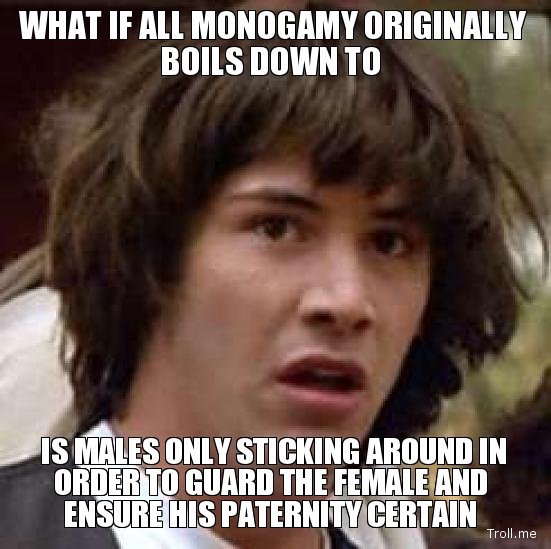
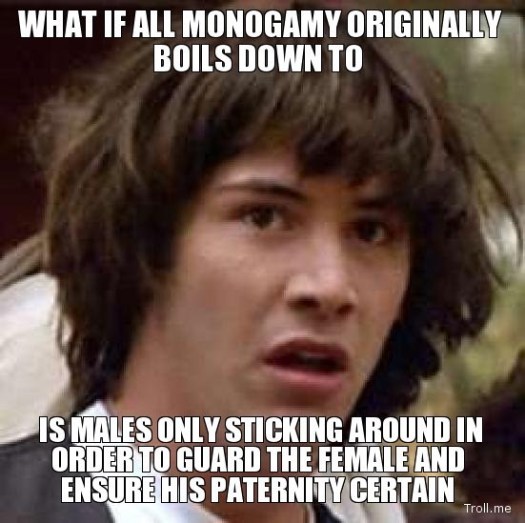
credit: http://www.troll.me/images/conspiracy-keanu/

A world without mistresses is a world that prizes honor above all else. This mistress-less world or region or culture raises children not merely to believe in themselves or to obey their parents, but to honor themselves and others.

That is not to imply all mistresses are dishonorable.

What is honor? As a verb (per google), it is to “regard with great respect” and synonymous with “esteem, respect, admire, defer to, look up to; appreciate, value, cherish, adore; reverence, revere, venerate, worship; put on a pedestal.”

It also means “pay public respect to” and is synonymous with “applaud, acclaim, praise, salute, recognize, celebrate, commemorate, commend, hail, lionize, exalt, eulogize, pay homage to, pay tribute to, sing the praises of.”

The second definition is to “fulfill (an obligation) or keep (an agreement).”

The honor that means respect, defer to and appreciate is half the meaning of the honor that eliminates the need for a mistress. For what is it to honor the self?

Honoring self means first knowing the self. Those with self esteem believe the self worthy of curiosity and thereby knowledge. Knowing thyself as the ancients and moderns recommend for a happier life–or more meaningful, anyhow–is key.

To take inventory of the self, one’s traits good and bad, is the first step. It takes honesty, something simple in concept, difficult in practice but is that which makes honor work.

Taking frank inventory is difficult because we delude ourselves, suffer under preconceptions inherited by our parents’ stories and opinions of us that we mistake as our own.

Sometimes we do not know our own voice from others’ in our heads telling us we are kind, pretty or argumentative.

My mother always told me that I needed to have the last word on everything, that I was argumentative.

Did she label me so based on my tendency to challenge or her interpretation and reaction to being questioned? Perhaps that “confrontation” was actually curiosity or clarification by a nervous, perfectionistic kid who wanted to make sure she got everything right. If she told me to do something and I asked “Why?” was I challenging her or trying to understand? Her perception, as a busy mother of 5 kids, was that I argued.

We are complex beings and require vigilant and continuous monitoring, listening and considering to understand what we do and how we do what we do: our motivations, desires and traits.

A culture that prized honor would encourage in schools, on billboards and on television, deeds of self-respect. It would teach children not merely to quietly and mindlessly obey the commands of a teacher or words of an adult, but to stay quiet in order to listen to their heartbeat and breath.

Training them young to focus on their bodies, paying attention to its sounds and sensations, would be a foundational step to knowing themselves, easiest commenced with the physical. They would learn that how they feel is manifest in the physical and certain thoughts create physical reactions. They would know, “When I am afraid, I forget to exhale.”

They would learn yoga to keep their bodies in focus and minds quiet. This preparatory practice for meditation is required daily to hear, feel and understand themselves. It takes a quiet that is deeper and stiller than mere mouth closing.

Not that yoga and meditation are the formula to acquiring knowledge or a happy society. But those “indoctrinated” (we are all indoctrinates of a time and place) in the benefits–the necessity–for what these yield–inner focus and listening to one’s authentic voice–fare better in the odds of achieving self-knowledge requisite to honoring self.

To honor self requires self knowledge and honesty. If I know truly who I am, that I am argumentative, kind, clumsy, perfectionistic, fair, foolish and the rest of the adjectives to fill up the half dozen pages or so, I can fairly represent myself to others and circumscribe or expand my life to fit those known attributes or liabilities.

Able to accurately represent myself, I can choose those with whom I enter into agreements, knowing the wisdom of doing so and understanding humans as organic beings; we change and so our needs and wants shift.

This brings me to the second part of the definition of honor, which is fulfilling agreements. All relationships are agreements and thus negotiable.

If I honor you, I come to you honestly. I tell you who I am to the best of my ability. I present myself in hopes of being accepted as that bundle of stuff at that particular moment.

I look at you and run as fair an assessment as possible of who you are and then evaluate whether we bring enough to one another to enter into a relationship at all or if so, to what extent, degree or duration.

If I know that I am a monogamous person but you are not or are not to the same degree and definition as I am, then I must not expect monogamy from you or not enter into a relationship with you if I cannot change my need or expectation for myself.

This all takes the respect to accept people, including the self, as they/we are. Easier in an ideal world that values honor, honesty, knowledge, and integrity above all else, more than money, competition, power, blind obedience, or equality.

When people enter relationships with a firm grasp of their strengths and weaknesses, they offer an other both limitations and options for growth, romantically, sexually, financially, and communally. They offer avenues of achieving goals and desires.

They also bring liabilities which limit growth and possibility.

Think about the odds of finding the ideal match for child rearing and reproducing, financial and emotional support, sexual compatibility, friendship and trust. If you could design your life and honestly acknowledge that who you are and what you want requires serial relationships or multiple relationships throughout time or at any given time to achieve that, your odds of success would be greater if you found someone(s) like minded.

So, if you lived in a society of candid communicators that believed in respecting self and others, honored them, you could have the frank discussion of who you are and what you need.

And partial honesty severely limits what I can do with you, how much I can depend on you and what barriers I have to create in order to work around you to enjoy other aspects of you. I cannot place delicate and precious things in your hands.

But when the odds are in favor of meeting likeminded open and honest people, I could be engaged with people for as long as and in as many ways as I wanted and needed. I could agree to monogamy until that was not right for either or both of us with the understanding that all relationships are negotiable. Cheating would be eliminated. All would be negotiated.

Not that feelings would be spared and misunderstandings or cheating wouldn’t occur. But the likelihood of cheating would be reduced. The mistress would go out of style if the society that honors self and others, realistically, openly communicated their needs and desires.

Capable of loving many and so consensually enter into relationships with several open, honest and communicative people at once, true polyamorous people contribute to that potential of the mistress-less world.

True polyamory, to my understanding, eliminates cheating. It takes work to live in polyamory, more work than keeping up a lie of monogamy. The former is active and constant while the latter is passive and repressive.

Honesty and communication are acts of honor. They are crucial to monogamy or polyamory or any healthy, happy relationship and are a constant practice for readiness to understanding and acceptance.

The mistress exists and has existed for many reasons. Historically, she filled gaps for royalty politically not romantically married.

Today, she fills another kind of gap, which is the monogamy gap. It appears between what we say we want and need or our society prescribes for us and what we actually do.

She also exists because some live for risk, adventure and danger afforded only by secrecy and the forbidden entwined in her.

In that ideal fantasy world of honoring self and others, where would the clandestine loving seekers go for the thrill of the forbidden?


Why We Do What We Do Sometimes: Compartmentalization and Fantasy

IMG_0343
credit: https://s-media-cache-ak0.pinimg.com

There are many reasons for infidelity, such as revenge, boredom, the thrill of sexual novelty, sexual addiction. But experts say that a large majority of the time, motivations differ by gender, with men searching for more sex or attention, and women looking to fill an emotional void…. Women tend to have an emotional connection with their lover and are more likely to have an affair because of loneliness.

I googled random words that popped into my head yesterday, only a few that I recall now that I have wandered far from my original search–crisis, conscience, fidelity, causes–and found the above webmd answer to the inquiry, “Why do women (and men) cheat?” Having researched infidelity endlessly in the last six months, I was pretty sure I knew the answers. Yet, as each new search yields slightly different results, I keep returning to the inexhaustible topic.

Paraphrasing here, despite feeling guilty and regardless of how “the other woman” compares to their wives, men cheat when emotionally dissatisfied, i.e., feeling under appreciated or unloved, according to Dr. Gary Newman’s study of 200 avowed strayers. The proposed solution: Wife, get out of yourself and pay attention.

The article teases out the commonplace and dresses it up with officialdom in a reader-friendly version of the study findings. There are few details of the subjects, questions or demographics. But do we need a study to come to the banal conclusion that marriage breeds contemptuous familiarity, human nature tends toward the unconscious and ungrateful, and daily presence and gratitude is the answer to so many of the questions?

Presence:

How can I be kind to my husband and show him how much he means to me with the daily do’s grinding me into the ground: work, kids, parents and the myriad other balls I juggle to keep it all going, each taking huge chunks out of my time, patience and happiness on most days?

Simple, I remark to myself. Stop, breathe and re-set. Do the enormous work of superhuman strength to take ten minutes out of the day for a gratitude inventory: people who care deeply for my wellbeing, who would suffer horribly if I died or fell gravely ill, even if it doesn’t seem like that most days. So that when I mindlessly knee-jerk react to my husband’s insignificant screw up, I can at least apologize and salve the wound. And just maybe avoid the knife altogether next time. It takes practice.

So the next time he goes out to get 2% milk and gets nonfat instead without an inkling that his kids would never drink that, I refrain from laying into him, complaining how clueless and checked out he is. No one wants to feel dumb. No one reacts well to unkindness. I marvel at how I give strangers on the street more kindness than I give my people sometimes. Just unjust.

But kindness is not a panacea and presence is not easy. Some cheat even if they feel good about and are well-treated by their spouses–to what degree I have no idea, but articles abound with studies attesting to infidelity even among avowed happy homers. People stray for as many reasons as there are people, my weak math brain speculates, as each individual comes to a relationship with his or her own nature and nurture.

Compartmentalization:

The human mind copes with conflict in unseen ways. Mindfulness–a condition for catching self-deception in action–is tricky when it comes to danger triggers and survival mechanisms. I have observed that clandestine relationships survive largely on compartmentalization, which is only one tool in the human arsenal of coping skills.

We parcelize ourselves in order to make sense of what we do. For instance, I have been known to be an overly conscientious mother and daughter but a neglectful wife, at times, and I rationalize that deficit by focusing on the surplus.

Likewise, a man in a strained or dying marriage may justify an affair by weighing his acclaimed superior fathering and provider skills against the undeniably less superior husband skills attested to by his wife and his own admission. But since he is a good father and provider, he believes he compensates for the few failings as his wife’s lover, friend or supporter. She gets her due, so he should get his.

That is just one example of guilt-alleviating separation that keeps folks moving along through their days and in their marriages until either or both terminate. But it’s not just for cheaters. Many sites I consulted on the subject such as Psychology Today and Webmd, cite professions that necessitate compartmentalization. Soldiers, for example, seal up the killing to survive the mental anguish.

Compartmentalization is often survival, no doubt, especially for those with high powered jobs widely responsible for others’ safety like police officers, doctors and lawyers. A doctor could not work without burying the constant threat of lives lost at her hands.

To a lesser or greater extent, we survive emotional infidelity by splitting ourselves into bad and good, justified and unjustified. This disassociation answers the question of how she could fuck her lover each afternoon and then spoon her husband to sleep each night. But is she aware of the division?

Fantasy:

We all come to situations as we are. No kidding. Some of us are, and I do include myself, if not outright addicted then highly reliant upon fantasy to prop us up through hard times or as the go-to coping mechanism. I know I dealt with teenage loneliness in fantasy. It gave me the endorphin boost I was later addicted to in distance running.

If I imagined that someone to whom I was attracted also found me attractive as THE object of desire, I smoked those elaborate imagined scenarios with that special someone who found me irresistibly witty and charming, and so, so deep. I would inject the role of lover in love songs, succumbing to the bitter-sweet surrender of being someone else, somewhere else for a while. It was release.

Some people use love to obtain that high even into adulthood. While life sped up for me so much that I lost the luxury of hours mulling in my imagination–school, work, real relationships that were not so ideal and took a lot of rolled-up-sleeves ugly work–I still had spells of disappointment or a generalized ennui that was relieved by lapsing into fantasy.

Specifically, when I found myself in a restricted relationship by borders of time, emotional commitment and opportunity–mistressing, for example–fantasy played a huge part for me and my partner. It sustained the relationship and certainly heightened the sex.

Intention:

There is an interesting thing about daydreaming and fantasy: Sometimes it works to manifest what you want in life, and other times it keeps you stuck in your life. What makes the difference?

The difference has to do with your intent. Are you consciously imagining what you want from a place of inner connection and joy, or are you using daydreaming and fantasy to avoid your feelings and avoid reality?

When you consciously and joyously imagine what you want, you are participating in creating what you want. However, when you use fantasy and daydreaming as a way of avoiding your feelings and avoiding the reality of a situation, you are using them addictively.

So says Margaret Paul, PhD in “Addiction to Fantasy and Daydreaming.” I agree. Intention is everything–almost. Fantasy spans the poles of medicine to poison.

When abseiling the steep slopes of rocky terrain–deep, existential loneliness or disappointed dissatisfaction in a life partner choice–unhealed lovers or spouses find respite in the life-supporting ropes of daydreams or fantasies of another’s possible meaning or potential in some improbable space and time of the imagination.

This human tendency, whether for avoidance or enhancement, as addiction or inspiration, no matter how dilatory to healing a relationship or the self, was certainly pronounced in those who made me mistress. That is one of the things all lovers had in common: being in love with feeling love and their projected ideal–in me. And I did the same for them.

My illicit loves were all drenched in rich fantasy, which has made each relationship both an irresistible draw and a resounding alarm. While I heard all I desired, all the tailored words and acts calculated to keep me–or my image–I placed a padded, porous cotton circle of safety around my heart.

Because in time I knew that I knew. Looking at myself from the outside as if in a metafictional moment, an actor slow turning away from the scene to wink at the unseen, unknown audience, I broke the fourth wall. I toggled the strutting and fretting between falling in and out of my heart’s desire in dangerous liaisons, which accounted for my enjoyment and sanity within them.

Of course, there is living in the moment and then there is all the rest. When I was with my lover–in that room or car or restaurant–looking into the eyes of the object of my reciprocated desire at that precise moment, there was only the thickness of amniotic warmth, need and desire in perfect balance.

And the other pole–fear, longing, insecurity, conscience, dissatisfaction–drifted in and out of the majority of hours spent without my lover, sometimes striking me with a punch and other times with contemplative concern.

Most times, however, I just went through my days attending to what was directly in sight. I still do. And hope that sleep, my most beloved and ardent lover of all, returns a new day with answers, insight, solution or simply more of the same as all the other yesterdays–practice.

Presence, intention and study are disciplines that enable me to dip into the copiousness of heart pumping inflow and outpouring. Some days it is easier than others to see myself and others with incisive clarity. Others, I fog over.

However, the intention is always there. Struggling with the practice, sweating the line of possibility and decency, creation and destruction, I awaken each day resolved to do the best I can even as I want to do better than that. And so I get up, falter in a slight sway, and get on with the business of another first step to somewhere.

Windowed Away

2015/01/img_0327.jpg
Credit: i2.wp.com

Some people alight upon my life and walk apace awhile.
Others come and plant seeds that root belong-with-me,
even if merely for that moment, those days, those years.
I met just such a woman who came upon me suddenly,
though it was obvious I was asking her, “Come find me?”
And she did set foot upon the soil of my soddened lands.

We had nothing and everything in common: music, play,
hopes, dreams, fears, and all the unspoken known things.
She liked all the teams I couldn’t and ate what I wouldn’t,
like meat-burgers and fries for lunch on every other day.
From the south was she and I the north; she was waves,
I lines, but neither size nor shape moved us, not our taste.

We mattered to one another in most ways, assured ones.
She had the same window in her house, though we lived
in two different worlds facing polar ends of the same earth.
Our windows opened to onlookers peering in on mimicry
as if an ex ray technician looked down the bony guts of us.
We let the air open space flow alike in each our breaths.

But I have never visited her house, so have not looked in,
only glimpsed shots, yet she has walked under my window.
She has eyed me pacing the kitchen floor and mumbling;
she knows how I fold my clothes in too hurried an un-care
so that corners are not crisp and the shirts are not square.
She has spied the crackled walls of sun bleached golden.

Too, eyes witnessed my children laugh and fall to the floor,
her sight-following the line of their dance or pitched glares.
And I memorized photos of her children, callows and cars.
Though I have never stood, and may never glance there
not in front nor from any angle un-before her open window
where others tread her sandy yard on tippy toe’d high view.

She keeps the keys and I the lock but only in third space
where bespoken desire kept in cranial play, hands sleight,
strong caressing visions malleable as clay in divine heat
baking dust forming bodies from sleeping nudes raw lie.
Or not she but the neighbors circumscribe ruled borders
that walk the metes and bounds writ in maps and books.

In a dream, I am a-wing to her window open wide waiting
and through it I can see soft cornered shirts un-squared
and foot traces of trails paced fretting the kitchen tile floor.
Where acne’d stares beam dull, disillusioned indifference
among feline’d fallows, howling chuckled comforted glee,
and rosemary floating breezes clung to seamless walls.

Mistress Gone Ballistic

2015/01/img_0322-0.jpg

I have written of the lure and power of confession before, the cost and benefit to confessor and hearer. Clearly some confess to atone, to bring on the flogging. That is what must be going on in this short advice column Q & A in elle.com, “Ask E. Jean: The Other Woman Etiquette.”

Surely there is a plea to be judged and condemned by the inquirer and E. Jean the advice columnist is only too happy to do so. Why else would a woman expose herself so when she could have easily kept it to herself or sought less public advice, like the therapist E. Jean suggests? I have to wonder at the authenticity of this piece. If not for self-flagellation, what motivates someone to seek an advice columnist, exposing herself publicly to disdain, being judged as someone so crazed or callous as to have committed the act for which she seeks atonement? Maybe it’s made up.

I am not judging (though it sure seems like it). Crimes of passion happen and are treated differently in the law from murder by reason of just that sort of mindlessness that negates intent to do harm, the lack of premeditative hurt and the acknowledgement that this state of mind is part of being human all too often. Some acts are far too provocative–say, catching your wife in bed with another–so that collateral damage is if not excusable then predictable at least.

But I always pause when I read about passion disasters, ponderous at those reported burns so deep that the blacked out mind ceases to direct the body’s actions any longer. Don’t get me wrong. I have suffered blind rage and mindless ecstasy. Perhaps I have been fortunate not to have utterly destroyed anyone or anything in my wake of near total obliteration, not that I know of anyhow.

Only near total obliteration. Somehow the little cricket conscience has chirped audibly enough for me to catch my breath, effect a re-set. The thought of destroying someone else in rage has no doubt occurred to me, but the gear shift from thought to action is sobering. Because sometimes it is just too late and too tragic to say I am sorry. That is what E. Jean and I believe about this mistress story. I have copied the entire short advice piece below.

Dear E. Jean: I have a question about the etiquette of being “the other woman.” The married man with whom I’d been having an affair told me I was “too needy” and that his “shoulders are not for [my] problems.” I was so angry that I texted his wife and ratted him out. I also called his sister and mother-in-law and told them I was pregnant with his child.

It was a lie. I was not pregnant. But I had reached the end of my rope when he ignored an important text I’d sent him. I was not only furious about being ignored, but I was hurt because he was emotionally unavailable to me. Now I feel terrible about what I’ve done. This is not the kind of person I am. How can I clear my conscience and move on from this? —Wronged Woman

Woman—Please: The man is a scoundrel. He was unfaithful to his wife. But you? What you did was so cruel, so half-witted, so dirty, so over the top, causing so much pain to so many people—and if any children suffer the slightest anguish because of your lie (if the man has kids and you cause a divorce)—I don’t want you to “clear your conscience.” Actually, I want you to go to a therapist.

WE RECOMMEND
Ask E. Jean: How Do I Make Peace With His Ex?
The shrink will help you understand that a married man is by definition “unavailable.” (I have the sickening feeling that you’re one of those sparkling Paula Broadwell–esque hotheads for whom “uproar’s your only music,” as Keats said. Hence, I’m not going to yammer all day about therapy. I just want you to give it a whirl and see if you can grok what’s going on and come to a deeper, truer understanding of your life.)

For your own honor, you must now write three letters. The man’s wife, his mother-in-law, and his sister should each receive one—handwritten in ink, on serious cream-colored stationery. Apologize for your heinous lies, take full blame for the affair, and say you led him into it. Yes, we know he’s a bastard. Yes, we know you’re not the Dalai Lama. But make this your one great, selfless act. Your remorse and honesty will restore your dignity, help three people deal with a catastrophe, and show what “kind of person” you are, really.

Big Week in Mistress News

2015/01/img_0321.jpg

Sunday is pandering to the public’s need to know day, apparently, because I am about to update readers on the latest in mistress news. But seriously, there is more motivation to critique the reporting of these events than to merely report these “compelling” mistress happenings.

First up is this eye-catching headliner from gawker.com: “60 Minutes’ Steve Kroft Guzzled Champagne from Mistress’ Ass: Report”. Here the big news is a celebrity newscaster had a three year affair with a Manhattan lawyer for which he was sorry and is quoted as apologizing to his wife with whom he has a kid. Of course, that in itself is not big news. No, to make this story newsworthy, piquing the public’s prurient interests, the gawker publication had to include copies of the illicit couple’s sexting, brought to everyone courtesy of the infamous National Enquirer. Thus the titled headline grabber.

Note that had the cited behaviors or sexting occurred between Kroft and his wife, even the National Enquirer would not have escaped criticism–or worse–as most readers would have been offended with such an outlandish invasion of privacy. But when it comes to affairs and celebrities, all bets are off. I got the distinct impression that the story was way too common place as a mere celebrity with a mistress report, so the piece had to be beefed up with something juicy. Thus the sexts.

In other less than stellar news reporting, the late Sammy Davis Jr.’s avowed ex-mistress became the latest in a long line of accusers, 24 or more, to step up in remembrance of being raped by Bill Cosby in USAToday’s report of a couple of weeks ago.

She describes the surprise attack, which occurred in the early 70s when she went to Cosby’s hotel room with barbecued ribs in hand, as one that left her stunned, particularly since she knew Cosby as a friend to Davis. Her stated reasons for not reporting the attack earlier were the prevailing attitudes about rape 45 years ago, her confusion about a friend rather than stranger in a dark alley rape and the awakening of her long ago repressed memory by the recent revelations of Cosby’s other alleged attacks.

It seems the writers did not pursue the going-to-Cosby’s-hotel-room-alone- bearing-ribs line of questioning. How many will read this article and think she is suspect merely by virtue of her being a professed ex-mistress? I would be surprised if there were no more than a handful.

Cosby himself has been the subject of many articles in the past year, all of them increasingly cognizant of his fall from a pretty high pedestal. Six months ago, the indulgences apparently went to him, the celebrity of notable clean, comic wholesome fun with family values. For example, uk’s dailymail ran an article about him in August of 2014, headlined with Bill Cosby’s dumped mistress and her mom having dinner with him. That is apparently the lead-in lure, but the story is a rather warm-ish more than critical story about Bill Cosby, ending with his heh, heh, heh parting remark on the Jimmy Fallon show that he got “some” from his wife on his 77th birthday and alluding to the trials and tribulations of an aging sexual guy with husbandly duties.

However, prior to that, the article matter of factly outlines the sexual abuse accusations, the long term affair and breakup with the subject mistress, as well as the lawsuit by a former lover claiming she raised his love child, the latter having gone to jail for extortion after she threatened Cosby with going to the tabloids. The most interesting part of the article is this excerpt from Cosby’s wife explaining how they were weathering the storm, discussing a time when the Cosbys had focused on ‘selfish needs’:

‘We were both young. We had to go through a lot. It’s difficult to learn to live with somebody, to be unselfish and to be responsible for your behavior – and even to think how you hurt others if you do certain things.’
‘You go through a transition, if you are committed to each other. You cleanse yourself of all of that baggage, and you look at each other and determine whether the relationship is worth salvaging, whether you really love each other and want to be together.’
‘Then you realize, ‘Wait a minute. I might have been doing this because I just didn’t want to think about how this would affect the other person or to allow myself to love someone with emotional intimacy’.’

She claims, I think, that Cosby’s ‘dalliances’ are the result of avoidance behavior, fear of emotional intimacy with a spouse or denial behaviors. Camille Cosby, a PhD in education, appears to be a very smart woman, and she is standing by her man. After all, what does she gain in vilifying him? She is not running for public office and is probably financially secure. Apparently she knew he was a philanderer, perhaps just not the extent of his behavior. And of course he is innocent until proven guilty though it is tough to overlook so many accusations. Defending her husband of 40 something years, a private and personal duty, surely trumps her civil duty to the female victims. Or does it?

Finally, there is the latest and greatest on an old mistress scandal, this one the most logically troublesome. Former CIA director and General, David Petraeus, is accused of having leaked classified information to his then mistress and biographer, Paula Broadwell, which could lead to felony charges.

The businessinsider article acknowledges that Petraeus’ affair was not so much the big deal (imagine that: a politician with a mistress) as the potential threat of blackmail or leaks, such as those he is accused of having made, that skewered his personal life publicly–clearly an exclusion from the wink wink exemption of the age old good ol’ boys’ mistressing practices.

So four different journals, from gossip to news, cover four different mistress stories from four different subjects: an unknown, two television celebrities and a high-ranking government official. Each is accorded the credibility afforded by society’s attitudes. The unknown mistress gets a salutary news spot in a daily gossip riding on a bashed celebrity’s coattails. The two celebrities get the usual free pass of a double sided nod playing up the public’s interests in illicit affairs of stars with intent to tarnish–or further tarnish–their reputations even while exploiting those celebrity reputations for the hook. That’s because journalists know the public both adores and excoriates celebrities, most likely due to the fame-lust that elicits both adoration and envy of those who have acquired it.

Fame is a shield, almost magical; it makes people turn away in disinterest or in wary suspicion of accusers assumed to be extorting from a monied star. Bill Cosby may still be riding that magic carpet ride: old stories, why didn’t they come forward sooner, paid off, wanting more money or attention, etc. Of course, the jury is not only not still out, it may never assemble. The play in the public sphere for sympathy and the power of fame and money may be the only “justice” on display here. And where there is power, fame, and money, there will be mistresses, adored and abhorred.

But the real power is in the consumers. The public are mostly predictable, sometimes quirky judges. They are a mix of salacious salivators, moralistic finger waggers and jealous girlfriends hooked on fantasy and soaps stories. And when they turn, as quickly as a rising star, public figure, or complete unknown can float the wave of notoriety or popularity, is as deep as they can drown and disappear. Power to the people.

Ghost Marriages

Ghost marriages? Though ghost marriages are historically reported, and thus are real, the metaphoric possibilities of the concept are far more interesting.

Ghost marriages were an ancient Chinese practice to ward off loneliness in the afterlife. The “arranged” betrothal of an unmarried deceased family member occurred when a corpse match was found to bury beside the unmarried one, usually by a relation, resulting in the intended eternal union. Though contemporary China has discarded the practice and grave robbing is outlawed, there still exists practitioners in rural areas. In fact, just last October, the BBC reported a grave-robbing incident by eligible corpse seekers, which led to arrests.

The idea of a ghost marriage is quite frankly creepy to me, but that is most probably due to my cultural predispositions. As the short TED talk featured below describes, marriage is an historical institution that is shaped by the ever-changing values and practices of a given culture throughout time. It is a flexible arrangement that conforms to the people who practice it.

But a ghost marriage is precisely what some people have, whether intended or not. Let me belabor the obvious with an example of the married couple, one of whom works endless days and nights and misses out on the benefits of marriage and family. A husband who works at an all-consuming job appears vacantly in the family functions of necessity, sometimes at dinner or breakfast before scurrying off to work. His mind is never really there, just his body. He is a symbolic figure as husband and father. Though he goes through the motions of patting his children on the head before leaping off to his car or makes love to his wife to keep up some semblance of duty, his presence is somewhere buried in what others need of him: his job.

Or perhaps his mistress’ siren call is the life-suck that keeps him a specter in his marriage. When he is home, he thinks of her and wants to be with her; she provides him with what he doesn’t get at home. He thinks of her when he does his husbandly duty to keep that circle sewn up, maybe even making it possible to complete the task of making love to his wife. He is a ghost husband.

But the ghost husband or wife may also be either or both in a marriage that has run its course, where both long to be somewhere else but remain in the marriage for the sake of the kids or for fear of financial insecurity or the unknown. The comfort of the well-worn patterns walked in the carpeted floor of the family home of thirty odd years is all that is left when desire and disdain have deadened walking bodies, zombies, that refuse to be buried. The glazed over lifeless eyes that gaze out the kitchen window onto manicured green flawless lawns of suburban safety reveal the truth.

A marriage is only as strong as its weakest member.

Marriage clearly is a highly improbable proposition. How can two people pledge themselves forever after in a lifetime of change? The inhabitants of this thing, marriage, are both the components and the encasement of that which has an independent existence itself. Marriage is both the sum of its parts and the excess, an entity in itself, an idea, a pledge, and a monument to societally structured love and order. It persists.

Like the jailhouse that stands separate from the inmates will continue to stand though the inmates perish, languish or thrive within, so too marriage survives beyond its inhabitants. The bride and groom pledge as much to the symbol and practice of marriage from wedding rituals to marriage licenses and filing joint tax returns, as they promise themselves one to the other.

Marriage tests the mettle of its subscribing members. Survivors of imprisonment and marriage–no I am not equating the two–make their world from within not without. Strong marriage mates can stretch, withstand and grow from pain, isolation and degradation yet do not stagnate in the long safe sailing days of predictability, comfort and security. Marriage is both stasis and evolution, the anchor and the ship.

Just as our bodies are garments we wear to weather the surrounding climate, so too the marriage protects us from outside forces that threaten us: disease, rejection, insecurity, heartbreak and restlessness. We trade possibility and excitement, stimulants from the outside, for the quietude and stability from within the shelter of marriage. Some of us need the staid grounding that strengthens us to journey far.

Some find themselves, what they’re made of, only in adversity. While marriage is the impetus for that discovery for some, ultimately, each of us finds within ourselves the necessary tools to make our own happiness wherever we are and with whom we are by self love; selfless compassion and forgiveness; fullness of time; persistence, presence and acceptance; growth in experience; open-mindedness and the ability to laugh at ourselves.

Picture Me Picturing You

Man is the only picture-making animal in the world. He alone of all the inhabitants of the earth has the capacity and passion for pictures . . . Poets, prophets, and reformers are all picture-makers, and this ability is the secret of their power and achievementsy: they see what ought to be by the reflection of what is, and endeavor to remove the contradiction.
Frederick Douglass

/home/wpcom/public_html/wp-content/blogs.dir/e19/64332962/files/2014/12/img_0310.jpg
Edward Jean Steichen’s Gloria Swanson

In manipulating the presentation of information in a photographic negative, the Pictorialists injected their own sensibility into our perception of the image—thereby imbuing it with pictorial meaning.

We are all poets for what is a poet but an image maker?
We are all imagists.
We imagine we see in others what is, what will be and what we have always wanted.

The fiance envisions the perfect wife in spikes and aproned pearls,
nymphomaniacal lover and cookie-baking Cleaver mother.
No matter that she is not the one;
he sees those features in her nevertheless, more or less.

She can cook.
She likes children.
She looks great in heels.
He makes her fit the dream of his waking.

Who is a husband but a movie projector to the screen of the chosen one?
He depicts desire–figure framed photo of his ideal in ribbon and steel.
Meanwhile, she is his pocket and his purse, the hand up his sleeve making his jaw move.
Her world spins his above their heads.

What is a lover but someone who ‘shops the photo of her future mate,
rich in charms, clever to the touch,
sexy in her arms, ambitious enough for a sensitive side–
though she has never met him?

What is the unfaithful but a husband who paints his mistress the un-wife?
What is a poet but the mistress of make-me-love, hers for the taking?

/home/wpcom/public_html/wp-content/blogs.dir/e19/64332962/files/2014/12/img_0311.png
Castell Photography on Vincent Serbin

I generally experiment with ways to artistically illustrate human thought. By human thought I mean- to present an image that expresses the way we perceive the world. The way our visual system assimilates information ( i.e. two eyes see two images and those two images are processed by a brain) and creates an interpretation of a moment. So in my work , when I juxtapose two images ,it reflects the way our visual system works but, in a sense I’m eliminating a function of our visual system by presenting two images instead of one. This I believe offers a fascinating way of reinterpreting the world.

Happy Birthday Madame de Pompadour!

One of the more famous mistresses, Louis XV’s, Madame de Pompadour (born December 29, 1721) was an innovator of style, fashion and letters and contributed greatly to French cultural life with the influence she garnered as the king’s long term ‘official’ mistress.

Here she is rendered (not the real one) strangely by pictorialist styled photographer, William Mortensen, who has been overlooked in the annals of photography greats for his unusual grotesque style in a time when Ansel Adams’ realism was more in vogue. Mortensen was influenced by Jung’s archetypes and ideas, which are prevalently worked into his work, giving many pieces a larger than life effect. Some of his art can be viewed, along with Madame, in the Smithsonian magazine article reviewing his work.

/home/wpcom/public_html/wp-content/blogs.dir/e19/64332962/files/2014/12/img_0309.jpg

Letter from a Former Mistress to Her Former Lover

/home/wpcom/public_html/wp-content/blogs.dir/e19/64332962/files/2014/12/img_0291.jpg
Credit: 3.bp.blogspot.com

Dear Wayne:

You have been the ghost of the week, haunting my harried holiday mad dashes and work hour drags. As long as you are hovering above my day, I want to ask you something. Though I’m sure you have so much on your mind these days with the busy-ness of work and family, I’m curious to know if you sometimes think of me. Somehow I know you do. Although so much time, over twenty years, has passed since we were lovers, I wonder which of our moments you remember most.

I apologize if that makes you feel awkward or is inappropriate to even ask. The holidays do this to me, get me maudlin and reflective. Do you remember that about me? So much to do and so much forced cheer and obligatory reflection, it’s like being dragged to church or synagogue as a kid–an empty burdensome rote task. We’d all much rather be out playing with our friends. But I must continue the crusade, braving mazy parking lots and frenzied shopping herds synced to the mind-numbing messages of good cheer, reverential-looking reflection and commercially-convincing gratitude encoded in the music piped into my brain in every shopping mall. There is no respite from the prescribed mood of the season.

In my brainwashed holiday cheer, I am picking through the dollar section of Target trolling for knick knacks for the little ones on my gift list today. Dutifully feeling grateful for those cute little great nephews and nieces of mine, I flash on a memory of the time you and I were Christmas shopping for Jenny, who was 8 then. You held up those Mary Janes covered in ruby red glitter and recited verbatim the entire monologue of the Wicked Witch of the West flitting and flapping above her crystal ball calling upon her minions to capture Dorothy and Toto. You spoke those lines with pitch perfect voice, accent and gesture, imitating every eyebrow lift and evil sneer emblazoned on the 35 mm film cells and in the memories of everyone who watched the Wizard of Oz from childhood to their children’s childhood. I laughed so hard I cried. You remember?

Your total recall of movie lines was astounding. But I could never figure out how you could screw up song lyrics, except to make singing the lines as misheard malaprops another way to get me to laugh…Doing Gypsy, “Let me just disdain you…let me make you smile…” I was more amused at your thinking you were funny than at some of the lines you tortured.

That’s what came to me. I flashed on the glint in your eyes first, the impish grin and twinkle when you had just made a funny. Probably the most prominent feature of yours etched in my memory is that smile in your eyes, proud and amused by your clever comedy. I smile inwardly (and sometimes outwardly) the most about our laughing together.

That’s the way it started. You passed that note to me in class with a cartoon drawing of a shark with a bubble above its head repeating what the professor just said about mechanics liens or subpoenas. I don’t recall the subject now, but I remember suppressing laughter not so much for the joke but for the silliness of the act itself. We were both close to or over thirty then.

You knocked me off my throne then, from the sequestration of the fearful, from proud disdain for team sports, polyester laden high school football coaches, silly songs and Republicans. I was so serious, trying so hard to be someone, while you were comfortable in your skin, your brown skin and black hair and thick lips. I never thought I would find myself in half lit rooms with thread-bare hotel sheets enwrapped in you. But I was, and it was wild and breathy and loud and sweaty sweet, your voice a soft baritone lullaby as we counted the stars imagined through the stained motel ceiling afterwards. Do you remember asking me if I could live the rest of my days like this?

Christmas gifts were a problem. You could give them to me, but I could not give them to you because they would need a convincing story of their giving. Not even chocolate bars or key chains. And I didn’t want you to give me gifts unreciprocated, felt it was not in the holiday spirit. Besides, we had to wish each other love and warmth and a Merry Christmas through a long, loving embrace in a car or in a park on the 23rd or the 27th, because the 25th was spent with silent cheers and clinking of glasses to your health for the year past and ahead while I smiled into the face of someone who was not you and while you blessed your family with your laughter and the glint in your eye that made someone who was not me smile.

Jenny is 35 now and I am buying Chanukah presents for her two little ones. You are not here with me in Target in the flesh, just as you were not with me on those six Christmases, Chanukahs, New Years, Thanksgivings, Easters, Presidents Days, Valentines Days and our birthdays. It wasn’t you who gently placed a hand on my shoulder as I lay in bed face down in my pillow in convulsed sobs the day my mother fell ill. And it wasn’t you who ran into the street with the blue tipped pee stick to shout in child-like delirious excitement to your brother at the corner that a baby was going to be born in February.

No, you’re here as you were with me so much of those years of our time: in my grin when I would hear a movie line of one of the many movies you could recite scenes from and insert into most any conversation or in the salt of my sweat when I awakened from a dream of our last love making session so real that I turned to search for your face peering into mine from the shadow on the pillow next to me. I found you in the ache of song and the edgy wonder of what it was like to have a family who needed you home, present in body and mind and not distractedly longing to be elsewhere.

Your image is ghostly now because the love that infused our veins in the thickness of syrupy desire and amnesiac release is frigidly lost to the lives of Christmases and school days past. I loved you hard as you did me. Only the threads remain of that blanket we wrapped ourselves in to keep us warm and alive, to survive the blizzard that trapped us and threatened our lives like the anger of banging heads bloody on the filthy cement walls of the prison, desperate with no way out. But we are alive and free to remember how it was.

I conjure you up today as if you were flesh and blood. I know you’re smiling too when my ghost appears. And sometimes, I know once in a while, we smile at the same exact time over the same silly note or line playing on the radio or overheard in passing conversation between friends or lovers at a cafe.

Peace and Love–