Something About the Bees

  
In fits of nostalgia, I have bemoaned the loss of bygone items and activities. No, not 8 tracks or vinyl, but more like the bliss of ignorance. Somehow, not knowing what everyone I know ate for dinner last night or that a hit and run accident happened in some town called Smartsville hundreds of miles away is something that strikes me nostalgic. I miss the quietude of select pieces of information entering into my sphere of knowledge. I miss the word intrusion that had meaning, not like now where it will be erased from common usage given that there is nowhere to hide from anyone else in the world.
 
In particular, however, I will miss the bees.
 
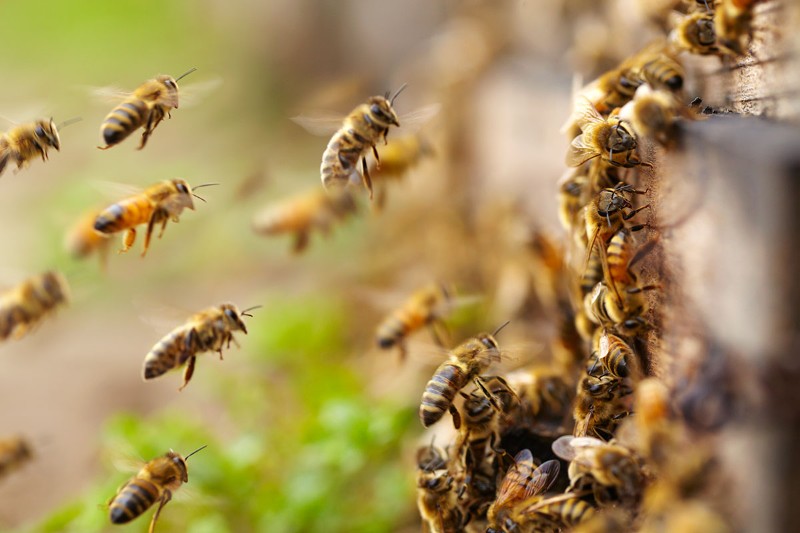
Not just because I grew up with them, just like I grew up with aluminum street roller skates and homemade skateboards of wood blocks mounted atop those skates. But because our world depends on them, more than we know. I am not an alarmist. I shy away from ringing any alarm bells for a cause as I am a subscriber to the crying wolf wisdom. Save the fire alarm for what most needs sounding. The bees need a five alarm fire warning, for they are sounding bells for us in their departure. Why are the bees leaving us?
 
Not that they are going off for good. Most bees abandoning us are domesticated slaves to the agriculture industry, shuttled from farm to farm to pollinate crops, but it’s not only the pesticides that are killing off these slave bees. Those in the wild know better than to go where the pesticides waft in the wind through miles of wheat stalks or almond trees. It’s also the stress. The suffering, farm-raised, overworked honey bees are one of the most threatened populations–enslaved pollinators chained to their instincts and the dollars that drive their keepers and chemical companies. While the EPA as well as the world looks away.
 
Bees are responsible for a third of all we ingest.
 
Agribusiness practices include bee transportation across countries where they are released to pollinate crops: a month feeding on blueberries then another month on almonds and another month on some other fruit or vegetable plants, season to season, place to place. Keepers earn their keep.
 
The artificial dietary conditions and non-stop travel schedule stress these insects that vibrate to one another and radar their stress all along the colony, a highly systematized bee industrial complex inside the hive. They want out.
 
The smart bees have left the building–abandoned their hives, collapsed their colony. They punched their final time card in the clock.
 
Stress and pesticides are forcing the bees out. Their disappearance is a message to those who can decode it. I will miss the bees.

 
Photo: Bobby Doherty

One for the Bees

Victory, most probably pyrrhic, for the bees last week in a San Francisco Court that ruled against the EPA’s approval of neonicotinoid pesticides, specifically sulfoxaflor, a Dow chemical product that confuses bees flight patterns, according to the New Scientist. Apparently succumbing to “public pressure” (Dow’s money and agricultural lobby?), the EPA approved the use of the chemical without enough viable support, tactfully stated as “flawed data.” This despite the known harm to not only bees but all pollinators, other insects and even birds.

The upshot: Fuck the bees. There’s money to be made.

But can we live without the bees?

They are critical pollinators: they pollinate 70 of the around 100 crop species that feed 90% of the world. Honey bees are responsible for $30 billion a year in crops.

The battle for the bee is not won, however. Though one of these nenicotinoids have been banned in the U.S., they have not been banned in Europe or elsewhere. Bees do not stay in one place. And other harmful pesticides are still in use–just not sulfoxaflor.

And while pesticides are only one of the causes for the dwindling bee population, they are a big contributor, one that can be controlled by human intervention. So hooray for the court’s decision last week, but so much more needs to be done.

Who will speak for the bees?

dn28167-1_800

Workhorses of a seething-bustling, 
strange, 
misunderstood 
and alien world that we barely see
its glory and gore
acidic stew of swallow
and cilia claws 
burrowed below
but for the infrequent frightful protrusion,
intrusion,
extrusion, 
threatening a sting, 
a bite 
or a siphon
sipping the living juices of us,
savagery in the encounter.
 
And yet they sustain those who would crush them,
self-defense or not, 
fill the undergirding of our world with germinating life, 
exchange and commerce in wildflowers of the fields, 
manicured gardens of urban rooftops 
and edges of the sand dunes. 
They nourish us with sweet meats 
of the trees 
and gifts of the earth’s panoply of gallant beauties
pageantry of roses, peonies and daffodils,
and green godly goodness of cabbage cool,
beans of the vine
and broccoli floret 
walnuts
almonds
Brazils
the browns of nutty seas.
You, pinpoint friend, swap the day away, 
flitting from one sweet hollow to the next 
wearing, 
ingesting, 
carrying 
and dusting yourself with your wares, 
plying your trade 
and all we breathe better for it
and eat 
and expire
respire by your daily toil, 
though your armies are micro
populated,
though thinning, 
smallest of the small, 
and most benign. 
Some will warn
look away
not to watch,
not to near 
or interfere
or swat 
our swelling flesh worse for the encounter.
Carpenters of the Carribbean, 
homed amid the yuccas 
and woods 
while others gnaw at our backyard decks right here. 
Crow swims in sunflowers and black-eyed Susans, 
carpeting himself the golden sun, 
while sumptuous sand specialists 
hang in the hills of North Carolina 
or the Eastern Shore dunes, 
skimming the edges for life. 
Affable-bliss, 
drunkard, 
drinks from his nose of a tongue, 
buzzing about the Badlands, 
sucking up sweets from the wells of bells, 
trumpet trollops of honey delight, 
a piña colada of rum and pineapple pollen bits.  
But big old bombus and Metallica and modest-us, 
modest in size, 
half a rice grain wide, 
who carries her goods inside, 
a vomitous gift 
her babies survive
or they die
too sick
sparse
poisoned
murdered
by un-notice
unseen
unheard
unfelt
turnaway.
Health of heart, 
health of earth, 
home to hordes
4000 kinds strong
all native North American
only 40 left home
to honeycomb here
home to homo-cides
ignorants
polluters
stung-greedy
core-less
suicides
who
deny
if they are we are.

A Curious but Obvious Notion

I nearly always practice yoga in the solitude of my room, yoga mat spread flat and cushy on the clearing between my bed and doors, bathroom and bedroom. The spot is spacious enough, though I often disappear from wherever I am anyhow, closing my eyes in movement, shuttering my awareness to the outer material world as much as possible. I do not feel this kind of freedom in a class.

One consistent ritual in my practice is to light incense, some evergreen, pine or reedy scent reminiscent of the earth’s goodies. I am not sure when or how I switched from scented candles to incense, but I burn incense now as I have for years. To complement the scents, I click on my Native American flute ensemble station on Pandora to hear the hollow wooden whistles of the fluted chorus sung through the wind or birds, screeches of eagles, or even drums of thunder and clackle of wampum. Sometimes I listen to the sound of simulated light or water in vibrational tones or wind chimes. Anything to cast away the walls as I salute the sun through and past the house rooftop.

But it recently hit me. The memories of moving through asana practice outdoors, like that yoga on the beach or in the park series, bring me peace, thinking how I glimpsed the indivisibility of the inner and outer worlds integrated then. The juxtaposition of moving inward while outside brought everything yoga I had read, practiced and believed into focus. Moments of fluidity of mind and matter.

It all makes sense. Inside, the impulse to move inward is driven by outdoor signs; outside, the drive to move inward out into the expanse pivots from the outside moving inward and back out again, both inward and outward absorbing all as one. Not so much an epiphany as a slot-filling, the answer finally catching up to the question.

Namaste, as you were.

One Naked Poet, the Gaze.

Traveling On 

  
Emerging from the mountain forests, Dunsmuir.
 
A few hours’ sleep at a rest stop north of Eugene and we rise early to greet the day bleary-eyed. Hard travel brings back the days of recent college graduate pals taking a road trip across country on $300.00, Michael Jackson’s Thriller playing on cassette the whole way. It was the 80s. 

Passing through Redding, CA, I thought of you Holly and wondered how you fare. I saw your telephone listing for a massage therapist in the Redding White Pages a long time ago, which has not changed–no email address, no Facebook or Twitter listing. Maybe you no longer exist except in a journey I dreamed. 

That trip marked me, the wonder and adventure of freedom: two young girls setting off to see beauty up and down the west coast and across the Rockies to DC where Holly’s pastry chef boyfriend awaited and our fabulous meal at the Watergate Hotel with chef Jean Louis pulling out the culinary stops to impress him. Best meal of my life up til then (not hard given my humble beginnings). The VolksWagen bug Don had us drive, the one built by a friend, gave us hell, but I would not have it any other way. That VW thematizes the adventures and misadventures of youth without plans or time to savor–just doing. 
  
We laughed getting high and chasing deer in the Rockies until Holly got altitude sickness and I was tasked to figure out how I was going to get her out of the field and back to the car. I was so thin then, her too, which was unusual for her. She tended toward the thick. Her green eyes were fierce cat eyes, her brows perpetually shaped in perfect arches, a gift of her mother’s singing praises of electrolysis. 

I still see her putting on lipstick, covering the thin bottom lip and then using that lip to coat the nearly non-existent upper lip. I watched that so many times. I coat my lips the same way, when I wear lipstick, which is not often. And I think of her doing that each time. Amazing how time sticks to the bones of memory, especially from youth. I recall reading that those early incipient memories recall to mind the clearest due to their being memory-etching first-timers, before much clutter dulls a mind to narrowing newness.

  
The green of Holly’s eyes are unmatched to the green everywhere outside Southern California, which refreshes always. Flying into LAX continually reminds me that I live on a desert, brown and brimming in short scrubby smatterings of life thrust. The effusion of greenery near Portland contrasts starkly. Of course the cloudy skies also remind me of why. 

We search for breakfast. Driver’s choice so I prepare myself for sweet, blanched flour French fine pastry.

I have married my father, someone always looking for the next meal, the gourmand’s preoccupation. Only my father feasts at the other end of the culinary spectrum: Burger King hamburgers and fries.
   
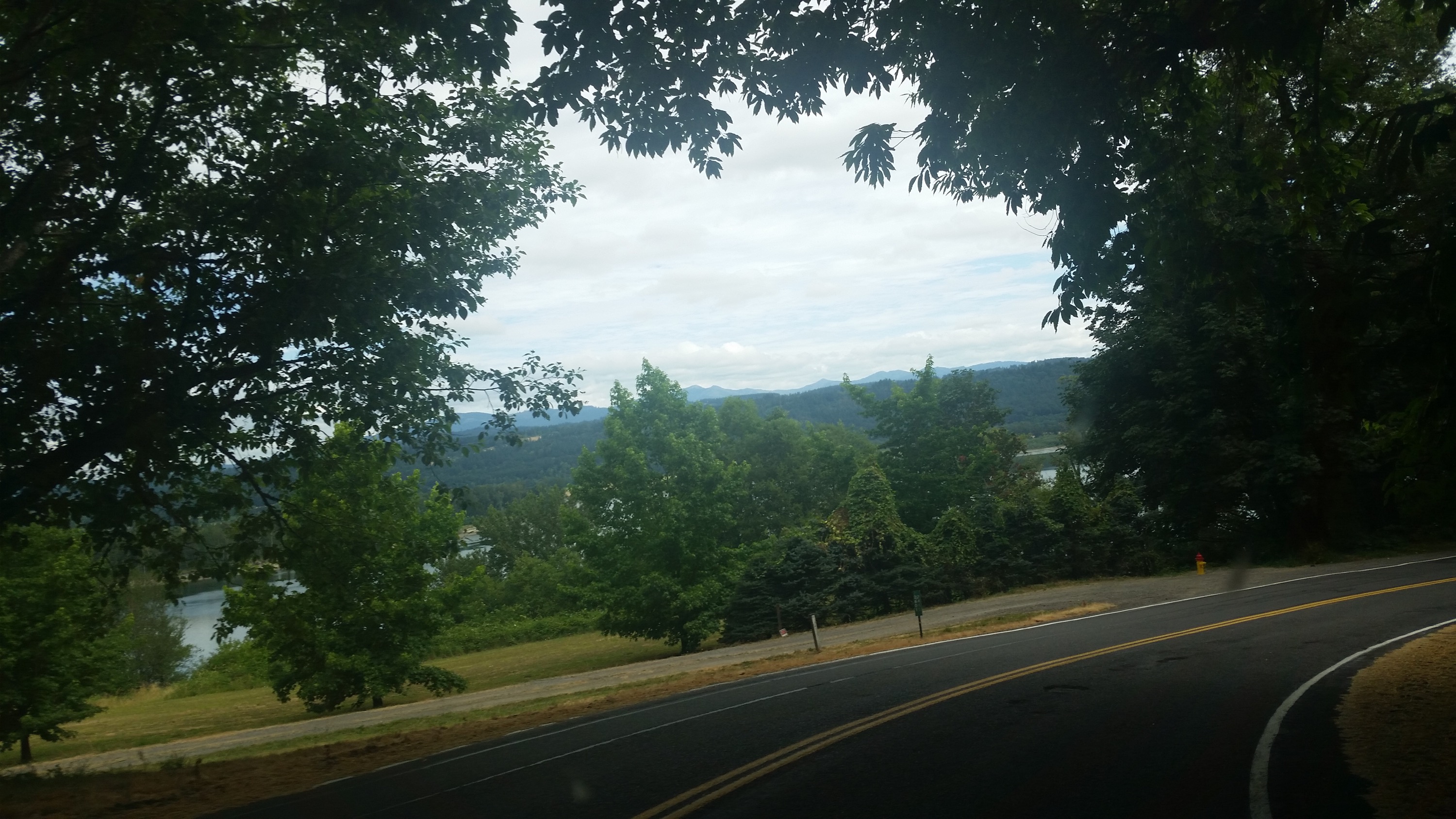
The Columbia River pours by in majestic pines, thick lush Douglas fir lined highways guided magisterially by the Cascade mountain range overlooking its charges. Keep green. Between the Dalles and Hood River, the sun bathes the trees, big leaf maples, Ponderosa pine, cottonwood and Oregon white oak, green glossy frost. The heaviness of the dense foliage leans in to the road with a threatening call. 

Crossing Bonneville dam, the daisies line the road spotty white among the tall wheatland grass and Western hemlock. Mountain crags, humps of black rock jutting through the pines decorating its crown like liberty, pop from nowhwere. Stone walls line a country road nearing the cobblestone bridge. And the clouds hover and stare.

  
Deforestation scars the mountain tops, golden grass exposed through the sparse trees, soldiers left standing in the war against industry, disrespect for the land, chunks of the grab gone for timber. Small vineyards orderly tucked behind a hill also pen the hand of man on nature’s back.

Hairy rocks, like my old man’s shoulders. What grows there on the spiny rocks fungus stained hard knocks of geological story?

4 hours outside Spokane.  

The four hour rest at the truck stop outside of Eugene refreshed what little remains of our spunk and patience. Traveling with two teens and their corny-humored father wears the patience of even saints. I am no saint. I am not remotely patient.

The mugs and the fire burnished hills, repaired by time and patience, sprigs determined to fulfill their seeded destinies. 

The Columbia Gorge, a myriad of textures and vertical measures, scrubbed to ethereal. 
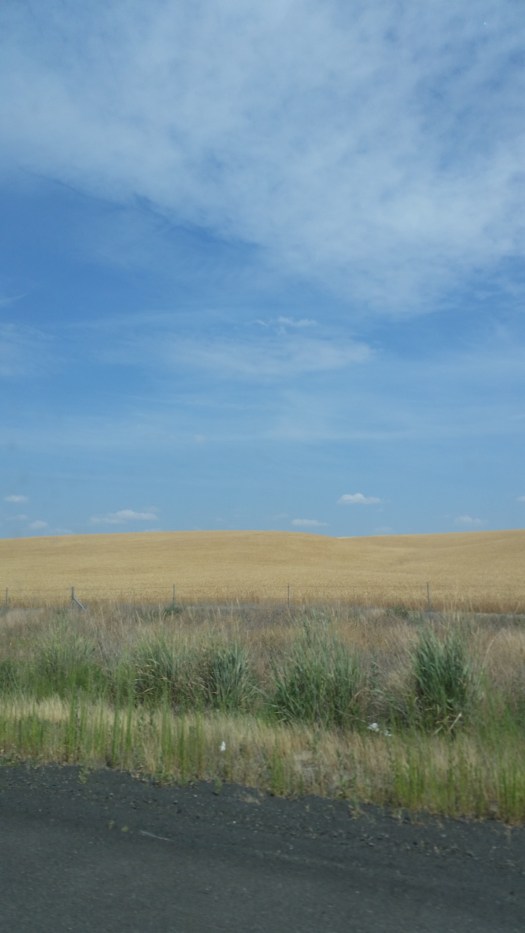
  
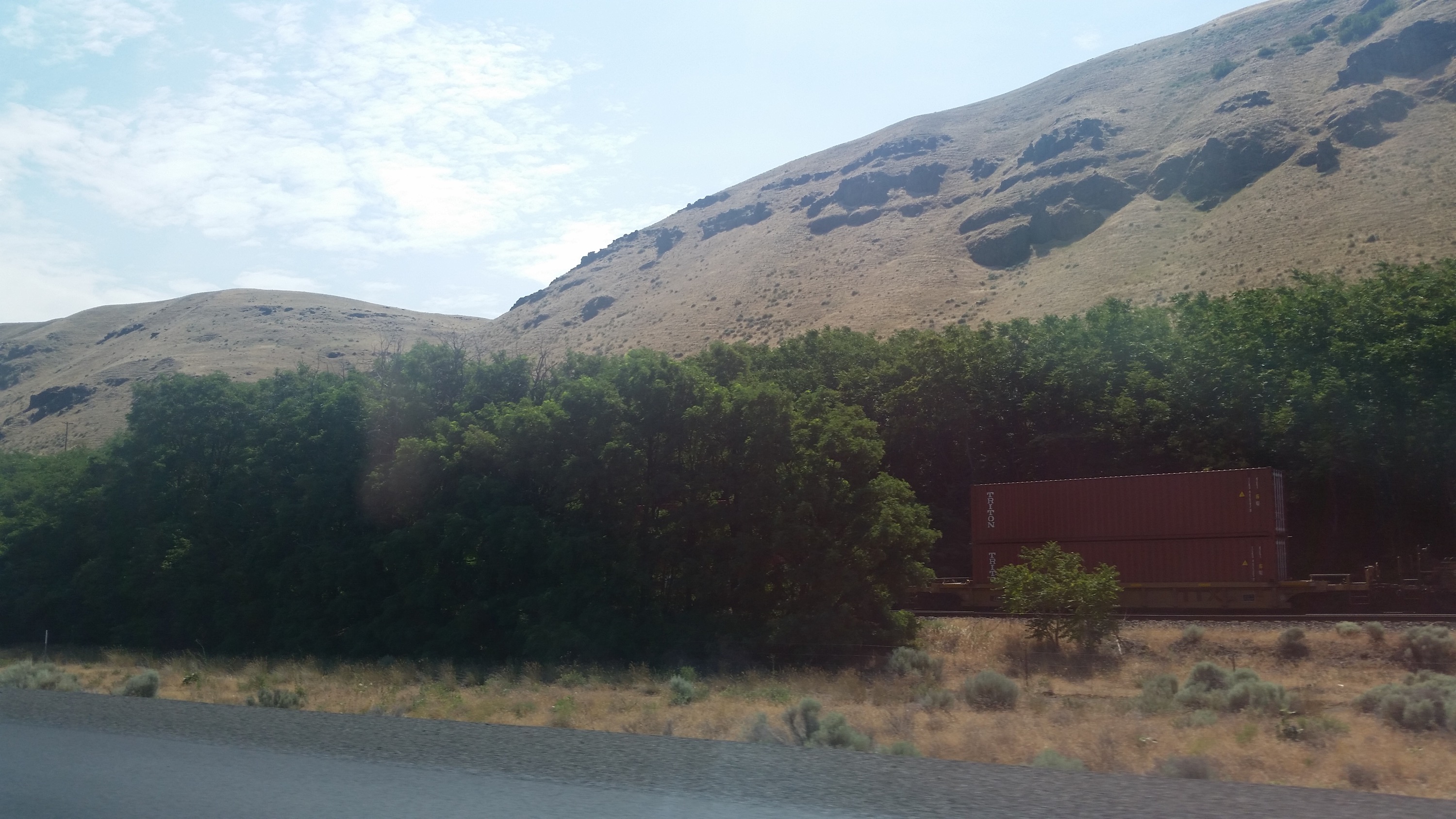
And the sterile blanched wheat colored hills remind us that altitude changes flora. The high desert provides stark contrast to the lush landscape of the Gorge. We must be headed to Spokane soon. 

A huge expanse of farmland and chaparral heading east to Spokane peppered with silos and green houses on near barren landscapes under a great polka dot open sky. The clouds form cotton balls. Water sprinklers look like sin here in a drought. Perhaps Oregon has forgotten our drought. California certainly has not. Water will drive the next world or civil war, I am reminded.
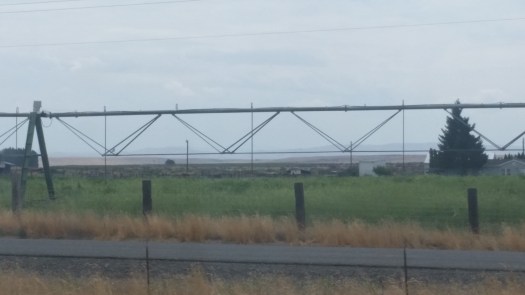
  
And the car ahead contains my two daughters speeding up and leaving us behind. Somehow that seems destined.

The hills are dusted with aqueous green scrub, mid-high interspersed with deep forest greens and kelly greens, hunter and sage too. The nature paint protrays delightful. Somehow I think artifical irrigation is the cause.

Umatilla Irrigon region.

And she is gone. Her sister will wean her these two weeks before returning as the lone twin of upstairs living.

  
He complains of the enormity of it, the lack of planning, the endless driving non-stop, sleepless roadside napping round the clock and the expense of renting a van with its out of state costs, yet the real vastness of disbelief is in her leaving. While nothing is ever permanent and kids go off to college and come back, live back at home, the leaving and living on her own is an indelible shift forever away from the cocoon years that stretched from conception to that first departure. 

She has left her childhood behind for good as the step back in will always be from a distance, a retrospect. Like unringing a bell, she cannot ever live the purity of those flexed years of growing up seamless from birth to first steps, first walking away to another’s hands in school, first kisses, first heartbreaks, and first flights of freedom. Thoughts of self, identity and independence color a life once only colored in coloring books, backyard swimming pools, trips to the candy store or tear-stained shoe box coffins for small beloved hamsters named Hammie. 

  
No, your beef, man, is not with us, our slap dash, rag tag impromptu impossible road trip, the one with endless miles of road bearing insights among the natural sights and blights of countryside and cityscapes of the northwest, sorely needed respite from the daily doldrums of grinding work hours and spatial deprivation you also complain about as likely to kill you. 

And here we are speaking lightly of the shame of it all, the clear cutting demoralizing the Oregon hills along the Columbia, deforestation in the Amazon rain forest and water wasted on the open expanses of thirsty crops along the Washington thoroughfare while our first born worries about being good enough to last, to make it under the pressure of intense competition and her own perceived weaknesses. 

  
Struggle coats our innards, the outside world only the mirror and consequence. 

But I caught a glimpse of wince in you yesterday, the pinched frown of devastating knowledge held in check–but not enough. Despair leaked from your downward cast lower lip and fallen eyes, a momentary slip of the heart spill. 

“You okay?”

“Yeah, it’s just Jordyn leaving.”

“I know.”

And we each look to our respective windows for escape into the landscape upon which we hurl our pain masked in observation, a costume of the fearful. Tears haunt us. Afraid to unleash the avalanche of suffocating cold loneliness threatening to smother us.

Technology Ticks

  
Technology ticks like hiccups gone mad
torment a novice’s grip on poetry’s feast
when mind’s immersion in patterned plaid
yeans unleashed growls of a gnarly beast
 
Screaming primal tones blasted in bleeps
a machine shunts me into mental mayhem
one along shattered nerves a fault creeps
and cracks open wide calm’s cool diadem.
 
Clicking across railway ties’ smooth sound
the wood of imagination settles a twitching
and rust scented bark draws images round
deep strung in a tapestry’d poem’s stitching.

 
photo credit:  mediadpublicbroadcasting.com

Bauhinia


Bauhinia, 

the delicate pink orchids 

that blossom each spring 

cheer the grog of the morning 

march to distances 

far and few 

from your branches. 

The blistering sun’s alchemy 

or the blustery grey

 of the day–alters. 

Drifting and burgeoning, 

transforming and contrasting 

as my moods, 

sometimes filled, lagrimal

of rusted red seed pod, 

feet and fingers of them 

like stultified streams 

of leaking fear frozen 

brown and red in mid drip. 

It’s then that your leaves wither 

at the edges, 

blackened and burned. 

The weather turned for the worse, 

your leaves round hearts 

of butterfly green, 

full and wide bloom. 

But when the winter wears away, 

your flowering bauhinian 

bells and stamen 

reach for my notice 

as I breeze past 

to travels once again 

drawing me from you.

Roses of Song and Myth: the Love Lie

 
Credit:   http://assets2.madewithcolor.com/2014/08/11/17/57/30/934/Marigold_Rose_3.jpg

The rose is not flattery, nor flattered can she be.

Her colors never brighten so with admiration.
Her white is white and pink is pink regardless.
Sun is her food, water her delight and nurture
she needs nothing from hands, no clip or two
no more than her nature designed so provides.

A stem releases bloom from inside itself formed
its patterns deep and wide configured long ago
running through time like speed of sound-light.
The evolution of her growth and being precede
all hands that pluck her bloom from bony bush.
She needs no more than nature draws from her.

For when she is clipped, she poses as love sigh
tall, thorny languor along the chilled lip of glass,
a vase for her thoughts to showcase her beauty.
But hollow and thin she starves on water alone
no earth to feed her fibers, her soft petal velvet 
of colors destined to rot, odiferous swill of death.

The rose bleeds not from thorns as do your gods
for she needs protection from prey; all who harm
love in the name of hunger forcefully feed on her.
The host of vines and verdure are not loving kind
but raw and real as the rain that beats her roots, 
suffers her drowned to make her stand woody by.

Patience and virtue and kindness do not clothe her.
She hangs no myrrh between her breasts to lure.
Nature is not a song for her nor an allegory rhyme.
She fails as ideal and lasts only so long as her DNA.
For her name is rose not love by human confusion
and sings a song the words unknown to mankind.

Leave her an earth that grows her feet strong-free
and make her not your words a sign of loving,
for she is not an idea, symbol or object, no agent.
Neither is she subject or lust or desire or longing.
She is not inspiration, romance or pheromone but
life stuff, permeation, breath, not your philosophy. 

Wingless Wren


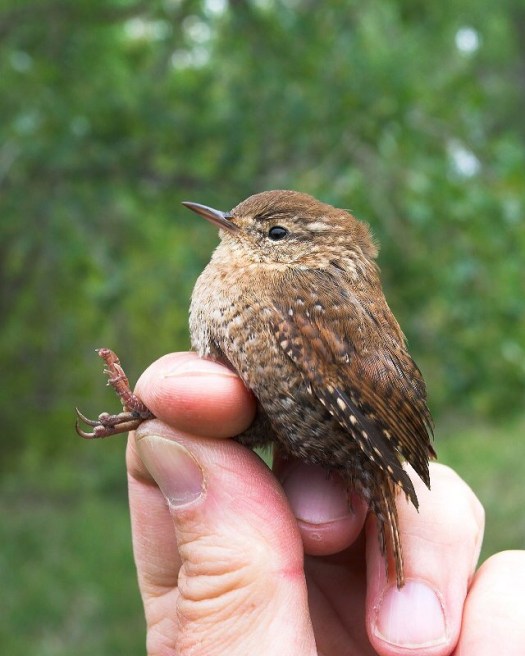
She is a wingless wren
a bitty beak a half lid
slow-eyed sunk in
dreaming of flight
and plans of cities wide
and deep for her pain
losing miles of time sweet
she is dove of sighs
coos left for the unloved
she is an electric beam
of magnetic woe laid
before her feet and song
one shared in no one
my little song bird mute
limps to nesty retreat
dark hollow of a tree
gleamy eyes trickle
light fogged from within
a birdless fright of whim
a skittering feather foot
scamper shot running
a wrong winged one
she is a grounded wren.

Speaking for the Bees


“It’s not about what it is, it’s about what it can become.” 
― Dr. SeussThe Lorax


Workhorses of a seething-bustling, 
strange, 
misunderstood 
and alien world that we barely see
its glory and gore
acidic stew of swallow
and cilia claws 
burrowed below
but for the infrequent frightful protrusion,
intrusion,
extrusion, 
threatening a sting, 
a bite 
or a siphon
sipping the living juices of us,
savagery in the encounter.
 
And yet they sustain those who would crush them,
self-defense or not, 
fill the undergirding of our world with germinating life, 
exchange and commerce in wildflowers of the fields, 
manicured gardens of urban rooftops 
and edges of the sand dunes. 
They nourish us with sweet meats 
of the trees 
and gifts of the earth’s panoply of gallant beauties
pageantry of roses, peonies and daffodils,
and green godly goodness of cabbage cool,
beans of the vine
and broccoli floret 
walnuts
almonds
Brazils
the browns of nutty seas.


You, pinpoint friend, swap the day away, 
flitting from one sweet hollow to the next 
wearing, 
ingesting, 
carrying 
and dusting yourself with your wares, 
plying your trade 
and all we breathe better for it
and eat 
and expire
respire by your daily toil, 
though your armies are micro
populated,
though thinning, 
smallest of the small, 
and most benign. 
Some will warn
look away
not to watch,
not to near 
or interfere
or swat 
our swelling flesh worse for the encounter.


Carpenters of the Carribbean, 
homed amid the yuccas 
and woods 
while others gnaw at our backyard decks right here. 
Crow swims in sunflowers and black-eyed Susans, 
carpeting himself the golden sun, 
while sumptuous sand specialists 
hang in the hills of North Carolina 
or the Eastern Shore dunes, 
skimming the edges for life. 
Affable-bliss, 
drunkard, 
drinks from his nose of a tongue, 
buzzing about the Badlands, 
sucking up sweets from the wells of bells, 
trumpet trollops of honey delight, 
a piña colada of rum and pineapple pollen bits.  
But big old bombus and Metallica and modest-us, 
modest in size, 
half a rice grain wide, 
who carries her goods inside, 
a vomitous gift 
her babies survive
or they die
too sick
sparse
poisoned
murdered
by un-notice
unseen
unheard
unfelt
turnaway.


Health of heart, 
health of earth, 
home to hordes
4000 kinds strong
all native North American
only 40 left home
to honeycomb here
home to homo-cides
ignorants
polluters
stung-greedy
core-less
suicides
who
deny
if they are we are.

Spring Reprise

image

Credit: https://www.google.com/search?q=finch&client/

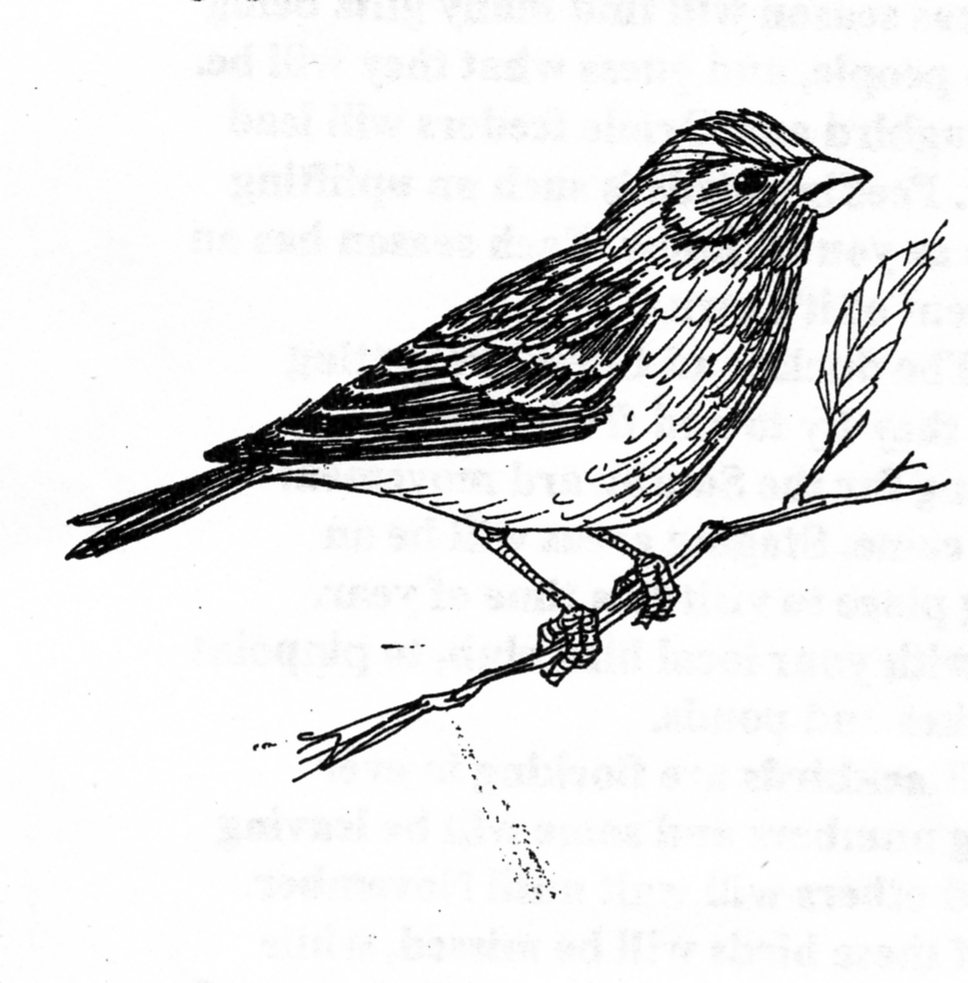
Who stirred the flock of tittering, flit-footed finch flecked in winter’s burrowed stains brown and beige, a creamy crown distinct among peers assembled among the weedy fields and woodland edges?

A rogue among them, dressed in greedy golden coats of late summer’s stolen glints, gallantly arrogant in his per-chic-oree to a frenetic furrow of mad foragers, frowns from inky brow.

His nest–in spring–already fit, his queen awaiting, while the others peck among the thistle and dream to nestle golden wheat for seed-ful warmth when the heat of late season pairing in pale blue-egg tender caring lingers in hazy heat’s beckoning, he circles once in condescending flutter atop the crowd and darts in great goodbye to lazy longing of life to come.

A single black blink of an upturned unctuous eye winks in return, his bony beak enclosed upon a woody pea, exposing shriveled tongue in willed withdraw.

Greater gold yields edge; straw blown fire burns quickly.

A milky corona hangs crookedly, askew, among the feathery reeds on the skull unseen from heights  among the dun of an earthen sky.

March, her equinox anew, changes everything–again.