The Science of Happiness

  
Credit: http://image.clipdealer.com

The expanse between the question mark and the period
impossibly prolonged contains the secrets of all seekers. 

The distance run between confusion and understanding
measures the precise extent of pleasure in our pursuits.

The conquest of cause and effect links us to the principle
the paradox of seeking, knowing and adapting to facticity.

And once we find it, the answer, solution, and knowledge,
our joy ends, for the tickle of the quest vibrates happiness.  


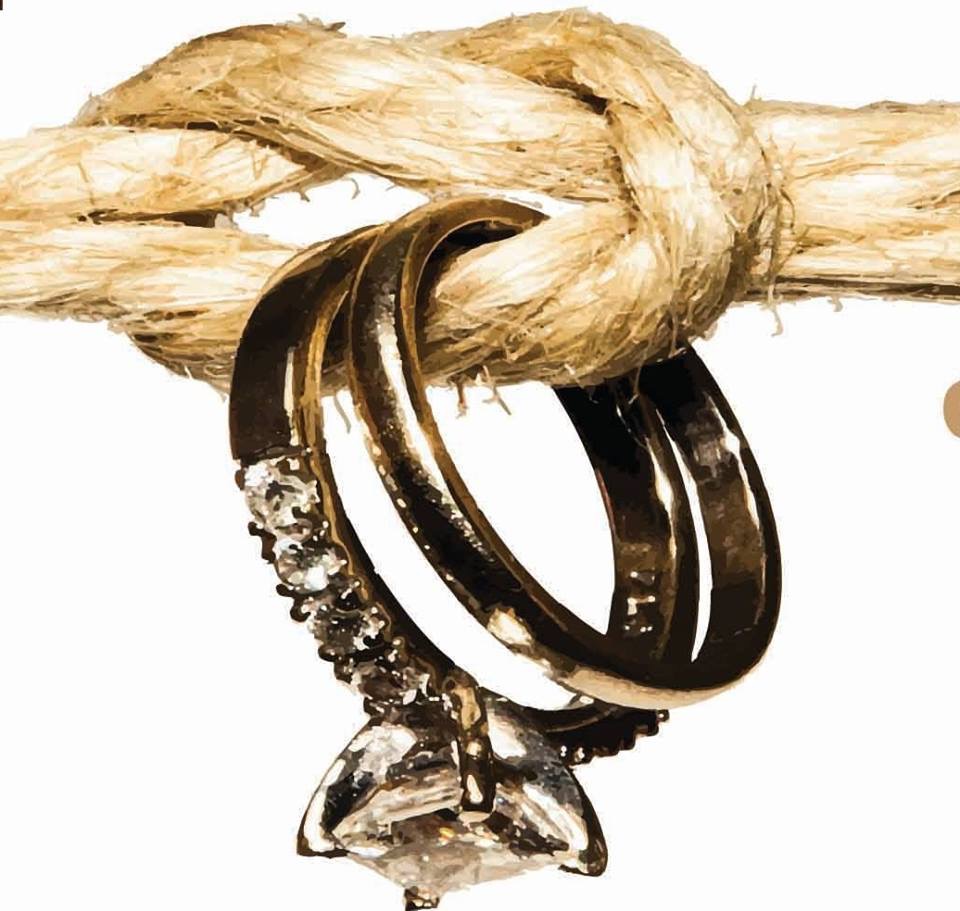
Monogamy on the Ropes Again

  
credit:  https://polysingleish.files.wordpress.com/2014/01/1003954_1423682221182522_1247773358_n.jpg

This time by Salon.com’s Anna Pulley in the article 4 Reasons Humans are so Bad at Sexual Monogamy, which faults our natural proclivities and our ancestors. According to Pulley’s resources, we humans crave variety, get bored easily (especially women with sex) and hear the call of our collectivist primal ancestors who lived, parented and copulated communally. Her cited resources are a few notable books on the topic, including Chris Ryan’s Sex at Dawn, a synopsis of which you can find at Ryan’s site among other of his projects, to bolster her brief scan of the huge monogamy balliwick. 
In the end she echoes a call to action I myself have made on this site–more tolerance and less dysfunctional belief when it comes to sex and marraige.

To say we are bad at monogamy isn’t an indictment of monogamy in general. Of course, people can and do succeed at life-long monogamous arrangements. Non-monogamous arrangements aren’t inherently better or worse than monogamous ones. And yet, just because we are monogamous with one person doesn’t negate the fact that many of us are still and always will be attracted to other people. As German philosopher Arthur Schopenhauer put it: “One can choose what to do, but not what to want.” We’d do better as a culture if we could exercise a little more tolerance, acceptance and honest discussions around sex, desire and marriage, and try to be less rigid in our idealistic views of monogamy.

Awakening

 
Credit:  http://vignette4.wikia.nocookie.net/jjba/images/a/a9/Vlcsnap-2013-01-21-00h58m20s23.png/revision/latest?cb=20130125202637

Awakening prompts a glancing checklist:

Same place as last consciousness–

Darkness or light–

Feel my bones collect, my eyes adjust–

First blink: lids dragged over gravel or oil?

First move: any pinches, aches or strains?

On my feet, the day’s first inhale, 

a wet finger to the wind.

Last night the pings of paranoia 

called through the curtained phone

closed down for good–for the night,

disturbed the blank peace of erasure,

electric muted screams of digging rebuke

nagging disappointment and broken rules

known only to those who hide them.

Ping: You don’t know…

Ping: You don’t have…

Ping: You are not…

Ping: You … 

The device pinged and dinged, 

begging me to bury sound deep in darkness.

And I did.

The morning checked in misaligned,

a misstep of hungover, awed silence.

Roaming the days hunkered inside me, 

downward dream-filled head of cotton

clear cuts paths of fallen dead trees; 

upright sight, moving back like Mercury,

the illuminating specks piercing a miasma

best trailed in side-step unresolved truth,

prick the skin like sand in a wind storm

abrading hope-possible of reconciliation.

Apophenia

  
Credit:  http://www.creativitypost.com/images/uploads/psychology/249_2nd%20place.jpg
Constructed from smoke and mirrors, us,
ideas floating around bodies, 
expectations wherein others’ unfulfilled 
desires, prejudices, hurts and dreams 
hurled at us in continual bombardment 
so we in the end do not know how or why 
we possess our minds with determined drive 
to become “successful” defined by they
who came before us in a long line of delusion. 
Why did I “choose” to become a lawyer? 
Because I argued my way through youth, 
and my mother capped it all in a sigh, 
“You should be a lawyer. 
You always have to have the last word.” 
Simple cause and effect?
A match of my talent with a career? No.
Parental desire, a definition of success,
a dream of security and hope for respect.
All myths. The mold makes more models. 
An inundating lore trails every profession: 
lawyers are sharks, 
doctors have god complexes, 
plumbers are slovenly, 
and no one rises more than the level. 


Human propensity to stereotype, shortcut, 
satisfies a deep need and biological destiny
human patternicity or apophenia. 
But the appalling truth, each arcs complexity 
requires attention, examination, exploration 
work, in other words, to evaluate
the fount each encountered being springs. 
Only few venture willingly to invest time. 
Thus, the disconnection prevalent 
in polarized politics and social media, 
hatred on roads, in parking lots and 
on grocery store lines. 


Sneers of indifference pollute.
The pool of difference is tepid.
Come in. The water’s fine.

Patterns of Memory Seize


credit:  http://blaine.org/sevenimpossiblethings/?p=2216

A static image floats fuzzy still life before a mind’s eye

–mine.
Lips crushed in grimace foul, screeching silent panic
a movie memory sans sound features a small face
wet with tears, her curls raging above and about her
head brown with ratted coils
and a dainty, tender, fragile forefinger
one finger enlooped by layers of hair, an index finger
struggling, captive, to untangle its freedom locked in 
a strangling tress much to the horror of its owner.
That image, that girl, that finger flashes before me
now, you, whose wide firm hand with digits like
iron stuffed leather rods rummage through my 
hair gripping the base of the rubber band that ties
the tail to my head, tighten your grip, finding 
the loops for your yanking intention 
my head poised, still, steeled up to constriction
and confinement.
All hands reach back, pull my trussed will, memory-
bound to arches circumscribing the view
of the celestial seascape’s cliche’d vision:
a man, a woman, trapped in time and hair-locks.
A choice, ownership and recognition–
a cerebral passion, homo sapien adores patterns.

Helping Men be Men Despite Technology


credit: http://www.djfood.org/wp-content/uploads/2012/02/Men-Machines.jpg

…men usually have what they term “single-cue arousability”. Give a man the image of a pair of attractive breasts or a curvy backside and they are half-way to happiness, where women need multiple cues: they are aroused by men who are “attractive and nice to children and self-confident….

I have been wanting to read this text when I first came across the title and recognized the author for his previous studies. However, scanning a few reviews of a new book, Man (Dis)Connected: How Technology Has Sabotaged What it Means to be Male, and What Can be Done, by psychologist, Philip Zimbardo, who “argues that technology, online porn, gaming and sedentary jobs are causing terrible damage to the male psyche,” I cannot help but once again bemoan the insidious perpetuation of stereotypes that net individuals into the indoctrinating tidal wave of culturally predetermined roles.

While I am well aware that psychologists observe human behavior and make prognostications, the collateral effects of Zimbardo’s conclusions in his latest book, although an admirable contribution to the conversation of gender roles amidst social climate change, is to reinforce sedimented stereotypes. 

Zimbardo, known for his famously criticized Stanford Prison Experiments, asserts in his book that men are biologically susceptible to falter in a world that promotes less physical work, more sedentary entertainment and less in-person interaction due to technology. Male reliance on online gaming, dating, and pornography in addition to less physically demanding office work has socially retarded men and made them not only obese but ineffective as social beings. He also blames the shift in roles due to feminism as well as other social “ills” or challenges for men as The Telegraph’s Chris Moss summarizes.

It’s when you combine absent fathers, staying at home into early adulthood, video gaming, overreliance on internet porn, obesity (with its associated decline in testosterone and increase in oestrogen) and lack of physical activity, educational failure, joblessness and lack of opportunities for interaction – plus a women’s movement that continues to empower that gender and thrust positive female role models into economic and political arenas – that you have the makings of a screwed-up masculinity with all the wider social consequences that implies.

While I can appreciate Zimbardo’s work, my sensibilities are a bit ruffled at the suggestion that empowering women disempowers men and thereby ominously causes “social consequences” implied by that disempowerment. But why do the implications necessarily bode ill?  Intelligent, resilient men, of which there are plenty, certainly realize the freedom from sole breadwinner responsibility results not only in less pressure to perform and be their careers, but also more opportunity to develop other neglected skills and traits long scorned by social necessity due to inherited cultural predispositions. 

Just like the current shifted economy squeezes out old patterns of work formulas like the corporate career that ends in a gold watch retirement and forces individual innovation and creativity for survival, so too the breakdown in traditional role models can lead and has led to opportunities for growth emotionally and psychologically through the loss that naturally occurs in evolution. All transitions are an equation of cost and benefits, the pre and aftermath of change.

But the reiteration of steretypical male expectations to be physical and in control, and the remorse suggested in the loss of that attribute and power position, all bundled in a cause and effect legitimacy (we all trust cause and effect, right?), ominously confirms both the stereotypes and the doomsayers who look for feminism to blame for harming men. Pointing the finger at feminism, even as a co-contributor, couched in scientific clout–the psychologist–serves to confirm the current suspicions piled on feminism by some factions as harmful, a disturbance of a centuries old patriarchal order. For some, the byproduct fear and hatred results in injury to women. 

The country does not need any more binaries, dichotomies and polarization. Blaming feminism even under the guise of scientific observation does not help men. Bringing men the positive about change that has inevitably occurred and will continue to occur–technology and empowered women–benefits men. 

I am hopeful that when I read his text, Dr. Zimbardo will conclude his observations with helpful insights on how to help men adjust.

Is that a vibrator in your pocket or are you just happy to see me?


What I treasure most about blogging is the many contributions from readers whether in thoughtful or supportive comments, or suggestions of what to “gaze” at as today’s content donor put it. It makes my day when someone sends me a bit, a piece, an image, video or an article, some snippet topical to the blog’s thematic interests. Today’s gift is an article in the New York Times paying tribute to Dell Williams, former actress, advertising executive and army WAC, who started Eve’s Garden, a Manhattan sex boutique opened at a time when openly flaunting female sexuality took some daring. 

The story goes that she opened her sex shop after a humiliating experience at the hands of a young “pimply faced” clerk/interrogator when, in 1974, she purchased a vibrator. This spurred her mission to establish a place where women could purchase sex paraphernalia in peace. This kick-ass entrepreneur spent a majority of her life defending the right to open acceptance of women’s sexuality, something perhaps taken for granted today as more of a given than in her lifespan. 

Though it is still not a given even today.

While attitudes about female sexuality have progressed from denial by the patriarchal societies of Western Civilization to acknowledgment that it exists, there is still some distance to go before female sexuality is fully, openly celebrated, let alone discussed, by men and women. 

Thanks to vibrators, and women like Dell Williams who fought for freer access to them, there is an interesting history from which to start a conversation about women’s sexuality that does not seem so contrived, cliché or awkward. In fact, I used today’s research to pique the interest of my 15 year old, a sly engagement of her unsuspecting provincial sensibilities, to talk about sex, something she is loathe to do with her mother.

It turns out the vibrator is the tool that has not only traveled well through the centuries but also one that has propelled female sexuality and feminism into its current state of the question I have heard of late: Do we even need feminism any more? While the answer is yes, for many reasons, economic equality access being only one of them, that is a story for another day. The advent of the vibrator is a story of patriarchy, capitalism and power.

It begins with Hippocrates in 4th Century Greece, or at least he was the first on record to theorize that hysteria, a condition ascribed to women who displayed symptoms such as fainting, nervousness, and bad temper, more commonly known as “dry womb disease,” which seems to me as overall unhappiness most probably due to a lack of sexual excitement (read: not pumping out the lube) or fulfillment with men and the “normative” practice of penis-penetrating-vagina sex, what Rachel P. Maines in her book The Technology of Orgasm terms the “androcentric standard” of acceptable sexual practice.

The medical treatment Hippocrates and generations of physicians thereafter–until 1952 when hysteria was no longer diagnosed–for women experiencing hysteria and dry womb, was manual manipulation of the vulva by physicians to hysterical paroxysm, the medical condition better known as orgasm–in other words, getting women off. This treatment, an ongoing therapy, took up too much time for doctors to make enough money from other patients and was a routine and rote task that clearly could and should have been the work of midwives but for physicians not wanting to forego the income, prestige and power over the female body. As such, devices were developed to facilitate that “chore.”

Coupled with attitudes that women should not be touching their own bodies or have pleasure outside of marriage and what men could provide–androcentric sex–the vibrator was kept in the hands, so to speak, of the medical establishment until 1902 when Hamilton Beach patented the first take home vibrator, a large and noisy (we can heeeeaaaar you) apparatus. The hush of sexual repression quietly deposited these household objects from the hands of doctors into locked drawers, despite their popularity. According to trojanvibrations.com, these early vibrators emerged as one of the most common household electrical appliances invented even before the electric iron:


By 1917, there were more vibrators than toasters in American homes, claiming to cure everything from headaches to polio, deafness and impotence. Some ads for vibrators even claimed to be able to put a glow on your face.


In the radical feminist 70’s, the vibrator came out of the closet and into the hands of women trying to bring all things woman into the forefront, but particularly her sexuality as her power and her own.  Today, approximately half the American population uses or has used a vibrator, according to a survey of statistical findings I conducted on the web, only one of which is livescience.com.

Maine’s first chapter of her book mentioned above is available online and is a fascinating detailed history of the vibrator in context of sexual history from 4th Century B.C. through the Victorian era til modern times, citing wonderful hysteria treatment tools like horse simulators and other early curative devices designed for women’s orgasm, wickedly delightful apparatus to an unappreciative audience, my guess.

The covert manipulation (pun intended) of attitudes toward women’s sexuality–sexual pleasure that demanded more than male vaginal penetration as well as women’s ownership, participation and education (To know why, see Huffpost’s 13 Reasons Every Woman Should Masturbate Regularly)–derived from what Michel Foucault, French philosopher and author of the History of Sexuality, deemed the male medical establishment’s “hystericization of sexuality” (using their authoritative power to keep women’s sexuality as well as homosexuality in the realm of disease vis a vis the normative sexuality of the culture), patriarchy and capitalist greed.

Thank you Hippocrates for taking the time to notice, for kickstarting the vibrator’s journey to women, promoting sexual health for both men and women, and for getting all those women off, a trend that persisted even if disguised as medical treatment (wink, wink). He was hip to the truth he and his cronies kept mum, I suspect: most women, producers of the only organ designed for pure pleasure, maybe don’t need men so much to get off once they figure out what they have and how to use it.

Freud’s Immature Orgasm and Other Myths and Truths

image

credit:  http://i.huffpost.com

Every day is a thrill to be alive, to be human–even when it’s not. Nothing pleases me more than settling into my writing routine each day with nothing on my mind. Reading around the Internet, then, is an adventure:  wide open. 

My day’s journey may start with poking around Facebook or Twitter to see what’s shaking in the world, immediate and distant, and then end with a question sparked by something I read, which then drives me to Google or some other engine, and so on until a shaped idea forms.
 
Today’s Facebook scan brought me to elephantjournal.com’s The Top 3 Secrets Women Tell Their Sex Coach. The word “sex” in the title did not pique my interest as I have read enough intolerably reductive “3 ways” articles about sex to last a lifetime. No, I was drawn to the idea of a sex coach.  My first thought:  “How much do they get paid and for doing what?”  All I could think of was my daughter’s soccer coaches yelling on the sidelines, “Move forward!!!  Now move back!!! Cross it, cross it!!” I recall paying them more than I could afford to yell at my kids. So is that what a sex coach does and what type of degree or schooling does that require? Are the final exams practicals? The possibilities are endless.
 
Goofball wise cracks aside, I read with an open curious mind and found the article while yes, reductive, not simplified. The three observations gathered from listening to hundreds of clients (wow, and I never even heard of a sex coach before this except for Masters & Johnson) were, in paraphrase, that women have difficulty having orgasm, they don’t like their partners’ touch but don’t know what to ask for and want to want sex more than they do. These three observations alone are not earth shattering news but the expansion upon each is worth the five minutes’ read.  
 
Summer Engman cites the porn industry, cultural dictates, women and men, the usual suspects, for  women’s lack of orgasm and realistic expectations. Again, none of this is revelatory to me so much as confirmation that my own intuition and vague recall of books I have read and lectures I have attended have not steered me wrong.
 
But the nagging thought persisted after reading this article:  It’s Freud’s fault. And I Googled just that. Aside from some hits I knew would appear, scrolling past Wikipedia and other usual fare with phrases “the immature orgasm”, I landed on Meghan Murphy’s It Happened To Me:  I Don’t Masturbate (But That Doesn’t Make Me a Bad Feminist) on xojane.com. While the title is intriguing enough, her insight and wit make this a worthy read and a nice counterpoint, sort of, to the tonal apogee, elephant journal’s serious arrival at sexual advice.  
 
Murphy’s take is she does not masturbate, does not feel the need, not wired that way, and to each her own. She is not offering advice so much as perspective. And not just that women are all different–duh–with different needs–duh–and different bodies and upbringing and anatomy, yadda, yadda…duh. She includes nod-your-head-in-an-amen tidbits like we know so much more about female anatomy now, i.e., the clitoris is not where and what you think it is because it’s way longer and probably parked in the vagina too, so Freud was operating in a clear deficit of information. He was mistaken. Women can and do have vaginal orgasms. 
 
I blame Freud for ruining everything for feminists who have vaginal orgasms (they’re the “mature, feminine” orgasms, he said, causing us all to rebel by only having “immature” clitoral orgasms).
 
Murphy’s saying so–vaginal dick-initiated orgasm is her thing–is neither proof nor an epiphany. But it is refreshing to read. Women (Hey, what do you know?) are diverse beings with a variety of pathways to orgasm. (Hey, what else do you know?) We don’t hear enough about that diversity.  
 
I am not disagreeing with Engman’s canvas of women’s sexual experience. I believe women of my era, specifically, have inherited a defensive posture toward sex from un or ill informed mothers and surrogate foremothers of second wave feminism, who were just trying to change the course of history, a tidal wave of oppression and missing or mis-information, kind of like steering a cruise liner’s direction with a wooden rowboat oar.  
 
So, I am content with my morning adventure into the too-often disappointing and disgruntling cyber world (maybe it’s just the ebb and flow of my moods) for today’s sea treasures I uncovered for my readers. I hope there is a tasty morsel there to savor (apologies to the non-pescatarian vegans) or something shiny to admire, at least.
 
Peace,
 
Gaze
image

Mere Mortals We Cheaters Be


Of course, Anna Jorgensen’s 4 Stages of Cheating & When it’s Warranted in elephant journal grabbed my attention, but, after reading it, I feel a bit betrayed myself. First, the title is terribly misleading:  “when it’s warranted”, according to Jorgensen, is never…unless your life warrants it. In other words, it’s complicated, not surprisingly.

Second, the 4 stages of cheating she outlines are pretty obvious. No, the most interesting insights of this article are found in her off-the-cuff wisdom culled from personal experience. Mentioning her three observational points of view, conspirator, cheatee and cheater, she confesses the following about being cheated on (the cheatee):

I also don’t know if I was more bitter about the cheating or the lying. Lying makes me pretty bitter.


Lying makes most people crazy. Social brainwashing and the human tendency toward compartmentalization are partially to blame for that toss up, deciding which is more insanity-inducing. One may eventually understand the cheating, sexual urges and all (media reporting cheating is a fact of life), but the lying is almost always interpreted as conscious, decisive and lacerating. Lying is a knife in the heart of trust and often taken as a sign of a deeply flawed character. 

An insane world is one where truth and falsity are in constant flux, making for a meaningless existence. When the lying is revealed, it not only induces shame and blame, punched-in pride and cries of victimhood, none of which help to expedite healing, but turns the world upside down, leaving the “victim” paranoid about her own failure of instinct and understanding. She often becomes defensive and mistrusting. 

In truth, cheating IS lying–to self and others.


Jorgensen avers cheating is never warranted and argues an either-or fallacy:  fix it or forget it.
When Cheating is Warranted

It’s not. Cheating is never the answer; if only because it ultimately won’t make us feel good. We’re far better off to figure it out or part ways peacefully. Of course, that’s way easier said than done sometimes and all my experience and those of others will never replace your own experience. That’s how life works.

Strikes me as a rational imperative: work on the relationship or get out of it if it cannot be worked out. And yes, easier said than done, especially when children are involved. Balancing the needs of two people is incredibly challenging. Three, four or more components to the equation is far more difficult. Now add some children or parents with all-consuming special needs or a spouse with a congenital, contracted illness ten or twenty years into the relationship and see how the formula of fix it or forget it comes out. Jorgensen acknowledges the fallacy and backtracks from her hard stance to a more philosophical one.

If the issue were black and white, the conversation about cheating would be over.

The Blame Game: We Lose

Also, never blame the cheater. Or the other person. No blame, or blame both parties in the primary relationship. No matter how perfect one partner may seem to be, it’s a two way street. Ladies, if we hold out on giving our man the cookie, we’re asking him to cheat (eventually). Men have very few needs (primarily freedom, respect, appreciation, food, sex) to be content, but they will even put up with a lack of most of those to a large degree if they’re getting sex gratefully. Put out (happily) or put up with a cheater. I’m aware this will ruffle some feathers. I’m not saying we can never say no, but I am saying we’d be best off to not use sex as a weapon or bargaining chip. As a bonus, working out differences between the sheets is a lot more fun for both team mates.


Again, I like her homespun advice imbued with personal experience. My head nods when I read this excerpt, but my knee-jerk doubt scoffs at such an assurance of life operating in neat little stereotypes. If it is that easy to appease men, then there wouldn’t be much to write on cheating. Psychologists would go broke. 

Though, I have been told by many men that this is what wives must do to avoid infidelity: be an avid sex participant. However, each man defines “avid” and “participant” vastly differently: once a day? a week? smiling?  Most men, I suspect, are more complicated than “just feed, bathe and sex me.” 

Some men have emotional cheats that remain purely emotional. Others may have been drawn initially by the emotional support, recognition and respect perceived as missing from their relationship, appreciation for which they later translate into physical contact. Or some men are drawn to outsiders because they are outsiders, plain and simple. 

There are innumerable sources to the cheating complex just as there is an unlimited spectrum of flavors of men and women, combining in infinite ways. Hyperbole, maybe, but so is reducing men to primates.

Some humans are excellent comparmentalizers. They see the world in boxes and parcelize people into um-teen utile categories. The impossibility of the composite picture, of the ideal fed to a population, is culprit, in part, to infidelity. 

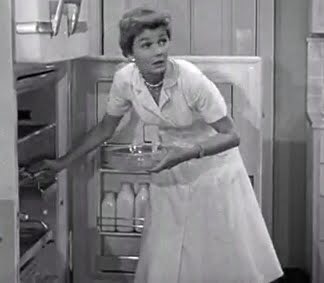
Think of June Cleaver with her clean white apron, Laura Ashley styled cotton dress, string of pearls and freshly swept up-do. She stays home all day scrubbing floors and baking cookies for the Beav, but keeps herself on-the-ready attractive with her pearls and dress for her husband’s whims and desires. She is saint and sinner. She is a symbol of the impossible ideal of an era. 

We aim too high, are fed too many fairy tales and told too many lies from birth. Thus, I say the aggregate behavior of a culture is partially to blame for cheating. We are inculcated to it. 

It is complicated. I have been beaten down from my high horse long ago. Personal responsibility, determination and justice used to be the cure-all in my mind. Judgments flew from great heights. But there is nothing like life to equalize: nothing like getting my ass kicked up and down the halls inside and outside of courthouses, by attorneys, judges, clients, business associates, trusted friends, lovers, brother, sisters, children, strangers, parents, spouse, and nature at one time or another to afford me humble perspective.  

The conversation is critical. Keep talking, observing, listening and starting anew, I silently affirm daily. Be flexibly firm, empathic and self-doubting while amused, I often think. Aspire to be the acme–saint June Cleaver–knowing the inevitable shortfall. It is all anyone can do in the face of the mystery and misfortune of mere mortality.  

“When the Best Sex is Extramarital”


When the Best Sex is Extramarital by Lawrence Josephs, a New York psychotherapist, chronicles the study of one patient, Cynthia, who, though married to a devoted husband and father of their two young children, begins an affair with a co-worker. Sex with her husband is reported as “boring” while she claims to have had the best sex of her life with her lover, Neal. When Neal suddenly dies of a heart attack, she is left to mourn him in secret, which drives her to the therapist, Josephs, who makes her realize that her work is in reinvigorating her sex life with her husband. 

Other than the therapist’s inserted judgment of the deceased Neal, which I found disconcerting, the article drew intriguing insights into that long-perceived dichotomy of good love vs. good sex. Apparently a Freudian, Josephs cites the good father of psychotherapy on love and lust:

Freud claimed that people often split love and lust. It is not uncommon to have great sex with someone who isn’t lovable, or to have a trustworthy loving relationship with someone with whom the sex is boring. Recent empirical research shows that individuals who exhibit high degrees of narcissism, like Neal, have difficulty integrating love and lust in a single relationship. This is also true of individuals, like Cynthia, who are “avoidantly attached” — they can’t tolerate the vulnerability of being intimate with someone on whom they are dependent, and so they create a self-protective distance from their partner.

The latter term “avoidantly attached” is not a phrase with which I am so familiar and since Dr. Josephs does not define his term or discuss how he reached the conclusion that Cynthia was “avoidantly attached,” I had to research.

Avoidant attachment yields two different separate behaviors: “fearful” and “dismissing.” Fearful avoidants have a negative self-image, but are also passive and dependent; they actually want intimacy but they are also desperately afraid of being hurt and distrust others. Fearful avoidants are the hardest category of insecure people to deal with in a relationship since they send out a mixed bag of signals. The dismissing avoidant has a more positive self-image but would agree with the following statement: “ I am comfortable without close emotional relationships, It is very important to me to feel independent and self-sufficient and I prefer not to depend on others and have others depend on me. “ These working models affect individuals in myriad ways.

In the article with the above excerpt, Avoidant Personalities Destroy Relationships, author Peg Streep later notes what we all know: people marry their opposite sex parents. Hearing this early on in my dating days, I thought I was safe in that I married someone so different from my father. But having lived with my father the last few years, I realize I am mistaken.  

My father, when physically present on those rare occasions he was not working or sleeping, was not a warm, accessible guy when I was growing up. As an adult, I was more relatable to him and he showed a very warm, sentimental side amidst his general crankiness and abusive language to not only my mother but all of his five children.

But that overly sentimental side lurched between the nasty brutal cutting side, which later showed me that he is simply incapable of relating to others, incapable of truly attaching. He either loves you or hates you depending on what you have done for him lately. Then again, how could he have learned how to attach when he was one of 9 children of scraping by parents?

So it’s no wonder I married someone devoted yet aloof and emotionally unavailable, he coming from parents who were the same. My mother, at least, was very warm and affectionate, but very busy with five children. I, being the middle child, fashioned my world, my niche in this enclave, as the independent one who needed her least so as to caretake her some. I still do.

All arrows point to the “dismissing avoidant” in the mirror, but the arm chair self-analyzing therapist is a lousy therapist indeed.

What do you do when the best sex of your life is outside of marriage, but you still want the emotional security of a stable long-term relationship with someone you love and trust? I’ve worked with a few couples over the years who have been able to make an open marriage work, but most people, even those who think they might want such an arrangement, are too insecure and jealous to do so.

Interestingly, Josephs does not discount that an open relationship could work, only that most people are too insecure and jealous to succeed. But how about two people forced into honestly engaging with each other about their needs and inability to fulfill them? What about those forced to stay together despite a lousy sex life because they have higher responsibilities to fulfill, like kids and aging parents? 

Cynthia decided to work on her sex life in couples therapy, but how often does that “fix” an ailing sex life? I don’t have the data, but I do have a couple dozen years in divorce story land. My gut and experience tell me that many couples do not work out a sex life even after proper diagnosis and willingness to do so.

Sex is as mysterious as it is natural or primal.The complex of psychological, emotional, intellectual and physical cocktails that make some sex the best and some the worst is rocket science or voodoo to me. Honesty is critical to a healthy sex life but not easy. How do you instruct someone you love how to kiss you or please you, especially if you don’t really know how to instruct or what you need–for example, young teen or twenty something starter couples?  

Sometimes the circumstances are such that two people want to stay together, perhaps at first for the kids, but later for more reasons than that; maybe there is no one out there to go rushing to that’s any better suited or as time tested as their marital partners, despite the dead sex life. Though the two may feel jealous and unwilling, they both know and are open to sex outside the marriage. And when they do so, in time both parties become acclimated. Exigencies make it work at first and time settles everything else afterward.

Freud claimed that children are emotionally possessive and jealous creatures who don’t like sharing their parents’ affection with anyone else. As a clinician I try to keep an open mind about romantic partner sharing, but when it comes to our spouses, it seems most of us never outgrow being fundamentally childlike in our possessiveness. At our best we learn to refrain from doing things that would make our spouses jealous and insecure, despite our temptations, and when they make us jealous we try to restrain our hostility, despite our hurt.

This would describe the majority of people most of the time and some of the people some of the time. I can remember being jealous of my husband’s friends, the coveted time he spent with them. When we separated and I dated someone else, he was jealous. And later when we reunited and then agreed to an open marriage, we were both jealous at times, but knew it had to be this way and so became inured to seeing other people come and go in our communal lives. The other option was divorce, which was clearly unnecessary.

We talk about our lives, but do not open up to each other much emotionally. He has always struggled with articulating what or that he feels. Yet, we provide each other the steadfast support that allows security, safety and adventure too–time tested love and respect–immeasurably comforting.

The best sex of my life has been with those I have been most emotionally connected to, felt the most love for–at that moment of enjoyment. With some, it has been easier to have great sex due to chemistry (scents, voice, hormones) or physical compatibility, similar aims, fantasies and spirit. Those relationships that afforded the greatest sex were firm, committed, yet clearly not forever. Perhaps the attachment avoidant in me has made that so.