Argue!

  
Should vivisection on animals be universally banned?

California’s gun control laws are the strictest in the nation and do not need tightening.

Costa Rica’s Preventia policies are unjust and inhumane.

The papparazzi need to be reigned in from their reign of destruction.

Coed education beats same-sex education miles high.

Long Beach police officers are doing a great job despite the public outcry against police brutality.

The higher divorce rate among military families compared to non-military familes cries out for resources.

Street art is not graffitti!

Torture has its place in terrrorist prevention.

Inception is not a coherent thriller.
 

It’s end of the summer semester research term paper time. So many arguments, so many readily available resources, and so many fallacies.  My students, weaned on the Internet, both master and destroy logic. Familiar with the bounty that is the network–social, educational and otherwise–they can research. They find stuff. However, likewise products of the world wide of webbings, traps for the unweary, they believe without discernment. 

Teaching young minds to think in verticals and horizontals tasks the impatient and weary. Entitlement does not only measure ownership attitudes; the right to be right falls in the heap of our stuff. Ours. Mine. Not yours.

How else does the abounding madness of polarizing non-sense stop: me vs. you, right vs. wrong, with us or against us? Isn’t that the major premise of Saul Alinsky’s Rules for Radicals--keep the pressure on with conflict so power can slip in its agenda? 

I responded to a social media prompt on a relative’s Facebook page about the minimum wage not being about bickering over which unskilled worker should get two dollars more than the other. Two good responsive posts about the issue over dignity of work, skilled vs. unskilled worker…and then it came: the post about me, me, me and what I do and don’t blame me for trying to work and make money. 

Buzz kill. There is no response to a hijacked discussion of a public issue by someone’s feelings about his or her life or imaginary persecution–a failure to read and understand a public forum’s purpose in the shades of meaningful and polite interaction. 

Teach a mind to think, reason and discern: rule one of a civilzed nation.
 

credit: http://static.squarespace.com/

Shhhh…

  
Shhh…don’t tell anyone.

I have a long, torrid relationship with her, my mistress and master both. I submit to her daily, as she owns me now. Though it was not always that way. She once hurt me badly, my heart and body, which caused us to part ways for many years, close to twenty, in fact. But I realize now that she had something to teach me, a lesson I needed to learn about myself–and her–before we could be together, merge our lives seamlessly into the desire and need we are about today.

I met her as a teen with big ideas. I was sixteen then and drawn to everything and everyone I measured as cool, earthy, and spiritual. I read about her in a book I purchased second hand from a used bookstore, and I was immediately lured to her mystique. There was something there I did not understand but wanted to know more about. So I read and learned about her, imitated her every move to earn me my cool. Until one day, I met her.

She was all she was cracked up to be at that first meeting: sexy, lithe, strong and flexible. Muscular and compact, she appeared the picture of youth, while she breathed ancient wisdom, emitted it from her pores. I was astounded and flustered in love.

And though our meeting ended then, we met again, and then again…for awhile…until the pain. 

I had to learn the hard way, as I always have. I was arrogant and needy. Not one to be forced and taken, controlled and overpowered, she left me howling, bedridden for months, depressed and injured. The love affair ended in the slow drip of time it takes to heal a body and mind.

When we later met again, I had changed. She had not. But my approach to her differed then from the earlier times. I did not need her, merely wanted her. I penetrated her eye to eye, then bowed. That made all the difference between us.

We co-exist now, as one. Since our reunion five or six years ago, she has never left me. We live with and through one another.

When I am down, face down to the ground but hips high to the sky, she takes me, makes my breath grow steady and strong; she makes me weep sometimes like this, too much to hold, my arms arrested for the weight of my body. She buckles my knees sometimes, how she holds me in her grasp, in her heart and her embrace, me and all who love her, whom she loves. And she loves.

 
credit:  http://ih1.redbubble.net

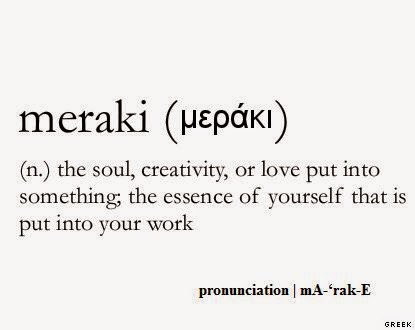
Meraki

  
The therapeutic rewards of writing have long been touted even before Freud and “the talking cure.” Writers write endlessly about writing as compulsion, art, creativity, release, documentation, imitation, recording, reporting and life. But my scouring of the web today yielded very little about writing as a gift. Correction, writing as a gift to the reader. I read plenty advice to write as a gift to the self.

I teach writing. I have often wondered not only what every teacher has wondered (and Kurt Vonnegut wrote about in one smart anecdote he told in the New York Times “Writers on Writing” series), if writing can in fact be taught (which I think it can), but what can teaching writing teach about relationships. 

Just like all roads in creative nonfiction lead home to the writer writing about writing, all teaching should lead to life, and what is life but relationships? We live in the world with other people–most of us. Relationships are relevant. Teachers should teach relevant skills, especially in classes teaching craft.

So, I try to impress upon students that grammar is life and writing is a gift, if you write consciously and conscientiously. 

Grammar is life. The eight parts of speech comprise the basic elements, the core of the English language. However, what something is, changes in relation to what that something is next to. For instance, when is a noun not a noun? When it is up against another noun, side by side, in a sentence. Often the first noun acts like an adjective such as in the phrase “road runner” or “nurse maid.” 

Similarly, a student sits in my class as a human being, perhaps a particular gender identified to that human. Sitting in my class, that human is a student, an enrollee and a peer. At home, he or she may be a sibling, a daughter or son, or spouse. People are defined by their relationships, where they are in the world–just like grammar.

And grammar is the coded order of our language, how we make sense of things. When we write–even for our own health or need–we write to be read by ourselves and others. To be understood is to write for someone else, to paint pictures, to explain something, to teach how to do something or vent, to name a few purposes of writing.

The act of writing is a giving. To do it well, to make it beautiful, clear, precise or illustrative, we must turn our eyes from ourselves to others, see like an other. What will my reader understand? What will it mean for the reader? My great gut-wrenching desire to get “it” right–just the right word–is the desire not only to create something worthy of respect, not merely catering to compulsion, but to connect a mind to another mind in a shared moment of thought or experience.

  
Wanting to transport something from inside the self to another self is a longing to merge with another. The writer and reader are lovers, always longing for being one.

credit: 

jarretfuller.com and illuminology.tumblir.com

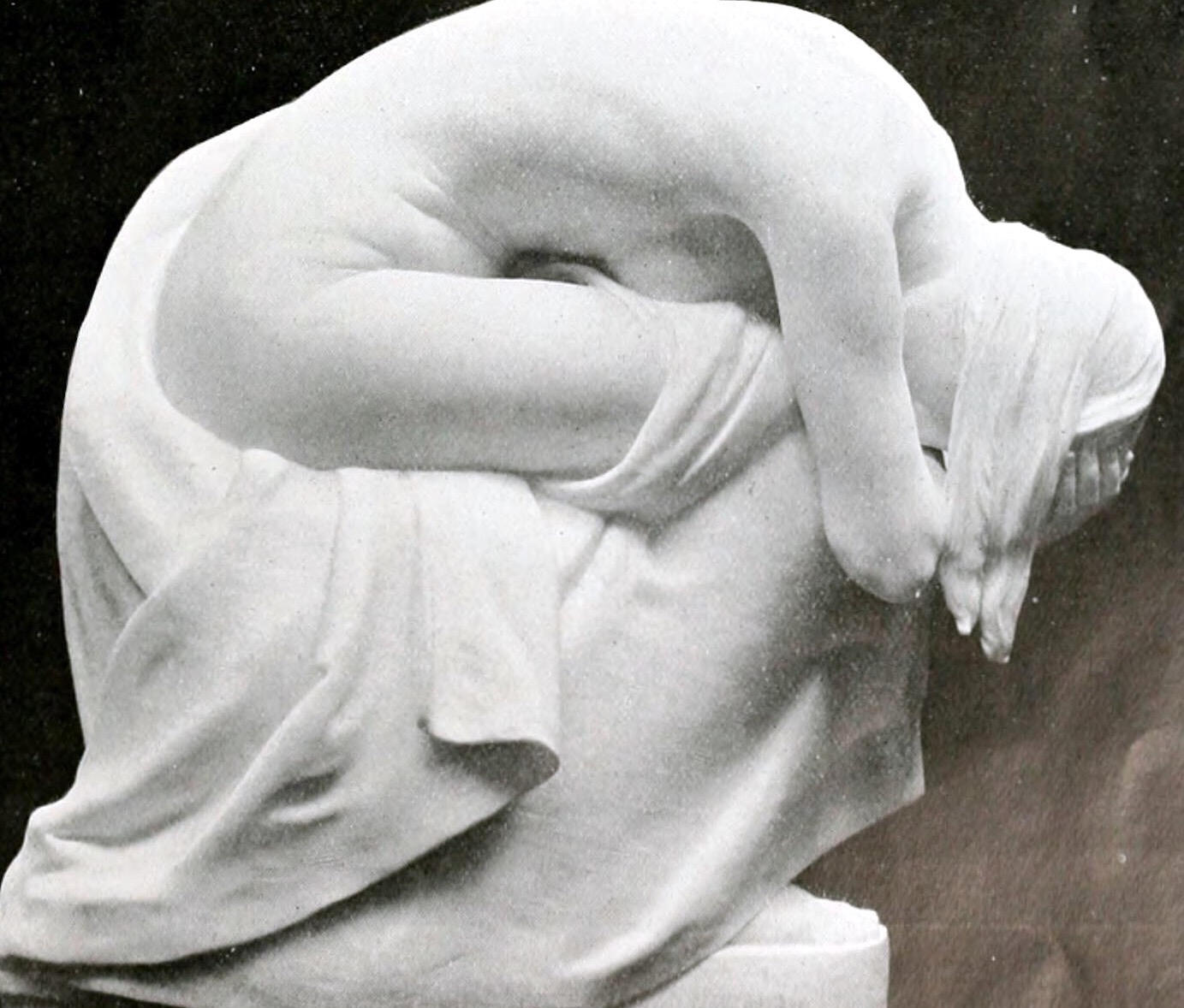
Professor of Cups


Professor of cups picks off the dust from chairs
and washes the filth from sieves and tunnels
when once she polished prose and persuasion.
 

Professor of swedish fish, marshmallow bits,
coconut hairs and pillow cushioned seats, she
bleaches the silverware shiny sterile grade A.
 

Professor of mourning the days of harrowed fear
salting agonizing dread and jittery legged angst
when dirt dwelled only in systemic sly dealings.


photo credit:  https://pondermortality.files.wordpress.com/