The Gift of Writing in the Mindful Word

  
My first piece published as a contributing writer for this wonderful journal, The Mindful Word, came out today. Please enjoy this esssay about writing and teaching students old and young about the craft I attribute as salve for what ails us in the human condition of illusory separateness.
Peace, 

the Gaze

Writing Empathy

  
Eternal seekers, humans are also time travelers. Separated by comforting (but illusory) shelters–houses and skin–they journey among others and through others. A simple word, a name called out in a crowd, suddenly connects the speaker and the unsuspecting, in-his-own-world hearer in a moment of communal recognition. This is the magic of language. 

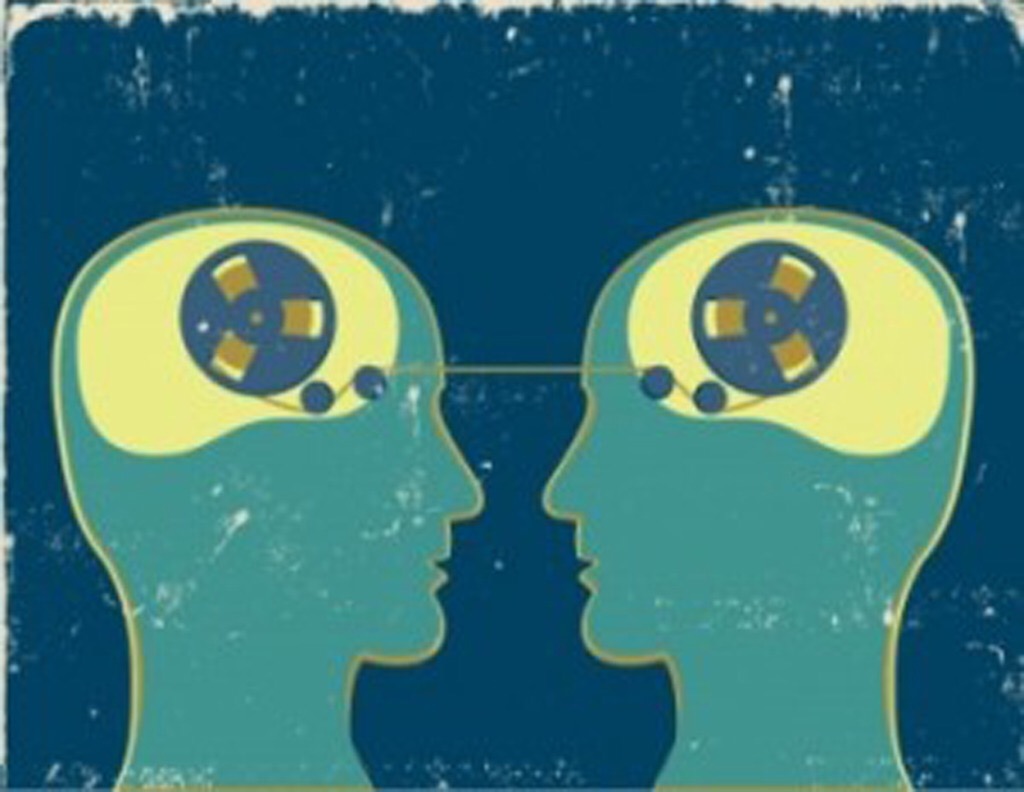
But beyond the word, driving the journey of sentences, is the uncoded language neither spoken or written: the language of compassion. Compassion is the foundation of every act of communion, not merely writing. We ‘read’ others with a willingness to believe them if they are true, paint the real of our experiences. Moreover, we empathize in reading and writing, experiencing or anticipating an other’s suffering or success. A story character we have grown to love falters, missteps and fails, and we grieve.

“The state of reading consists in the complete elimination of the ego,” Virginia Woolf wrote, and it is true. To be in the story, we must suspend ourselves to be others for a while.


credit: https://betterwritingnow.files.wordpress.com

On Writing as Suffering

  
Joyce Carol Oates claims, “The effort of memorable art is to evoke in the reader or spectator emotions appropriate to that effort.” And the effort is worth it. When our writing moves others, we affect, share and connect, thus confirming our oneness or perhaps experiencing that oneness as an ancient forgotten memory.

To reach out is to remember. The writer in all of us struggles to be understood through the code of language, a tricky bridge that requires constant constructing, honing, and refining to support the weight of ideas and experiences by which we convey ourselves to others. 

Writing is recursive, ever moving us backward and forward in thought and word–and in time.

Circling, it is an ever circling around the precise words to capture a specific piece of us we so desperately want to convey without misconstruction–that piece of the self we share using only the meager writing tools at our disposal. We search for words. Will this one mean exactly the same for my reader?
 
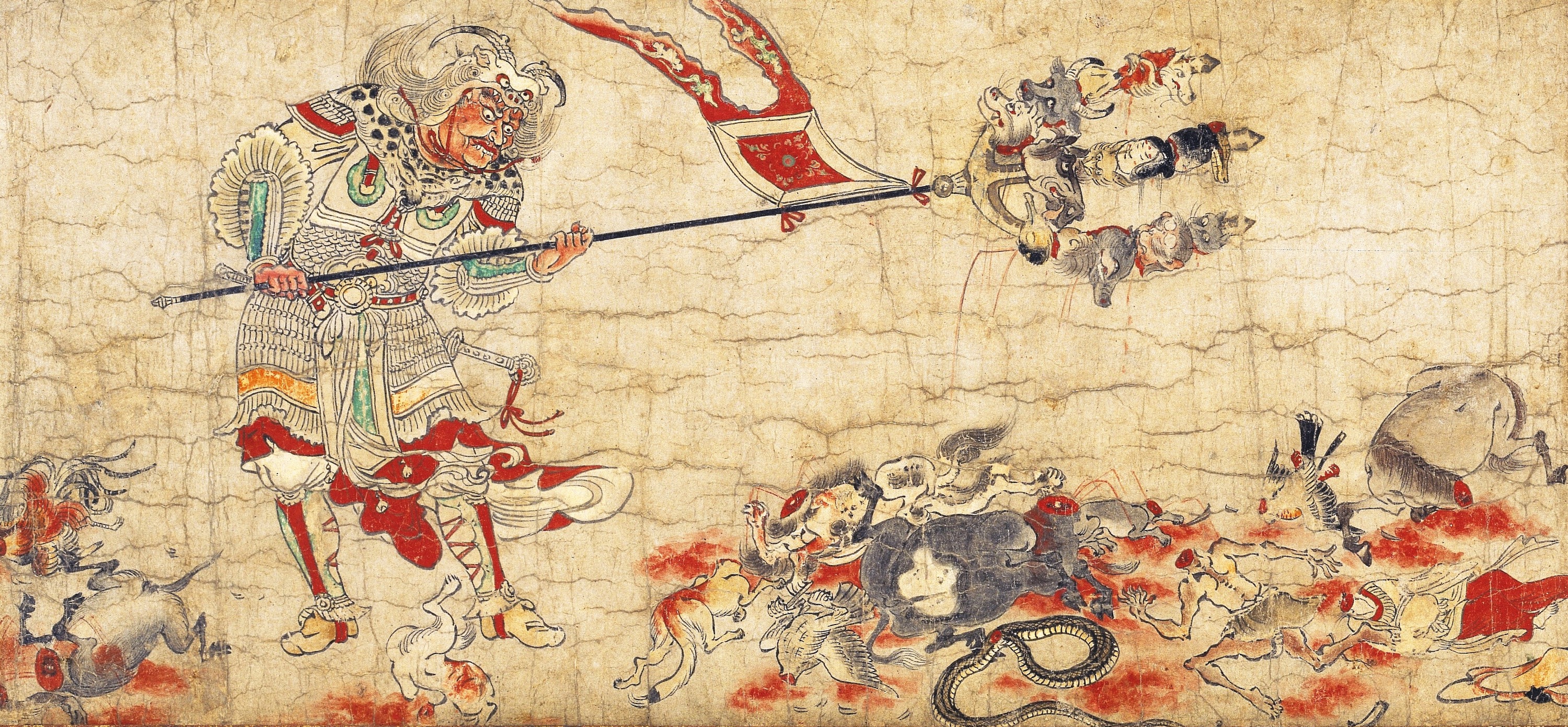
And the process of building sentences that flow into paragraphs, paragraphs into essays, is tedious. It takes patience. We must persist. Like herding wild horses, we must gather our unruly thoughts breaking wild in a hundred directions per second and corral them into the pen of ordered, confined blocks of coherent patterns. 

We must be painters and logicians both, fighting spirits within us.

credit: wikimedia

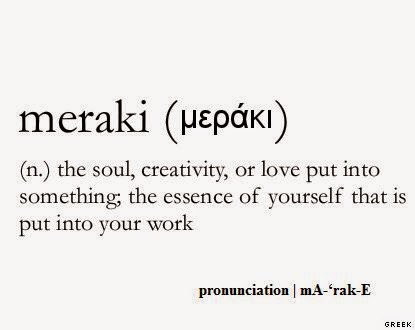
Meraki

  
The therapeutic rewards of writing have long been touted even before Freud and “the talking cure.” Writers write endlessly about writing as compulsion, art, creativity, release, documentation, imitation, recording, reporting and life. But my scouring of the web today yielded very little about writing as a gift. Correction, writing as a gift to the reader. I read plenty advice to write as a gift to the self.

I teach writing. I have often wondered not only what every teacher has wondered (and Kurt Vonnegut wrote about in one smart anecdote he told in the New York Times “Writers on Writing” series), if writing can in fact be taught (which I think it can), but what can teaching writing teach about relationships. 

Just like all roads in creative nonfiction lead home to the writer writing about writing, all teaching should lead to life, and what is life but relationships? We live in the world with other people–most of us. Relationships are relevant. Teachers should teach relevant skills, especially in classes teaching craft.

So, I try to impress upon students that grammar is life and writing is a gift, if you write consciously and conscientiously. 

Grammar is life. The eight parts of speech comprise the basic elements, the core of the English language. However, what something is, changes in relation to what that something is next to. For instance, when is a noun not a noun? When it is up against another noun, side by side, in a sentence. Often the first noun acts like an adjective such as in the phrase “road runner” or “nurse maid.” 

Similarly, a student sits in my class as a human being, perhaps a particular gender identified to that human. Sitting in my class, that human is a student, an enrollee and a peer. At home, he or she may be a sibling, a daughter or son, or spouse. People are defined by their relationships, where they are in the world–just like grammar.

And grammar is the coded order of our language, how we make sense of things. When we write–even for our own health or need–we write to be read by ourselves and others. To be understood is to write for someone else, to paint pictures, to explain something, to teach how to do something or vent, to name a few purposes of writing.

The act of writing is a giving. To do it well, to make it beautiful, clear, precise or illustrative, we must turn our eyes from ourselves to others, see like an other. What will my reader understand? What will it mean for the reader? My great gut-wrenching desire to get “it” right–just the right word–is the desire not only to create something worthy of respect, not merely catering to compulsion, but to connect a mind to another mind in a shared moment of thought or experience.

  
Wanting to transport something from inside the self to another self is a longing to merge with another. The writer and reader are lovers, always longing for being one.

credit: 

jarretfuller.com and illuminology.tumblir.com

Time Travel

Travel Hangover–

Pouring damp memories over dying embers, 

anticipating the pop, sizzle and hiss of regret,

I refuse the temptation to stir the ash,

re-confirm the smolder hides no live fire.

Driving a rented van packed with her–

obstructed the view of road left behind,

held fleeting glimpses, speeding past blades

grass, roller, razor, “Did you bring knives?”

A mother reviewing, checking, fretting

the details whirring ahead to the horizon.

Unpacking the view clear, opened us up

to ponder, muse the hours in notes, little

cares, rehearsed sentiments, deficiencies

repeated with silent knowing nods, all said.

I play the game of focused movement 

to wile the hours, trick time to obey, my eyes

follow, attached to the point out there as all

else spins and races, rattles empty spaces ablur.

A splinter swollen sore and angry, riotous red

throbbed through a chipped thumb reminds me

I waited for you on wooden slats in the park

while you twirled a dizzy dance of fractured tune.

I stifled an urge to call out, make you notice,

but the stretching sound that circled us then

that moment I was churning in your disregard

of the world, of me, of the beckoning children

could not blanket the distance between us,

the one I carried up to your bed, squared 

to the wrong wall on the wrong floor in a room. 


Sharon Olds  

I Go Back to May 1937 (from The Gold Cell)
 
I see them standing at the formal gates of their colleges, 

I see my father strolling out

under the ochre sandstone arch, the 

red tiles glinting like bent 

plates of blood behind his head, I 

see my mother with a few light books at her hip 

standing at the pillar made of tiny bricks with the 

wrought-iron gate still open behind her, its 

sword-tips black in the May air,

they are about to graduate, they are about to get married, 

they are kids, they are dumb, all they know is they are

innocent, they would never hurt anybody.

I want to go up to them and say Stop, 

don’t do it–she’s the wrong woman, 

he’s the wrong man, you are going to do things 

you cannot imagine you would ever do, 

you are going to do bad things to children,

you are going to suffer in ways you never heard of, 

you are going to want to die. I want to go 

up to them there in the late May sunlight and say it,

her hungry pretty blank face turning to me,

her pitiful beautiful untouched body, 

his arrogant handsome blind face turning to me,

his pitiful beautiful untouched body,

but I don’t do it. I want to live. I 

take them up like the male and female 

paper dolls and bang them together 

at the hips like chips of flint as if to 

strike sparks from them, I say

Do what you are going to do, and I will tell about it.

 
credit: maphappy.org

Just–in time

She barreled through the classroom because she was a barrel, as wide as she was tall, and she was tall. Young, vibrant and cheery with an obvious eye for the boys in the classroom so much so that even I knew at a sullen and cynical 14 that she craved attention. Perhaps her size measured her insecurity.

She had ink black straight hair, long, parted in the middle falling down her back. Her thick black eyeliner matched the color of her hair and framed her deep brown crinkling eyes. She smiled a lot, teasingly–especially with the boys.

I resented her flirting in slight sexual innuendo, all for male attention, just like I disliked my mother’s constant catering to my father who, in return, called her “fat ass” or “sumbitch.” An adolescent of the woman warrior seventies,  I believed in taking no shit. Miss Hill’s pandering to the scarcely post-pubescent boys was shit; it annoyed me, which conflicted with the attraction to her enthusiasm for my favorite subject, English.

I wanted not only to like her, to take her seriously, but for her to notice me, despite the quiet and unprepossessing persona I wore at the time. An ‘A’ student, I yearned to be recognized for my smarts–my perceived strength.

“This is a wonderful piece, something I can see Janis Ian or Carole King singing,” she scrawled in large, deep-ink flourishes in my journal. She had assigned a journal at the beginning of the year, instructing us, the class, to write our thoughts–whatever we wanted–just to incent us to write. With such loose parameters, I wrote poems, cherished song lyrics, doodles and observations, all of which added up to my solitary, dark, introverted teenager dreams and drama.

Music–all kinds–made my world back then: everything from hard rock/metal to folk to classical. Before that sophomore year, I was a cellist. The local elementary school offered music lessons to third graders and so I learned the cello (after the music teacher grabbed my hand, looked at my long fingers and decided cello it would be instead of the violin I and everyone else pleaded for). I played second or third chair in the orchestra throughout my school years up to 9th or 10th grade when I perfected a full time recreational weed and boys pastime.

I especially loved fine lyrics: the poetry of Joni Mitchell, Neil Young and Dylan. That year Phoebe Snow sprung on the scene with Poetry Man, which prompted me to buy a couple of her albums. Her warbling jazz-soul sound, intoned from a space between her nose and throat in the register of a deep tenor or high alto, intrigued me. And some of her lyrics spoke bitter-sweetly about disappointment, fear and inadequacy. I felt her.

One song in particular consumed me so that I memorized the lyrics after too many spins of the vinyl. The title described my life–as I felt it: “Inspired Insanity.” The piece still holds a foundational place in my music history more for its statuesque placement from an impressionable youth and sentimentality than for its musical appeal.

In fact, a friend recently asked me to name a favorite song–seemingly impossible–but for the qualification that it somehow represent me. Instinctively, I named “Inspired Insanity” more likely from habit or history than actuality, but it was the first song that came to mind.

I’ve since moved across ample fields of genres and artists to add much more sophistication and style than her simple folk-jazz temperament into my listening repertoire occasionally moving back again to folk, where music returns time and time again: think Tracy Chapman in the 90s, Iron and Wine a few years back and some of the ballads of current bands like the Weepies of the Indie folk rock genre.

It must have been what I was going through at the time as a moody self exiled 14 year old in a New York winter hibernation, either loneliness, disconnection or generalized angst about me in the world. But the song spoke the yearning inside: “Help yourself to my new clothes. Borrow some of my daydreams too…You can call me hung up but when I call you, don’t hang up the phone…Come visit me, inspired insanity.”

Perhaps I felt taken for granted. Or simply taken. My mind did not register quickly enough all the outside motivations, what strangers or acquaintances wanted of me, and so I created misunderstanding. My intuition absorbed into analytical musings always. Books not people amused me, made me feel lucky, desired, understood…made me feel. People were not my strong suit. But 14 year olds generally don’t do people well.

I only knew I craved attention for what I could master, and I excelled at school. I had cracked the code of teachers and books long before, so I kept my eye on the coveted ‘A,’ did what I had to while enjoying some of it along the way. My ‘A’s’ were the teacher nods that validated me.

So at mid-year, when I read her praise, replete with exclamation points, next to the journal entry containing the entire neatly penned Snow song, I silently shrieked, panicked with the horror of the mistake.

“She thought I wrote this?! Oh no!!”

Instant shame, embarrassment, fear and flattery combined to redden my face, flushing heat all the way down to my ankles.

It had been painful enough to deliver my thoughts and poems to her, a stranger reading my creations, my penned pretties, not just the usual rote academic scribblings, but I consoled myself in safety of the teacher-student relationship. I trusted she would never ask me to bare my soul only to betray me by reading my work to the class. She may have even given such assurance in assigning it.

Not like in 9th grade when Mr. Rowe announced to the class that the creative project would be performed or read to the class. Back then, I combined my two loves, writing and music, and somehow mustered the courage to play a recording of a song I wrote and performed on the guitar. The ballad told the story of an assigned text, A Single Pebble, the Yangtze River Chinese gold miner who braved the forces of society and the river and lost (unless you count the immortalization by John Hersey). The image of my reserved former self does not comport with that project choice, but the certainty of the recollection cannot be denied. I can still sing some of the song.

But the song in 9th grade spelled pure victory in an earned ‘A’ for work performed, finished and collected. If memory serves, mention of using the song to accompany the reading for future classes echoes proudly (whether real or imagined) in my mind’s ears.

Not so this mistaken praise. Though mortified, my ego beamed with the attributed talent of writing such a song, which translated into the belief in me as a poet–or a songwriter, at the very least. I could not help but conclude that the other poems in the journal led her to believe so. Otherwise, how could she not detect the difference in style, the clear polished finish of the one song compared to the other driblets of word leakage (the estimated worth of my creative endeavors)?

So, though I feared she would discover the song some day and judge me a fraud–burned with the humiliation of that thought–I did round back to the idea that she presumed; I did not misrepresent. I assumed she would figure it all out, while simultaneously dreading she would not. I had little faith in human capability or not enough experience to realize that she most probably would not even remember the whole incident. She, a 22 year old, teaching her first job probably, had more to do and think about than one song in one journal of her dozens of students in several classes.

However, the scene often played out in my mind of her buying the album and hearing the song, so familiar in some way, and not knowing why. Or, the flash of recognition coupled with memory of first reading the song would conjure up my image before her eyes: the quiet student who dressed in coveralls, flannel shirts and construction boots (the original Doc Martens) and wrote poetry. Would she color that image with respect for my musical tastes or disappointment in the assumed attempted fraud perpetrated on her–even if the assignment was ungraded?

It doesn’t matter. I know. The minuscule moment magnified in my mind from teen hood speaks louder to the undigested lesson, the latent effect of that experience. Somehow I registered (or chose to) that someone recognized me as capable of producing publishable work, something as good as Phoebe Snow lyrics (which in hindsight proves less poetry than song, raw and unpolished; I mean her lyrics without the voice through them fell short of spectacular). The 14 year old me sensed the twinge of an inkling of a promise: perhaps I too could create something worthwhile, a source of another’s delight or ease of sorrow.

If only I could withstand the collective gaze of others.

Eventually, I did adapt to scrutiny. Inspired by past small successes and fleeting acts of bravery, I pushed myself through the paralysis of stage fright, figuratively for me but very real for Phoebe Snow (and Joe Cocker), and performed, wrote and occasionally sang for my living and others’ entertainment.

Real inspired insanity–sometimes frenetically and other times serenely–produces beauty, wisdom, advice or instruction. Its seeds can be found in frozen undetected time tucked in between the blinks that flutter chaos and creativity, and sway a life to the left or right. Perhaps the heat of a blush imprinted a dormant notion that unlocked itself in time, just at the right time, when I began to write–without fear.


image credit:  http://wewantedtobewriters.com/wp-content/uploads/2012/05/Chron-Higher-Ed.jpg

Hearing to the Heart of What Matters


Tripping on sounds of birds outside my window, I can hear them over the swish-throb of my own heartbeat sounding in my ears, a pulsing slightly alarming and soothing all the same. I can also hear the clanking of a dish outside the closed door of my room emanating from the kitchen where I imagine my mother is sitting, skeletal and serene, in her wheelchair, gazing off through the filmy stare that inhabits her face now, the cataracts of her mind’s eye reaching some unknown space outside or inside her head that swirls and lulls the cerebral juices to twitching stillness, her jerking to and from that space in seconds like recognition of a face, an idea, a musical slice of song, a voice…. 
I imagine her waiting like the baby bird with beak wide open in anticipation of its mother’s nurturing tongue, depositing the meaty worm of egg or pear.  

Where are you, Mom?  I miss you hard like a crowbar to the back of the head. 

My thoughts cannot stay on task. My self-imposed inspiration today is directed to my ears. Listen. It is nearly impossible to hear the murmur of soft utterings spoken outside my closed door, cooings enmeshed with frenetic blather-blurbs of television banter of I know not what over the din in my brain. 

I hear her dully, though. She calls my mother’s name over again sweetly, as if to a child, “Doris…Doris…Are you hungry?” The answer is unintelligible, but of course she is hungry. Her mind does not remember satiation. She, who ate more for comfort than survival, dieted constantly, losing hundreds of pounds over her lifetime, and is now, ironically, the weight her doctor claims befits her small frame no one knew was there. She always felt fat, was fat because she said so, and my father confirmed, except for the time she lost fifty pounds and he said she was too skinny so brought donuts and candy home for her to eat, the very same items he would chide her for eating when he reminded her that she was a “fat ass.” His love was always a savage love.

You are a saint. I cannot blame you for checking out, Mom. I want to be where you are only too often, though I am afraid of dementia’s detritus. You are braver than I ever will be.

But back to my exercise of listening to the sounds, right here, right now, this moment. It’s no use. I cannot hear distinctly above the rhythmic swoosh in my head. It’s my heart. The sound of a moving dish slid across a wooden table, rumbling and ceramic shrill, draws me to her again and again, outside my cave haven door, tended to by caring voices and hands that are not mine, sitting alone with feet, arms and hands moving about her, tending to her every need in studious care, while her husband sleeps off the night’s numerous calls to relieve himself of the plaguing piss of the swollen prostate that stems the flow of sleep and slows his 82 year life ever so much more, each pace a step from bed to toilet to table to television. 

The soft pings of my electronic devices notify me that someone has me in mind, has read something I wrote and appreciates or takes issue with it. The whistle of “hey, answer me” has sounded also from my phone and I know that I must answer that one, feeling it in my bones and the back of my neck, even though it is just playful pointless slinging ping pong balls of inanities. I somehow believe I need the nonsense, like my bread and butter banter, countering the angst of imagined life sentences I carry submerged like an atomic sub awaiting the directive to fire.

But now I can hear the dogs bark outside in the distance, loud enough to distract me from the door bell ringing  from my phone–simple email notification of stuff like yoga newsletters or soccer updates that can wait–and the murmur of my heartbeat in my ears, backdrop to the dish washing, sing song lullaby caress of Mom’s caretaker and the chirping tree creatures and the people’s pets next door and the insensate stream of yak yak from the tube and my mother’s babble, my father’s snore and my daughter’s running out, late for school, clomping down the stairs and slamming the door. I don’t actually hear but the anticipation of that last sound because her noise is not announced yet and should be–a human-made ping in the nerves from a mother’s consciousness of time, responsibilities and household goings on.

I am told it may be high blood pressure or blocked ear canals that cause that murmuring metronome reminding me that I am seething flesh, a mere mechanism of pumps and cogs and wheels of spongy muscle and sinew. I pay the tellers no mind. I like my heart beating and so the sound comforts me, synchronizing my outers and inners, recalling the always-at-hand task of staying here now with me, with us, with it all, embracing what is: the fauna and flora, birds, dogs, people I love, strangers, trees, leaves, sky, wind, vibration of the telephone and the sky, the stirring of creaking beds and limbs that dash above my head in squeaking pain of wood stretched to capacity by age, use and disrepair, this old house of ours, in our circle of suburban secret burrow and peek, safe seclusion of sound and stare. 

I hear the circle of my heart. And it hears me. The world begins and ends in the heart of creation, imagination, the bonds that tie and break, the ebb and flow of living matter, all in a day’s work, in a disciplined moment of timeless listening–to life living me, us.


A Pre-Valentine Meditation on the Language of Love: Advice to ‘S’

LanguageOfLove
credit: api.ning.com

Today I ponder the sentence, “I have your back.” Depending on the source, that sentence can be quite comforting, most probably intended to be so by the speaker. It’s a sentence offered, usually with a wink, a click of the tongue and an assuring smile, as support, shorthand for “I will be your backup in a fight, your second to celebrate the win or console the loss.” Spoken by a tried and true friend, you know the invaluable purchase of the sentiment despite the cliche’d expression. By a lover, the comfort may be dubious.

On the one hand, a lover’s deeper connection and care should inform that assertion with commensurate depth and caliber of worthy comfort. However, given the heart’s investment and volatility of passion, the motivation to employ machinations to keep someone, avoid loss, manipulation being integral to human coveting, is high. As such, a lover’s declaration is far more unstable and somewhat suspect counterintuitively because most would believe the opposite. Of course he has my back. He loves me.

Clichés are dead metaphors, most English teachers and long-suffering students know, but it is astounding to think that the expression, “I have your back” or less grammatically sound, “I got your back”, was once a vivid metaphor that caused a grand éclat at its crispness, a concept derived from an odd literal body position vis a vis another human being. I mean, how does someone actually have your back? My lover is a psychopath, cut me to pieces, saving only my back, maybe just the lower third of my torso in his refrigerator. Seems anatomically impossible, or at least unimaginable.

More likely, and I am probably remembering this from some forgotten space in my vast and sundry tidbit collection eating up all my brain RAM (just don’t want to interrupt the flow to look it up), it is a war reference to protect soldiers while they “go for it” from behind the trenches or the thicket of trees: protective, life preserving–or the attempt–in dangerous situations. The speaker intends to warn you and be your second pair of eyes to ensure your odds against getting picked off by a sniper, a guy with a gun or anyone who is prepared to do physical, emotional or psychological harm (or any combination thereof).

War metaphors seem apt in matters of the heart. The struggle with desire to surrender and need to protect the heart, a part of every love story long or short, feels like goose stepping on a mine field. We want to believe in the truth of words, especially those that contain the universally cherished missive “I love you.” Even as we fear the risk of injury, we want the message and will find it hidden in so many other words, so much so that we miss important cues and clues that language emits to the brain to shape behavior.

When language is abused, words divorced from their communally consensual meaning–an irrevocable breach, is when the battle ensues and treachery flies, innocent lives lost. Children spend many years forming the world through their initiation into language. Accessing the portal to ideas and things is granted only upon the trust in the safety of the vehicle that brings them to that door: words. They learn trust in the great unspoken agreement of humanity that words will mean what they were taught to mean by parents, schools and community. The ensuing savvy acquired through rubbing against other humans in the journey of days is the slipperiness of words and the deviousness of people.

But not all is lies and deception, not all words suspect. A lover, friend or business partner may mean he has your back when he says it but change his mind later. Though true when he said it, even if he said it over a dozen times, repeated it like a lullaby’s refrain, his mind or heart changed and so stopped saying it because he no longer wished to protect.

Or maybe the last time he said it, “I have your back,” the meaning of the expression–so broad and vague, practically incomprehensible–changed imperceptibly (unconsciously, to give him the benefit of the doubt) to reflect a different, newly emerging intention, a slightly different slant or even a total inversion. Maybe his subconscious drew the invisible target on your back for the bullseye knife throw:

Love is war. War is hell. I’ve got your back. It’s in my scope and my finger is on the trigger.

The language of love (and war) exposed in innumerable metaphors and clichés (think: love is blind) is a special case of the general, meaning it partakes of the attributes of language, generally, while nuanced with its own subject-specific idiosyncrasies. Love engenders both lies and truth motivated by intentions and causes distinct from commerce, for instance: lying to spare my husband’s feelings rather than for profit.

To be imperfectly reductive or hopelessly expansive, however, the nature of all language (written, spoken and body) is twofold: communicative and formative. It gets the job done, sends the message, and delivers the goods. At the same time, it gave us the job, the message and the goods in the first place. A cat becomes a four legged furry creature that mews for the child who learns its name. Before that, it is something unknown and out of focus.

Like its inhabitants, language–messenger or maker–is cagey, illusive, illustrative, beautiful, crafted, elusive and mutable. Many more thoughtful and capable before me have doubted the possibility of getting outside of it. But so too, many have escaped its clutches, unthought wordless language in meditation. It takes being both within and without the self to achieve that place that words fail to describe–a place without desire for anyone at your back.

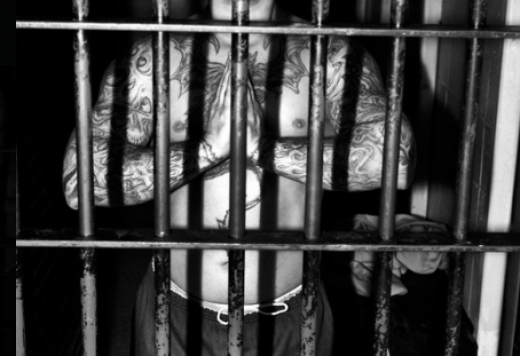
YogiTimes article: “Yoga and Compassion in Prison”

IMG_0356

A predecessor article to the others recently showcased on this blog in elephant journal and rebelle society, this YogiTimes article published yesterday is the version I submitted before revisions requested by editors of those other journals. It is significantly a different story.

The evolution of the publishing process has been illuminating to say the least, but more interestingly, is how many ways a story can be told.


Those who do not have power over the story that dominates their lives, the power to retell it, rethink it, deconstruct it, joke about it, and change it as times change, truly are powerless, because they cannot think new thoughts
. —Salman Rushdie

Writing Your LIfe

2015/01/img_0335.jpg

During the early 2000s, I taught a course called “Writing Your Life” at a few senior citizen centers in Riverside County, California. I was an English Composition instructor at the local community college when the call for a teacher came up through the community education division. I was happy to embark on something unknown–teaching folks much older than I how to write their life stories.

After a few rough starts, including a crabby ex-English teacher rolling her eyes at me, I got into the rhythm of helping my students tell their stories, rich in textures from worlds I imagined only through history texts, like hopping a train or tears for receiving a sandwich from a stranger during the Great Depression. There were some talented writers among the group, but most were there to listen and write to share their joys and sorrows–to be heard and seen. It was therapy.

Freud and those that came before him knew that talking about one’s life is therapeutic healing. Narrating the self gives the speaker the opportunity to frame her life with a beginning, middle and end for others to understand the point of the story, the meaning of one’s life in specific scenes or on the whole.

Writing has the same therapeutic qualities according to an article in The New York Times entitled Writing Your Way to Happiness. The article examines a study documenting the effects of students who wrote and re-wrote versions of themselves with respect to school performance and other aspects of their lives. The results were interesting, reflecting the importance of controlling perceptions–of others and of self. Students who re-framed their stories improved their performance in school.

“The idea here is getting people to come to terms with who they are, where they want to go,” said Dr. Pennebaker. “I think of expressive writing as a life course correction.”

I agree. The creative urge is the same in writing and living–insight and projection.