Weekly Coffee: deep trout

image
Credit:http://melodieperrault.bigcartel.com/

“I adore looking down at his face, his mouth and chin wet with my pussy,” she sighs.

An unmistakeable internal wince triggers the 20-second rapid-fire movie reel of analysis playing before my mind’s eye: 

“Why the discomfort at glimpsing a peek into her fucking? It’s not like I’m intruding. Certainly I have outgrown my culturally infused hang-ups about nudity and pleasure long characterized as pornographic guilt sources. And the word “pussy” ceased to make me bristle decades ago, ” I muse.

She and I confess daily details hidden from the public in the corners and crevices of our lives each week for years now. “From whence does this auto-shame come?” I hear a feigned British accent ask inside my head. 

I watch her circle her hollow straw round the inside of the half empty mocha blended drink she seemingly speaks into. Her fingers are long, delicate and deceptively thin for how strong they are. I have seen them finger guitar frets and forcefully rip out knotted laces of a five year old’s shoes with ease. And her lips belong to a much younger woman, half her age, the way they remain stained pink-naked like the color of her fingertips after strumming that guitar. 

The rolling analysis halts at the sound of her voice.

“But he still can’t make me cum.”

Shaking my head, “After all these years…?”

“I know, right? You would think he could figure it out. Of course I don’t give him much help finding his way. I give hints like it’s some sort of treasure hunt or game of you’re-getting-warmer…put your finger here, circle like this, now move here… but I lose interest when the whole lesson becomes teachy and disruptive to the flow. I prefer to masturbate for cumming and leave the loving to him.”

“Hmmm…” I intone. Funny how we parcel the sides of ourselves out like that, almost a division of labor delegation to those who specialize according to training and capability. Who is more trained at knowing a body than its long-exploring owner? And it’s far greater, multiply abundant, to love physically with another than alone. 

“How ’bout dem Ducks,” she mocks, and we’re off to more surface ground.
 

Joyas Voladares by Brian Doyle (for poetry month)

Still one of my all time favorite poems…


Credit: benvironment.org.uk


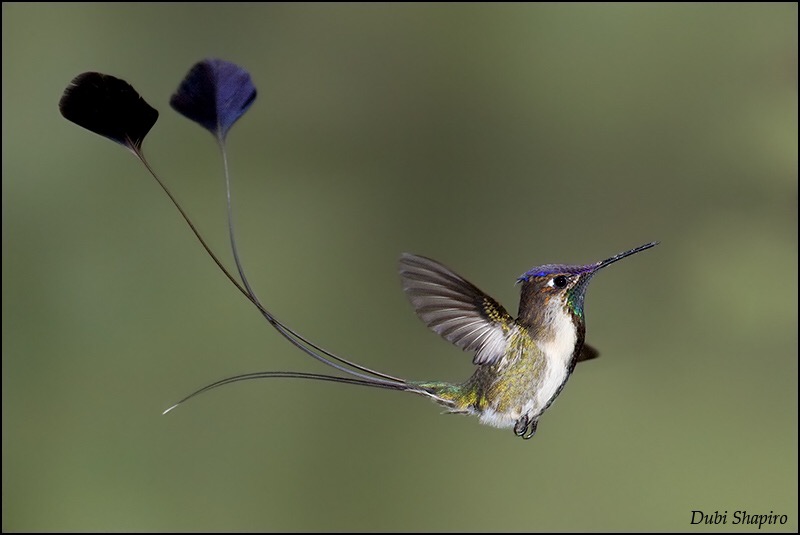
Consider the hummingbird for a long moment. A hummingbird’s heart beats ten times a second. A hummingbird’s heart is the size of a pencil eraser. A hummingbird’s heart is a lot of the hummingbird. Joyas volardores, flying jewels, the first white explorers in the Americas called them, and the white men had never seen such creatures, for hummingbirds came into the world only in the Americas, nowhere else in the universe, more than three hundred species of them whirring and zooming and nectaring in hummer time zones nine times removed from ours, their hearts hammering faster than we could clearly hear if we pressed our elephantine ears to their infinitesimal chests.
 
Each one visits a thousand flowers a day. They can dive at sixty miles an hour. They can fly backwards. They can fly more than five hundred miles without pausing to rest. But when they rest they come close to death: on frigid nights, or when they are starving, they retreat into torpor, their metabolic rate slowing to a fifteenth of their normal sleep rate, their hearts sludging nearly to a halt, barely beating, and if they are not soon warmed, if they do not soon find that which is sweet, their hearts grow cold, and they cease to be. Consider for a moment those hummingbirds who did not open their eyes again today, this very day, in the Americas: bearded helmet-crests and booted racket-tails, violet-tailed sylphs and violet-capped woodnymphs, crimson topazes and purple-crowned fairies, red-tailed comets and amethyst woodstars, rainbow-bearded thornbills and glittering-bellied emeralds, velvet-purple coronets and golden-bellied star-frontlets, fiery-tailed awlbills and Andean hillstars, spatuletails and pufflegs, each the most amazing thing you have never seen, each thunderous wild heart the size of an infant’s fingernail, each mad heart silent, a brilliant music stilled.
 
Hummingbirds, like all flying birds but more so, have incredible enormous immense ferocious metabolisms. To drive those metabolisms they have race-car hearts that eat oxygen at an eye-popping rate. Their hearts are built of thinner, leaner fibers than ours. Their arteries are stiffer and more taut. They have more mitochondria in their heart muscles—anything to gulp more oxygen. Their hearts are stripped to the skin for the war against gravity and inertia, the mad search for food, the insane idea of flight. The price of their ambition is a life closer to death; they suffer more heart attacks and aneurysms and ruptures than any other living creature. It’s expensive to fly. You burn out. You fry the machine. You melt the engine. Every creature on earth has approximately two billion heartbeats to spend in a lifetime. You can spend them slowly, like a tortoise and live to be two hundred years old, or you can spend them fast, like a hummingbird, and live to be two years old.
 
The biggest heart in the world is inside the blue whale. It weighs more than seven tons. It’s as big as a room. It is a room, with four chambers. A child could walk around it, head high, bending only to step through the valves. The valves are as big as the swinging doors in a saloon. This house of a heart drives a creature a hundred feet long. When this creature is born it is twenty feet long and weighs four tons. It is waaaaay bigger than your car. It drinks a hundred gallons of milk from its mama every day and gains two hundred pounds a day, and when it is seven or eight years old it endures an unimaginable puberty and then it essentially disappears from human ken, for next to nothing is known of the the mating habits, travel patterns, diet, social life, language, social structure, diseases, spirituality, wars, stories, despairs and arts of the blue whale. There are perhaps ten thousand blue whales in the world, living in every ocean on earth, and of the largest animal who ever lived we know nearly nothing. But we know this: the animals with the largest hearts in the world generally travel in pairs, and their penetrating moaning cries, their piercing yearning tongue, can be heard underwater for miles and miles.
 
Mammals and birds have hearts with four chambers. Reptiles and turtles have hearts with three chambers. Fish have hearts with two chambers. Insects and mollusks have hearts with one chamber. Worms have hearts with one chamber, although they may have as many as eleven single-chambered hearts. Unicellular bacteria have no hearts at all; but even they have fluid eternally in motion, washing from one side of the cell to the other, swirling and whirling. No living being is without interior liquid motion. We all churn inside.
 
So much held in a heart in a lifetime. So much held in a heart in a day, an hour, a moment. We are utterly open with no one in the end—not mother and father, not wife or husband, not lover, not child, not friend. We open windows to each but we live alone in the house of the heart. Perhaps we must. Perhaps we could not bear to be so naked, for fear of a constantly harrowed heart. When young we think there will come one person who will savor and sustain us always; when we are older we know this is the dream of a child, that all hearts finally are bruised and scarred, scored and torn, repaired by time and will, patched by force of character, yet fragile and rickety forevermore, no matter how ferocious the defense and how many bricks you bring to the wall. You can brick up your heart as stout and tight and hard and cold and impregnable as you possibly can and down it comes in an instant, felled by a woman’s second glance, a child’s apple breath, the shatter of glass in the road, the words I have something to tell you, a cat with a broken spine dragging itself into the forest to die, the brush of your mother’s papery ancient hand in the thicket of your hair, the memory of your father’s voice early in the morning echoing from the kitchen where he is making pancakes for his children.

Monogamy and Us…again

image

Two articles on monogamy came out this week, both once again proclaiming monogamy has outlived its origins and is not suitable to our wiring.

In Salon’s Take that, monogamy! We’re actually hard-wired for polygamy, which helps explain why so many cheat, biologist David P. Barash explains that humans are hard wired for poly relationships:

Even though monogamy is mandated throughout the Western world, infidelity is universal.

Anthropologically speaking, Barash contends cultures around the world fulfill their social commitments in monogamy but not their biological commitments, which is more inclined toward polyandry.

In short, when adultery happens—and it happens quite often—what’s going on is that people are behaving as polygynists (if men) or polyandrists (if women), in a culturally defined context of ostensible monogamy. Adultery, infidelity, or “cheating” are only meaningful given a relationship that is otherwise supposed to be monogamous. A polygynously married man—in any of the numerous cultures that permit such an arrangement—wasn’t an adulterer when he had sex with more than one of his wives. (As candidate Barack Obama explained in a somewhat different context, “That was the point.”) By the same token, a polyandrously married Tre-ba woman from Tibet isn’t an adulteress when she has sex with her multiple husbands. Another way of looking at this: when people of either gender act on their polygamous inclinations while living in a monogamous tradition, they are being unfaithful to their sociocultural commitment, but not to their biology.

Meanwhile, in today’s Globe, Science writer Ivan Semeniuk reports on science’s latest findings that monogamy may have its roots (more likely one of them anyhow) in avoiding STD’s in To have, to hold, to avoid STDs in Science tackles evolution of monogamy.

In a paper published on Tuesday in the journal Nature Communications, the researchers propose that the impact of sexually transmitted diseases may have started pushing humans toward monogamy during the agricultural revolution, when social groups began to grow in size to hundreds of individuals. The culturally imposed reinforcement could have taken hold even though the individuals involved would not have been aware of any longer-term survival benefit to their group over many generations.

Monogamy as an early safe sex device? Seems so unsexy.

Daddy Deep

wp-1460528910841.jpg
What sound makes hollow deep?

Not quite sound at all,

It is a missing knock, 

Soft and insistent,

Knuckles weak.

A buzz of silence

Just about where the t.v. 

Lies blank and mute.

A sneer faded to black

And a joke told 10,000 times

With a missing punch line

Or vaguely remembered,

Souring the laughter.

Questions unrelenting and inane

Will one day go unanswered

Not for lack of interest, 

Raised eye brow, 

Rolled eyes, but

For want of asking.

Some day the house

Will die without you,

Emptied of its anchor

And upturned root.

That day will gut us,

No doubt, but not today.

Not this day.

Clowns to the Left of Me, Jokers to the Right…

…Here I am, stuck in the middle with you, you the sane ones. Can we just stop? I blame the middle for its quietude.

Extremism everywhere in all forums and locations seems to be the new norm if you merely scan social media. And the balance, the middle, is silent, gets no air time.

To the right most extreme we have banning books, dissemination of contraception information, health care advisory on certain procedures–abortion, for instance, or exploration of new research areas like stem cell, and, the latest, a Texas senator who would vote to keep women in the house where they can clean and care take. At the left most, we have trigger event warnings, micro aggressions, and the University of California regents censoring any coded anti-semitism in the form of anti-Zionist speech or acts on UC campuses.

Last week’s critique of this newly introduced policy by the California regents board is discussed in the article (Op Ed) by Saree Makdisi and Judith Butler in last week’s LA Times entitled “Suppressing Zionism on Campus is Catastrophic Censorship.” The policy seeks to root out anti-semitism disguised as anti-zionism on campuses. The UC committee charged with examining the purported rise in anti-semitism expressed on campuses (a vandal’s bathroom scribble about hating Zionist Jews, for example) sought to expose thinly disguised or coded prejudice in the form of an ostensible critique of an Israeli political faction.

Authors and UC professors Butler and Makdisi contend the hidden agenda behind the policy is motivated by suppressing anti-American sentiment fomented by growing criticism of Israeli-Palestinian relations/stand-off. The authors accuse the move as a thinly veiled censorship attempt aimed at suppressing criticism of American policy regarding Israel.

Whether these professors are correct or not, censorship does not belong on campuses–period. Students who vandalize bathrooms should be prosecuted for destruction of property. Students who commit or instigate violence should be counseled. People who hate others by reason of their color, creed, beliefs or practices, well, exposure to those types is the cost of living in society.

The purpose of colleges and universities is to prepare students for life, civic duty, employment and social existence. In particular, higher education should expose students to both practical and ideal considerations of living in society like earning wages and working in teams, understanding democratic responsibilities to vote and be informed as well as honing critical thinking skills vis a vis advertising, politicians and door to door salesmen let alone legal documents, medical treatment and military service. In other words, the primary responsibility for higher education is to teach students to think, to slot them into already established spots in society or to make new ones.

Thinking requires exposure to thoughts, principles, laws, behaviors and energies present, past and future, seen and unseen. There must be exposure to all that should and could be thought about, including beliefs and ideas that challenge existing beliefs and ideas. That’s called growth, and growing into citizens of a nation and the world.

And yes, restraint and constraint are also taught on campuses. You cannot say and do whatever you wish. There are laws against harassment, vandalism, assault and battery. There are laws forbidding lying about others such as defamation. Prosecution or expulsion for these crimes or torts is lesson learned for committing wrongs against society or specific others.

Regardless of the motivation or interpretation of UC policies regarding anti semitism or zionism, censorship does not belong on a college campus.


All Good Things…

Opening Night of Thomas Keller's Bouchon
November 16, 2009 – Beverly Hills, CA Environmental Opening Night of Thomas Keller’s Bouchon Photograph By Jacqueline Miccalizzi© Berliner Studio/BEImages

I am fortunate to be a writer. I have worked doing what I love, even if not all writing has been fun. Writing fun quickly withers if you have to do it for a living. My paid writing assignments have varied in scope and subject matter from the mind-curdling banal to the wildly exciting.

One assignment I rather enjoyed for the research I had to do on subjects for which I have passion, food and travel, was writing for the DaringPenguin.com site, which kept me researching and salivating while luxuriating in luscious pictures of gorgeous food, decor and scenery. I loved the job and am sad to see it end as the site is taking a new direction and/or going on hiatus.

Here are five articles I wrote for this site that I hope you enjoy:

For the Finest Dining in Los Angeles, Feast at These 5 French Restaurants

Our Choices for the 5 Finest French Restaurants in Las Vegas


10 Great Things to Do in Seattle for Free


Santa Monica’s Amazing Seafood: Ten Spots to Try


7 Unique Seattle Hotels That Will Truly Amaze You

courtroom casino


A shivering mass in a cold-lit courtroom,
slunked skinny in government issue chair,
the lone “ring leader” sat in grim-lip stare.
 
Straight ahead at nothing in particular upon
a judge’s dispassionate immovable face, the
charged steered a red-rimmed vision eroded.
 
A shuffle, a gurgle, a sigh, a sniff and a cough,
and the whole matter was decided on a whim.
Scales tip in no one’s favor but the beholder.
 
A life’s mere matter, flesh forged in fire image
and fluttering time, like dust on butterfly feet.
And the revolving door justice spun 7’s today. 

The Dancing Devils’ Eve

  
Three sports minded looking (shorts, windbreakers, running shoes) 

men in their late sixties, early seventies in fine fit shape, 

eating frozen yogurt and chatting about American Idol, 

debating which singers touch their hearts rather than 

merely their ears and how Adele, who has a powerful voice,

sings the same sounding songs all the time while outside

the kidlets also dressed in shorts, tennies and windbreakers,

 well they just spin and run and chase and throw caps to the floor

“Pop!” and squeal and drag little sisters and brothers by the hand.

As I in my cloud of sleepless fuzz watch behind a counter through 

the protective pane of legitimacy, bleary eyed, she who cannot

help but listen and let the wordy notes of lilting song and sting

float in and out of me, touching my nerves in a gentle buzz and click,

anodizing the metal of my thoughts to clumping the hours abiding.

A glance at my bloody finger, cuticle ripped down to the root, reminds

me the angst trembles beneath the calm veneer–tomorrow’s near,

and the dancing devils and retinue request (demand) my presence. 

To the Thief Who Stole a Teacher’s Textbook

bae

I wish no ill will

if to steal will fulfill

a desire to learn–

a worthwhile return–

in literary taste

as is truly the case

in so fascinting a text

“What happens next?”

The suspense never ending

in essays mind bending

priced at a mere 100 bucks

which to you probably sucks

because you obviously can’t pay

so keep it and have a joyful day.

Oh, and the essay on morality

skip it lest it damper joviality

at having stolen a book

to resell to some schnook

who’ll think he struck gold

at this collection re-sold

replete with scribbles galore

like none sold at the book store

but good luck deciphering words

gifts as intended but to  fools, absurd.