Cultural Appropriation or Emulation: Does it Matter?

  
Published in the Mindful Word, please enjoy an article I contributed to the ongoing conversation about Rachel Dolezal, cultural appropriation and social media. 

For those of us who grew up in a Pakistani, Sri Lankan, Bangladeshi, or Nepali household, our struggles to fit in are vastly different in magnitude, but the solidarity exists. So that’s why we are upset when someone wakes up one day and decides to exploit our turbulent identities as a disposable fashion—and by doing so be rewarded as a paragon of globalization and cultural acceptance. How dare they regard Indian fashion as effortlessly cool and chic while we make it look “fobby,” or a stubborn adherence to our culture that purports us to be “fresh off the boat.”


How dare they have a crush when we spent our entire lives trying to love.

Read more here.

Peace, 

Gaze

“The Coddling of the American Mind” in the Atlantic

  
I have taught college students to write, read and think for over 15 years now. Before that, I did the same for high school students. My job–teaching–particularly skills for college, and more importantly, life, impresses me as one of mind crafting. I teach students how to think, using the medium of the word. Others teach the same through other media, such as art, music, math or computers, to name a few.

Since writing starts with the word, that is where I start my classes each semester. I compare grammar to life. It starts with the word, which has an essence and a function, depending on its relationship to other words. I try to illustrate this by pointing to a student and defining the student as presumably human, male or female, but also in context of a classroom, a student, peer, son or daughter, just as a noun is a noun until it is placed next to another noun and then functions like an adjective.

It has always been a hit–until recently. In the last couple of years, I hesitate to use the example because once I get past presuming a student is human, I get tangled up in words trying to be respectful of gender identification. I now find myself saying the person appears as this gender or that but may actually identify some other way…and then it gets complicated for me. I start thinking that maybe it is wrong to even presume a student represents as human, now with people going bionic by choice, according to an article I read this morning.

I am the last person to be the most sensitive in any situation. I am not a clod or a jerk (at least I don’t think so), but I can be absorbed in my own world, the material I am teaching and not notice the effect of my natural expressions. I sometimes use profanity to make a point. I reference all kinds of beliefs and politics and history, my class encompassing words and ideas. The constant running through my classes, lately, however, is my fear of others’ sensibilities. I am wary of the trap of my own words.

A true gift, the recognition of these fears in the Atlantic article entitled “The Coddling of the American Mind,” which is a thorough investigation of the temperament and tendencies of the American college student as well as some reasonable suggestions to change the trends toward litigation and censorship based on what the author identifies as distorted thinking often bordering on psychological disorders, including adapting sensitivities on behalf of other groups and identities.

The authors define and exemplify micro aggressions, catastrophizing and trigger warnings, topics, words and imagery taught in classrooms or presented in the world that trigger traumatic experiences personal, racial or historical. For example, students object to the mention of rape and rape cases in a law school class for the emotional triggers to some students’ traumatic experiences. This is merely one type of behavior that crowds the classroom’s content and censors speech.

However, as the authors assert, shielding students from offense runs counter to the exposure students should be getting to new ideas in school, including ones that offend. Schools are not bubbles but training grounds for the world beyond school, as world inhabitants, of which there is much that offends.

Attempts to shield students from words, ideas, and people that might cause them emotional discomfort are bad for the students. They are bad for the workplace, which will be mired in unending litigation if student expectations of safety are carried forward. And they are bad for American democracy, which is already paralyzed by worsening partisanship. When the ideas, values, and speech of the other side are seen not just as wrong but as willfully aggressive toward innocent victims, it is hard to imagine the kind of mutual respect, negotiation, and compromise that are needed to make politics a positive-sum game.

The article is a fair treatment of the causes and effects of this educational and social phenomenon, including a recommended list of twelve distortions (reproduced below) to identify and teach in the classroom based on cognitive therapy practices that help individuals focus on a reading of reality that is not merely emotional. I know my falll class opener may start with this article for discussion.

 Common Cognitive Distortions
A partial list from Robert L. Leahy, Stephen J. F. Holland, and Lata K. McGinn’s Treatment Plans and Interventions for Depression and Anxiety Disorders (2012).
1. Mind reading. You assume that you know what people think without having sufficient evidence of their thoughts. “He thinks I’m a loser.”
2. Fortune-telling. You predict the future negatively: things will get worse, or there is danger ahead. “I’ll fail that exam,” or “I won’t get the job.”
3. Catastrophizing.You believe that what has happened or will happen will be so awful and unbearable that you won’t be able to stand it. “It would be terrible if I failed.”
4. Labeling. You assign global negative traits to yourself and others. “I’m undesirable,” or “He’s a rotten person.”
5. Discounting positives. You claim that the positive things you or others do are trivial. “That’s what wives are supposed to do—so it doesn’t count when she’s nice to me,” or “Those successes were easy, so they don’t matter.”
6. Negative filtering. You focus almost exclusively on the negatives and seldom notice the positives. “Look at all of the people who don’t like me.”
7. Overgeneralizing. You perceive a global pattern of negatives on the basis of a single incident. “This generally happens to me. I seem to fail at a lot of things.”
8. Dichotomous thinking. You view events or people in all-or-nothing terms. “I get rejected by everyone,” or “It was a complete waste of time.”
9. Blaming. You focus on the other person as the source of your negative feelings, and you refuse to take responsibility for changing yourself. “She’s to blame for the way I feel now,” or “My parents caused all my problems.”
10. What if? You keep asking a series of questions about “what if” something happens, and you fail to be satisfied with any of the answers. “Yeah, but what if I get anxious?,” or “What if I can’t catch my breath?”
11. Emotional reasoning. You let your feelings guide your interpretation of reality. “I feel depressed; therefore, my marriage is not working out.”
12. Inability to disconfirm. You reject any evidence or arguments that might contradict your negative thoughts. For example, when you have the thought I’m unlovable, you reject as irrelevant any evidence that people like you. Consequently, your thought cannot be refuted. “That’s not the real issue. There are deeper problems. There are other factors.”

Science Meets Philandering

hardinginternal87873

I like today’s compelling Fox news story about Ancestry.com’s confirmation of President Harding’s love child. Some folks were vindicated and love shone on the day.

Of course my first thought questions the motivation, desire and impetus for such DNA testing to prove something that does not really matter in terms of inheritance or political effect these many years after the fact. Who even remembers Harding’s presidency?

But this passage is my favorite:

Based on DNA from Britton’s grandson and descendants of Harding, the results are 99.9 percent certain, Ancestry said. The findings were first reported Thursday by The New York Times.

I mean there is always that .01% chance of mistake. Then what? 😉

Define Mistress 

  
I certainly enjoyed the following Urban Dictionary definitions of the term “Mistress:”

***Something between a mister and his mattress.

***Spare pussy to have when your wife or girlfriend is either on the rag or just not in the mood to straddle the cock. Traditionally a popular stress reliever in France, which might explain why they rarely wage wars these days.

***The woman who is dominant to you and will gladly punish you at any time for any thing. 

see bitch

You missed a spot on the window… 

Bend over to be spanked!
***<ORIGIN> from the Old French maistresse, from maistre ‘master’

Noun 

1) – a woman in a position of authority or control.

<special usage> a woman who is skilled in a particular subject or activity. (possibly sexually)
2) – a woman having an extramarital sexual relationship, especially with a married man.
<special usage> a woman loved and courted by a man
3) – a woman that is the dominating role in a dominate/submissive relationship or arrangement.

***Side hoe
***mistress

a women who has a foot slave and allows him to worship her feet, ie kissing each toe, licking her soles, eating her toejam

mistress gemma wanted to punish her foot slave so took off her boots and smothered his with her sweaty soles, the slave was in heaven, she even then made him masturbate over her smelly socks

***female PIMP

***1.) a lonely female with no self-respect who willingly subjects herself to the marginal attention of married men 

2.) enemy to the institution of marriage 

3.) an example of female energy used for evil

4.) a married man’s co-conspirator 
5.) the puppet a married man keeps in his closet and pulls out only at night and only when no one else is around to witness its existance 

6.) one who will never experience real romantic love, and seemingly has no desire for it

7.) a woman with no value other than that of sexual gratification

credit: http://pre01.deviantart.net

Medicinal Embrace

  
“I hate when someone cuts me off, and then flips me off as if my very existence provoked the act.”

She nods, not lifting her eyes from the words on the screen, and mumbles a “hmmm…”

“But the worst part is that I get so angry about it, cursing out loud, speeding up, trying to make eye contact to give the person the stink eye and stab them with my utter disgust. Why would I even care? Why would I make myself so worked up?”

Still bathed in the glow of the screen and not looking up, she responds distractedly, “I don’t know.”

“And I immediately check myself and wonder how I could lose my cool like that, let someone just take me out of myself into the hate zone. My thoughts get ripped from wherever they were to this horrid place some stupid stranger took me to–with my permission. It frustrates me that I cannot resist…cannot NOT react.”

She looks up from the computer, and turns all the way around in her chair, 180 degrees, and faces her now–she with her back turned who rummages through the refrigerator as her complaints dissolve into questions that perplex the vegetables she picks up one by one–broccoli rabes, Japanese eggplant, and summer squash–examines and then shuffles to the far side of the shelf.

“Then my reaction to having reacted like an ass, an overly angry ass, is even worse, just berating myself for being out of control and habitually reactive. I mean I just want to let these things pass without getting my adrenaline pumping—just once. But the whole thing is just one big ugly pattern that I can’t change….ingrained, like….a disease…Have you seen the…? I think I put it…

Oh! I didn’t hear you sneak up behind me. Aw baby, that’s so nice…you’re so toasty warm. Just what the doctor ordered mmmm…”
 

credit: http://www.annashukeylo.com/

Autophony

  
Clicking, no ringing, not quite a ring but a hum.

My breath, I hear my breath…and my heartbeat, 

flooding my ears with pulsing thrum, alarming yet calming.

Am I dying, an aneurism around the corner, pressure cooked?

Cyber facts point to clogged ears given my health history.

Simple fix, but something stops me from stopping the sound.

A comfort in hearing life, my life, in its rawest base components:

a heart beat and breath reminds me that I walk as mechanical wonder,

a miracle of meat and synchronized pumps and electric pulleys, 

anima’s dusty coat of confectioner’s powder smothering the shine.  

The Little Death

  
Yet Freud’s or the French’s little death (orgasm) requires total submission and trust–to let go of holding on without fear of being judged or betrayed by another, a body or self. 

Different pathway to the same result, which is total obliteration, mind-erasure, loss of control over the world–fear and pleasure. 

Both test humanity.

When terror burns its path through a being, however, surfing its electricity at sonic light, what remains is not so much silence as a spentness, a vapid stripping of nerves that leaves a permanent mark, maybe a tic, a recurring memory, or a dullness close to death.

Dopamine refuses fear the same experience as orgasm, though dopamine injects its life-loving pleasure-ful substance in both, pre-death.

Both are ineluctable surrender, an abandonment of reason and belief, a blackness in the mind’s hole.

But I’d take a cheap orgasm over a good scare any day.


credit: http://www.notable-quotes.com

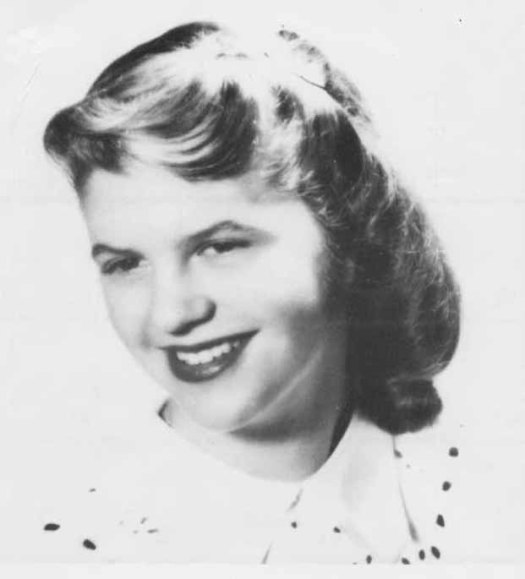
Is Sylvia Plath a cultural appropriator?

image

Daddy

BY SYLVIA PLATH

You do not do, you do not do   

Any more, black shoe

In which I have lived like a foot   

For thirty years, poor and white,   

Barely daring to breathe or Achoo.

Daddy, I have had to kill you.   

You died before I had time——

Marble-heavy, a bag full of God,   

Ghastly statue with one gray toe   

Big as a Frisco seal

And a head in the freakish Atlantic   

Where it pours bean green over blue   

In the waters off beautiful Nauset.   

I used to pray to recover you.

Ach, du.

In the German tongue, in the Polish town   

Scraped flat by the roller

Of wars, wars, wars.

But the name of the town is common.   

My Polack friend

Says there are a dozen or two.   

So I never could tell where you   

Put your foot, your root,

I never could talk to you.

The tongue stuck in my jaw.

It stuck in a barb wire snare.   

Ich, ich, ich, ich,

I could hardly speak.

I thought every German was you.   

And the language obscene

An engine, an engine

Chuffing me off like a Jew.

A Jew to Dachau, Auschwitz, Belsen.   

I began to talk like a Jew.

I think I may well be a Jew.

The snows of the Tyrol, the clear beer of Vienna   

Are not very pure or true.

With my gipsy ancestress and my weird luck   

And my Taroc pack and my Taroc pack

I may be a bit of a Jew.

I have always been scared of you,

With your Luftwaffe, your gobbledygoo.   

And your neat mustache

And your Aryan eye, bright blue.

Panzer-man, panzer-man, O You——

Not God but a swastika

So black no sky could squeak through.   

Every woman adores a Fascist,   

The boot in the face, the brute   

Brute heart of a brute like you.

You stand at the blackboard, daddy,   

In the picture I have of you,

A cleft in your chin instead of your foot   

But no less a devil for that, no not   

Any less the black man who

Bit my pretty red heart in two.

I was ten when they buried you.   

At twenty I tried to die

And get back, back, back to you.

I thought even the bones would do.

But they pulled me out of the sack,   

And they stuck me together with glue.   

And then I knew what to do.

I made a model of you,

A man in black with a Meinkampf look

And a love of the rack and the screw.   

And I said I do, I do.

So daddy, I’m finally through.

The black telephone’s off at the root,   

The voices just can’t worm through.

If I’ve killed one man, I’ve killed two——

The vampire who said he was you   

And drank my blood for a year,

Seven years, if you want to know.

Daddy, you can lie back now.

There’s a stake in your fat black heart   

And the villagers never liked you.

They are dancing and stamping on you.   

They always knew it was you.

Daddy, daddy, you bastard, I’m through.

Sylvia Plath, “Daddy” from Collected Poems. Copyright © 1960, 1965, 1971, 1981 by the Estate of Sylvia Plath. Editorial matter copyright © 1981 by Ted Hughes. Used by permission of HarperCollins Publishers.

Irving Howe charged that “there is something monstrous, utterly disproportionate, when tangled emotions about one’s father are deliberately compared with the historical fate of the European Jews.” Susan Gubar wrote similarly that using the Holocaust as metaphor diminishes the Jewish experience,  the real of it, personalizing and fictionalizing it.

Is that a form of cultural appropriation?