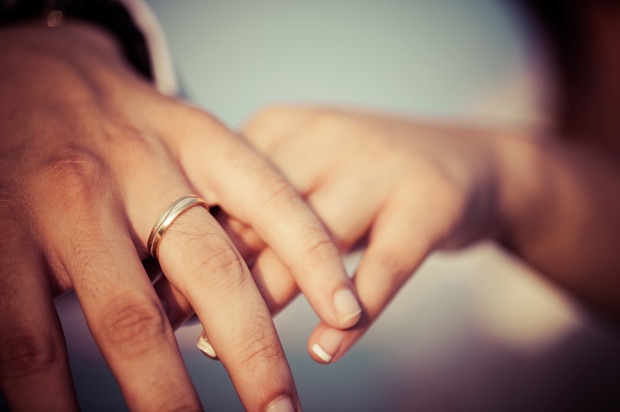
The New Millennial Marriage: Idealistic or Realistic?

Studies show that 45 to 55% of people will stray at some point in their marriage. Some marriages may appear monogamous on the surface, but have secret affairs. Some have affairs and recover, moving on to a more committed type of marriage. Some partners negotiate a more fluid type of monogamy with outside partners or sexual agreements that do not threaten their emotional monogamy. The integrity of the relationship is maintained through emotional commitment, not sexual exclusivity.

This passage excerpted from an article entitled The Future of Marriage by Tammy Nelson, PhD, in a Huffpost Divorce section is both a stark reality and a breath of fresh air. The reality gleaned from the cited statistic is that monogamy is hard pressed these days. Over half of marriages or more, depending upon whether the “some marriages” that “appear monogamous” are included in those statistics, involve cheating, straying, non-monogamy–pick a term that appears descriptive or indicting as you please. The hopeful part is the elasticity potential of marriage as a lasting institution–if the participants acknowledge the nature of marriage as a constant set of negotiable points, as a pact of two (most often the case nationally) with constituent parts of emotionality, physicality, mentality and spirituality, and that all of those constitutional needs are not met in one person.

In addition to a more fluid definition of marriage, the article also addresses a concomitant fluidity about divorce, which reflects current trends of “conscious uncoupling” and “divorcing with integrity,” what the doctor asserts is a possibility given the trend toward mediation and out of court options. She states that “Divorce can be heartbreaking, for both partners,” and so, implicitly, couples would want to seek more civil ways, less heartbreaking ways to divorce, she states.

Though Dr. Nelson may be right about the trends toward mediation and less combative ways of de-coupling, most probably due to financial considerations than the foresight to avoid heartbreaking battles, I am dubious of her prognostication about kinder, gentler divorces.

Having been a divorce lawyer for over two decades, I know divorce is devastating, whether the divorce is consensual or non-consensual. Divorce is like death, includes the same stages of shock, denial, anger and acceptance, in most cases. It IS a death of a relationship, a marriage, an expectation, a family, a future, and a life envisioned and lived. Facilitating hundreds of divorces in 24 years, I cannot deny there is heartbreak, but there is also hatred, fear, insurmountable loss, guilt, sense of failure, vengeance and often temporary insanity, among a host of other human emotions.

Divorces destroy men, women and children, a little or a lot. They often leave permanent scars. And it is not only because people do not know how to behave. It just may be due in part to the delusion of what marriage promises historically but not currently–a life-long betrothal of two, dipped in everlasting love and sacrifice. The probability of two people growing in the same direction with static needs is, well, hovering still at about 50%, which has been the steady first-time divorce rate for at least the last ten years of my practicing law.

The ideology of marriage is endorsed socially through media imagery, parental lore and financial incentives permeating the laws of the land (tax and insurance). Perhaps the broken promise of societal “norms” and the deception of popular television and magazine images are reasons for the incendiary explosion that divorce is oftentimes. Until that ideology changes, divorces will be experienced as they are–the death of a dream.

So, I agree with the doctor that there needs to be revisions to the myth of marriage; it needs adjusting to reflect the realities and trends she outlines in her article. Perhaps a revised marriage concept will lead to corresponding divorce expectations and thereby less destruction. But it’s not there yet.

The article is interesting; the following passages are particularly intriguing, even if perhaps a stretch:

In the future, in order to avoid this, marriage will be defined by shorter, more renewable contracts, in five year increments, or smaller two year contracts with options to renew. These agreements will be revisited at the end of their lease, and either renewed or ended, depending on how the requirements and expectations of the contract are being fulfilled. Both partners will make the decision to stay and renew or both will agree to move on. We renew our license every four years, why not renew our marriage contract?

In the future, gay marriage will have been legal for decades. More arrangements between couples will include open marriages with sexual agreements, polyamory will be more common and perhaps even polygamy will be visited in the legal system.

More of us will be bisexual, transexual and even more sexually androgonous than ever before. More babies will be born without clear gender identity and will not have surgery to assign a sex. We will judge less on sexual identity and more on how we treat one another

Since the majority of her predictions are based on a definition of marriage, she must be right about that definition or the conclusions she draws from those premises fail. Is she right about the five components of marriage?

“The Coolest Thing About Gratitude”

image

I have no idea which researchers substantiate the science in this article, which I have copied in its entirety because it is short and contains a poem by Pablo Neruda, a personal favorite, but I sure love the idea.

By now, most of us have heard the news: grateful people are happier, healthier and generally more fulfilled.

And while these are all really great side effects of gratitude, for me, one of the coolest things about gratitude is the way it affects the heart. The heart creates an electromagnetic field that expands up to five feet from the body. Its electrical field is 60 times stronger in amplitude than that of the brain.

Studies show that when people cultivate positive feelings, the heart’s frequency changes and its waves become smoother and more consistent, while anxiety or stress caused waves to be shorter and less organized. Though most positive feelings were capable of affecting the heart in this way, researchers noted that gratitude changed the heart’s rhythm more easily and faster than any of the others.

What’s more is that this frequency can even “entrain” hearts and brains nearby. It’s especially likely that the heart with smoothest, most “coherent” frequency will be the heart that other people sync up with. So if you’re cultivating gratitude, it’s probable that you’re changing the feeling state of those around you for the better too.

Basically, even when we aren’t aware of it, our heart is constantly communicating with those around us. But as complex as it all may seem, intuitively, it seems that humans have been aware of this chatting between hearts for quite some time.

It may be the reason we say we’re having a “heart to heart” with someone when we’re engaged in an intimate, sincere conversation.

Researchers have reported that hearts between lovers sync even when the lovers aren’t touching or conversing. The same goes for heart frequencies of unborn babies and their mothers.

So when Jim Rohn said, “You’re the average of the 5 people you spend the most time with,” he made an interesting point indeed. Our bodies are talking. And physiologically, it’s gratitude whose message is the loudest. We’re affecting each other in ways we may have never even pondered.

Choose your company wisely, but find comfort in the idea that gratitude has a way of trumping all. Keep gratitude flowing in your own heart, and you can change the world around you without lifting a finger.

Ode to Thanks
by Pablo Neruda

Thanks to the word that says thanks!
Thanks to thanks,
word
that melts
iron and snow!
The world is a threatening place
until
thanks
makes the rounds
from one pair of lips to another,
soft as a bright
feather
and sweet as a petal of sugar,
filling the mouth with its sound
or else a mumbled
whisper.
Life becomes human again:
it’s no longer an open window.
A bit of brightness
strikes into the forest,
and we can sing again beneath the leaves.
Thanks, you’re the medicine we take
to save us from
the bite of scorn.
Your light brightens the altar of harshness.
Or maybe
a tapestry
known
to far distant peoples.
Travelers
fan out
into the wilds,
and in the jungle
of strangers,
merci
rings out
while the hustling train
changes countries,
sweeping away borders,
then spasibo
clinging to pointy
volcanoes, to fire and freezing cold,
or danke, yes! and gracias, and
the world turns into a table:
a single word has wiped it clean,
plates and glasses gleam,
silverware tinkles,
and the tablecloth is as broad as a plain.
Thank you, thanks,
for going out and returning,
for rising up
and settling down.
We know, thanks,
that you don’t fill every space-
you’re only a word-
but
where your little petal
appears
the daggers of pride take cover,
and there’s a penny’s worth of smiles.

~

New series ‘Mistress’ shines light on ‘the other woman’

image

Sarah J. Symonds, apparently the Ann Landers of mistressdom, is bringing her advice columnist for mistresses who want to get out of mistressing, to her own cable television spot on the Discovery Life Channel according to a New York Post article of today’s date. Is she plying her trade as an angler exploiting the prurient interests of the populace or is she an earnest do-gooder? I wonder. Like most, the curiosity will make me tune in.
Twitter nugget: When mistressing goes mainstream.

Polyamory: a bouquet of lovers

credit: johnstore.com

I woke up with angst this morning, and when that happens, all the ugly appears. Today’s ugly came in the form of jealousy and not just the kind commonly thought of in relationships–the other man or woman–but the all encompassing kind that takes in a little of everything including envy, such as how come some stoned guy who repeats “double rainbow” twenty or thirty times in a video can garner such attention and semi-fame?

However, the sharpest jealousies come from the investments I make with other human beings. My teenage daughters and I have discussed the friend jealousy, the one where the best friend gets a boyfriend and then has no time for the friend. Then there is the jealousy that comes with a significant other spending time with an ex-lover/girlfriend or boyfriend, the jealousy of time spent at work over the family, the jealousy of a significant other’s memories of past loves, etc. Jealousy is a host of ugly, and I don’t mean the emotion itself, which is merely an emotion. I mean the way it makes me feel and think.

Poking around the Internet for enlightenment on jealousy, where it comes from and how to deal with it, I came upon an extremely informative article in the Atlantic Monthly entitled “Multiple Lovers Without Jealousy” so thorough and well presented that it was impossible not to share. I had heard of polyamory before but had never read about the psychology and lifestyle but lightly. This article challenges the reader to think about the basis of our relationships, monogamous or otherwise, and intimates not surprisingly that successful relationships are based on ever-negotiating agreements, long-term and moment by moment. Seen through the prism of polyamory, monogamy or polygamy or communal living comes down to understanding the nature of jealousy, i.e., the self, taking responsibility for one’s own emotions, and of course, trust in the other person’s feelings and commitment, whatever the parameters of the relationship is determined to be whether pre-determined or negotiated as it goes.

It sounds ideal–to have multiple partners because the pressure to be everything to someone is overwhelming as is the expectation (and probably disappointment) of someone to be that everything. But can the green-eyed monster be controlled? Is polyamory realistic? Probably not for everyone–in practice–but for some it certainly can be.

Here are a few teasers to this thoroughly interesting article, but I recommend taking the time to read it even for the tidbits of the history of monogamy and the studies to dive into further if the subject interests:

There’s a phenomenon within psychology called obsessional review, which refers to the kinds of questions that the partner that finds out about the infidelity asks the unfaithful partner,” Shackelford said. “Men ask, ‘Did you have sex with him? How many orgasms did you have?’ etc. Women ask, ‘Are you in love with her? Did you buy her gifts? Did you take her to our restaurant?’ and so on.”

Those of us who are in monogamous relationships will probably never stop being jealous—and that’s healthy. What’s not healthy is the way some monogamous people manipulate their partners’ jealousy and devotion. According to Shackelford, women in monogamous relationships “are more likely to use sexual assets to induce jealousy in their partner,” while “men will manipulate access to resources.”

By contrast, the way polyamorous people tend to resolve their conflicts is more above-board. When extramarital relations are already out in the open, it seems there’s little else to hide. “A big part of what makes someone feel jealous is when their expectations for the relationship are violated,” Theiss said. “In poly situations, where they’ve actually negotiated the ground rules—‘I care about you and I also care about this other person, and that doesn’t mean I care less about you’—that creates a foundation that means [they] don’t have to feel jealous. They don’t have uncertainty about what’s happening.”

For example, as Conley, the polyamory researcher, has noted, “polyamory writings explicitly advocate that people revisit and reevaluate the terms of their relationships regularly and consistently—this practice could benefit monogamous relationships as well. Perhaps a monogamous couple deemed dancing with others appropriate a year ago, but after revisiting this boundary they agree that it is stressful and should be eliminated for the interim.”

People in plural relationships get jealous, too, of course. But the way polys get jealous is unique—and possibly even adaptive. Rather than blame the partner for their feelings, the polys view the jealousy an irrational symptom of their own self-doubt.

Lord Nelson and His Mistress – the 18th Century Mistress Career

image

Perusing the Internet the other day, I came across the Daily Mail Online article entitled “Letter from Lord Nelson to his mistress Emma Hamilton written days after the birth of their secret love child expressing fears their relationship could be discovered goes on sale for £15,000,” which drew me in with curiosity about yet another clandestine long term love affair with the added delight of the phrase “secret love child.” However, like the promise of so many of these articles with impressive titles, I was not so much intrigued by Lord Nelson’s affair nor their “love child” of whom I learned nothing, but moreso the afterthought write up on the life of Ms. Emma Hamilton.
Ms. Hamilton (yes, the title is anachronistic) apparently fell into a career climb solely due to her sex–gender and activity. Her tale is reported as one of woman as object–body and womb. By virtue of her sex, she rises from poor beginnings, daughter of a blacksmith, to fodder for a “sexologist” (read: procurer of a bordello) to someone’s sole sex object to wife to mistress to abject poverty and death. The 18th Century afforded fewer other career options for a woman on the rise but sex and marriage. Her story seems to be the embodiment (pun intended) of all options exercised, what little agency I imagine she had to exercise. Of course, there is much untold in this skeletal “portrait of a mistress.”
Another noteworthy item is the scant mention of Lord Nelson’s wife, whom he appeared to love very much but was irresistibly drawn to Emma Hamilton upon meeting his future mistress. One can only surmise that the vast complexities of the motivation and underside of the players in this triangle are buried and returned to the soil from which they arose-only the letters remain from which to read between the lines.

Mr. Mafioso’s Madcap Mistress Myth

image

Two plus two always equals four, right? Well, except when things don’t add up. Take, for instance, an article I read the other day. I am aware that Mr. Mafioso, on a website entitled askmen.com, writes “Get Yourself a Sexy Mistress” half in jest. I get that the article is meant for entertainment–and it is entertaining–for savvy readers who recognize farce or irony. The caricature of a mafioso with his Italian/Sicilian Brooklynese appears in words like “dames” and “goomas” and his over the top machismo is both amusing and revealing that this author does not wholeheartedly advocate what he advises–to get a mistress with all boobs and no brains who poses no threats. Or does he? Of course, the writer knows that he is endorsing an “illicit” and “immoral” relationship without compunction and one with the criteria that the woman or women, as he recommends a circle of mistresses, be the receptacle of every man’s desires: to be used and disrespected willingly, i.e., cum on face, thrown money at for sex and secrecy, though not too expensive to thumb her nose at cheap motels and backs of Cadillacs. He depends on the everyman’s dream to have a beautiful woman with big boobs and no self respect to make the proposition.

Mr. Mafioso does not really mean it. The exaggerated caricature combined with his manifesto and disclaimer about his own lack of credibility–a convicted criminal–coupled with his good grammar and writing skills clearly show that he is not who he claims to be. He is not seriously a mafioso, a criminal nor an insecure man that needs to demean women to make himself feel better about himself, to make himself feel like a man. No, he is a writer utilizing a persona clearly satiric to pose behaviors that are recognizably socially unacceptable in the guise of a familiar reprehensible figure. He knows that all men are not that extremely macho type, but most men are in some part. There is partial truth that some men are excessively insecure about their manhood and need a certain type of woman, submissive with lower self esteem than he has, to make such a man feel whole, to give him an ego adjustment. To have that beautiful woman on his arm, one desired by other men, allows him to think he impresses as a big man, lover, and spender. How else could he get the girl? And if others perceive that, it makes it true. He works the outside appearance in hopes of installing some inside assurance of adequacy, whether consciously or unconsciously.

Mr. Mafioso works the stereotypes well. I read an article today on Mayor Betsy Hodge’s (Minneapolis) blog that stated this about stereotyping: it “blunts the humanity of the person making the judgment and creates unnecessary separation between two people in a world where more, rather than less, human connection is needed for us to move forward as a community.” She was referring to the unfounded accusation by some political figures that she was using gang signs in a photo that captured her and an African American get-out-the-vote street stomper pointing at each other, in an article satirically called “Pointergate.” She thought African Americans were being stereotyped in assuming the pointing was a gang sign.

I “point” this out not to get sensitive and politically correct minded about those who are stereotyped in Mr. Mafioso’s article–bimbos, machismos and mistresses–but to point to the truth about how we fall into stereotypes, not just make them. Stereotypes exist for reason of people practicing patterned behaviors over time, generations. If people are overexposed through media or in lived experience to African Americans making gang signs or being in gangs, they will use that patterned behavior to make conclusions about all African Americans. Not only that, they will look for confirmation that those behaviors exist even when they don’t just to make the stereotype true. It’s human nature.

Stereotypes are assigned by gender, ethnicity, race and age, mostly. While they are shortcuts that help in certain situations, to avoid dangerous people or for police investigative work, for example, they are so subtly a part of us that they are imperceptibly abusive. Stereotypes tap into the familiar, something most are drawn to like promise of the pillow and sleep. We want to be as comfortable as the somnambulant. It is difficult to take things not at face value but at examined value, actually having to pay attention, look closely, and withhold judgment until enough facts or evidence is present to make a determination after assessment of worth, trust, and/or truth. The sheer thought of the endeavor to be open and informed and equanimous is overwhelming. That’s why people are not so, generally. That’s why we rather stereotype. It’s the lazy person’s way of handling people and appeases our yearning for order and familiarity, for our egos. “See, I told you he was an asshole.” Stereotyping also makes for good jokes.

But let’s be good readers. Mr. Mafioso wants us to see that his persona is a jerk, that men should not merely use women as human toilets to cum into or for the sad scaffolding of their own nearly absent thin, weak egos. However, he is also showing us that his satire would not work if not based on certain truths about the human condition: there are men and women who treat each other the way he describes–using each other for sex, money and status–and we recognize and relate or recognize and hate that kind of behavior or both. Mr. Mafioso starts off with accepted notions of the mistress–having one is wrong/immoral–and builds on that idea that so long as you are going down the road of socially unacceptable behaviors, let’s go all the way. Here are some things that respectable citizens would not approve of: men who use women as their sperm banks and credit them with no self-respect and esteem and women who fuck for money and status and like those guys.

We laugh at ourselves. A friend texts me the other day with a screen shot of a man-filled sports bar with a dozen or so television screens transporting live or prerecorded football games, maybe a half dozen or more of them, where women with serving wench boob-filled bustiers serve the ever flowing beer. I text back, “When men fall lovingly into the arms of their mistresses–their own self-caricatures meta narratively.” He was mocking his own stereotypical picture of himself doing something he loves to do–watch a ton of football on a Sunday with a buddy in a boob bar. He is both amused at himself enjoying the actual entertainment and the entertainment of himself as stereotypically enjoying what men are stereotyped to like. I suppose I could counter with a snapshot of my teenaged daughters and I at the nail shop getting mani-pedis or our brows threaded. Except, we don’t do that. My daughters are smelly athletes with neglected nails, as am I. Perhaps we are stereotypes of the anti-stereotypical females.

Judith Butler tells us we should fight stereotypes with anti-stereotypes. I say, “Help! We cannot get out of the stereotype game!!” Because aren’t we merely instating new stereotypes that way? The anti-femme type becomes the stereotype of the butch type, even if only exercising a modicum of “boy-ish” behavior because just a hint will do for eager minds and attitudes. There is no way to escape that binary that stereotyping forces.

I am neither a psychologist nor a sociologist. I claim my stake as a close observer of human behavior and a superior note taker. I say the key to breaking the mold is for people to think, to stop depending on stereotypes and do the work of patience, of having an open mind and being informed. Look at Mr. Mafioso. He is a stereotype in service of exposing stereotypical behavior. He expects the majority of his readers to sheepishly identify with or bristle at what he portrays and advises. That’s called irony.

Poor readers may not pick up on that. Un-exercised minds, ones not disciplined in the rigor of observant examination, of continual curiosity and vulnerability to wonder and awe, will lazily confirm their beliefs by the existing patterns without question–for their own security. It’s unkind as well as it deepens fear and separation as the good mayor states. Here’s a close cousin of the stereotype, a cliche: A mind is a terrible thing to waste. Here’s another: think before you leap. No, feel compassion before you “blunt the humanity” in you and imprison your victim with a stereotype. Thanks for the reminder Mr. Mafioso that we should get ourselves a sexy mistress–and she is our own beautiful human capacity and desire to love. Unfortunately, she is still just the side chick.

Mistress: Woman or Whore?

image
Alexander Buxton of The New Statesman discusses and excerpts Dr. Amy Erickson’s history of the title mistress in a September, 2014 article entitled Mistress, Miss, Mrs. or Ms: untangling the shifting of women’s titles. A fascinating and quick read, Buxton’s article manages to tease out the gist of Erickson’s work: that women were once mistresses of their own domain…until they weren’t.

The author gives a brief history of the term Mistress, Mrs. and Miss, citing Samuel Johnson, known writer and author of an early English language dictionary, who provides the following 18th Century definition of the term Mistress:

Neither “mistress” nor “Mrs” bore any marital connotation whatsoever for Dr Johnson. When in 1784 he wrote about having dinner with his friends “Mrs Carter, Miss Hannah More and Miss Fanny Burney”, all three women were unmarried. Elizabeth Carter, a distinguished scholar and lifelong friend of Johnson’s, was his own age and was invariably known as Mrs Carter; Hannah More and Fanny Burney were much younger and used the new style Miss.

Citing Erickson, Buxton writes that the title Mrs. and Miss contain the word Mistress and Mrs. was the female equivalent of Master, merely a term of address that delineated class or profession and not marital status. A woman of status or business profession was a Mrs. whereas a scullery maid was addressed by her first name or some man’s wife. How the term Mrs. became a distinction from Miss and the advent of Ms. are not covered in depth, but I suppose the more curious of us will have to peruse Dr. Erickson’s “Misresses and Marriage” in the autumn edition of the History Workshop Journal to find out.

“Why I Date Married Men”

image

Heather L. Hughes, a freelance writer, contributes to Salon.com “Why I Date Married Men” and lends light insight into her choice of dating partners, a kind of liberation for a sexual late bloomer (a virgin until 29), when she concludes:

Affairs with married men offer controlled companionship — there’s warmth and there’s space, there’s intimacy and there’s distance. I can’t control growing older. But as the other woman, I’ll always have an element of mystery, an invitation to a different narrative, like that lit-up window in the darkness.

The “lit-up window in the darkness” refers to her ignorance of and outsider status to the married man’s family life, his other life, about which she admits to being curious and even fantasizes.
The “controlled companionship” concept certainly appeals to the more introverted of us. Hughes doesn’t say so, but adding up the facts of her nerdy entertainment choices, her lack of sex and her lauding “controlled companionship” aka I love you now get out and give me my space, she is probably an introvert. Introverts need battery-recharging alone time, something marriage doesn’t always afford.

The best and worst part of any long-term relationship is the daily living together, the friction and resentment that builds up by the large and small stuff, disliking a mother in law or snoring. Space, one’s own space, could help relieve some of that tension. When my husband and I were separated, it was the first time I had ever had my own room. I was delighted, covetous of that space to call my own, clean as I wished, decorated as I wished. That ownership of space alone improved my disposition. That separateness also allowed me to see my then estranged husband when I wanted to and not when I had to, which improved our relationship. In sum, controlled companionship is not only convenient but a high recommendation to the relationship that allows for that. Of course, married couples can and do afford each other space, but unless one of the couple travels a lot, there is not that completely divided space that one owns and occupies like a room of one’s own.

I suppose the element of mystery in being the other woman that Hughes refers to is also tied into that controlled and convenient aspect of the dating a married man relationship–parts of the other are left private and unknown. A couple does not kill the mystery and one another with familiarity. How often have I heard, “I know you only too well”? That is not only a mood killer, an instant irritation, but is an accusation that the accused is a pattern predictable and boring, and can be no other way. Ironically, the accuser both desires and despises that kind of predictability that produces comfort and boredom too.

The most interesting part of Hughes statement, however, is that the other woman is “an invitation to a different narrative.” The assumption is the different refers to different from the man’s wife and family, the life he has set up in the daily display of the house he lives in, perhaps, the wife, kids and job he has, community he is part of and the like. His story. Perhaps it is the story of the suburban upper middle class man with money to buy nice cars, house and toys for himself and his family–the lucky guy who has everything story on the outside from society’s point of view, the very same one who keeps another woman on the side, immoral from society’s point of view. Perhaps that is the draw: look like a good boy while being a bad boy.

However, I take issue slightly with Hughes “invitation.” The assumption, though imperceptible, is that one narrative is more legitimate than the other, i.e., the married narrative is the acceptable one and the one with the other woman is “different”, weakly argued as mysterious to make the invitation more inviting. However, invitation could be bridging the territory of its silent rhymed reminder of temptation, which, of course, suggests the illicit nature of the “affair.” Hughes takes the cautious self-repudiating approach even as she defends–lightly–her choice of lifestyle. It’s weak.

Her mention of narratives reminds me of something unacknowledged. I am reminded of an old studied philosopher from school years back, one who baffled me more than enlightened except in intermittent glimmers. But now as I am older and wider read, I realize he is a writer who has covertly influenced my way of thinking and viewing the world more than any other philosopher or writer. Jean Francois Lyotard, the French philosopher who describes the postmodern condition (post WWII) as one without universals or generalities that work any longer, lured me in with his anti-establishment thought. He exposes the overarching theories and philosophies (meta narratives) that historically govern thought and behavior since the Enlightenment, for example the notion of absolute freedom or justice, as no longer tenable to order an ethical, legal, philosophical or moral structure of societies made of individuals with such an acknowledged immeasurable degree of variety.

Lyotard argues that reality is created by and social structure consists of micro narratives that we all speak and act on, engage in on the local level in discrete situations of daily life, which show how different and diverse we all are in our beliefs, desires, and actions. So even though we may say we subscribe to the belief that all humans are born free and freedom is the ultimate right and happiness, the way we live daily from situation to situation negates that actuality. Each day I work, drive kids around, eat, sleep and speak at the dictates of others. Freedom is negotiated within the pockets of time and allowance of others, not some overarching principle that governs thought and behavior.

Extrapolating from Lyotard, the way we think and act should not be proscribed, encouraged or naturalized by broad moral banners that wave the monogamy narrative or the marriage narrative as THE narrative. It is painfully obvious that we actually operate within the language and rules of private, small group situations, and specifically with respect to Hughes’ dating: man, woman, children, other woman. What is justified behavior is applicable to and determined by each individual, i.e., this man needs newness to keep him alive and happy, while this woman needs the security of a marriage to keep her free to do what she needs to do, etc, in conjunction with another or others. The agreements and socio-ethical rules are local to the participants. And they are agreements. It’s only when we start believing the grand narratives of right or wrong for everyone is where we fall into fantasy land, wanting to believe there is one right for everyone.

Some may say this is merely relativism, which may be regarded as chaotic, unstructured and anarchy (I can hear a friend say, “If you stand for nothing, you’ll fall for anything”). I don’t believe that is true. It is simply an acknowledgment that people actually operate on the level of their one on one or small group interactions relative to their lives, and their behavioral ethics are determined within that local climate.

So, Hughes, relax. This works for you. You’re different from others. Celebrate difference. It’s what we all are anyhow.

How-To Guides to Becoming a Mistress or a “Side Chick”

image
These two articles, “How to be a Mistress, the 1/3 Method” and “How to be a Side Chick: 11 Steps (with Pictures)” from the Wiki How series are hilarious. Who is the audience for these two, people looking to get into the mistress biz? Really? Does someone actually think about being a mistress and research it before doing so? My guess is it is something that just happens, in most cases. Even if there were such an audience of advice seekers, what kind of advice or instruction do these articles give: To be whatever the married guy wants you to be? They assume that there are certain universals regardless of the parties to the relationship of husband, wife and mistress, that individuals cannot act otherwise because it is a mistress-married man relationship. But stereotyping and platitudes about human behavior are dangerous, often make for validating prejudice and de-humanization (think about history of any genocide attempt). The instruction needs to be first, decide on what is acceptable parameters to each of the involved parties, including a wife who knows but chooses not to know. The assumption is that adults cannot communicate about what they are doing and that they all act the same when it comes to sex and marriage.

The illustrations and instructions are amusing, but the generalizations and assumptions that men want what they don’t have and some women out there are “ambitious” enough to consult a Wiki How to make sure they know how to be what any man doesn’t have–someone who doesn’t wear sweats and sneakers in front of her man or ask him questions, of any sort because this is what these simpleton folks–men–want (since they’re cheaters)–are lame. I am hoping these articles are ironic or comical by intent. Otherwise, I smell some moralizing in the manner in which men and women to “this type of behavior” are assumed to be: selfish and low self-esteemed. Each basically intimates that if you’re going in for this type of thing, this is the crap you’ll get–and you deserve it or you just shouldn’t.