“It is a curious subject of observation and inquiry, whether hatred and love be not the same thing at bottom. Each, in its utmost development, supposes a high degree of intimacy and heart-knowledge; each renders one individual dependent for the food of his affections and spiritual life upon another; each leaves the passionate lover, or the no less passionate hater, forlorn and desolate by the withdrawal of his object.”
― Nathaniel Hawthorne, The Scarlet Letter
“This day of torment, of craziness, of foolishness—only love can make it end in happiness and joy. —W. A. Mozart and Lorenzo Da Ponte, Le Nozze di Figaro (1786)”
― Martha C. Nussbaum, Political Emotion
“What do you regard as most humane? To spare someone shame.” Friedrich Nietzsche
“Power and violence are opposites; where the one rules absolutely, the other is absent. Violence appears where power is in jeopardy, but left to its own course it ends in power’s disappearance.
Hannah Arendt
Chinese mistress beaten in the streets by a mob of women marks new trend of wronged women meting out punishment in China. This disturbing bit of news brings to mind so many social, moral, and philosophical questions such as the meaning of justice, the role of power and violence and social contracts. But mostly, it is a disturbing lack of humanity to use shame as a method of punishment.
While this article has an intriguing title that is actually somewhat misleading (she devotes little if any time to the reasons for her wanting to cheat), it is, nevertheless, confirmation to me that being the object of desire is powerful, compelling and irresistible–in the gaze. She rounds out the article to craft the main idea as an honesty is the best policy moral of the story, but the writer appears to be trying to convince herself more than her audience that honesty will save the day–and her marriage–in the end. She devotes exactly one or two sentences at most to that notion, but the majority of the 35 micro paragraphs are relished details of the one who made her feel desired.
And why repeat so many times how she was not attracted to this man who she risked her marriage for just to see in the park or coming out of his place? The thrill she squeezed from this clandestine relationship was first, that it was clandestine, and second, that it was about wanting to be wanted. She said as much. The draw of those two potent potions is why the writer wants to cheat on her “soul mate.”
As if there could be a number assigned to quantify the methodology of finding true love…but I like the basic premise of self love before loving another even as the author, whose article is in the link below, argues that true love is selfless. There is nothing revelatory in this article, but I think obvious truths are sometimes nice to read about through some other’s perspective, for instance the Spirit, Science and Metaphysics perspective.
Enjoy. http://www.spiritscienceandmetaphysics.com/
I Long to Hold Some Lady from The Spice Box of Earth
I long to hold some lady
For my love is far away,
And will not come tomorrow
And was not here today.
There is no flesh so perfect
As on my lady’s bone,
And yet it seems so distant
When I am all alone:
As though she were a masterpiece
In some castled town,
That pilgrims come to visit
And priests to copy down.
Alas, I cannot travel
To a love I have so deep
Or sleep too close beside
A love I want to keep.
But I long to hold some lady,
For flesh is warm and sweet.
Cold skeletons go marching
Each night beside my feet.
The scene is set in this song from the outset, longing for a body, any body (some lady) of not just the female kind, but one ascribed “lady” characteristics, suggesting manners and carriage, not just woman, which is neutral along the lines of female, a mere nominative term. In just the first line, a reader can see what Leonard Cohen is about in this song. Him.
His use of a mistress, the one night stand, a body, for his purposes, whether that is sexual or inspirational–the muse–is obvious. He refers to what he desires as “lady” and “flesh” and “bone”, which suggest the physical body and sexual desire, but he also uses words like “distant” and “perfect” and “masterpiece” along with religious figures of pilgrim and priest, suggesting the female figure as muse, on her pedestal, in his mental loins, a mere image for idolatry. But in the end of the poem, it becomes clear that woman is merely a placeholder for his own masturbatory lovemaking, the love he cannot travel to as it is so “deep”, I would posit inside of him, is the love of a woman….because he is so busy loving himself.
Leonard Cohen’s image as poet-lover is not unknown to others who know his music and writings, the lover who dabbled with so many women (Joni Mitchell one of the more famous of them), committing to none, and painted them on the walls of his imagination in his music and in his schtick, his gig, the crooner surrounded by the chick backup singers. Whether act or true story of his inability to attach/commit, he is devoted to promoting and expressing that romantic self image in just about everything he writes: Cohen as being Cohen. And that’s not a bad thing.
I like Leonard Cohen’s music and writing, most all of it. He is a caricature of a beat generation figure of freedom of expression and romantic love mid to late 20th Century style. He is historical. The brush strokes of his collage poetry is delicate and flavorful, like his last few lines: “For flesh is warm and sweet/Cold skeletons go marching/Each beside my feet.” The contrast of warm flesh, evoking the blood and bone imagery throughout, juxtaposed with the cold skeleton, life and death, is stripped purely in binary anatomical, biological terms. The romantic notion of craving someone gets reduced to blood, bone, and death. It is not macabre so much as a revelation that the “lady” was a mere idea in the first place–mistress muse of his imagination.
One may begrudge him for being a user and abuser of women for his purposes like any rapist, or one can judge him a showman plying his trade full of promotion and self-selfish love, or one can enjoy a poet using symbol and metaphor in his own style. Give him a break? For “there is a crack in everything (and everyone). That’s how the light gets in.”
Funny how things change with a little time seasoning. I did not appreciate Madonna when I first heard her, probably the song “Holiday,” finding her music too bubble gum and her vamp style too demeaning to women with her kitten sexo-fascist look and a less than subtle attempt to capitalize on sex. It was 1983, and I was still into Joni Mitchell and the Rolling Stones, suffering through Michael Jackson’s Thriller, admittedly a great album, though far too pop for me, rock-alternative elitist in my own mind and leftover feminist hippy. My heyday was in the 70s.
Like many amateur critics of the time, I thought the 80s were bereft of music with soul–all that techno machinery replacing actual musicians and musicianship swapped for computers. It wasn’t until her song “Live to Tell” from the movie At Close Range that I stopped to listen to her, her voice, her passion, her captivating eeriness. The movie was a tough movie, and I thought the song was rendered well against the backdrop of the grim and complex themes only one of which was rape. I did not see the movie–only read about it and opted out–but felt it in her song. I thought that was a telling tribute to her talent as a singer/songwriter (though a collaborative effort).
After that, I listened to her music through the years with a more open mind and attuned ear about both music and sex. Some songs I liked and some I did not. When I truly began to appreciate her was when I saw the imitators–ostensible innovators to the uninitiated–follow along on her coattails, thriving off the capital of her inroads into the hip and campy hypno-sex as music scene, only one of whom I consider the most famous and imitative, Lady GaGa. Imitation is not necessarily the litmus test of greatness but combined with prolific productivity and time, there is something there that will turn Madonna (yes, some would argue already is) into the icon she deserves to be, even in my mind. Maybe that something is maturity, mostly mine.
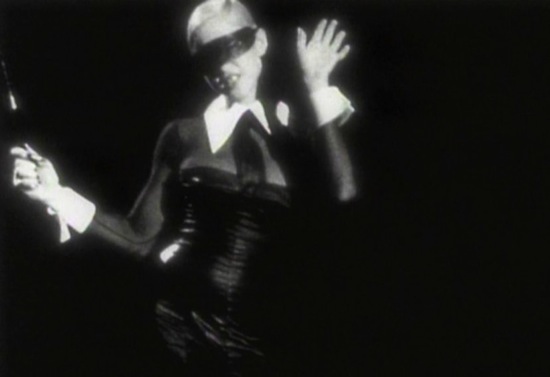
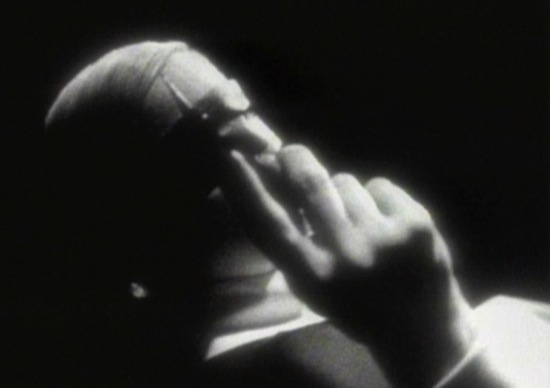
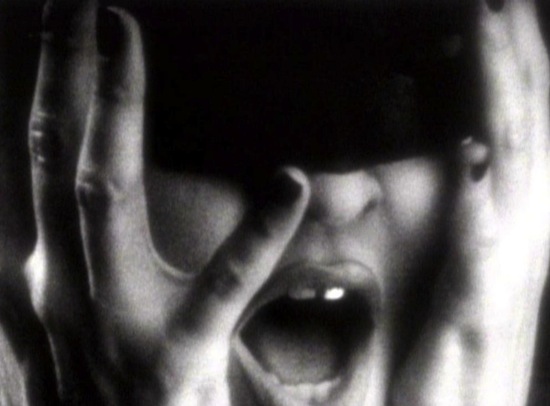
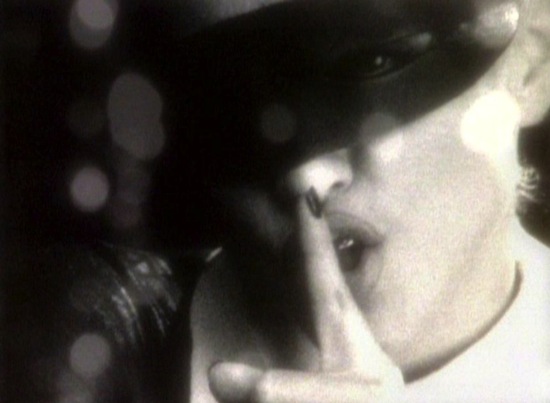
On October 2 1992, Madonna’s “Erotica” video premiered on MTV.
The “Erotica” video was directed by fashion photographer Fabien Baron, and featured a masked Madonna in a dominatrix costume. It also featured celebrities such as Naomi Campbell, Isabella Rossellini and Big Daddy Kane. The video was highly controversial, being aired by MTV a total of three times, before becoming Madonna’s second video to be banned, after “Justify My Love” in 1990.
MTV spokeswoman Linda Alexander said, “The themes of the video are clearly aimed at a more adult audience. It is not appropriate for a general viewing audience”.
The footage of Madonna lip-synching the song in her S&M dominatrix costume was filmed on August 22, 1992 at The Kitchen in New York City, while the rest of the footage for the video was shot during the photo sessions for Madonna’s “Sex” book.
In order to imitate the look of old home-made movies, the entire video…
Esther Perel, rooting out the cause of sexual boredom in marrieds in her essay entitled “Mating in Captivity”(http://www.powells.com/essays/perel.html) directs married couples to rebel, to actively challenge fear in order to balance desire against love and thus recharge their sex lives. She challenges each to see the “other” in their partners.
She begins her article defining the problem, “the dilemmas of desire”, long term married couples experience, when passion, and thus sex, is murdered by the inherent contradictory needs and conceptions of love versus desire. She says, “couples around the world are chasing the desire dragon” trying to keep desire alive, which takes reconciling the need for security and familiarity with the need for newness and separateness. She affirms, “To sustain desire toward the other, there must be an element of separateness,” a creation of space that requires each of the couple to let go of, or at least suspend, fear. It takes foregoing the security of familiarity and sameness and the conception of love as sweetness and intimacy, and allowing the “mystery” in the other to flourish by seeing his or her otherness. The recognition and appreciation of otherness incites eroticism. That takes distance–scary.
Most people’s conceptions about love are based on “reciprocity” while desire is more “selfish”, and passion, in long term marriage, is traded for security, leading to boredom, both of which–passion and security–Perel says, are illusions. Of course, she advocates in the end devoted time for sex, even planned, and invites fantasy and rebellion as a mindset for charging up the mental loins. She ends with a cleverly conceived concluding conception: “Like the child who jumps off a mother’s comfortable lap, running off to discover and explore, before returning to the safety of home base, we adults continuously seek to balance our contradictory needs for connection and freedom, comfort and fear, the grown-up version of hide and seek.”
The draw of this essay is not so much the novelty of the information or advocacy to give up the illusion of the oneness of couples and to be brave enough to realize that we are all essentially, in the words of Brian Doyle in “Joyas Voladares”, “alone in the house of the heart”, but in the writing of the essay. She has an ease in her prose that comforts the reader, creating lovely imagistic analogies to convey the essence of her message, one like her last simile of the child running from the mother’s lap. She uses discreet bits of well-turned phrases to illuminate the more poignant points. I especially enjoyed this passage:
These elements we seek, the ones that combined, light the flame of eroticism, exist and thrive in a space I think of as otherness. The best intimacy is the one that respects this otherness. Individuality and difference are accentuated, and you actually see the other person as a separate being. As expressed by the great narrator, Proust, ‘The true voyage of discovery is not about discovering new landscapes but in seeing with new eyes.’ In those moments we stand on opposite ends of this space we see each other with new eyes. Our separateness is what allows for risk, vulnerability, and erotic charge of the unknown.
Standing on opposite ends of a space and “the erotic charge of the unknown” are two notions and phrasing that made me sigh in contentment upon concluding this piece. She takes what could be cliche’d psychological dicta–give each other space–and infuses a phenomenological dimension to the psychological.
The general patterns of behavior are underscored in this essay–we tend to meld into and conflate our spouses with ourselves–but individual perception is put in relief, something I call the gaze, in a more general and not historical-theoretical context.
Walking through daily life, people depend upon their anonymity and interior-absorbed space. They walk through streets in the anonymity of a crowd, invisible, thinking of where they have to go and what they have to do. It is only when someone recognizes the walker/thinker and calls her name or looks in her eyes with an i-know-you look that the comfort of the invisible world of thought and “self” is shattered. The reverie is interrupted and the self is pulled from her space into the world of another, into the community.
We forget about this general condition and comfort of lone self when we dive into marriage or any relationship to escape what some mistake for loneliness, most probably due to the fear of that conception–loneliness–or an angst about one’s own self worth. Am I doomed to be trapped in my mind, with my thoughts? Me? To zoom in, when the lover is in the gaze of her other, this separateness is capitalized. It is a nanosecond recognition that she is an object–of desire–a body, a repository of fantasy and fluid, a separateness, as Perel serenely states. She is seen. Maybe not as she “truly” is but as a strangeness that comes from not being a part of the self, like seeing one’s hand floating in space, disconnected from its arm. That space allows for possibility–what can I do to or with this other?–because this other is not me, doesn’t think like me, or fear like me. What does she want/like? The gaze turns the trite plea for space, I just need some space, to the reality: we are each alone in this world, and that is fucking hot!
I am not much of a television watcher. In fact, I was unsure of how to turn my t.v. on for many years, which remote and the sequence of buttons to click, but was never motivated enough to learn. That was until “True Detectives” with Woody Harrelson and Matthew McConaughey on HBO last year. Now, Showtime is previewing a series entitled The Affair, which promises to feature an honest, slightly empathetic or at least justified look at the complicated and much maligned subject of marriage and cheating. As enticingly introduced in Cara Buckley’s write up on September 3rd in the New York Times (thanks to Frank Jelnicky for passing this on to me), “Imagine an extra marital love affair in which neither party can be blamed.” Cognizant of the touchiness of the subject, the Israeli writer Hagai Levi notes the challenge of writing something compelling and engaging, serious, without elicited “knee-jerk audience disapproval.” In addition to the promised feature of the landscape of beaches along Long Island, I am looking forward to seeing how the writer and producer’s efforts achieve that challenging goal in their measured choice in casting and intimate, dicey subject matter.
I guess it is time to take lessons in television operations.
“Everything you want in life has a price connected to it. There’s a price to pay if you want to make things better, a price to pay just for leaving things as they are, a price for everything.” — Harry Browne
During the darkest part of the night, who do you blame?
Do you know who Mr. Browne is? According to Wikipedia, Harry Browne (1933 – 2006) was a free-market libertarian writer and investment analyst who was the Presidential candidate of the United States Libertarian Party in 1996 and 2000. He was also Director of the American Liberty Foundation.
I don’t know what these characteristics translate into or even the kind of person Harry Browne was. I did, however, come across this letter he wrote at Christmas to his then nine-year old daughter. The letter was dated December 25, 1966.
I have shared Harry’s letter over the years with circles of friends and family. The responses have varied. Some have whole-heartedly agreed with Harry, yet some reacted with defensiveness, even contempt, not only for Mr. Browne, but toward me for sharing. Some felt the letter was cynical, harsh, even cruel. There were also those who thought that Harry’s words to his daughter offered them a new perspective on life.
For me, the letter was a great reminder of the expectations we attach to people, outcomes and situations, and the potential blame we assign when we don’t receive what we have desired.
Who is responsible for life’s outcomes? Who is responsible for our experiences?
***
Harry’s letter to his daughter:
It’s Christmas and I have the usual problem of deciding what to give you. I know you might enjoy many things — books, games, clothes.
But I’m very selfish. I want to give you something that will stay with you for more than a few months or years. I want to give you a gift that might remind you of me every Christmas.
If I could give you just one thing, I’d want it to be a simple truth that took me many years to learn. If you learn it now, it may enrich your life in hundreds of ways. And it may prevent you from facing many problems that have hurt people who have never learned it.
The truth is simply this: No one owes you anything.
Significance
How could such a simple statement be important? It may not seem so, but understanding it can bless your entire life.
No one owes you anything.
It means that no one else is living for you, my child. Because no one is you. Each person is living for himself; his own happiness is all he can ever personally feel.
When you realize that no one owes you happiness or anything else, you’ll be freed from expecting what isn’t likely to be.
It means no one has to love you. If someone loves you, it’s because there’s something special about you that gives him happiness. Find out what that something special is and try to make it stronger in you, so that you’ll be loved even more.
When people do things for you, it’s because they want to — because you, in some way, give them something meaningful that makes them want to please you, not because anyone owes you anything.
No one has to like you. If your friends want to be with you, it’s not out of duty. Find out what makes others happy so they’ll want to be near you.
No one has to respect you. Some people may even be unkind to you. But once you realize that people don’t have to be good to you, and may not be good to you, you’ll learn to avoid those who would harm you. For you don’t owe them anything either.
Living your Life
No one owes you anything.
You owe it to yourself to be the best person possible. Because if you are, others will want to be with you, want to provide you with the things you want in exchange for what you’re giving to them.
Some people will choose not to be with you for reasons that have nothing to do with you. When that happens, look elsewhere for the relationships you want. Don’t make someone else’s problem your problem.
Once you learn that you must earn the love and respect of others, you’ll never expect the impossible and you won’t be disappointed. Others don’t have to share their property with you, nor their feelings or thoughts.
If they do, it’s because you’ve earned these things. And you have every reason to be proud of the love you receive, your friends’ respect, the property you’ve earned. But don’t ever take them for granted. If you do, you could lose them. They’re not yours by right; you must always earn them.
My Experience
A great burden was lifted from my shoulders the day I realized that no one owes me anything. For so long as I’d thought there were things I was entitled to, I’d been wearing myself out —physically and emotionally — trying to collect them.
No one owes me moral conduct, respect, friendship, love, courtesy, or intelligence. And once I recognized that, all my relationships became far more satisfying. I’ve focused on being with people who want to do the things I want them to do.
That understanding has served me well with friends, business associates, lovers, sales prospects, and strangers. It constantly reminds me that I can get what I want only if I can enter the other person’s world. I must try to understand how he thinks, what he believes to be important, what he wants. Only then can I appeal to someone in ways that will bring me what I want.
And only then can I tell whether I really want to be involved with someone. And I can save the important relationships for those with whom I have the most in common.
It’s not easy to sum up in a few words what has taken me years to learn. But maybe if you re-read this gift each Christmas, the meaning will become a little clearer every year.
I hope so, for I want more than anything else for you to understand this simple truth that can set you free:
No one owes you anything.
Life as the other woman is just SO hard. You can’t put pictures of your cute little getaways on social media, you can’t brag to all of your friends how awesome your new man is, and you can’t bring him home to meet the folks. Your sleepovers are few and far between and you know you’ll never get that goodnight or good morning text from him because he’s at home with his family. Oh shit — did you forget about those other people? Y’know, his wife? His children? You probably didn’t think it would matter; you probably figured it was just a little affair and we would never find out. We’ll just go on and live the rest of our lives completely unaffected by it, right?
Nope. I am the child of a cheating father and believe me, I’ve been deeply affected by the mistakes you’ve made. In fact the pain that you’ve caused me will follow me for the rest of my life. Soon after my father’s infidelities came to light I struggled with depression, anxiety, and binge drinking — problems that I had never had before you were around. I was in so deep I didn’t realize I was spiraling out of control until I had nearly destroyed my academic career, my friendships and my relationships. The selfish choices you made ruined my whole family. Not just my mom, and not just me or my sister either. But his parents too. His sisters, nieces and nephews. My mom’s sisters and her nieces and nephews. It ruined my relationship with my boyfriend of two years because I couldn’t deal with the stress you caused. People have openly mocked me about my dad being a philanderer and I can’t say anything back because it’s true. Do you have any idea how it feels to come home to your crying, depressed mother and have to be the one to comfort her because of mistakes YOU made? Members of my family (myself included) had mental breakdowns because of the pain that YOU caused. The worst part is that I had to accept you or face the threat of being cut out of my father’s life. Because, after all of this, he’s still crass enough to continue dating you. Yeah, he may have left her, but don’t you dare believe he ever did it for you.
THIS is not a little affair and you’re ruining people’s lives far beyond your own. It’s bad enough to disregard his wife, but the damage you’ve caused me and everyone else will haunt us forever and you will eventually pay for what you’ve done. You can attempt to justify your decision by saying he was unhappy and that, if it weren’t you, he would have probably just cheated with another woman. But it’s not your place to decide “If not me, someone else.” You let it be someone else.








 In the gaze of the other