Dooms Day

  
La Mort de César (ca. 1859–1867) by Jean-Léon Gérôme

 
Caesar:

Who is it in the press that calls on me?

I hear a tongue shriller than all the music

Cry “Caesar!” Speak, Caesar is turn’d to hear.
 
Soothsayer:

Beware the ides of March.
 
Caesar:

What man is that?
 
Brutus:

A soothsayer bids you beware the ides of March.
 
Julius Caesar Act 1, scene 2, 15–19
 
Today is bad omen day, or “I told you so” day. Julius Caesare apparently was warned of the treachery that awaited him at the Senate–many times and ways–yet he remained in denial, denying even his own gut feeling that the nasty-liver-missing-heartless entrails of a dozen or more sacrificed beasts did not bode well.
 
According to UK’s The Telegraph, The Ides of March: The assassination of Julius Caesar and how it changed the world, Caesar was warned by an entrails reader that ill fortune awaited him. According to this account, Caesar actually died with an unopened scroll in his hands, given to him by a messenger warning him of the treachery. But nooooo, he had to go to show good appearances, at the beckoning of his so-called friends and countrymen.
 
For drama’s sake, Shakespeare spiced up Caesar’s departure with parting words, “Et tu, Brute?” and anyone who knows anything popularly about Caesar’s death, probably knows it through Shakespeare’s play, required reading in many high schools and undergraduate college courses.
 
In the English-speaking world, we know a slightly different story, thanks to Shakespeare. He lifted Caesar’s dramatic dying words, “Et tu, Brute?” from an earlier play by Richard Edes, and made them a part of the assassination mythology. In reality, most Roman writers state that Caesar said nothing, but merely pulled his toga up over his face. They do note, however, that some people were spreading the story that Caesar had gasped, “καὶ σὺ, τέκνον?/You too, my child?” to Brutus. (Many Romans of all classes were bilingual, with the more educated frequently preferring to speak Greek.)
 
Most famously, however, Shakespeare does away with Spurinna, the venerable entrails-gazer, and instead invents a soothsayer in a crowd, who shouts the famous prophetic warning to Caesar, “Beware the Ides of March!” It is, perhaps, one of Shakespeare’s most famous lines and, as a direct result, “the Ides” has come to mean a date of doom.
 
Doomsday. I hope not. My father has a doctor’s appointment today in preparation for surgery. The innards of my breakfast cereal looked okay this morning, however. I think it’ll be all right.

Bhavana: How we grow as knowledge cultivators

shutterstock_141965581 (1)

Bhavana, meaning to cultivate or develop but commonly used in Buddhism as a word for meditation, once again flashes before my mind’s eye. Despite researching the term, the exact sense of the word often escapes me. Does it simply mean to grow understanding? Are meditation and bhavana the same? I have not yet reached that place where my life experience and the word’s essence combine to flesh out the bones of meaning—not in its spiritual sense.

Cultivating takes time: crops grow over…See more

Give me back my hour!!

To die, to sleep.

To sleep, perchance to dream—ay, there’s the rub


credit: thephilfactor.com
 

I feel tired, resentfully tired. Like I’ve been robbed. It’s not just an hour. It’s my life!

What Difference Could an Hour Make?

By Michael J. Breus, PhD

WebMD Feature Reviewed by Michael W. Smith, MD

The daylight-saving time change will force most of us to spring forward and advance our clocks one hour. This effectively moves an hour of daylight from the morning to the evening, giving us those long summer nights. But waking up Monday morning may not be so easy, having lost an hour of precious sleep and perhaps driving to work in the dark with an extra jolt of java. How time changes actually affect you depends on your own personal health, sleep habits, and lifestyle.
 
Moving our clocks in either direction changes the principal time cue — light — for setting and resetting our 24-hour natural cycle, or circadian rhythm. In doing so, our internal clock becomes out of sync or mismatched with our current day-night cycle. How well we adapt to this depends on several things.
 
In general, “losing” an hour in the spring is more difficult to adjust to than “gaining” an hour in the fall. It is similar to airplane travel; traveling east we lose time. An “earlier” bedtime may cause difficulty falling asleep and increased wakefulness during the early part of the night. Going west, we fall asleep easily but may have a difficult time waking.
 
How long will it take you to adapt to time changes? Though a bit simplistic, a rule of thumb is that it takes about one day to adjust for each hour of time change. There is significant individual variation, however.
 
How will you feel during this transition? If you are getting seven to eight hours of sound sleep and go to bed a little early the night before, you may wake up feeling refreshed. If you are sleep-deprived already, getting by on six hours, you’re probably in a bit of trouble, especially if you consume alcohol or caffeine close to bedtime. In this situation, you may well experience the decrements of performance, concentration, and memory common to sleep-deprived individuals, as well as fatigue and daytime sleepiness.

 GIVE ME BACK MY HOUR!

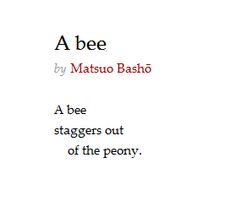
Basho’s Bee Meets Monsanto

basho bee

…Monsanto’s contribution to the vanishing bee population is detailed. From genetically altered corn, Monsanto produced an insecticide called Bacillus thuringiensis (Bt), which once ingested by bees, Bt binds to receptors within the bee’s stomach lining that keeps the bee from eating. Of course this weakens the bee, causing the breakdown of the inner stomach wall, which in turn makes the bee susceptible to spores and bacteria. To further compound the problem, for years the lobbying power of the chemical giant denied causing damage to the bee’s internal immune capacity for resistance to parasites, which of course only continued to kill off the bee population worldwide. Thus, continued chemical use, especially in America, only exacerbates this growing problem.

Death and Extinction of the Bees

By Joachim Hagopian

Global Research, March 07, 2016


Blind Fingering Dates

  
Illustration by Frances Waite via instagram @franceswaite.
 

Yes, they exist. A woman, unclothed from the waist down, stroked by a fully clothed stranger (man, so far) to orgasm is called orgasmic meditation. The purpose is not just to get the woman off, but to exercise mutual focus on one spot–literally–that becomes meditative for both, I assume. There is no information from the the doer’s perspective, only the do-ee’s vantage point in the Dazed article “Blind ‘fingering’ dates are London’s Latest.”

“Learning how to handle her pussy is equally important as learning how to handle the rest of her. Imagine what would be possible if you learned to do both?”

The fifteen minutes of orgasmic meditation costs about £147 for the first session with the exploratory aim of an intensely meditative-orgasmic shared experience–which makes sense if you think about it. What is the hardest part of meditating? Keeping the mind chatter quiet. Getting stroked to body and mind submission–you know that focus that orgasm takes–is a kind of cheat shortcut way of silencing the mind for brief minutes anyhow. And as to the orgasm part, for those who find it difficult to orgasm with a significant other (don’t want to hold lovemaking hostage, fear of hurting someone’s feelings, total lack of knowledge or experience), this seems like a solution.

The other advantage here is the association of orgasm and meditation. I think the author lightly touches on it (pun intended), but my own experience at least proves this true. My meditation practice tails my daily yoga session. So the routine practice, including DR.DREZ music and burning incense, triggers the meditative disposition and my mind quiets quicker due to the association. So imagine the possibilities of an orgasm-meditation reflexive association.

According to the accompanying TEDx talk, speaker and method founder, Nicole Daedone, claims the practice is not merely liberating but culturally transformative, given how women are typically unable to access orgasm for a host of reasons not some of which are schizophrenic societal expectations and unrealistic or harmful portrayals and treatment of women, especially female sexuality. Tapping into orgasm feeds the “hunger” many women feel. Daedone believes if more women were tuned in and turned on, they could change the world.

To my mind, however, just as to Dominque Sisley’s, the writer of the article, the binary underpinning of this practice is exclusionary, and quite frankly, mystifying. If isolating a fifteen minute orgasm into the mechanics of beingness, of the meditative moment, is also a lesson in the mechanics of female parts to orgasm, then what difference does it make whose fingers work the parts? I’m also curious about the giver’s experience, an unfortunate lack in the article. What’s in it for him?

Despite the gaps, the 15-minute TEDx talk is worth watching as Daedone is clear, clever and charming. Enjoy and happy finger-ful Sunday!

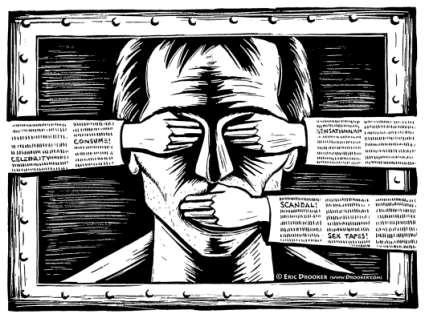
On PC and Censorship: “Why This Radical Leftist is Disillusioned by Leftist Culture”


credit: blog.baladi.com
 

I like this essay, succinct and vehement about non-censorship, two qualities I cherish. As a college instructor and mother of two socio-politically conscious teenagers, I flinch at shutting anyone out, up or off. My job as teacher and mother is to foster thinking and feed young people a steady diet of food for thought. Censorship directly conflicts with those efforts whether the censor’s intent is benevolent or malignant. 

Most censors simply want to craft a world better conforming to their own comfort level, and many believe protecting the sensibilities and exposure to harm of the vulnerable–children, the wounded, or ill–outweighs prohibiting thoughts/words/symbols of the able, a seemingly charitable and compassionate endeavor. But though well-intentioned, intolerance and censorship buds from the well-meaning as well as the malicious, and from the right and the left, the latter with their pretensions of superior tolerance, disregarding opinions of others on the grounds of sensitivity, i.e., controlling words that hurt others’ feelings or trigger traumatic memories, is no less intolerant and censorship than right wing fascists trying to outlaw the words “global warming.”

Noam Chomsky and Bailey Lamon, who quotes Chomsky in “Why this Radical Leftist is Disillusioned by Leftist Culture”, say it best:

“If we don’t believe in freedom of expression for people we despise, we don’t believe in it at all.”

Encouraging my children to seek the heights of compassion and sensitivity respecting others’ sensibilities somehow ran aground when they interpreted that as outshouting or blocking others they deem insensitive on social media, or even in real life. One of my daughters quit her boyfriend over his disbelief that a disproportionate number of African Americans are incarcerated in America. 

They, like their peers, go too far. And like Lamon concedes, no one advocates racism and bigotry as acceptable. But opinions should not be feared and those who differ shunned just because they are not leftist-approved. 

History, something few college kids remember, teaches us that freedom of speech is the very embodiment of U.S. suffering, rebellion and founding ideals. Better to hurt someone’s feelings than give up that battled-for right.  

Happy National Sticky Bun Day!

  
Whoa, almost missed it. So glad I could sneak in before day’s end and wish everyone a happy national sticky bun day.

Not sure why I check what the nation is honoring on any given day from time to time, but sometimes it really pays off in amusement, inspiration, curiosity and bafflement. Who comes up with these days?

Apparently I am not the only one to wonder:
 
There are random and off-beat national days almost every day of the year. This prompted one of our podcast listeners, Katie Rowles, to send a question all the way from Australia for our series, “I’ve Always Wondered.” How do these days get declared? Who’s in charge of the list of days?
We start with International Talk Like a Pirate Day, one of the days Katie mentioned in her question. It’s celebrated across YouTube each September 19, and it turns out a couple of guys declared the day a few years ago because, well, they’re fond of talking like pirates…
“Because once you say something, it’s out there, you can’t call it back,” he says. Carnell submitted his idea back in 2006 to Chase’s, the yearly almanac that acts as a sort of loose gatekeeper for national days and months.
But not all national days are listed in Chase’s — the more extensive resource is the website nationaldaycalendar.com.
“There’s a couple ways it can happen,” says the site’s co-founder, Marlo Anderson. “Of course, a company or an individual can just declare it, and a lot of people do.”
Point being, really anyone can make up a national day, and there’s no accreditation process or government agency. Though Anderson says they don’t approve just any old day that comes across their desk.
“In the last year we’ve received over 10,000 requests for national days,” he says.
Out of the 10,000, he says they typically take about 20 to 25 days each year. They’ll focus on iconic items over brands — say, National Coffee Day as opposed to National Starbucks Day (which, as far as we know, hasn’t been declared). And they look for things everyone can enjoy or be a part of.
The most common request they say no to?
“You know, it’s my girlfriend of three months and she’s changed my life forever, can I have National Heather Day … that’s a very very popular thing,” Anderson says.
But most of these national days are recent inventions that have spread around on social media. As far as we can tell, only one of the June 1 celebrations goes back to before the internet: National Heimlich Maneuver Day.
“I do not know who wrote the article on it that made it come about,” says Dr. Henry Heimlich. He’s 95 and living in Cincinnati. Heimlich published an article about his life-saving maneuver on June 1, 1974. “Immediately lives were being saved.”
At some point, a day was declared, though he’s not sure exactly how. Heimlich is pretty amused to learn that he’s now competing with National Hazelnut Cake Day.
“I guess people could choke on that too,” Heimlich says, laughing.
Well, hazelnut cake might not be for everyone, but it’s your day — go celebrate! Take off your shoes, say something nice, help out a choking neighbor, and meanwhile, start polishing up on talking like a pirate.

(See marketplace.org)

I have a few suggestions: National string up your cat day, or pick a fight with your relative days. What about pick a random presidential candidate day or plain old honor the stupid day? Recognizable, noteworthy and celebratory, my entries ought to win the day.

Bee Heists


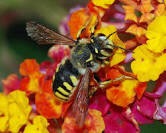
It is not enough that bees are vanishing: sick, stressed, overworked or poisoned. No one source of colony collapse and disappearing bees can be pinpointed by consensus. Now, due to vanishing supply but unrelenting demand, bee hives are the latest coveted commodities to steal. 

The Washington Post reports in As bees vanish, bee heists multiply the following:

The bee economy in California is immense. Eighty-two percent of the world’s almonds are produced within a 400-mile stretch in the state. There are hundreds of thousands of acres of un-gated almond orchards in California, all of which need to be pollinated in the span of a few weeks in February — by an ever-dwindling bee population. Beekeepers come in from across the country to fulfill contracts with farmers and brokers, moving hives to and fro on forklifts and flatbed trucks. And they come with a steep price that’s getting steeper every year.

At the start of pollination season in 2010, the average hive cost $130 to rent. Rental fees are $200 this year, and will continue going up as hives continue to die off. The industry is becoming increasingly volatile, increasingly expensive and thus, increasingly criminalized.
 
Bee keepers forego income most of the year, banking on readying themselves for payday when the season arrives. When their hives are stolen, they cannot recoup their losses and despite the article’s keen detective (a beekeeper himself) on the trail of these thieves, few of these crimes get solved. This business runs on slim profit margins, so keepers are unlikely to break tradition and invest a whole lot on gps and other tracking, stamping and registering technologies. 

The answer lies in saving the bees, not in tracking and imprisoning the criminals (though that too should happen). Finding the cause(s) of the bee scarcity to eliminate roots out the entire chain of victims and perpetrators. Banning known pesticides that weaken, confuse and/or blind (mutes sense of smell) bees, breaking down colonies and affecting bee populations seems like a logical start–globally. 

Investment in and cultivation of local beekeeping so that a variety of bee species thrive rather than feeding traditional worker bees like honey bees on intense single crop diets, i.e., all almonds or fruit trees, is another solution. Keeping local native bees to pollinate a variety of local crops has been known to grow bee populations

Bees are responsible for over 75% of our food supply. I am baffled why more attention, funding and efforts are not thrown at their plight. The bees’ lament is our own: industrialized agricultural production is killing us. We are too far from nature, mother and human.

Just Be


Credit: Angela Jimenez for The New York Times
 

A friend sent me this article in today’s New York Times, knowing it would be of interest to me as a female college instructor. The author, Carol Hay, in Girlfriend, Mother, Professor? presents the gender role expectations and student-teacher dynamics unique to women professors as described in her title. 

I too have found students of various gender identities attempting to posit me as mother (I’m older) to fit their particular emotional or academic agenda. I have had the distinct impression many students male and female assume that a sob story will likely work an extension or accepted excuse out of me, an avowed mother and presumed female who is therefore, presumably, an emotionally pliant nurturer. And like the author, I both bristle at that cultural expectation framing my student-teacher relationships and reinforce it by presenting as female and exercising compassion. 

To preemptively strike such a situation arising in the first place, I warn students at the outset that requests, pleas and beggings for extensions and other variances from the syllabus terms require creative stories real or imagined to appeal to my imagination more than manipulative ones meant to appeal only to my emotions. I tell them I do not really want to know the reason for their transgressions or requests for amnesty. I just want to hear a good story in exchange for my lenience–a bargained for exchange. 

That first-day-of-class advisory is meant to foster creativity in an English calss as well as set the professional distance between student and teacher. Some get intimidated and fear approaching me at all after that speech, which is not the desired effect, while most do not even detect the signal–do not ask me to sympathize. Your excuses, absences and late work are just that–excuses, absences and late work (excluding verified medical causes). Most do what they do, regardless of syllabi, rules, words and grades. If a harried student is in dire need, he or she will resort to what comes naturally, whether that be groveling, begging, lying, demanding or manipulating.

Somehow I suspect most students act the same with men–need dictating the method and expectation. I doubt gender has more to do with role expectations than personality of the professor. Each brings his or her own strengths or weaknesses, experience and exuberance to the classroom and students react accordingly. Men perceived as gentler than sarcastic and caustic me are going to attract the nurturer-seeking students more than I will probably.

Honestly, this year teaching English at the local college marks my 16th year of just doing me. While students of all stripes and colors have passed through my classroom doors these many years, exercising displays of need, desire, hunger, apathy, enthusiasm, curiosity, ernestness and dozens of other dispositions in their dance of student and teacher otherwise known as jumping through the hoops of yet another required course, I may have experienced and certainly understand Hay’s dilemma (women professors get this typecasting, not men) but so what? 

We do ourselves, mindfully as educators, and point out human behaviors and relationships as part of education. The English or any classroom includes discussions and critical analyses of people, relationships and culture, including gender roles and expectations. Sometimes I call my students out on their assumptions. “Are you assuming I will react emotionally because of my presumed gender?” 

Be the teacher; be myself. I consider it my job. I teach English–and life.

Hoovering

image

Yep, I read it in elephant journal today, the term meaning the state of sucking or being sucked back into a relationship that sucked.

Urban is more expansive:

Hoovering
1. v. To vacuum a floor or rug ;

2. v. Being manipulated back into a relationship with threats of suicide, self-harm, or threats of false criminal accusations. Relationship manipulation often associated with individuals suffering from personality disorders like Borderline Personality Disorder or Narcissistic Personality Disorder ;

3. v. Excessive consumption as in drug or alcohol use ;

4. v. Sexual term describing oral stimulation of the penis, vagina, or rectum ;

5. n. Derogatory term for taking advantage of others by taking more food, drugs, beverages, than paid for or borrowing things and rarely returning them.
1. I was hoovering the second floor bedrooms and hall!
2. After I broke up with my girlfriend, she tried hoovering me back!
3. Last night, Blake was hovering the cocaine as usual!
4. Last night was great, Tanya was hoovering me all night!
5. Alicia is hoovering her brother this weekend.

Say someone dumped you, broke your heart, and then walked away. Hoovering is that act or actions of the dumper coming back into the dumpee’s life to get one last buzz or rekindling solely for the sake of lighting up the dumper’s momentary lull in his or her life–a pick-me-up, if you will. So the dumper, knowing what makes the dumpee respond, tries overtly or pretextually to wedge his or herself back into the relationship without regard to the damage left in the wake of the dumping or outright wreckage by deception or other abuse. The hooverer is usually a narcissist, according to the ej article.

Now I am a logophile and enjoy words old and new. I like that there are labels to characterize the nuances of behaviors, like ghosting and hoovering, while I simultaneously despise labeling that lazily sizes someone up as simply a type–one behavior labels the person hooverer or narcissist.

Prior to the advent of psych-typecasting, we used to call ghosters, hooverers and narcissists the umbrella term: assholes. To me, foregoing the finer distinctions between one asshole and another is unnecessary. Bad behavior is bad behavior regardless of its personality phenotype (or is genotype?).

Does anyone feel any better saying “I was hoovered,” rather than “that woman was an asshole”?


credit: cei.org