Bhavana

  
Bhavana, meaning to cultivate or develop but commonly used as a word for meditation in Buddhism, filtered down into my comprehension pool of late, that place where I can see a term’s reflection and pair it with illustrative experience to flesh out the bones of the word.

Cultivating takes time; it slowly sweeps widespread across a large swath of reading, span of years and percolation time. Like when I first tried vegetarianism back in the 90s. I ran tons then and ate little meat to keep light. Thinking the natural evolution of cutting back on animal protein was a vegetarian diet, I took the leap but was unsuccessful. I craved someting, felt a huge hole in my diet and so gave up. 

Fifteen years later, without much thought, I just stopped eating meat. And never missed it. Like yoga and meditation, dozens of attempts over several decades and then one day it all made sense and was effortless to form the habit with full understanding of that seepage, that diffusion through mental pores of  cultivated disposition to bend not only body but behavior, to flex a will to become. Unfold. 

Sometimes conscious understanding needs time to catch up to that deeper knowledge, the stretch between knowing and understanding like the lightbulb lit with the words, “So that was what he was trying to tell me,” or “now I get how to play fifth position on the fingerboard”. Before, it was flat mystery like a hollow idea.

Bhavana is like a road trip uncharted and unknown at the start but so expected at the destination. As if you always knew where you were going after rolling back all the miles that you thought you had no idea where you were–an illusion, like your shadow catching up with you.

 
credit: wikipedia

Hair

  
My older sister played the grooves off this album in 1971. I can still recite every word to some of the songs, and I often burst into a refrain of “Aquarius” when my first-born, Aquarian, squares some of her traits to her zodiac sign. Sometimes I belt out the tune merely because it is such a belting kind of song and the edge of my range register of the song can induce a near spiritual experience or maybe it’s just the oxygen deprivation.

Hair defines. 

My hair has always been a badge of horror and honor. Growing up in the hippy long straight hair parted down the middle fashion era, my hair was a horror. I was mortified that my mother had to cut my black frizzy mop very short, pixie style, to save her the time and grief of taming it, the snarls and fuzz that did not hang but billowed everywhere like a balloon around my head. My hair grew out not down. 

But in the 70s when Jimi Hendrix had already made his mark and died to solidify it, somehow afros for everyone called the day. Then, my hair was perfect. A pic and a shake set the wide puffy do–like a giant woolly black powder puff–for the day. Not a hair primper, that suited me fine. 

When the 80s arrived with its feathered bangs and poof teased hairstyles that required hair to hang up and down vertically not horizontally, I was in trouble again. Though my hair did a bit of a mullet in the early 80s, it was back to the search for the perfect stylist professional enough to make order out of the chaos that was my willful unmatched sides of thick naturally unruly curls doing their own thing. Terri and John did decent jobs with my head for the shearing every couple of months I endured to keep legit.

After the 90s, short hair to medium length hair cuts managed a certain neat professionalism to my look until the end of the first decade of the new millennium when the ever-tightening yet losing the grip of my hair’s will came to an end with Gina, the whispering sideline soccer mom color specialist who subtly wooed me into her kitchen swivel chair for the leap into another’s appearance: long blonde, straight hair. 

And the chorus kicks in:

Gimme a head with hair

Long beautiful hair

Shining, gleaming

Streaming, flaxen, waxen
Give me down to there hair

Shoulder length or longer

Here baby, there mama

Everywhere daddy daddy
Hair, hair, hair, hair, hair, hair, hair

Flow it, show it

Long as God can grow it

My hair

falalalalalalalala

  
A therapist once asked me why I gave myself appendicitis. I was supposed to move out of my marital home of 9 years that weekend but ended up moving my appendix out of my body instead. It was ready to burst and so was I, especially after such a farfetched question. I quit her after that session and never went back.

Since then, however, her question returns even after 20 or more years. Not exactly the question but the idea that I could induce a physiological crisis in my body in avoidance or in reaction to a psychological catastrophe. Could repression or stress so powerfully indel, cut, trigger or distress the body to rebel in disease? I know what the scientific literature says, but could I have caused appendicitis?

As I sit here with a flu, I believe such unconscious self-destruction possible. I have resisted this Christmas shopping for as long as possible and now that there is only today to shop, I am sick. I cannot remember a holiday season I have felt less jubilant about, and now layering the whole holiday experience is a Rudolph red nose and the vicious taunting of my own conscience. 

The kids will be so disappointed with nothing under the tree. And so, I will trudge through the stores, sharing the sick germs of Christmas spirits past and present. T’is the season to give after all. 

I do not love the holidays


I am not going to say I hate the holidays because that would admit to a greater investment in the whole sketchy affair of good cheer and “gratitude” the holidays purportedly promote. I do prize genuine good cheer and gratitude, but enforced holiday spirit not so much.

It is common to hear this complaint–about the obligatory holiday gift buying and cookie baking and niceties that go with. Just look how thrilled most people look in the overcrowded parking lots to impossibly busy malls, stores and roadways. And yes, that seasonal depression thing is real.

Fortunately, I do not get depressed so much as annoyed, fatigued, exasperated and grumpy. And it is much better now that I have grown old and beaten up enough to have far fewer fucks to give (so happy for that current expression). My stress over getting everything done–shopping, baking, wrapping, shopping, cooking, tree-decorating, candle lighting, card-writing (yeah, who am I kidding there?), and shopping–is half of what it used to be when the kids were younger and I had more fuel to burn. 

But there is still a lot of shit to do, much more than should be done in a two-week period, one of very few, during which the nation slows down to celebrate and appreciate the goodness of life granted us by a benevolent God or universe or both. We get an entire day off–all together.

But I do not need to mention the obvious–that the consumerist hypocrisy of the holidays exhausts a very noble idea, one of good will and graciousness toward other human beings. The lost message is as much of a  shame as the squandered opportunity to wind down and rest, lost to self-induced comatose gift buying and giving many of us can neither afford nor truly relish for the sacrifice of sanity the activity steals.

I am neither a shopper nor a craft maker. Though I am a gracious gift receiver, I want for nothing that can be bought in a store or online. I am a lousy gift buyer, no imagination for it. And perhaps the traditions I have grown up with and created are far too consumer-centric. 

I regret not changing the habit in my children, who I did enjoy baking cookies for and eventually with, as well as decorating trees and lighting menorah candles, when those activities were as wondrous as the gifts wrapped in expectation. Then the holidays eked out some cheer, some joy and love, despite the heightened stress of teachers’ gifts and Christmas cards and too many gifts purchased with too little money spent in far too distant and varied places among the too stressed and sick throngs.

So, as I sit here in a momentarily near vacant store two days before Christmas Eve, watching the rain, thinking about the gifts I still have to buy (have not started actually) and the dinner I have to cook in a couple of days that I have not planned yet, and the entertaining I have to do the following day and the day after, I audibly sigh the sound drowned out by the “Happy holidays!” a customer chirps as he walks out the door. Ugh! 

I truly want everyone around me near and far, known and unknown, to have a happy holiday and new year, to find peace and love and happiness, but I just have to figure out another way to express it.


Sleep Per Chance: a Tuesday Thought


Watching you sleep, I see defenselessness, frozen worry pocketed momentarily, far from the muscles in your face that folds into the linen encased pillow. Your eyes roam the darkness inside you. When you awaken, you’ll reach for me, close me into your warmth, your body heat rising as you battle weariness in slumber’s imaginarium fraught with curiosity and care.
 
Easy. Sleep devours some while teases others, a little here and there, never on command. Always an uneasy relationship with sleep, I could write a book on the cruelty and charity of insomnia. After all, some mysteries solve under the light of the moon where the sun smashes them to smithereens, overexposed and heated.
 
“Mommy, what happens when you sleep?” The same kind of question like “How does your eye work?” that left me stumbling when my daughter, then 6, asked me. I did not know what the question meant or how to answer something so ordinary, so taken for granted and so available in the age of the internet. But how to explain it so she would understand was the mystifying assault on my usual ready to inform mode.
 
What happens to anyone in sleep–that great world divider between hope and despair? Death. Death to the waking world, the one we make sense of daily, and birth to the enigmatic world of weirdness and worry. Dream-works piqued wonder to others way before Freud. Prophecies preistesses told by dreams as hypnotic spells. And sleep, so much more than eye rolls, rapid eye movement and rest, reveals time’s illusion. Though the clock handles spin unceasingly while we play dead for so many hours, we have no recollection of its passage and do not experience it as we do awake time. The numbers do not lie, only our consciousness creates bent experiential time.
 
We travel in sleep, we fly, we problem solve and hit all kinds of brain receptors ranging from the pleasurable to the terrifying. As if the horrors of daily grinds, near missed vital truths and fatal accidents, deep abiding love attained and lost, rational solutions and indecipherable chaos, cannot affirm living human sufficiently. We need another look, another more creative, spatial-emotive glance at life’s curious condition to assure ourselves that it is better to live than die: God’s inserted micro chip in each of us. Otherwise, who would be there to entertain IT so thoroughly? Not all the others swaddled in space, far more advanced yet far less amusing than we.
 
credit: flickr.com

Sex Pots and Sex Bots


“The number of sexual acts and lovemaking positions commonly practised between humans will be extended, as robots teach us more than is in all of the world’s published sex manuals combined.”

Sexbots, teledildonics, cybersatisfaction…the time has come for customized cyborg sex, something I once dreamed right here on this blog in “Dream of a Mistress Sex Cyborg,” according to an article in the Guardian today entitled, “Sex, Love, and Robots: Is this the end of intimacy?” Sex toys on steroids, it seems, Realldoll team, makers of sex dolls, is on the verge of  producing sex bots, programmable to be responsive to the user’s whims, apparently, and more life like than…well, life, more accommodating, I would think.

The writer of the Guardian article, Eva Wiseman, does a bang up job of pulling in all the strands of the theme, interviewing the key parties, such as David Levy, author of Love and Sex with Robots, with whom she dances around the obvious ethical concerns about replacing the human, addiction and, of course, pedaphilia. Levy is a bit cavalier with his response about pedophiles, in particular: better acting out with a bot than on a child. He also doffs off the intimacy drain or addiction by alluding to vibrator use now. Levy is not the first to ponder the extent of the post-humanist possibilities. Biologist and academic Donna Haraway in her Cyborg Manifesto did so before him and many others, academics and popularists alike.

Just a couple of weeks ago, in a class discussion of Roe v. Wade and the future of abortion in America, I noted the Supreme Court’s critical consideration of a fetus’ viability (survival outside a womb) at some point after 3 months at which time the weighing of a state’s interests in health of the mother and potential beings against the mother’s right to privacy shifts away from the mother. I mentioned not only the medico-technological developments since that 1973 case that have pushed back viability to 3 months or earlier, but also the possibility of synthetic wombs, baby generator/gestators, like test tubes for conception, and how such a cyborg or mechanical device would change the abortion debate.

The practicality of a mechanical womb would alleviate much of the discomfort in the Roe decision, such as the inability to define a fetus as a person at law (though corporations are persons now) and the state’s intrusion into the private health care decisions a woman makes with her physician. Neat idea, which may even exist or be in the works. Then again, I’m still stoked about the remote control vibrator.

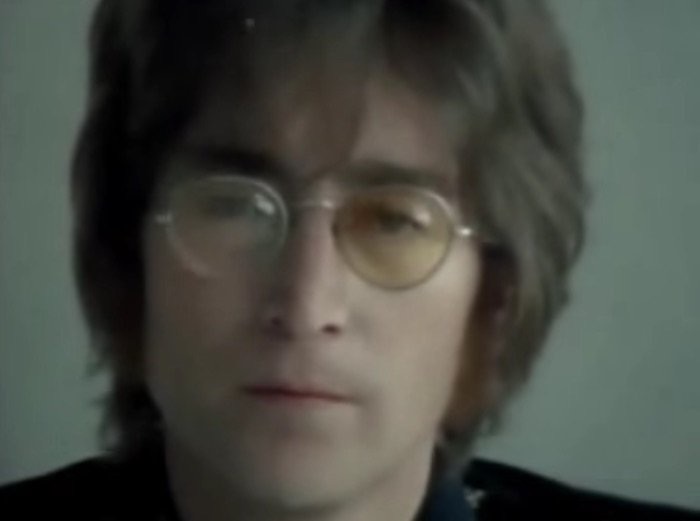
Imagine Lennon’s Song in Context


Pleasant read in Elephant Journal yesterday about the meaning of this iconic song that may surprise few but helps to remind us of something important in yet another age of crusades.

Like Heaven and Hell, countries exist only in our minds, yet we kill or die for them. Religion too is made up (imagined) by us—yet another institution that serves only to divide humans and prevent them from living life in peace. Neither are possessions real, except as a shared idea of ownership projected onto things, in turn producing yet more suffering as greed begets hunger.


When enough of us finally awaken to the fact that all of these things—religion, country, possessions—are nothing more than ideas in our minds, a world of unity, a brotherhood of man, with all the people sharing all the world, becomes possible. This may look like a dream, yet what is our current social reality but a collective delusion—a “reality” that only exists because enough people believe it? When enough “dreamers” actually see through the dream, a critical mass (what today we would call a “tipping point”) is reached “and the world live be as one.”

A simple Buddhist message to live within the reality we have, hard as it may be for many, this song also confirms the power of the imagination, whether for the highest of all achievements (Lennon’s song) or the most terrible (killing in the name of the deity of your choice). Imagine understanding and accepting the terrible beauty and destruction we create–as us. Simple and direct, less being more, the song is masterfully reiterating an ancient theme. 

Peace.

In which we witness a prayer


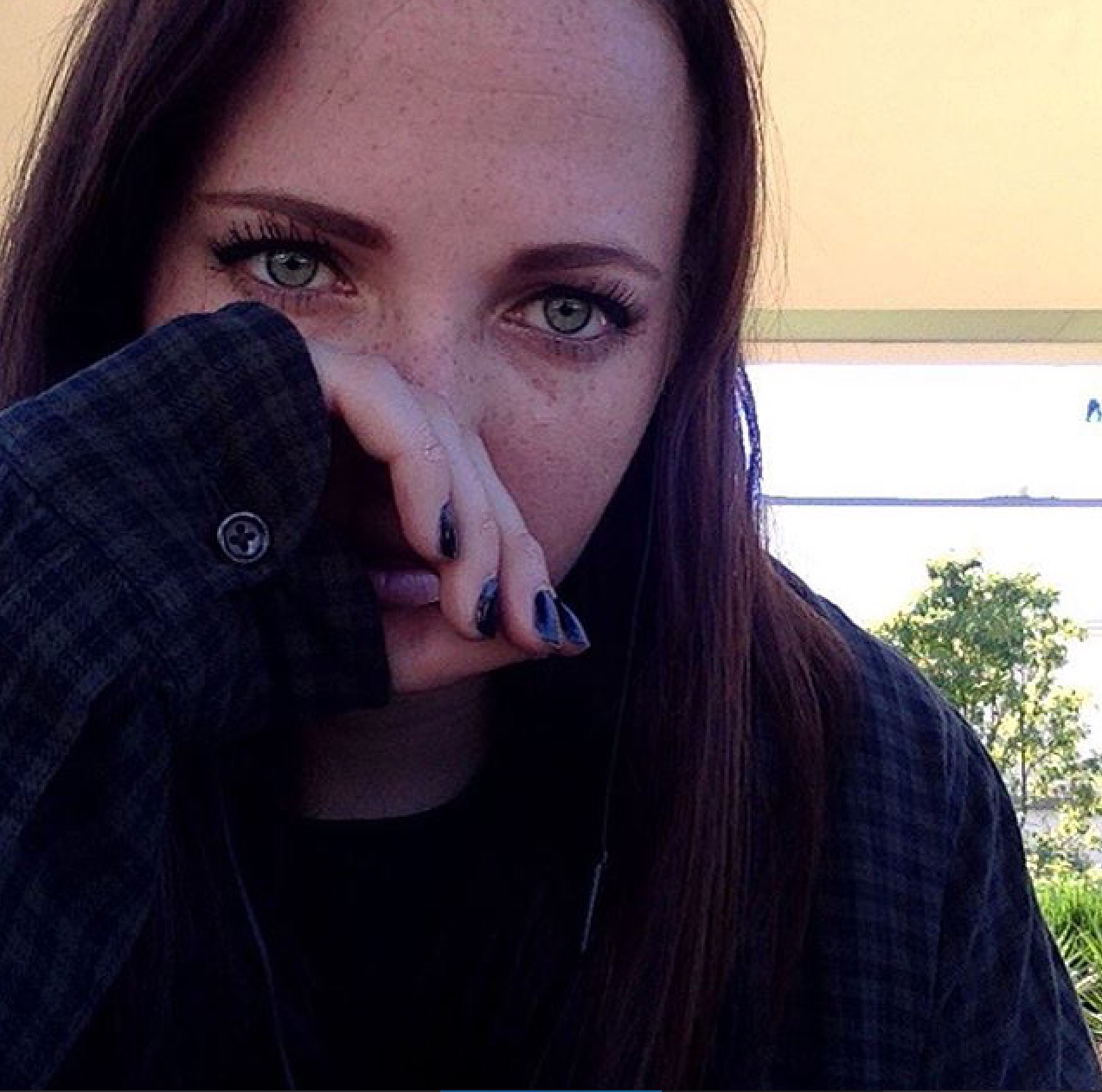
 I’ve looked into the eyes of this movingly tender and beautiful photo of my daughter fifty or more times since discovering it. She allows me a glimpse of her social media life in but one place: Instagram. I am grateful for it. There I can peek just a little to see what others see of her, what she allows to leak. I know her and don’t know her.

But this picture is poignant for several reasons. It is the one picture I believe I have a leg up on all of her friends, acquaintances and public, maybe even a significant other. I know the look in her eyes. I have been fully immersed in the practice of recognizing what lies behind the surface of her expression since she was born. It was a method of survival for both of us. Is she hungry? afraid? frustrated? Anger was always obvious. But differentiating between shy and reserved took some deciphering, some investigative study, and close observation on my part.
 
I had to discern between what I read–over-read really–in books about personality traits and behaviors from what my gut told me silently, wordlessly. Motherhood is the scariest ride at Disneyland times 100. It’s often a matter of life and death. The twists and unexpected turns cannot always be calculated or anticipated.
 
I have grown to recognize by an unconscious alarm in my head when my daughter is sad or slightly afraid or both by nuances. Her veneer always seems collected, polished plain and emotionless when she is settled into herself. When she is playing or performing, her face is a farcical mask of glee or humor or goof. She lets it out all hang out.
 
But this subtle look behind her eyes is sad sorrowing pain, one from prolonged stress of doubt and fear, standing on the edge of the fall balanced to the very brim of standing it. She abides. But she slides down into the “feels” of it sometimes.
 
I never set out to steer her into college sports. It took me along as it took her. One day I was her coach among all the other six year olds, trying to entertain and teach, and the next I was helping her decide whether to accept a college offer to play the game in another state. Recreation soccer blossomed into a competition that could only be sated by club ball, which always sold parent hopefuls on the steep price of a scholarship.
 
I cannot say that a scholarship was the lure for me. I figured out the math early on. For all the years of paying for trainers, club fees, equipment, travel and this and that peripheral fees, I could have paid her and her sister’s college by investing the money in passive income yielding ventures. But the lifestyle of soccer promotes health and the outdoors, hones the coping skills of competitors and educates the athlete to her own limitations, desires and nature.
 
I don’t regret the time and expense of it all. What else would have driven us as a family to places we visited–together–from hotels in deserts to hell holes to luxury digs in gorgeous cities? The drives alone provided family time we would not have scheduled otherwise. And I often ask what will bring me to lay myself down on the grass of an open field on a Saturday sunny afternoon in the breeze, imbibing the disparate smells of trees, wind and turf, when my children no longer play?
 
But watching my determined, ebullient, driven and light-hearted child-woman as she steps through her days of doubt and illness, waiting for her brain to heal, I wonder why I–we–wanted this. Of course, no one picks a course thinking something terrible will happen, something will go wrong. And even if we ever think about the possibilities of injury, failure, or loss, we gloss it over with a deferment and hope: think about it if it happens. Such is life lived as us.
 
She will survive a concussion that has driven the joy out of her first time away from home experience and exacerbated the hardship of that transition (something she has not managed too smoothly since I can remember) in school and life. But will I survive her Instagram pictures that freeze-frame the story of that grief and turmoil? Yes. With the faith and prayer of the priest and scientist, I watch.

Something About the Bees

  
In fits of nostalgia, I have bemoaned the loss of bygone items and activities. No, not 8 tracks or vinyl, but more like the bliss of ignorance. Somehow, not knowing what everyone I know ate for dinner last night or that a hit and run accident happened in some town called Smartsville hundreds of miles away is something that strikes me nostalgic. I miss the quietude of select pieces of information entering into my sphere of knowledge. I miss the word intrusion that had meaning, not like now where it will be erased from common usage given that there is nowhere to hide from anyone else in the world.
 
In particular, however, I will miss the bees.
 
Not just because I grew up with them, just like I grew up with aluminum street roller skates and homemade skateboards of wood blocks mounted atop those skates. But because our world depends on them, more than we know. I am not an alarmist. I shy away from ringing any alarm bells for a cause as I am a subscriber to the crying wolf wisdom. Save the fire alarm for what most needs sounding. The bees need a five alarm fire warning, for they are sounding bells for us in their departure. Why are the bees leaving us?
 
Not that they are going off for good. Most bees abandoning us are domesticated slaves to the agriculture industry, shuttled from farm to farm to pollinate crops, but it’s not only the pesticides that are killing off these slave bees. Those in the wild know better than to go where the pesticides waft in the wind through miles of wheat stalks or almond trees. It’s also the stress. The suffering, farm-raised, overworked honey bees are one of the most threatened populations–enslaved pollinators chained to their instincts and the dollars that drive their keepers and chemical companies. While the EPA as well as the world looks away.
 
Bees are responsible for a third of all we ingest.
 
Agribusiness practices include bee transportation across countries where they are released to pollinate crops: a month feeding on blueberries then another month on almonds and another month on some other fruit or vegetable plants, season to season, place to place. Keepers earn their keep.
 
The artificial dietary conditions and non-stop travel schedule stress these insects that vibrate to one another and radar their stress all along the colony, a highly systematized bee industrial complex inside the hive. They want out.
 
The smart bees have left the building–abandoned their hives, collapsed their colony. They punched their final time card in the clock.
 
Stress and pesticides are forcing the bees out. Their disappearance is a message to those who can decode it. I will miss the bees.

 
Photo: Bobby Doherty

What kind of love is it?

  
Unconditional love. Love unconditionally the gospel of everyone tells us. So simple. Just love for the sake of loving without expectation of return. Love is enough.

But we are also socially conditioned to believe that love is circumscribed to acceptable people and circumstances. Monogamy dictates love only to the betrothed, regardless of how many loving people a lov-er meets along the road of a long life. 

We categorize love: friendship, passion, God, country, children, siblings, spouses, lovers, flings, new cars, cats, gardening and pizza. We give time limits–for a lifetime, a season, a night.  So many names for so many kinds of loves–expensive ones (mistress or travel) to home grown ones (God, spirit, charity, and light).  We love the earth, the skies and the seas. We love. 

But we are so busy defining the type of love we are receiving and giving that we forget to just love and let love be the guide not the answer or the question. 

Analytical as I am, I fall prey to this downsizing and chopping love to bits. If I love being with an other, just talking and spending time, so much so that I can declare that I love that other for this compatability and gift we bestow of conversation and time, am I violating some unspoken laws or ethical codes if this person is promised to another for that other kind of love, the eternal everlasting one of ceremony and song? This I must always inventory.

A visitor came to town, someone from cyberspace, whom I have never met other than through x’s and o’s. I took it upon myself to be ambassador. The tour of some of my favorite cafes and nature spots yielded an instant bond and good time. I found a co-spirit in great conversation, shared interests and world views, a peace of just being. 

Flitting thoughts of expectations or produced impressions strafed this good time like WWII bombers overhead, periodic and impactful, enough to disrupt the flow with slight uneasiness. Am I giving the wrong impression–that I am interested in a relationships, fling, one-night stand? That I am interested? Don’t want to mislead.

Why not love what or who sits before me without figuring out the good or bad of it, hemming myself in measured patterns of behavior and select words?

My daily aim is to feel love not that way but freely–unfettered.  Not in exchange or as gift but connection. In some rare moments, even I am successful.