The short-sweet life of a teenage carnie (Ten For Today)


I’ve never joined or worked for the circus. Can’t even remember going to one as a kid but must have as an adult with small children. I just don’t remember one. Maybe I’ve blocked it out. I know zoos are a drag. I get bummed seeing the animal prison cells, even the ones that try to look like “natural” habitats. I know–and the animals do too–that they are NOT free. It’s unnatural.
 
But I did work in a carnival on Long Island for a couple weeks when it was in town. I don’t recall where it was, some place for it to spread out over a good square half mile or so. I want to say at the Islip Speedway or maybe at the Farmer’s Market grounds, but those don’t seem to jog my memory. Yet I can see that carnival in my mind’s “movie” reels.
 
The booth panels were coarsely painted royal blue, where the tickets were sold and pay checks were picked up. The rest of it was a winding affair: serpentine rows of small squar-ish booths, tents, food stands and rides. I worked a game booth. The floors strewn with straw partially hid the dusty dirt floor beneath.
 
Actually, I worked a few games: the balls thrown at wobbly flat wooden clowns with painted white faces that only took three balls to knock down three clowns. They defied the laws of gravity and never seemed to fall all the way down. I also worked the ping pong ball toss in the ceramic cups that alchemically caused ceramic and lightweight plastic to create super bounce. And then there were water pistol shooters to knock down ducks or rabbits passing back and forth. Hardly anyone won, so I mostly collected quarters.
 
I remember smelling popcorn around me and on my clothes for two weeks solid. I was 13. I just learned to drink coffee, creamed blonde and sugared sweet. That summer, I also found a boy who liked me. I don’t remember his name though I’m sure it started with an R or an M. He was cute, brown short hair with a bit of curl in the tresses. He kissed me and put his arm around me a lot, claiming his own. I was thrilled to have attention paid me–my company desired.
 
He would visit me at the carnival. We’d get coffee on my breaks, and he’d walk me to and from the carnival. We’d go on rides sometimes after my shift, though for the life of me I must not have had much of a will to survive, having seen how those rides were assembled and by whom. No one looked to me as if they were long into their parole, even with my young, naive eyes.
 
And when the carnival started packing it up, I looked for the guy who asked me if I wanted to earn a few dollars manning the booths, to no avail. I checked the blue wood paneled booth with the door sign “administration” or something official like that, but I was told to come back. I did. Twice. And then I brought my mother, who I watched stomp up the two stairs to the booth window, her arms flailing in threatening gestures and her shoulders pulled back. I couldn’t hear the exchange, but she came back with cash.

Ah, the short, sweet life of a teenage carnie.
Food


My childhood household held food that never rests on my pantry shelves. My mother, who cooked or assembled three meals a day for five children and one husband, subscribed to the then food pyramid. Dinner always consisted of a meat, starch and vegetable. Ours was barely a blue collar wage earning home, straddling the middle class line, so my mother bought what was cheap and easy: whole fryer chicken, chuck steak, potatoes, Minute Rice, lamb chops, pork chops, Green Giant canned peas and carrots, corn, beets and green beans. Special meals around the holidays expanded into beef stew, stuffed cabbage and chicken soup. She ground liver, eggs and onions into chopped liver for Passover.

My father liked Devil Dogs, Yankee Doodles and Ring Dings with a tall cup of milk before heading out to work late afternoons, so there were plenty of those box cake snacks in the house, along with my mother’s favorites, Entenmann’s coffee cake or coffee cheese cake. We lived under the fragrant shadows of that cake-snack factory. Entenmann’s filled our stomachs and noses.

After I moved away from home, past the college days of living on graham crackers and cottage cheese or jars of peanut butter, I shied away from those foods. For one, I could not find snack cakes with the same names in California, nor could I afford the price and weight-gain of them. My first job in California landed me in a frozen yogurt shop, where I ate hot fudge yogurt sundaes most every day. I needed to lose a couple dozen pounds after six months there.

But on my own, I chose healthier foods, simpler foods, like veggies and high-fiber carbs. When in my twenties and already married, I started working out at the gym. My intake was largely sugar or fat free, ready-mades and packaged foods until I learned to cook ten years later when my oldest daughter sprouted teeth at 9 months. Then, meals were consciously and conscientiously planned for freshness of ingredients and taste suitable to both the gourmand adults and plebeian small children–not an easy feat.

Before children, my husband and I dined well, sampling Southern California’s finest cuisine and accompanying wine. We were working professionals without children for 16 years, so we honed our pallets here and abroad. We ate plateau de fruits de mer in bistros in Paris; stone-grilled caribou and buffalo in Banff, Canada, apres ski; pabellon criollo in Caracas, Venezuela; and street stand tacos mariscos in San Felipe, Mexico.  We ate haute wherever we went. 

After kids, we had to bring the haute cuisine home, so we hosted dinner parties. I subscribed to Bon Appetit, invested in cooking tools and amassed recipes. I learned to shop for and prepare rib roast and imported French oysters for Christmas dinner and portobello pot roast for Chanukah. I mastered the soufflé and creme brûlée. We served 9 course meals til 2 a.m. to guests lined along stunning tables of Reidel glassware and hand painted China with perfect wine pairings

But then life got busy. The children grew up and into unforgiving, unyielding soccer-school schedules that left us eating on the run, in the car and out the door. My husband and I were back to ready-makes from Trader Joe’s and “healthier” fast foods like chicken rice bowls from Wahoos or Waba Grill. Happily, I still get to cook Thanksgiving dinner every year for the entire 20 to 30 of our clan to keep my cooking skills primed.

And then there was that one year I tried to single-handedly polish off an entire Thanksgiving leftover ten-pound Honey Baked ham, 2006, I believe. So sick, I couldn’t even think about eating meat for weeks. I just never picked up the habit again. I’ve never really missed it, except for the occasional temptation, like the lamb we bought up in Humboldt at the farmer’s market that my niece barbecued or the smell of a burger sizzling in the fry pan.  

Unlike my childhood household, my family never talks about diets or obsesses about food or weight. We did give our daughters choices based on experimentation. Like the times they wanted to eat donuts before playing soccer just like their friends did–instead of the banana or Luna bar I’d give them. I let them. Then, after watching their sluggish performance, I’d ask them how it felt fueling on donuts before a game. That’s all it took.

My mother, who dieted constantly–lurching between binging on a bag of Chips Ahoy chocolate chip cookies and going to Weight Watchers–did not impose restrictions on our eating habits unless it was snacking before dinner, but her constant struggle and obsession with weight was modeled to us. Some of us took to conscious eating as a result.

My young daughters wanted to follow my lead and forego the meat, but I did not allow them to until they understood how to eat meatless. Now, both mostly adults, they each have their own versions of a regime suitable to their lifestyles. The older is learning to be a vegan gourmet, while the younger is enjoying the role of test taster. Me too.

Bar Tending Ambitions: Ten for Today


In my thirties, whenever I’d go to a party or otherwise meet new people, inevitably the subject of what I did for a living came up. So often when I revealed I was a lawyer, I’d end up hearing someone’s legal problems. Of course, I’d make the salutary joke: “Okay, I’ll listen (tapping at my imaginary wrist watch), but I’ll have to charge you.” Ha ha (sigh).
 
The dreaded question, “What do you do for a living?” became a drag, so I started answering, “I’m a bartender.” It came to me on the spot once, and then it stuck. Everyone who asked me what I did, I answered, “bartender.” Then the conversation moved on to something else. Rarely did anyone want to hear more, and I was fine with that.
 
I once had aspirations to be a bartender. I was 19 and working at a Mexican restaurant as a hostess, training to be a waitress. I was promised a shot at bar tending when I became of age and had enough experience waiting. Until I got “laid off.” My manager, a middle aged man (could have been 30 from my young perspective of what middle age was back then), and I butt heads on this one point. He hinted at first, but after I didn’t bite, then insisted that I wear make up; he thought I needed a less hippy, more sexy look as greeter and server, especially when I worked the bar.
 
Ten or more years later, one early morning when I found myself watching the sun rise outside the window of my 12th floor law office after pulling an all-nighter to meet deadline, I closed my gravelly eyes before heading home to change clothes. Heaven forbid I should be seen with the same suit from the day before. In the soothing warmth of closed lids bordering on seconds of sleep, I flashed on a flicker of fantasy: I’m giving up this hellish grind and going to bar tending school.
 
That thought–that I could always be what I pretended to be–gave me solace. Still does. When I grow up, I still want to be a fifty-something year old bartender. Is it too late?

A kind of kindness (Ten for Today)


We’re in the car. I muse out loud, “I want to carry into the world the kindness and caring I feel when I do yoga or when I write about the garden I peek at sometimes through the fence separating our yard from the neighbor’s or when I’m baking apricot and garlic spread into baguette then topping it with sun dried tomatoes that have soaked in Greek olive oil a good long while, for our dinner guests.”

The one in the front seat is silent, but the wise ass in the back seat, snarkily asks in disbelief, “You?” Then she shakes her head slowly and says, “Nah.” They both laugh.

I laugh. She’s a quick witted funny kid. But as we drive a way into the silence, a momentary pause in conversation, each with our thoughts, I frown inside. 

I meant it. The kindness does not extend far beyond the mat. I don’t want to manufacture it for myself by motion and feel-good-pat-on-the-back exercises and readings. I want to exercise it, stress test it in the throes of messy, even horrible existence, in the battles on the streets, on the road, in the supermarket, and on social media. 

This election circus distracts me (a Trump funk), foments mental terror and pulsing anger that requires the quelling by kindness, everyone’s. But mine is especially important in my world, to the people I touch. Hiding inside words, playing nice with language won’t do. I won’t be jailed by the surrounding toxic vitriol. I vow to melt it, laser it with the heat of my passionate dispassion. 

Love. Love. Love. Love. Love. Love. Love…

Writing the Divine (Ten for Today)


August 8, 2016
 
I stuck a three-fold brochure entitled “What is Vedanta?” inside my book on writing. It’s a book mark but also a reminder. The pairing is everything.
 
The Vedanta is a philosophy based on the oldest scriptures of India, the Vedas. The basic premise teaches the divine in all of us, and the pursuit of the divine is all there is. Writing needs no definition. Most everyone writes.
 
But writing for some is more than communication, practical missives that need delivery to complete some operation, some function of human existence. Some of us write because it’s what we do to reach the divine in us. I’m not sure I’m including myself in that “us,” but I’d like to consider that conviction more.
 
More than God and the divine, the Vedanta embraces all other belief systems whose end goal is reaching the divine. In other words, it makes no difference the words or way, it’s making the journey that matters. And that’s sort of my approach to writing. I write. Every day. Some of it’s good, some not. No matter, it’s the doing that counts.
 
Some days writing is therapy. Some days it’s meditation. Others it’s creation, while still others–struggle. Writing is life. It’s all we do. Some of us.
 
The finest and lowest moments connect to writing: that painful process of birthing a poem, a story, an article, a listicle, even, like molding bramble, hay and rocks together to make a statue of the Mona Lisa. And then the miracle of finishing with something approximating Da Vinci’s girl, or even pretty damned close–well, that’s heavenly.
 
The struggle to achieve, find, see and discover the divine of us in, by, through and despite the Vedanta continues moment by moment. It is the ever-present, ever-elusive (seemingly) goal. Writing is the mock up. 

Cultural Creation: Misogyny in the House (Ten for Today)


August 5, 2016
Anxiety plucked at my sleep last night, spun me round inside my blanket, eventually tossed off like that rest awarded the dead after a life lived well. The mind wheel turned over the many ways I should be more direct, genuine and truthful in asking, no demanding what I want and need–never an easy thing for someone who feels undeserving most days. And I don’t know why I should feel that way.
 
It may have to do with this: a girl grows up in a loving household with loving parents who have told her the stories of her past and of her family’s past. She is told that she is the only child who was planned. Her parents were trying for a boy after two girls. But she turned out to be a girl. So, despite her wish for no more than three children, her mother is persuaded to try once more for that boy for her husband. The fourth was the charm. And then there was the major accident 7 years after him, another girl.
 
The girl is loved and encouraged to succeed from a mother who had her own ambitions but stayed home to raise children. Eventually this mother got her GED, a driver’s license, a job, an AA in secretarial science, a BA in English Literature and a Masters Degree in English Literature all in a matter of 20 years beginning from the time the girl was 15.
 
She saw her mother cook, clean and care for her household, children and husband who worked too many hours to be more than a shadow in the house. He slept days and worked nights. The girl saw this mother wait hand and foot on the man who had a strange kind of love of insults and denigration. He called it love, and she called it something the girl would understand when she grew up.
 
Last night’s anxious rumination stems from this story. Rehearsing dialogues, letters and monologues aimed at asking for what I want–without guilt and remorse–takes all night. The conditioning that created the condition–disbelief in deserving–takes a lifetime.

Post Politics: April Fools…Still? (Ten For Today)


August 3, 2016
 
You–

Where do I begin? Are you for real? You know the clear sign of adulthood is recognizing your own strengths and weaknesses, limitations and possibilities. Children believe they can do anything, fly to the moon with just their will and hands flapping, grow a cape and avenge their slights against school yard bullies. But adults know the difference between fantasy and reality. Not you.
 
Some say you know exactly what you’re doing. Others say you yourself have no idea what will come out of your mouth until you say it. My dear mother in law is like that–no editing filter from brain to mouth. It comes from a hyperactive attention deficit disorder, lack of impulse control and other causes. I’m no doctor. I’m just an observer. But she, at least, understands where she belongs, what makes her most effective as mother, friend, cook, caretaker and citizen. She knows her shortcomings and does not decide to become a surgeon or insist she can be one just because she believes her surgeons are not doing enough for her cancer and heart condition.
 
But you, ‘man’, own everything you do, say and believe, and expect others to do the same. You’re not a citizen of the world, just yours. The rest of us are all visitors to your world. They used to diagnose people like you as insane monomaniacal threats, curable only by electroshock therapy.
 
But that’s you. Somehow you have inserted yourself into every corner of the planet. The causes of your rise are plenty, but the time for analysis and disbelief are long past. Now the question is what will be done with you by the half of the nation that thinks, cares and clings to a worn, battered, torn and flaking democracy, but a democracy at last.
 
I am confident thoughtful people with conscience will do the right thing. Those lost in hope, dreams and fantasies, those longing for brutal fathers as a result of their own overriding fears, indomitable past or cultural patriarchal indoctrination will see themselves in you or not see you at all for the sake of something, something to help them bear the weight of the malaise and downright horror of their existence.
 
Whatever happens, madman (not to defame the ill) or pretender, I have hope that reason and goodness will prevail by the forceful intentions and actions of people who care, love and hope in humanity.   

The Best of the Best (Ten today)


July 30, 2016
 

We are in Carlsbad, parked in a cool-shady spot near the beach, car lounging before the next game. The slogan of this soccer tournament boasts that only the best of the best walk through the gates to compete on their well-groomed fields. My daughter and her teammates deserve to be here…on some days. When they want to–her included—they are unstoppable. When they don’t, they’re not. 17 year olds are like that, I guess. They can taste freedom to make their own mistakes just at the other end of the table.
 
This daughter, like her older sister, I know so well and don’t know at all. Her cynical, critical eye is inherited. Her sensed, inarticulable experience of the world is inherited. Her logic, forethought, anxiety and perfectionism are inherited too. She’s more outer driven, while I’m more inner. I want to live up to my own standards. She needs a watcher, a fan and a stern stick behind her.
 
But I respect her. She knows what she wants, I trust, and will have to figure out from where her limitations come should she decide to exceed and conquer them. I give her words and a model. And while my older daughter allowed me to help her, push her to push herself, this one never has–not in the same way. They’re a study in people hood. How humans fulfill their cellular and cultural destinies–endlessly fascinating, the best of the best.

Ten for Today: Race, Myth and Dead Boy’s Birthday

July 26, 2016
 
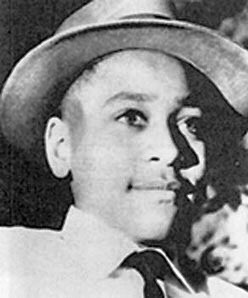
Yesterday was Emmett Till’s birthday, his 76th had he not been brutally beaten and drowned by white men, when he was only 14. It was 1955, I believe, and he was visiting the South from his home in the North. His mother warned him to be careful. But he acted like a silly black 14 year old in a seriously white-colored-hating town in Mississippi, and got lynched.
 
Coincidentally today’s class assignment was John Edgar Wideman’s “Father Along”, which chronicles Emmett Till’s trial, the one which his mother, Mamie, attended to watch her dead son get lynched again as the jury acquitted her son’s murderers. Before the son, his father, Louis Till, was hanged for treason in Italy, a fact revealed to the jury, despite being classified information illegally released and improperly introduced in evidence.
 
In class, we discussed how race is myth and power that perpetuates the myth. Wideman claims that race will disappear when we stop talking about it, but not just talking, also seeing, stop accepting the lies of implanted cultural inheritances that segregate races in the minds of generations.
 
And then I glimpsed a small clip of the DNC today, the part when a group of black mothers banded together to grieve and fight for awareness–of guns and violence and black youth, the sons they lost to guns and violence. Trayvon Martin’s mother spoke. That’s who I caught speaking in the five minutes I was able to snatch at work in between customers.
 
I’m not sure one Presidency can change that, meaning America’s racism, America’s segregation in the minds of its people. Though those women, and many other people maintain hope that the nation will inch its way toward a racially free society. I do too.

Ten–and 21–for today.


Working my way through the day 15 and 10 minutes at a time, I set the timer. It’s one of those days when sleep filled me, made me hopeful upon awakening, even after a pee trip and return to sleep, rare in itself (the going back to sleep part). An excited brain with a deadline is like a toad on crack. Reigning it in hard today.
 
I also drank a bit last night–a Stone on draft at happy hour. P and I went to dinner before the concert. His Christmas 2015 present finally arrived in a college stadium 80 miles from home–Twenty One Pilots, his favorite band these days. Or one of them. Having tapped into his on again off again creative piano playing and composing mojo lately, he was particularly ready to enjoy the show. And he did, dancing the night away.
 
I, on the other hand (not as familiar with the band), was glad to have had the beer and mushroom flatbread before the show, washed down with a cool glass of water out on that breezy terrace to the immaculate, tinged-with-class-and-hipness restaurant. A compromised restaurant between haute cuisine and bistro fare, I was satiated. The cool beer and water helped when the stadium filled with hopping, singing, dancing, screaming and hugging mostly-younger-than-I fans turned stifling.
 
Two young women standing/swaying in front of me in the row ahead turned to me like they would to an older adult, like their mom’s or grandma’s friend, and mouthed the question with slightly furrowed brows, “Do you have water?” My slow shaking head side to side, the response, they sadly looked away. I was holding up well for two reasons: beer and water chaser before the show, and sitting down while the crowd stood. It’s called conservation, like the camel-hood I procured decades ago.
 
That’s right security dude checking us for contraband at the stadium entrance, who asked me sarcastically, which song was my favorite of this 20-something band, I’m old–and savvy. And, while you were busy busting my chops, I was smiling and smuggling by.
 

Image: Twenty one Pilots/mtv