Graham Nash — A Simple Man

"My mistress' eyes are nothing…"
Graham Nash — A Simple Man
When all the stories of girlfriends and guyfriends collide and correspond, life unfolds in parables and tales of the universe. There are certain constants that run true in human behavior throughout time regardless of fashion, trends and technology. Listening to one friend over coffee yesterday and another few in email and text conversations, I awoke to a story of everyone, everywhere at some time, whether the relationship bespeaks love, career, worship, family or community. As parable, story figures take on symbolic feature to encompass the whole of humanity’s experience in some slice of its manifestation.
Today’s offering is called: A parable of the universe (Tell me if I am wrong).
I met a man when I was two thirds of who I had become that far. Too many rough years rubbed away the grit of my guts and solidity I had sewn together lo those many years prior, going to school, building a career and family–taking care of the world I had made and made securely well.
So when this man met me (I had gone looking for someone to top me off), he ministered to the two thirds left of me by being smart and witty, entertainingly soft and kind. The game of push the right buttons, turn the right knobs to nail the target and earn points had begun. He paid attention to me with admiring eyes that bathed me in light and filled missing space in the darkness of me. And he grew in me. He filled time and moment with his persistence and my quest for completion.
But then life struck again, and I lost another third. I was down depleted low. This gave urgency to him–to pour more into me, even more, to fill up that space as I, nearly eviscerated, crumpled to the ground at his feet. He saw opportunity and I felt lost. And he called it love and desire and support. He called it us and we and forever. And I fell back long, long with eyes closed until my body hit the sheets, which flew up from the force of the fall to cover me whole.
And when I awoke, I found replenishment–just enough. I could stand. I opened my eyes. The world was dull but constant. And one foot followed the other as it is wont to do. No meteor split the earth. No fire engulfed the city. Exhale followed inhale.
So when the flow of movement filled me up a little more, I found the man’s residence in me too much, too tedious and frantic. I would vomit. “Please pull back and rest inside yourself some,” I pleaded. But he could not hear. He had already made plans, made a home inside, expanded there to fuel his reason and his way.
Then the truth of the matter was plain. He was not a man at all. I had been fooled just as I had been all my life about what was life–doing hoops and carrots. I was wrong about that too. Separateness is an illusion. We don’t fill each other; we are one another. Only, some truly are tapeworms until they understand.
I have to say, I wish I had written this article What Not to Wear After Age 50: The Final Say by Michele Combs in the Huffington Post sent to me yesterday by someone who truly cares–the same one who sent me the original article this one counters.
Google ‘what not to wear after age 50’ and you will have your pick of thousands of articles telling you what looks terrible on your old ass body.
It’s not just Combs’ tell it like it is humor and irreverence that amuses me or the supportive message of the sender of the article that entertains me with a big ole “right on!” in reaction to this writing. It’s that it is truth, not just defensiveness disguised as truth or solely my truth.
Just as there are rites of passage for 13 year olds becoming men or women like Bar or Bat Mitzvah’s, symbols of acknowledged or expected responsibility for being part of the community of adulthood and baptisms by fire with the drunken night out or at the porcelain pedestal on a 21st birthday, signifying responsibility to the community’s recreating populace, so too there is a rite of passage for older adults, women over 50, in particular: becoming themselves.
50+ women who dress for themselves, to their own comfort and feel-good production, are totems to younger women, a signpost of what’s ahead for them, and encouragement to keep up the good fight of daring to say, “but this is me.”
So much struggling and striving and settling in the 20s, 30s and 40s, in living for others–parents, children, friends, lovers, employers and parents again–I have to believe there is some culminating prize for the effort, and I’m not talking about retirement. Retirement is an illusory carrot invented to keep people from walking off into the night or out to the desert to leave society just when (American) society wishes their less “productive” asses to leave.
Wearing the I don’t give a flying fuck because I’m comfortable style is the reward for a life too long lived giving a shit about things that don’t matter–like how we look to others, the messages our clothing and makeup (or lack thereof) send to others so that they can properly label us and act accordingly. We figure this out when the physical and mental wanes just as the emotional waxes.
You are over 50 for fuck’s sake. Wear whatever you want
Trending with or against the current style dictates for age appropriateness is a choice for the 50 something that she has earned–real choice. She has only one message to send if she has paid her dues to harvest the fruits of her life long burns and labors: I yam what I yam. And perhaps her legacy is in planting seeds in her progeny to do the same.
If I could beam one insight into my daughters’ beings it would be: Stop curtailing yourself to satisfy others. The sooner you allow yourself to be yourself, the longer your happiness will be.
Lovers and madmen have such seething brains
Such shaping fantasies, that apprehend
More than cool reason ever comprehends.
― William Shakespeare, A Midsummer Night’s Dream
The question of whether ex lovers can ever be ‘just friends’ seems to be a non-unanimous ‘maybe.’ Researching the mags and rags a bit, I surmise that befriending an ex successfully is highly improbable but not impossible. Not surprising, it depends on the two people attempting the feat. Essentially, if the two had a good relationship while lovers, were mature, responsible and communicative, they probably could succeed in being just friends.
Several factors come into play, however. How was the breakup? If acrimonious and one sided, the likelihood of morphing into friendship is slim to none, especially if the ex is a cheating ex. Too many hard feelings carry over into the attempted new relationship that do not get resolved unless the one feeling victimized moves on and gets over the hurt likely to be re-inflamed by the person who caused it in the first place, regardless of time passage.
The one who breaks up with the other, always thinks that the other feels the same way. The “erasure of sincerity”, feeling as though you never meant anything to the other, is not something that we can control and makes us slightly hysterical. It is hard to believe that the one who just broke your heart honestly meant it when they said, “I love you,” and now they cannot even say hello to you. friendsandlovers
All articles I perused suggest giving any attempt at friendship the benefit of time. One article suggested no less than a month should pass before exes see each other as friends. I would think more time than that to let the feelings of resentment, regret, anger, love and familiarity dissipate. Familiarity is the most difficult one to completely dissolve, I imagine, as each meeting with the ex will bring up habits, sayings, tics and patterns both recognize and perhaps once found endearing or annoying. Those don’t go away just because the love does. And does the love go away completely? The comfort of knowing someone is available emotionally and physically–or so you thought–to hear your woes and worries, joys and successes, is a powerful bond hard to completely break. We need connection more than anything else from others.
All advisors agree that time is necessary to let feelings fade, mutual breakup is more likely to lead to a more successful attempt at friendship and confirmed open expectations or ground rules must be articulated and adhered to for any promise of friendship. When one has hope for rekindling the fire or the other coming around while that other is already moving on, there will be no friendship, just an extension of what was and worse–an extended breakup. Also, if the same habits and patterns in the relationship exist, for example, the confidential confessions, continual flirting, sex discussions, the friendship will not work, too confusing.
All agree too that the new mate poses problems of jealousy and the true test of friendship: Can you talk to your friend about your new excitement or disappointments or great sex with someone else without jealousy arousal or memories evoked of being naked with your ex? Unlikely, which brings back an earlier point of mutuality of intentions. If you don’t really intend on being friends but are just hanging on or hoping, then the best you can ever hope for eventually is a mere acquaintance. A good friend wants you to be happy and offers support with genuine motivations of giving, not self-interest. If it’s too painful to hear others taking your place or imagining yourself as the stepping stone to someone else’s growth, move on, forget about friendship and better luck next time.
With some, it will take more time than others to develop a friendship. It took ten years to eliminate all traces of emotion infused with memory for one of my exes, but now we are old time-tested friends. Though it rarely occurs, I could drink a beer with him any day and have a laugh without getting caught up in a web of what if’s and when we were’s. But when we have, the reference to some fun time is almost always with a warm wink and a twinkle in the eye–for both of us.
With others, the possibility ended with the ending of the relationship–the good riddance kinds. Some relationships you just know are toxic but are too stubborn or stupid to give up on them in time. They get frothy filthy lowdown with cheats and insults. By the time they peak in brutality sufficient to kill a nation let alone a relationship, one or both are craving the bullet, so that moving on has already occurred. These will never be friendships despite the cold, cold corpse of the relationship. There were too many hard feelings in the first place. Even in time, those will have you questioning what sort of atonement you thought you had to pay to suffer yourself such pain and humiliation.
And with others, regardless of the mutuality of intellectual knowing that “this is the best for both of us,” there will always be a lingering–the one that got away kind. That is the one friend you would love to have because friendship was such a strong basis of the relationship in the first place, but that friendship sat smack dab in the middle of great love making, lots of laughs, a little bit of chemistry and just the right amount of romance. The breakup may have been crushing or calm, but just how close you got to the right thing at the wrong time, or so you thought, is what will linger and prevent the curiosity of what could have been or should have been done. Even when the smell of him or her is long gone, you can still evoke at least the idea of having once had that scent drive you mad with desire, though the pulse of it is now missing.
You know what friendship is and you know what love is by the feel, smell, taste, sound and look of it. The gut knows the difference, but if your stomach doesn’t let you in on the secret, then lose your mind that leads you astray–in meditation. Don’t think long and hard about it, but simply be with it–your true desires and motivations–before you make any agreements to “just be friends” at the breakup, something tossed out by and for the benefit of the breaker, to make him or her feel better by making the breakee feel less abandoned.
It’s always best to clarify what you want before entering relationships, which is not easy and takes time and devotion. But in the end, that knowledge makes you less susceptible to capitulating to another’s needs in neglect of your own, one thing that was probably wrong with the relationship in the first place.
Should ex lovers be friends? Weigh in. Who has had the experience of trying?
References:
Can You Ever Be Friends with Your Ex? askmen.com
Sorry but this is why you can’t be friends with your ex psychologytoday.com
Can You Be Friends With Your Ex? bodyandsoul.com
5 Things to Know About Befriending Your Ex
huffingtonpost.com
Should You Really “Stay Friends” After the Relationship is Over? eharmony.com
Friends or Lovers friendsandlovers.com
Today I ponder the sentence, “I have your back.” Depending on the source, that sentence can be quite comforting, most probably intended to be so by the speaker. It’s a sentence offered, usually with a wink, a click of the tongue and an assuring smile, as support, shorthand for “I will be your backup in a fight, your second to celebrate the win or console the loss.” Spoken by a tried and true friend, you know the invaluable purchase of the sentiment despite the cliche’d expression. By a lover, the comfort may be dubious.
On the one hand, a lover’s deeper connection and care should inform that assertion with commensurate depth and caliber of worthy comfort. However, given the heart’s investment and volatility of passion, the motivation to employ machinations to keep someone, avoid loss, manipulation being integral to human coveting, is high. As such, a lover’s declaration is far more unstable and somewhat suspect counterintuitively because most would believe the opposite. Of course he has my back. He loves me.
Clichés are dead metaphors, most English teachers and long-suffering students know, but it is astounding to think that the expression, “I have your back” or less grammatically sound, “I got your back”, was once a vivid metaphor that caused a grand éclat at its crispness, a concept derived from an odd literal body position vis a vis another human being. I mean, how does someone actually have your back? My lover is a psychopath, cut me to pieces, saving only my back, maybe just the lower third of my torso in his refrigerator. Seems anatomically impossible, or at least unimaginable.
More likely, and I am probably remembering this from some forgotten space in my vast and sundry tidbit collection eating up all my brain RAM (just don’t want to interrupt the flow to look it up), it is a war reference to protect soldiers while they “go for it” from behind the trenches or the thicket of trees: protective, life preserving–or the attempt–in dangerous situations. The speaker intends to warn you and be your second pair of eyes to ensure your odds against getting picked off by a sniper, a guy with a gun or anyone who is prepared to do physical, emotional or psychological harm (or any combination thereof).
War metaphors seem apt in matters of the heart. The struggle with desire to surrender and need to protect the heart, a part of every love story long or short, feels like goose stepping on a mine field. We want to believe in the truth of words, especially those that contain the universally cherished missive “I love you.” Even as we fear the risk of injury, we want the message and will find it hidden in so many other words, so much so that we miss important cues and clues that language emits to the brain to shape behavior.
When language is abused, words divorced from their communally consensual meaning–an irrevocable breach, is when the battle ensues and treachery flies, innocent lives lost. Children spend many years forming the world through their initiation into language. Accessing the portal to ideas and things is granted only upon the trust in the safety of the vehicle that brings them to that door: words. They learn trust in the great unspoken agreement of humanity that words will mean what they were taught to mean by parents, schools and community. The ensuing savvy acquired through rubbing against other humans in the journey of days is the slipperiness of words and the deviousness of people.
But not all is lies and deception, not all words suspect. A lover, friend or business partner may mean he has your back when he says it but change his mind later. Though true when he said it, even if he said it over a dozen times, repeated it like a lullaby’s refrain, his mind or heart changed and so stopped saying it because he no longer wished to protect.
Or maybe the last time he said it, “I have your back,” the meaning of the expression–so broad and vague, practically incomprehensible–changed imperceptibly (unconsciously, to give him the benefit of the doubt) to reflect a different, newly emerging intention, a slightly different slant or even a total inversion. Maybe his subconscious drew the invisible target on your back for the bullseye knife throw:
Love is war. War is hell. I’ve got your back. It’s in my scope and my finger is on the trigger.
The language of love (and war) exposed in innumerable metaphors and clichés (think: love is blind) is a special case of the general, meaning it partakes of the attributes of language, generally, while nuanced with its own subject-specific idiosyncrasies. Love engenders both lies and truth motivated by intentions and causes distinct from commerce, for instance: lying to spare my husband’s feelings rather than for profit.
To be imperfectly reductive or hopelessly expansive, however, the nature of all language (written, spoken and body) is twofold: communicative and formative. It gets the job done, sends the message, and delivers the goods. At the same time, it gave us the job, the message and the goods in the first place. A cat becomes a four legged furry creature that mews for the child who learns its name. Before that, it is something unknown and out of focus.
Like its inhabitants, language–messenger or maker–is cagey, illusive, illustrative, beautiful, crafted, elusive and mutable. Many more thoughtful and capable before me have doubted the possibility of getting outside of it. But so too, many have escaped its clutches, unthought wordless language in meditation. It takes being both within and without the self to achieve that place that words fail to describe–a place without desire for anyone at your back.
A predecessor article to the others recently showcased on this blog in elephant journal and rebelle society, this YogiTimes article published yesterday is the version I submitted before revisions requested by editors of those other journals. It is significantly a different story.
The evolution of the publishing process has been illuminating to say the least, but more interestingly, is how many ways a story can be told.
Those who do not have power over the story that dominates their lives, the power to retell it, rethink it, deconstruct it, joke about it, and change it as times change, truly are powerless, because they cannot think new thoughts. —Salman Rushdie
Please visit Rebellesociety.com to read or re-read “Sun Salutations While Surviving a Short Stint in County Jail.”
The editing of the piece was handled a little differently on this site, which is interesting to note.
Rebellesociety.com is a wonderful site for embracing and fostering creativity of all sorts. I have reblogged from this site to share some of the important topics covered.
Enjoy, Peace, Namaste….
And thank you once again for your continuing support.

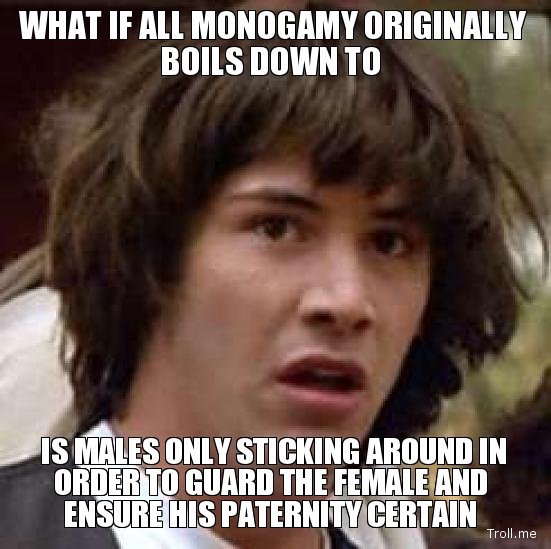
credit: http://www.troll.me/images/conspiracy-keanu/
A world without mistresses is a world that prizes honor above all else. This mistress-less world or region or culture raises children not merely to believe in themselves or to obey their parents, but to honor themselves and others.
That is not to imply all mistresses are dishonorable.
What is honor? As a verb (per google), it is to “regard with great respect” and synonymous with “esteem, respect, admire, defer to, look up to; appreciate, value, cherish, adore; reverence, revere, venerate, worship; put on a pedestal.”
It also means “pay public respect to” and is synonymous with “applaud, acclaim, praise, salute, recognize, celebrate, commemorate, commend, hail, lionize, exalt, eulogize, pay homage to, pay tribute to, sing the praises of.”
The second definition is to “fulfill (an obligation) or keep (an agreement).”
The honor that means respect, defer to and appreciate is half the meaning of the honor that eliminates the need for a mistress. For what is it to honor the self?
Honoring self means first knowing the self. Those with self esteem believe the self worthy of curiosity and thereby knowledge. Knowing thyself as the ancients and moderns recommend for a happier life–or more meaningful, anyhow–is key.
To take inventory of the self, one’s traits good and bad, is the first step. It takes honesty, something simple in concept, difficult in practice but is that which makes honor work.
Taking frank inventory is difficult because we delude ourselves, suffer under preconceptions inherited by our parents’ stories and opinions of us that we mistake as our own.
Sometimes we do not know our own voice from others’ in our heads telling us we are kind, pretty or argumentative.
My mother always told me that I needed to have the last word on everything, that I was argumentative.
Did she label me so based on my tendency to challenge or her interpretation and reaction to being questioned? Perhaps that “confrontation” was actually curiosity or clarification by a nervous, perfectionistic kid who wanted to make sure she got everything right. If she told me to do something and I asked “Why?” was I challenging her or trying to understand? Her perception, as a busy mother of 5 kids, was that I argued.
We are complex beings and require vigilant and continuous monitoring, listening and considering to understand what we do and how we do what we do: our motivations, desires and traits.
A culture that prized honor would encourage in schools, on billboards and on television, deeds of self-respect. It would teach children not merely to quietly and mindlessly obey the commands of a teacher or words of an adult, but to stay quiet in order to listen to their heartbeat and breath.
Training them young to focus on their bodies, paying attention to its sounds and sensations, would be a foundational step to knowing themselves, easiest commenced with the physical. They would learn that how they feel is manifest in the physical and certain thoughts create physical reactions. They would know, “When I am afraid, I forget to exhale.”
They would learn yoga to keep their bodies in focus and minds quiet. This preparatory practice for meditation is required daily to hear, feel and understand themselves. It takes a quiet that is deeper and stiller than mere mouth closing.
Not that yoga and meditation are the formula to acquiring knowledge or a happy society. But those “indoctrinated” (we are all indoctrinates of a time and place) in the benefits–the necessity–for what these yield–inner focus and listening to one’s authentic voice–fare better in the odds of achieving self-knowledge requisite to honoring self.
To honor self requires self knowledge and honesty. If I know truly who I am, that I am argumentative, kind, clumsy, perfectionistic, fair, foolish and the rest of the adjectives to fill up the half dozen pages or so, I can fairly represent myself to others and circumscribe or expand my life to fit those known attributes or liabilities.
Able to accurately represent myself, I can choose those with whom I enter into agreements, knowing the wisdom of doing so and understanding humans as organic beings; we change and so our needs and wants shift.
This brings me to the second part of the definition of honor, which is fulfilling agreements. All relationships are agreements and thus negotiable.
If I honor you, I come to you honestly. I tell you who I am to the best of my ability. I present myself in hopes of being accepted as that bundle of stuff at that particular moment.
I look at you and run as fair an assessment as possible of who you are and then evaluate whether we bring enough to one another to enter into a relationship at all or if so, to what extent, degree or duration.
If I know that I am a monogamous person but you are not or are not to the same degree and definition as I am, then I must not expect monogamy from you or not enter into a relationship with you if I cannot change my need or expectation for myself.
This all takes the respect to accept people, including the self, as they/we are. Easier in an ideal world that values honor, honesty, knowledge, and integrity above all else, more than money, competition, power, blind obedience, or equality.
When people enter relationships with a firm grasp of their strengths and weaknesses, they offer an other both limitations and options for growth, romantically, sexually, financially, and communally. They offer avenues of achieving goals and desires.
They also bring liabilities which limit growth and possibility.
Think about the odds of finding the ideal match for child rearing and reproducing, financial and emotional support, sexual compatibility, friendship and trust. If you could design your life and honestly acknowledge that who you are and what you want requires serial relationships or multiple relationships throughout time or at any given time to achieve that, your odds of success would be greater if you found someone(s) like minded.
So, if you lived in a society of candid communicators that believed in respecting self and others, honored them, you could have the frank discussion of who you are and what you need.
And partial honesty severely limits what I can do with you, how much I can depend on you and what barriers I have to create in order to work around you to enjoy other aspects of you. I cannot place delicate and precious things in your hands.
But when the odds are in favor of meeting likeminded open and honest people, I could be engaged with people for as long as and in as many ways as I wanted and needed. I could agree to monogamy until that was not right for either or both of us with the understanding that all relationships are negotiable. Cheating would be eliminated. All would be negotiated.
Not that feelings would be spared and misunderstandings or cheating wouldn’t occur. But the likelihood of cheating would be reduced. The mistress would go out of style if the society that honors self and others, realistically, openly communicated their needs and desires.
Capable of loving many and so consensually enter into relationships with several open, honest and communicative people at once, true polyamorous people contribute to that potential of the mistress-less world.
True polyamory, to my understanding, eliminates cheating. It takes work to live in polyamory, more work than keeping up a lie of monogamy. The former is active and constant while the latter is passive and repressive.
Honesty and communication are acts of honor. They are crucial to monogamy or polyamory or any healthy, happy relationship and are a constant practice for readiness to understanding and acceptance.
The mistress exists and has existed for many reasons. Historically, she filled gaps for royalty politically not romantically married.
Today, she fills another kind of gap, which is the monogamy gap. It appears between what we say we want and need or our society prescribes for us and what we actually do.
She also exists because some live for risk, adventure and danger afforded only by secrecy and the forbidden entwined in her.
In that ideal fantasy world of honoring self and others, where would the clandestine loving seekers go for the thrill of the forbidden?
A solar system a vortex,
some believe so,
the sun sucking in
all in its range
in ever closing spirals.
That I am too, no matter,
a vortex with spirals,
children, pets, students,
parents, friends, strangers
and partners and lovers.
As my trajectory spans
the sky of my life,
I feel those close,
farther and further
ahead and behind.
I merge with them,
drag and spin them,
catapulting
their weight and shape
to bend to and for me.
I draw people powerfully
with my own pulse.

credit: http://i.ytimg.com/vi/cyCtmtIu8Ks/maxresdefault.jpg
As I sometimes do, I asked my oldest daughter recently about her love interests, which appeared to be no one in particular, and as was almost always the case, she was noticeably uncomfortable with the question.
I am never sure when I ask her, that I should ask and what I should ask. My nearly nineteen year old has never been seen openly intimate with anyone thus far, though she clearly has interests to be so.
If I am honest with myself, I ask with more than mere conversational curiosity. It isn't quite concern, either. But as her mother, I want to know about her thoughts, feelings, interests and difficulties. As a budding adult human, however, she appears reluctant to share the complexity of her desires with me. Or maybe she can't articulate them and adopts a defensive posture.
However it is, I feel as uncomfortable asking her after I receive the response: "What are you trying to get from me, Mom?" Or often she will joke, "There's no one who has agreed to join the awkward club."
Yet, I know she goes out with friends, has a seemingly active social life with people of various overt and covert identities, as far as I can tell. Some are declaratively gay or lesbian. Others are more difficult to discern.
Once I asked her outright if she were in a relationship with a friend I knew to be a lesbian. After her usual overly joyous forced laugh, she steered the conversation to a more general discussion of sexual identity. Somewhere in the conversation, she declared she was pansexual.
I thought I knew what that term meant, but I wasn’t so sure she did. However, a sure way to kill the conversation was to get pedantic, probing definitions from her.
But I couldn’t help myself and asked her if she meant polyamory or pansexuality. After a blank look, she gave a decided, slow shake of the head in dismissal of me and the subject and moved on.
These morphing adults are so hard to get a handle on when they are your own offspring. I have better luck with college students I teach, though I never ask about their sexual or romantic orientation. Some offer it up unasked or wear it like a uniform, however.
After our neat little chat, I, of course, retired to my cave for some research on the topic that piqued my curiosity. There are so many terms to identify sexual and intimate orientations or inclinations that I get dizzy sometimes, despite my mastery of Greek and Latin prefixes.
The synthesis of my readings led me to believe that pansexuality is sexual openness for attraction to all gender/sexual identities: gay, lesbian, tran, cis, androgynous, to name a few off the top of an exhaustive list. Admittedly, I had to click the links to some labels.
Polyamory, as the word’s root suggests, is about loving multiply with open honesty (how else could you get away with multiple partners?). Loving is used broadly to encompass emotional intimacy and/or sexual intimacy.
What draws me often to this term–polyamory–is the notion of multiply loving that may or may not include sex. Intuitively and experientially, the idea resonates with me, especially when I reflect on all of the relationships of my life to date.
I have had love/sex relationships, love only relationships and sex only relationships with various gender-identified partners. I have known friends I have loved more than lovers, wanted to be with more than with my monogamous partner at the time. The ratio of sexual to emotional attachment or engagement has differed with each relationship long or short.
Long-distance relationships have been some of the most intense emotionally and romantically, perhaps due to the effort they require to maintain. In those, the physical to emotional calibration is far different from the daily relationship, though both are intense. The challenge of each–lack of physical touch vs. daily friction of minutia–hones different skills and underscores individual strengths and weaknesses.
I have far more patience for promise than reality, I find. Perhaps I am not much different from most in that regard–fantasy is so much more malleable than reality.
But this is why polyamory makes sense to me. I love so many people and each uniquely, which is reasonable given that each brings a specific set of attributes to a relationship. The combinations are endless in light of the global population.
I think we do largely operate polyamorously. At times, we love our girl friends or guy friends as much as or more than we love our chosen ones, our significant others. Why the term is not more widely adopted, however, is the underpinning of the term: honesty.
For all kinds of reasons, the least of which may be cultural, sociological, historical and/or biological, people around me cannot acknowledge they love to various degrees many people. It’s too threatening–to their security or sense of how things should be, as they always have been in the ways of love in monogamy.
And I am not knocking monogamous coupling as it has immeasurable benefits personally and communally. But monogamy may be not only unfit for some people as a lifestyle, but also unfit for any person at any given point along the timeline of his or her lifelong relationships.
We are a fluid people. We change, many of us. This does not suggest we are fickle or shallow lovers. It means we grow and shrink as we move through life. If we are honest, and that is not only critical but terribly challenging, we acknowledge our love and desire flux. If we are brave, we honor it and engage with others who are likewise brave enough to acknowledge it.
That takes continual checking in, open communication and honesty with self and others–a daily life practice.
So while pansexuality is a political term, in my mind, one that respects choice and a host of other attributes derivative of anatomy, biology and psychology, polyamory is the umbrella term of intimacy.
Pansexuality makes sense for my young daughter hell bent on railing against the evils of society, her youth the reason for her informed intimacy deficit.
Polyamory is not about having sex with lots of people. And the question of sexually transmitted diseases is encompassed by the honesty prerequisite. You cannot do polyamory without the honesty.
The choice and the identity is about loving people as we do, when we do and how we do–in our spanning days roaming the earth hunting and gathering, doing the business of living.