Jackhammer Song


An idling chain saw keeps rhythm with my back room dancing patter, 

Squaring tables and chopping fruit, two-stepping rectangle long sides

Coloring clear plastic eye-catching berry reds, blues and bumble-black.

Jackhammers turn my thoughts to you, muscle striata crisscrossing

A bare back strained in full throttle and thrust, arms braced at angles.

Broken concrete, that’s what it felt like after I was, you know, set free,

Like nowhere to stand for fear of falling again, in ankle-wrenching cracks.

But there they are to remind me, the construction workers–building–

Repairing the road, pipes or walls, I cannot know from here inside, hearing

And dancing as if I had rhythm or grace, as if I had time to notice and laugh.

Nail guns most certainly sound like giant mutant Swinglines on steroids, 

Though no paper stacks so deeply to need stapling, no two-bit bound book,

No, not like the one written to the back of my mind on scraps of bent memory,

Built to last, survive trapped steps danced in a backward line, shot-gun stapled

To the tar in my veins slick and crumble, hardened to the yielding roadway.

The steady machine hum and buzzle constant signal hard hat quitting time.

I hear the spooling of cords and wires rubber squeezed shut like garden hoses

Half circle’d serpentine in yard corners dark and dewy til Sunday mowing comes.

Only hard heads too entrenched in imaginary ditches to quit stay up to feed night

While sweat-stains run down shower drains of fixers and makers gone home.

By the time I turn keys, write pages, push pens on paper, close covers cleaned,

Those early rising sun greeting gritty orange vested denizens of asphalt and dust

Will have set their alarms to pillows, snores, grunts and swear to the sucking stars.

And tomorrow’s dance of rattle and ear-shattering drum will resume without me.

For maybe this night the secrets to staying will keep me there beyond the walls. 
Cradle to Grave


One more I honor and pray will not be the last,

This poem, your day, awakenings to more days

Filled with complaints, facts, lies, jokes and sighs

Those last with mortal grimace and existential pain–

And celebrations.

No one fills your place, not before or after,

None who sits just where you do in my house,

Or my car, no one quite like you who inherited and grew

status, class, gender, race, trait, stance and ethnicity.

You made me.

One day you will unmake me just like the sun and earth,

My fiery Death whose smoke will awaken the ravens

Loosen charred Regret and Steam, neither life companions

On my walk, my rise and fall, blossom and decay, my stain

After you.
 

The Heart of Empathy Speaks


I fell in love with foreign languages from before I could speak,

From Mother Goose nursery rhymes chanted to childhood,

Singing me through my days in silly lilting jibberish tolling tales–

Mesmerizing wispy wild figures sticking thumbs in plum pies

Or eating mystical morsels named curds and whey on a tuffet.

Then in college, I pined for the secret to unlock the hearts of 

Spanish, French and Russian poets, painters and culture magicians.

I cracked the code to some, forming strained lipped sounds,

Writing winsome words in chipped or open gullet accents  or

Symbols to sounds unmade, unimagined and click ticklish

until I could not remember my own tongue.

But after college, language tore at me, ripped me up

And left me dull, licit and languishing in legal triangles,

Endless geometry of angles, degrees and lines.

The law sandpapered language across imagination’s landscape,

Smoothed my edges in deeper, rounder archetypal paths, pregnancy, 

Until I lost Octavio Paz’s meter sanded out in childrearing recipes

Swapped with Guatemalan nannies.

Pellucid sentences peeled off like shredded wallpaper skin,

Their luster gone with a youthful jaunt, hop, gleam and trigger,

Flashed in skipping stones, falling in love and hopping fences

Round speedways, parks and wood clearings where music moved 

Us, loins and feet to primal noun-less, soundless speech, 

Just to see,  get a glimpse at lip-sung words beyond the barriers, 

Risking liberty and future, impelled by lusty mischief and rush.

Back then, I had to hear them sung in tune-ful missives keyed only to me.

And now, the remaining hash of come and gone, bright and dark, transforms

Acidic intestinal stew to sorcerer’s clairvoyant elixir: my gut tells me.

Among the clamorous hate-filled speeches and cautious creeds non-offending,

Blasted in soldiered lies and political stomps, and on uncivil, anti-social media,

The gurgle steels me listen to us, be your pain, own my heated core as if it were 

The world’s sole lingual ignition; the ravenous merging urge to swallow me up,

The kind you write in erotic type and imagery possessing, owning my pulse–

These are mere smoke signals, the wink-less language of I know you as I am.  

In the aftermath of lived language, word dross, let us, you and me, tutor empathy,

The Esperanza of human kindness,  re-remembered swish and slosh in thickish silent

 womb–connected to another’s rhymes and rhythms, as the song. 


All the king’s horses


She loved horses. 

Everything about them 

from their velvety lips 

to the wisdom burnt black into their eyes. 

Her childhood memories of horses never left her until…

He told her that night he left 

with only a duffle bag and a tennis racket, 

he was not one of the king’s horses or men, 

and she was no Humpty Dumpty, 

though she surely needed fixing.

Number 36

  
Tonight I raise a glass to you my long time mate on our 36th.

The reels we’ve spun can replay for decades to come, still

If we have them, for the lottery winnings pile in daily, you,

Me and this old house, decaying like two old yard cats, long

After the children have sought their own, riches strewn to 

The wind of fates, our progeny spinning their own records.

So let us look in the eyes of cheer and sound a resounding 

Reidel clink to another year’s pantomime time bound 37th

(Hurry home; the Insignia’s in the cooler heavy-breathing).


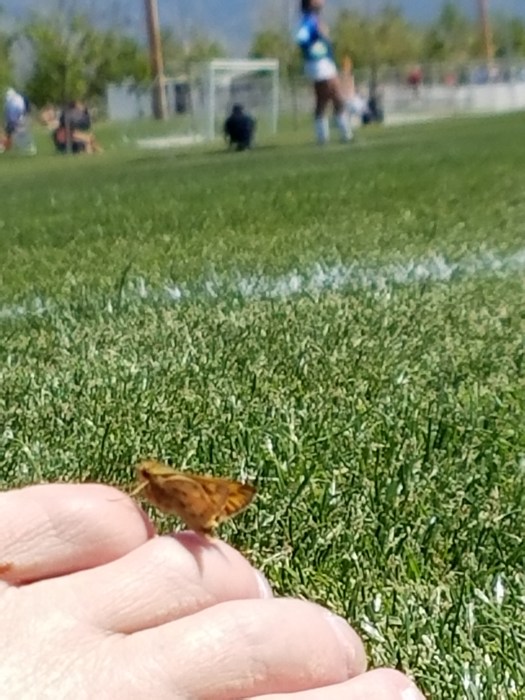
Butterfly wise

wp-1460852760274.jpg
In the days of our illusions

A certain shadow passes like a cloud momentarily obscuring the sun,

Its ray-beams struggling to burst free.

That darkness backlights the rolling images,

Reels of grass, sun and bare feet

Spliced with grimaces and shouts,

Cheers of hurray and way to go and not this time

Flash like solar flares boring holes in memory’s crust.

Dual reality of being here and gone, I

Split-watch now and leave this, then and thereafter–all behind, all ahead–

Like spinning wishes for days like these already gone in nostalgic longing,

While breathing the day’s passing–now–before future eyes.

Lazy time, lazy mind, the butterfly blinks and I am wise.

And then I am the grass, sun and bare feet–once again as never before.

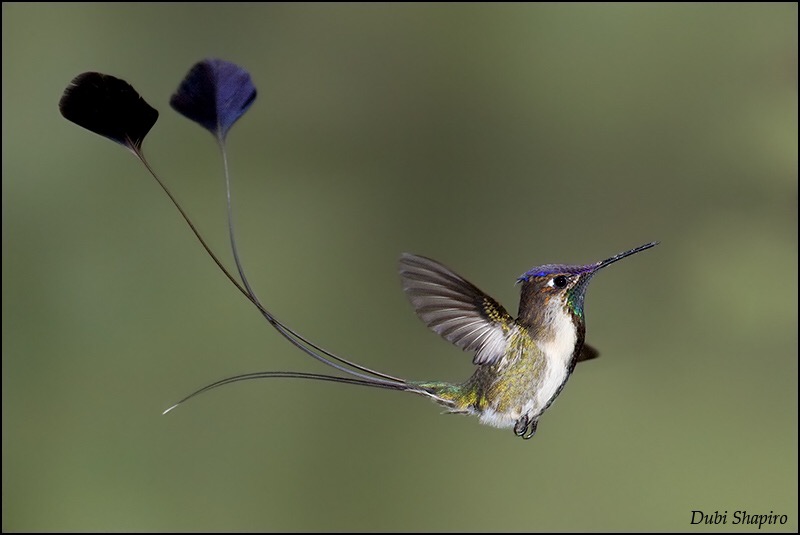
Joyas Voladares by Brian Doyle (for poetry month)

Still one of my all time favorite poems…


Credit: benvironment.org.uk


Consider the hummingbird for a long moment. A hummingbird’s heart beats ten times a second. A hummingbird’s heart is the size of a pencil eraser. A hummingbird’s heart is a lot of the hummingbird. Joyas volardores, flying jewels, the first white explorers in the Americas called them, and the white men had never seen such creatures, for hummingbirds came into the world only in the Americas, nowhere else in the universe, more than three hundred species of them whirring and zooming and nectaring in hummer time zones nine times removed from ours, their hearts hammering faster than we could clearly hear if we pressed our elephantine ears to their infinitesimal chests.
 
Each one visits a thousand flowers a day. They can dive at sixty miles an hour. They can fly backwards. They can fly more than five hundred miles without pausing to rest. But when they rest they come close to death: on frigid nights, or when they are starving, they retreat into torpor, their metabolic rate slowing to a fifteenth of their normal sleep rate, their hearts sludging nearly to a halt, barely beating, and if they are not soon warmed, if they do not soon find that which is sweet, their hearts grow cold, and they cease to be. Consider for a moment those hummingbirds who did not open their eyes again today, this very day, in the Americas: bearded helmet-crests and booted racket-tails, violet-tailed sylphs and violet-capped woodnymphs, crimson topazes and purple-crowned fairies, red-tailed comets and amethyst woodstars, rainbow-bearded thornbills and glittering-bellied emeralds, velvet-purple coronets and golden-bellied star-frontlets, fiery-tailed awlbills and Andean hillstars, spatuletails and pufflegs, each the most amazing thing you have never seen, each thunderous wild heart the size of an infant’s fingernail, each mad heart silent, a brilliant music stilled.
 
Hummingbirds, like all flying birds but more so, have incredible enormous immense ferocious metabolisms. To drive those metabolisms they have race-car hearts that eat oxygen at an eye-popping rate. Their hearts are built of thinner, leaner fibers than ours. Their arteries are stiffer and more taut. They have more mitochondria in their heart muscles—anything to gulp more oxygen. Their hearts are stripped to the skin for the war against gravity and inertia, the mad search for food, the insane idea of flight. The price of their ambition is a life closer to death; they suffer more heart attacks and aneurysms and ruptures than any other living creature. It’s expensive to fly. You burn out. You fry the machine. You melt the engine. Every creature on earth has approximately two billion heartbeats to spend in a lifetime. You can spend them slowly, like a tortoise and live to be two hundred years old, or you can spend them fast, like a hummingbird, and live to be two years old.
 
The biggest heart in the world is inside the blue whale. It weighs more than seven tons. It’s as big as a room. It is a room, with four chambers. A child could walk around it, head high, bending only to step through the valves. The valves are as big as the swinging doors in a saloon. This house of a heart drives a creature a hundred feet long. When this creature is born it is twenty feet long and weighs four tons. It is waaaaay bigger than your car. It drinks a hundred gallons of milk from its mama every day and gains two hundred pounds a day, and when it is seven or eight years old it endures an unimaginable puberty and then it essentially disappears from human ken, for next to nothing is known of the the mating habits, travel patterns, diet, social life, language, social structure, diseases, spirituality, wars, stories, despairs and arts of the blue whale. There are perhaps ten thousand blue whales in the world, living in every ocean on earth, and of the largest animal who ever lived we know nearly nothing. But we know this: the animals with the largest hearts in the world generally travel in pairs, and their penetrating moaning cries, their piercing yearning tongue, can be heard underwater for miles and miles.
 
Mammals and birds have hearts with four chambers. Reptiles and turtles have hearts with three chambers. Fish have hearts with two chambers. Insects and mollusks have hearts with one chamber. Worms have hearts with one chamber, although they may have as many as eleven single-chambered hearts. Unicellular bacteria have no hearts at all; but even they have fluid eternally in motion, washing from one side of the cell to the other, swirling and whirling. No living being is without interior liquid motion. We all churn inside.
 
So much held in a heart in a lifetime. So much held in a heart in a day, an hour, a moment. We are utterly open with no one in the end—not mother and father, not wife or husband, not lover, not child, not friend. We open windows to each but we live alone in the house of the heart. Perhaps we must. Perhaps we could not bear to be so naked, for fear of a constantly harrowed heart. When young we think there will come one person who will savor and sustain us always; when we are older we know this is the dream of a child, that all hearts finally are bruised and scarred, scored and torn, repaired by time and will, patched by force of character, yet fragile and rickety forevermore, no matter how ferocious the defense and how many bricks you bring to the wall. You can brick up your heart as stout and tight and hard and cold and impregnable as you possibly can and down it comes in an instant, felled by a woman’s second glance, a child’s apple breath, the shatter of glass in the road, the words I have something to tell you, a cat with a broken spine dragging itself into the forest to die, the brush of your mother’s papery ancient hand in the thicket of your hair, the memory of your father’s voice early in the morning echoing from the kitchen where he is making pancakes for his children.

Daddy Deep

wp-1460528910841.jpg
What sound makes hollow deep?

Not quite sound at all,

It is a missing knock, 

Soft and insistent,

Knuckles weak.

A buzz of silence

Just about where the t.v. 

Lies blank and mute.

A sneer faded to black

And a joke told 10,000 times

With a missing punch line

Or vaguely remembered,

Souring the laughter.

Questions unrelenting and inane

Will one day go unanswered

Not for lack of interest, 

Raised eye brow, 

Rolled eyes, but

For want of asking.

Some day the house

Will die without you,

Emptied of its anchor

And upturned root.

That day will gut us,

No doubt, but not today.

Not this day.

courtroom casino


A shivering mass in a cold-lit courtroom,
slunked skinny in government issue chair,
the lone “ring leader” sat in grim-lip stare.
 
Straight ahead at nothing in particular upon
a judge’s dispassionate immovable face, the
charged steered a red-rimmed vision eroded.
 
A shuffle, a gurgle, a sigh, a sniff and a cough,
and the whole matter was decided on a whim.
Scales tip in no one’s favor but the beholder.
 
A life’s mere matter, flesh forged in fire image
and fluttering time, like dust on butterfly feet.
And the revolving door justice spun 7’s today.