Freud’s Immature Orgasm and Other Myths and Truths

image

credit:  http://i.huffpost.com

Every day is a thrill to be alive, to be human–even when it’s not. Nothing pleases me more than settling into my writing routine each day with nothing on my mind. Reading around the Internet, then, is an adventure:  wide open. 

My day’s journey may start with poking around Facebook or Twitter to see what’s shaking in the world, immediate and distant, and then end with a question sparked by something I read, which then drives me to Google or some other engine, and so on until a shaped idea forms.
 
Today’s Facebook scan brought me to elephantjournal.com’s The Top 3 Secrets Women Tell Their Sex Coach. The word “sex” in the title did not pique my interest as I have read enough intolerably reductive “3 ways” articles about sex to last a lifetime. No, I was drawn to the idea of a sex coach.  My first thought:  “How much do they get paid and for doing what?”  All I could think of was my daughter’s soccer coaches yelling on the sidelines, “Move forward!!!  Now move back!!! Cross it, cross it!!” I recall paying them more than I could afford to yell at my kids. So is that what a sex coach does and what type of degree or schooling does that require? Are the final exams practicals? The possibilities are endless.
 
Goofball wise cracks aside, I read with an open curious mind and found the article while yes, reductive, not simplified. The three observations gathered from listening to hundreds of clients (wow, and I never even heard of a sex coach before this except for Masters & Johnson) were, in paraphrase, that women have difficulty having orgasm, they don’t like their partners’ touch but don’t know what to ask for and want to want sex more than they do. These three observations alone are not earth shattering news but the expansion upon each is worth the five minutes’ read.  
 
Summer Engman cites the porn industry, cultural dictates, women and men, the usual suspects, for  women’s lack of orgasm and realistic expectations. Again, none of this is revelatory to me so much as confirmation that my own intuition and vague recall of books I have read and lectures I have attended have not steered me wrong.
 
But the nagging thought persisted after reading this article:  It’s Freud’s fault. And I Googled just that. Aside from some hits I knew would appear, scrolling past Wikipedia and other usual fare with phrases “the immature orgasm”, I landed on Meghan Murphy’s It Happened To Me:  I Don’t Masturbate (But That Doesn’t Make Me a Bad Feminist) on xojane.com. While the title is intriguing enough, her insight and wit make this a worthy read and a nice counterpoint, sort of, to the tonal apogee, elephant journal’s serious arrival at sexual advice.  
 
Murphy’s take is she does not masturbate, does not feel the need, not wired that way, and to each her own. She is not offering advice so much as perspective. And not just that women are all different–duh–with different needs–duh–and different bodies and upbringing and anatomy, yadda, yadda…duh. She includes nod-your-head-in-an-amen tidbits like we know so much more about female anatomy now, i.e., the clitoris is not where and what you think it is because it’s way longer and probably parked in the vagina too, so Freud was operating in a clear deficit of information. He was mistaken. Women can and do have vaginal orgasms. 
 
I blame Freud for ruining everything for feminists who have vaginal orgasms (they’re the “mature, feminine” orgasms, he said, causing us all to rebel by only having “immature” clitoral orgasms).
 
Murphy’s saying so–vaginal dick-initiated orgasm is her thing–is neither proof nor an epiphany. But it is refreshing to read. Women (Hey, what do you know?) are diverse beings with a variety of pathways to orgasm. (Hey, what else do you know?) We don’t hear enough about that diversity.  
 
I am not disagreeing with Engman’s canvas of women’s sexual experience. I believe women of my era, specifically, have inherited a defensive posture toward sex from un or ill informed mothers and surrogate foremothers of second wave feminism, who were just trying to change the course of history, a tidal wave of oppression and missing or mis-information, kind of like steering a cruise liner’s direction with a wooden rowboat oar.  
 
So, I am content with my morning adventure into the too-often disappointing and disgruntling cyber world (maybe it’s just the ebb and flow of my moods) for today’s sea treasures I uncovered for my readers. I hope there is a tasty morsel there to savor (apologies to the non-pescatarian vegans) or something shiny to admire, at least.
 
Peace,
 
Gaze
image

For All the Scorned Women…

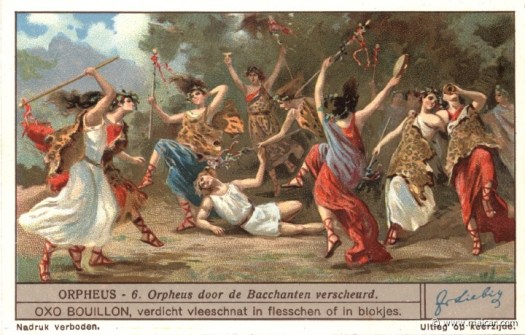
Just goes to show you I am not the only one who has muttered, “I’m going to kill that man.”  Women have been thinking about killing their men or any man for centuries and leave it to the great artists in Western history to bring that reality to life.  Seriously, the captions to these paintings in Gleeful Mobs of Women Murdering Men in Western Art History on the toast.net are the best part, unless you really do get off on cathartic dramatic renderings of raging women tearing men to pieces. Have a laugh and maybe pick up on technique 😉


Guest Post: Telling Everyone


credit:  http://f1.bcbits.com

The week after my husband told me he thought he was in love with someone else, I emailed a
group of close girlfriends with the news. My words must have been hysterical because the very next
night they stopped their busy-lives-kids-husbands-making-dinner-supervising-homework and told me to
meet them at a local café, which I did, where we sat and drank tea and I wept and wept and wept. And
they listened.

After that night, I decided that I simply had to tell people. Everyone. Anyone. My friends, my
family, his family, a few co-workers, the woman in front of me at the supermarket, the moms of my
daughter’s peers. I remember thinking that if I tell enough people, it won’t hurt so much. If I tell enough
people, no one will blame me. If I tell enough people, they will nod knowingly when we get divorced (or
when I kick him out, which I inevitably did, in my rage. He came back though. That’s for another blog
post).

And soon, hearing the news, friends and family began to react in ways that told me more about
them than about me and this infidelity experience. My closest girlfriends started to call, phoning to tell
me they love me, they are here for me, an invisible army out beyond the house where I can’t see them,
rows and rows of people who support me unconditionally, waiting there to hold me in my arms if I
needed holding or walk with me to happiness when I was ready to walk. My mom, in an atypical
expression of outward emotion, told me she would be there for whether we got divorced or stayed
married. A few friends, both male and female, told me they’d happily get in line to kill, maim, or
strangle my husband (one of them sounded uncomfortably serious). A couple of girlfriends admitted
they were so angry
with him that they didn’t know how they were going to work through that (they are
still struggling, I think, because their manner is different around him now). One friend never mentioned
it, not for the entire five months of the affair nor the following two years of marriage recovery; to this
date she does not bring it up or ask me how I am.

I know that my story, and my telling everyone so openly and forcefully, was terrifying to many
of our friends. “If this could happen to her, could it happen to me?” went the unstated refrain. “Would
my husband do this? Is he capable of such a choice?” No one ever spoke those words but I knew they
were there. My experience was a threat, something “other” that loomed on the edge of our nice middle
class world.

And yet. While this support was so beautiful, so unwavering, and so key to my eventual survival,
there was something missing. No one said, “Hey I’ve been there.” No one ventured, “My sister has been
through this.” I felt as if I was the only human on earth whose husband had betrayed her. Of course I’d
heard about infidelity in movies and books, with celebrities and politicians but I did not know
anyone else like me who had been through it. Anyone else like me: educated semi-suburban wife and
mom, married 20+ years, seemingly happy (though the marriage bore cracks) and basically successful.
Feeling so uniquely marked in this way was like a scarlet “I” (for infidelity) worn, invisibly, on my
forehead for an entire year. It was only later, once we began to rebuild our relationship and I started
sharing with people too about that effort, that three girlfriends came to me with their own infidelity
stories. Suddenly I was not alone.

Cross-posted on http://betrayedwivesclub.blogspot.com/, http://counselingwithcaroline.com/blog/, and
http://eldamlopez.com/category/blog/

Laura S.
Executive Director
Infidelity Counseling Network
www.infidelitycounselingnetwork.org 

Who Has Affairs and Why – Dr. Peggy.com


credit:  http://assets.nydailynews.com

For a compressed (succinct but thorough) breakdown of the profile of an affair with all of its moving parts and consequences, read Who Has Affairs and Why on Dr.Peggy.com, which includes this section that I particularly appreciated because the author, Peggy Vaughn, details data I have merely passed off in summary in prior posts as the various ways we inherit our cheating disposition:

Societal factors

Affairs are glamorized in movies, soap operas, romance novels, and TV shows of all kinds. Public disclosure of public figures having affairs is headline news because we are fascinated and titillated by hearing of others’ affairs.

People are bombarded with images of women as sex objects in advertising and marketing campaigns. Over and over, the message to men is that the good life includes a parade of sexy women in their lives. Women inadvertently buy into this image and strive to achieve it.

The lack of good sex education and the existence of sexual taboos combine to make it difficult for most partners to talk honestly about sex.

As teenagers we get conditioned in deception when it comes to sex—engaging in sexual activity while hiding it from our parents.

The code of secrecy is a major factor in affairs because it provides protection for the person having affairs and leads them to believe they won’t get caught.

She concludes that there are many factors that contribute to having an affair including “pushing” and “pulling” factors, drawing to or pushing toward it.  

In addition to causes and effects of affairs, there is a brief rundown on the naturalness of monogamy–or not–as well as advice on preventions, which is…guess what?  Right.  Honesty.   

There are other similarly succint, informative articles on the site to peruse for everything affairs related, Dr. Peggy’s specialty. Most are quick reads with easy-to-read and track headings, subheadings and bold font. It took me no time to read through the site and pick up on some of the advice and factual goodies she offers.  I hope you enjoy the site as much as I did.

Mere Mortals We Cheaters Be


Of course, Anna Jorgensen’s 4 Stages of Cheating & When it’s Warranted in elephant journal grabbed my attention, but, after reading it, I feel a bit betrayed myself. First, the title is terribly misleading:  “when it’s warranted”, according to Jorgensen, is never…unless your life warrants it. In other words, it’s complicated, not surprisingly.

Second, the 4 stages of cheating she outlines are pretty obvious. No, the most interesting insights of this article are found in her off-the-cuff wisdom culled from personal experience. Mentioning her three observational points of view, conspirator, cheatee and cheater, she confesses the following about being cheated on (the cheatee):

I also don’t know if I was more bitter about the cheating or the lying. Lying makes me pretty bitter.


Lying makes most people crazy. Social brainwashing and the human tendency toward compartmentalization are partially to blame for that toss up, deciding which is more insanity-inducing. One may eventually understand the cheating, sexual urges and all (media reporting cheating is a fact of life), but the lying is almost always interpreted as conscious, decisive and lacerating. Lying is a knife in the heart of trust and often taken as a sign of a deeply flawed character. 

An insane world is one where truth and falsity are in constant flux, making for a meaningless existence. When the lying is revealed, it not only induces shame and blame, punched-in pride and cries of victimhood, none of which help to expedite healing, but turns the world upside down, leaving the “victim” paranoid about her own failure of instinct and understanding. She often becomes defensive and mistrusting. 

In truth, cheating IS lying–to self and others.


Jorgensen avers cheating is never warranted and argues an either-or fallacy:  fix it or forget it.
When Cheating is Warranted

It’s not. Cheating is never the answer; if only because it ultimately won’t make us feel good. We’re far better off to figure it out or part ways peacefully. Of course, that’s way easier said than done sometimes and all my experience and those of others will never replace your own experience. That’s how life works.

Strikes me as a rational imperative: work on the relationship or get out of it if it cannot be worked out. And yes, easier said than done, especially when children are involved. Balancing the needs of two people is incredibly challenging. Three, four or more components to the equation is far more difficult. Now add some children or parents with all-consuming special needs or a spouse with a congenital, contracted illness ten or twenty years into the relationship and see how the formula of fix it or forget it comes out. Jorgensen acknowledges the fallacy and backtracks from her hard stance to a more philosophical one.

If the issue were black and white, the conversation about cheating would be over.

The Blame Game: We Lose

Also, never blame the cheater. Or the other person. No blame, or blame both parties in the primary relationship. No matter how perfect one partner may seem to be, it’s a two way street. Ladies, if we hold out on giving our man the cookie, we’re asking him to cheat (eventually). Men have very few needs (primarily freedom, respect, appreciation, food, sex) to be content, but they will even put up with a lack of most of those to a large degree if they’re getting sex gratefully. Put out (happily) or put up with a cheater. I’m aware this will ruffle some feathers. I’m not saying we can never say no, but I am saying we’d be best off to not use sex as a weapon or bargaining chip. As a bonus, working out differences between the sheets is a lot more fun for both team mates.


Again, I like her homespun advice imbued with personal experience. My head nods when I read this excerpt, but my knee-jerk doubt scoffs at such an assurance of life operating in neat little stereotypes. If it is that easy to appease men, then there wouldn’t be much to write on cheating. Psychologists would go broke. 

Though, I have been told by many men that this is what wives must do to avoid infidelity: be an avid sex participant. However, each man defines “avid” and “participant” vastly differently: once a day? a week? smiling?  Most men, I suspect, are more complicated than “just feed, bathe and sex me.” 

Some men have emotional cheats that remain purely emotional. Others may have been drawn initially by the emotional support, recognition and respect perceived as missing from their relationship, appreciation for which they later translate into physical contact. Or some men are drawn to outsiders because they are outsiders, plain and simple. 

There are innumerable sources to the cheating complex just as there is an unlimited spectrum of flavors of men and women, combining in infinite ways. Hyperbole, maybe, but so is reducing men to primates.

Some humans are excellent comparmentalizers. They see the world in boxes and parcelize people into um-teen utile categories. The impossibility of the composite picture, of the ideal fed to a population, is culprit, in part, to infidelity. 

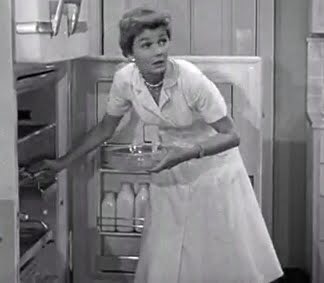
Think of June Cleaver with her clean white apron, Laura Ashley styled cotton dress, string of pearls and freshly swept up-do. She stays home all day scrubbing floors and baking cookies for the Beav, but keeps herself on-the-ready attractive with her pearls and dress for her husband’s whims and desires. She is saint and sinner. She is a symbol of the impossible ideal of an era. 

We aim too high, are fed too many fairy tales and told too many lies from birth. Thus, I say the aggregate behavior of a culture is partially to blame for cheating. We are inculcated to it. 

It is complicated. I have been beaten down from my high horse long ago. Personal responsibility, determination and justice used to be the cure-all in my mind. Judgments flew from great heights. But there is nothing like life to equalize: nothing like getting my ass kicked up and down the halls inside and outside of courthouses, by attorneys, judges, clients, business associates, trusted friends, lovers, brother, sisters, children, strangers, parents, spouse, and nature at one time or another to afford me humble perspective.  

The conversation is critical. Keep talking, observing, listening and starting anew, I silently affirm daily. Be flexibly firm, empathic and self-doubting while amused, I often think. Aspire to be the acme–saint June Cleaver–knowing the inevitable shortfall. It is all anyone can do in the face of the mystery and misfortune of mere mortality.  

“How I Came to Identify with my Husband’s Mistress”


credit:  izquotes.com

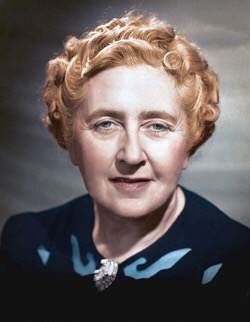
Dogs are wise.  They crawl away into a quiet corner and lick their wounds and do not rejoin the world until they are whole once more.  Agatha Christie

A well written piece in The Huffington Post, Sophie Rosen, writing for divorcedmoms.com, takes her readers through her transformation from a jilted wife railing at her husband’s mistress to knowingly tasting of the same forbidden nectar in How I Came to Identify with my Husband’s Mistress.

The article starts with the confrontation, suppressed rage:  “Are you fucking my husband?”

But then she settles into the reflective tone she adapts to chronicle moving through her thought process.

More than my husband’s actions, what I found most curious was his mistress’ lack of remorse, remorse for her part in a marriage’s end, especially where three young children were involved.


She ponders this idea that sticks in the craws of most who weigh in on the subject. What is the responsibility of the mistress to her lover’s wife? The clear dividing line is between those whose policy it is to never go near a married man and those who do. Rosen enters the nebulous area of those unknowingly lured. What of those who get involved innocently, or blindly? Again, the choice can be as clear as the no-married-men-no-matter-what policy or the struggling or not so struggling cost-benefit analysis of a relationship in those three-way circumstances.   

Some might disqualify a liar on the grounds of failing the integrity test, considering the future-going prospects of someone who starts a relationship with deceit. Others may evaluate the relationship in terms of the state of the marriage, i.e., waning or holding steady, and the aims of the parties. Two may simply share time as they may until it is no longer viable to do so.  Much depends on the parties’ intentions and expectations, which, of course, tend to be as fluid as Rosen’s in the end.


Within every lie there exists its opposite — the truth. In my eyes, this was it. The truth I saw that evening came in the form of a man desperately looking for the attention and appreciation he was obviously not feeling at home, likely why he exuded such warmth when we first met and the chemistry between us was so heated.

Empathically, Rosen “sees” the lonely man, acknowledging her own loneliness, and grows an understanding of why someone might seek comfort in another who can provide it, despite his allegiance or vows to another who no longer does. So much, to me, depends on the honesty of the individual confessing his truth and the self-awareness to do so.

Indeed, if we are not careful, marriage can become the loneliest place on Earth. I know.

Though Rosen spends only one night with someone whom she suspects lied about his marital status, she does earn valuable insight about the complexity of marriage, monogamy and human beings.

Today I question whether my husband’s mistress is the same homewrecker I had once thought.

Putting herself in the position of her husband’s mistress even momentarily or to the degree that she felt appropriate–she is not the same woman as her husband’s mistress, obviously–she concludes that the fault cannot be so easily attached to one person in a triad of lies and need. Though omitted, the underlying foundation of Rosen’s conclusion is the realization of her inattention or unawareness, her own part in the destruction of her marriage

My husband and I seemed to do a pretty good job wrecking the home we had built together without any of her help.

Perhaps I have been too much a subscriber to cause and effect, but my assumption about cheating and divorce has always been that something was wrong whether it was the character of one or both parties, self-delusion, denial, youth, mid-life crisis, incompatibility, unrealistic expectations, the failure of monogamy, fateful accidents or illness or any number of life circumstances providing the impetus.The client who tearfully confessed he or she was blind sided by the cheating, that everything seemed fine was suspect. I could not help but flash on whether the person before me was willfully “blind” in some way. 

Perhaps the cynicism of the job ripened the seeds sown in me at birth.  Or maybe I was to some extent right.

We get caught up in life. We fail to open our eyes wide enough, a self-imposed squint implemented to maintain focus on the daily business of getting through the days. How can we expect to “know” ourselves let alone the other one we have sucked up into the motion and madness, scooped up and absorbed as if two were only one?  We forget our spouses were once human beings we wondered about and ached to discover.    

It is easy to say with conviction that cheating should never happen. Accepting why it often does is what remains a challenge.


She does not excuse behaviors, anyone’s. She stops short of rationalization, only hinting at her own one night allowance and commendable perceptiveness in suspecting a lie when she smells one. The take-away is the understanding that snap judgment, the black and white of it, is an unconsidered stance, too raw. Empathy, compassion and reason gathered her into the grey.

“When the Best Sex is Extramarital”


When the Best Sex is Extramarital by Lawrence Josephs, a New York psychotherapist, chronicles the study of one patient, Cynthia, who, though married to a devoted husband and father of their two young children, begins an affair with a co-worker. Sex with her husband is reported as “boring” while she claims to have had the best sex of her life with her lover, Neal. When Neal suddenly dies of a heart attack, she is left to mourn him in secret, which drives her to the therapist, Josephs, who makes her realize that her work is in reinvigorating her sex life with her husband. 

Other than the therapist’s inserted judgment of the deceased Neal, which I found disconcerting, the article drew intriguing insights into that long-perceived dichotomy of good love vs. good sex. Apparently a Freudian, Josephs cites the good father of psychotherapy on love and lust:

Freud claimed that people often split love and lust. It is not uncommon to have great sex with someone who isn’t lovable, or to have a trustworthy loving relationship with someone with whom the sex is boring. Recent empirical research shows that individuals who exhibit high degrees of narcissism, like Neal, have difficulty integrating love and lust in a single relationship. This is also true of individuals, like Cynthia, who are “avoidantly attached” — they can’t tolerate the vulnerability of being intimate with someone on whom they are dependent, and so they create a self-protective distance from their partner.

The latter term “avoidantly attached” is not a phrase with which I am so familiar and since Dr. Josephs does not define his term or discuss how he reached the conclusion that Cynthia was “avoidantly attached,” I had to research.

Avoidant attachment yields two different separate behaviors: “fearful” and “dismissing.” Fearful avoidants have a negative self-image, but are also passive and dependent; they actually want intimacy but they are also desperately afraid of being hurt and distrust others. Fearful avoidants are the hardest category of insecure people to deal with in a relationship since they send out a mixed bag of signals. The dismissing avoidant has a more positive self-image but would agree with the following statement: “ I am comfortable without close emotional relationships, It is very important to me to feel independent and self-sufficient and I prefer not to depend on others and have others depend on me. “ These working models affect individuals in myriad ways.

In the article with the above excerpt, Avoidant Personalities Destroy Relationships, author Peg Streep later notes what we all know: people marry their opposite sex parents. Hearing this early on in my dating days, I thought I was safe in that I married someone so different from my father. But having lived with my father the last few years, I realize I am mistaken.  

My father, when physically present on those rare occasions he was not working or sleeping, was not a warm, accessible guy when I was growing up. As an adult, I was more relatable to him and he showed a very warm, sentimental side amidst his general crankiness and abusive language to not only my mother but all of his five children.

But that overly sentimental side lurched between the nasty brutal cutting side, which later showed me that he is simply incapable of relating to others, incapable of truly attaching. He either loves you or hates you depending on what you have done for him lately. Then again, how could he have learned how to attach when he was one of 9 children of scraping by parents?

So it’s no wonder I married someone devoted yet aloof and emotionally unavailable, he coming from parents who were the same. My mother, at least, was very warm and affectionate, but very busy with five children. I, being the middle child, fashioned my world, my niche in this enclave, as the independent one who needed her least so as to caretake her some. I still do.

All arrows point to the “dismissing avoidant” in the mirror, but the arm chair self-analyzing therapist is a lousy therapist indeed.

What do you do when the best sex of your life is outside of marriage, but you still want the emotional security of a stable long-term relationship with someone you love and trust? I’ve worked with a few couples over the years who have been able to make an open marriage work, but most people, even those who think they might want such an arrangement, are too insecure and jealous to do so.

Interestingly, Josephs does not discount that an open relationship could work, only that most people are too insecure and jealous to succeed. But how about two people forced into honestly engaging with each other about their needs and inability to fulfill them? What about those forced to stay together despite a lousy sex life because they have higher responsibilities to fulfill, like kids and aging parents? 

Cynthia decided to work on her sex life in couples therapy, but how often does that “fix” an ailing sex life? I don’t have the data, but I do have a couple dozen years in divorce story land. My gut and experience tell me that many couples do not work out a sex life even after proper diagnosis and willingness to do so.

Sex is as mysterious as it is natural or primal.The complex of psychological, emotional, intellectual and physical cocktails that make some sex the best and some the worst is rocket science or voodoo to me. Honesty is critical to a healthy sex life but not easy. How do you instruct someone you love how to kiss you or please you, especially if you don’t really know how to instruct or what you need–for example, young teen or twenty something starter couples?  

Sometimes the circumstances are such that two people want to stay together, perhaps at first for the kids, but later for more reasons than that; maybe there is no one out there to go rushing to that’s any better suited or as time tested as their marital partners, despite the dead sex life. Though the two may feel jealous and unwilling, they both know and are open to sex outside the marriage. And when they do so, in time both parties become acclimated. Exigencies make it work at first and time settles everything else afterward.

Freud claimed that children are emotionally possessive and jealous creatures who don’t like sharing their parents’ affection with anyone else. As a clinician I try to keep an open mind about romantic partner sharing, but when it comes to our spouses, it seems most of us never outgrow being fundamentally childlike in our possessiveness. At our best we learn to refrain from doing things that would make our spouses jealous and insecure, despite our temptations, and when they make us jealous we try to restrain our hostility, despite our hurt.

This would describe the majority of people most of the time and some of the people some of the time. I can remember being jealous of my husband’s friends, the coveted time he spent with them. When we separated and I dated someone else, he was jealous. And later when we reunited and then agreed to an open marriage, we were both jealous at times, but knew it had to be this way and so became inured to seeing other people come and go in our communal lives. The other option was divorce, which was clearly unnecessary.

We talk about our lives, but do not open up to each other much emotionally. He has always struggled with articulating what or that he feels. Yet, we provide each other the steadfast support that allows security, safety and adventure too–time tested love and respect–immeasurably comforting.

The best sex of my life has been with those I have been most emotionally connected to, felt the most love for–at that moment of enjoyment. With some, it has been easier to have great sex due to chemistry (scents, voice, hormones) or physical compatibility, similar aims, fantasies and spirit. Those relationships that afforded the greatest sex were firm, committed, yet clearly not forever. Perhaps the attachment avoidant in me has made that so.

Feminism Does Not Ruin Anything; Fairy tales do.


Emer O’Toole’s Ten Things Feminism Has Ruined for Me in the Guardian is a well-written satiric yet sincere read on what feminism has spoiled–mostly fun–for this writer from her cat to Catholicism to marriage and monogamy. While humorous, she raises some insightful conundrums in compromising that space of the political to enter the more relaxed place of “Hey, it ain’t correct, but it feels good, so I’ll just shut my mind off.”  
More than the insights and complaints, I love how she works through her queries in writing, watching the process of working through each dilemma. Here is just one example:
You’re a feminist. You’re questioning the gender-related norms in the world around you, trying to figure out which ones are oppressive (eg, sexual objectification; domestic violence; workplace discrimination) and which ones are OK (lipstick). And you begin to feel that a social system in which people claim rights of sexual ownership over each other’s bodies, and get very angry when these exclusive rights are violated, is a system so deeply imbued with patriarchal capitalist ideology as to make gender equality impossible.
So she recognizes the inherent intransigence of an institution, monogamous marriage, so deeply embedded in the larger socio-economic practice and mindset of a country that values possessions including others’ bodies, which is rife for abuse of women in a patriarchal society.  Men still run things around here. Marriage based on ownership filters down to men owning women and children, which was literally true only about a hundred years ago. Women were chattel as Kate Chopin’s ‘”Story of an Hour” reminds us.
Though, I do not doubt that two people can agree that they each have equal “ownership” rights over each other’s body and enjoy those rights, even with jealousy and possession as the basis of policing that arrangement. Two individuals cognizant of their needs and boundaries and respectful of the same in the other certainly can make monogamy work within the patriarchy of capitalism and monogamy. Like everything, it depends on the people entering into and honoring the agreements they make with continuing communication and monitoring about their arrangement when it is not working.
You take your head out of the theoretical clouds and look at the grounded reality of monogamy. You see lying, cheating, shame, even violence, and you think: is this because of love? Or is it because of the idea that we own the sexual function of the people we love? Love should make us happy (I’m looking at you, Anna Karenina). Yet jealousy, so often an excuse for abuse, is romanticised by the logic of monogamy, while love is vilified. Surely, with compassion, commitment and communication, we can find the courage to love differently. Polyamory is the future!
I do not know that romanticizing jealousy correlates to vilifying love, unless she means generally monogamy leads to jealousy and people focus on the keeping possession of bodies rather than the love that binds each to such an arrangement in the first place. Unless she means that love that someone can give to others is curtailed by having it wrapped up in only one other being. There are so many people one comes across in life, many lovable people, and yet many bargain away their love in an exclusivity contract, which seems rather unnatural and doomed as insurmountably contrived and unnatural.  
Polyamory, she applauds as the solution, though too quickly. The same kind of honesty and open communication, continual monitoring and negotiation that works for monogamy pertains even more so, even more than doubly so, to polyamory where there are more moving parts to consider. More people means more agreements, which inevitably means more of everything good and bad.  Polyamory is not for the lazy or the self-deluded. It is not an excuse to go fuck anyone you want as some do parading under the banner of polyamory. You know who you are. 
Compassion, commitment and communication are a lot of bloody work, though. Primary partners, secondary partners: all replete with complex emotions. Sometimes, at 1am on Friday night, when you just want to be out dancing with your friends but are, instead, “processing” with a partner new to poly, you wonder, ‘When did life become one long conversation about everyone’s feelings?’ You remember being 21, and trying to stop your boyfriend from punching a bloke who asked for your number while he was in the jacks. Brutal, yes, but alluringly simple.
Right. Sometimes you want to just fall back into easy patterns, even ones designed, implemented and perpetuated by patriarchy. The familiarity of it is enticing and the noble notion of chivalry is romanticism we have been fed since birth. 
Conscious choice to engage in agreed to relationship roles is what it is all about. A feminist is someone who believes in entering into relationships of any form or context, personal, career or academic, armed with information and analytical skills to see through the sedimented, unthinking practices of our culture. That practice does not have to be a battle within the self so much as a vigilance, an intellectual awareness directed to many aspects of life, not just spotting abuse. We are not dupes to advertising when we know what advertisers are up to, and yet we submit and purchase what’s for sale knowingly and willingly.  
Relationships of any kind are no different. I may submit my body to my partner’s jealous possession knowing all the implications and consequences thereof, and still sleep at night. The problem is not so much monogamy as much as it is about fairytales’ forever after. Humans want to nail down something for life:  this is the way it’s going to be so that I don’t ever have to think about that again.  It’s an insecurity thing. Again, it takes honesty and constant checking in with the self to see if the same old patterns are actively and consciously working or just mindless habits. That practice of checking in is a constant of good living. That is feminism in practice.

Luck of the Mistress – Nelly Ternan

IMG_0373
credit: biography.com

“These things cannot be written with a quiet hand or dry eyes.” Nelly Ternan

Sometimes it pays to be the mistress, especially to someone famous. Though the movie is a couple years old now and the biography much older, the Nelly Ternan story is a prime example of the sometimes advantageous position of the mistress–or so it would seem. In reading on the web, the facts vary slightly but all agree that she moved from actress to mistress to the rest of her life and onto fame and history without so much as a hitch. Of course there is so much to flesh out of these bare facts of Ellen Lawless “Nelly” Ternan, Charles Dickens’ mistress. If there is punishment, divine or otherwise, meted out for playing the role of mistress, this one seems to have gone unpunished.

According to Claire Tomalin’s biography, Ternan is born to a family of actors who tour the country even after the father dies in an insane asylum. One day Ternan, later acting in a burlesque show, is spotted by Dickens who casts her and her sister in his production of The Frozen Deep. Dickens, then 45 and married with 9 children (later 10), falls for the 18 year old Nelly, and they end up having a 13 year affair–though biographers differ on the nature of the relationship as Dickens himself took great pains to keep the circumstances of his estranged wife and his contacts with Ternan Victorian scandal proof secret–yielding one still born child from Dickens, who later dies, leaving his mistress money in his will. Ternan then moves on to marry a clergyman ten years her junior, with whom she has two children before he dies and she goes on to join the anti-suffrage movement. She dies of cancer at 75 years old. In 1913, that’s a pretty good long time. Much later, in 2013, a movie about her, The Invisible Woman, airs detailing her affair with Dickens, based on Claire Tomalin’s biography.

She lived 75 years, got married, had children and a long term love affair with a famous author that yielded her money and fame as long lasting if not as ubiquitous as Dickens’. She even got to campaign for her own political beliefs in her retirement. What a great story of American come uppance by being in the right place at the right time. The facts tell the story of a game with the score: Nelly 1, wife Catherine Dickens 0. Mrs. Dickens does not get her own write up and movie. No, her story is told through Dickens’ viewpoint. She goes down as the fat, grumpy woman with whom Dickens had 10 kids and then became dissatisfied for her lack of “ardor,” which is how he characterized his failing marriage at the time of meeting 18 year old Nelly.

Fame, fortune and history are random that way. Nelly’s story seems to reinforce that idea. Although, who can read between the mere hollow facts to see the story beyond the margins of the biography: the strife of being a young mistress to a much older demanding man of fame, his stress and the risk of both their reputations, or even the probable contentment of Mrs. Dickens being set up in her own apartment away from her dissatisfied husband who impregnated her ten times and left her to raise kids who likewise suffered the mortification of this hardly contained, much as Dickens tried, affair. One can only imagine the story behind the story. Unfortunately, the love letters between Dickens and Ternan were destroyed. In those letters lies the real story, I would like to believe, which is the story of passionate, irresistible love.

I Yam What I Yam

IMG_0371
credit: walkingwith.net

I have to say, I wish I had written this article What Not to Wear After Age 50: The Final Say by Michele Combs in the Huffington Post sent to me yesterday by someone who truly cares–the same one who sent me the original article this one counters.

Google ‘what not to wear after age 50’ and you will have your pick of thousands of articles telling you what looks terrible on your old ass body.

It’s not just Combs’ tell it like it is humor and irreverence that amuses me or the supportive message of the sender of the article that entertains me with a big ole “right on!” in reaction to this writing. It’s that it is truth, not just defensiveness disguised as truth or solely my truth.

Just as there are rites of passage for 13 year olds becoming men or women like Bar or Bat Mitzvah’s, symbols of acknowledged or expected responsibility for being part of the community of adulthood and baptisms by fire with the drunken night out or at the porcelain pedestal on a 21st birthday, signifying responsibility to the community’s recreating populace, so too there is a rite of passage for older adults, women over 50, in particular: becoming themselves.

50+ women who dress for themselves, to their own comfort and feel-good production, are totems to younger women, a signpost of what’s ahead for them, and encouragement to keep up the good fight of daring to say, “but this is me.”

So much struggling and striving and settling in the 20s, 30s and 40s, in living for others–parents, children, friends, lovers, employers and parents again–I have to believe there is some culminating prize for the effort, and I’m not talking about retirement. Retirement is an illusory carrot invented to keep people from walking off into the night or out to the desert to leave society just when (American) society wishes their less “productive” asses to leave.

Wearing the I don’t give a flying fuck because I’m comfortable style is the reward for a life too long lived giving a shit about things that don’t matter–like how we look to others, the messages our clothing and makeup (or lack thereof) send to others so that they can properly label us and act accordingly. We figure this out when the physical and mental wanes just as the emotional waxes.

You are over 50 for fuck’s sake. Wear whatever you want

Trending with or against the current style dictates for age appropriateness is a choice for the 50 something that she has earned–real choice. She has only one message to send if she has paid her dues to harvest the fruits of her life long burns and labors: I yam what I yam. And perhaps her legacy is in planting seeds in her progeny to do the same.

If I could beam one insight into my daughters’ beings it would be: Stop curtailing yourself to satisfy others. The sooner you allow yourself to be yourself, the longer your happiness will be.