The Day’s Disorder

 
The disordered day already under way
carries my mood under ground in coal,
lanterns out, miners gone home to sleep
and me left to rest with the morning dew
in this tram car stalled and waiting for day.
 
The turnaround east side of the tunnel
approaches slowly, nearby dim neon
growing warmer and fanned expansively
filling the grey night with airy luminescence
on a day when chaos tripped like a switch.


Photo credit: http://4.bp.blogspot.com/

Just–in time

She barreled through the classroom because she was a barrel, as wide as she was tall, and she was tall. Young, vibrant and cheery with an obvious eye for the boys in the classroom so much so that even I knew at a sullen and cynical 14 that she craved attention. Perhaps her size measured her insecurity.

She had ink black straight hair, long, parted in the middle falling down her back. Her thick black eyeliner matched the color of her hair and framed her deep brown crinkling eyes. She smiled a lot, teasingly–especially with the boys.

I resented her flirting in slight sexual innuendo, all for male attention, just like I disliked my mother’s constant catering to my father who, in return, called her “fat ass” or “sumbitch.” An adolescent of the woman warrior seventies,  I believed in taking no shit. Miss Hill’s pandering to the scarcely post-pubescent boys was shit; it annoyed me, which conflicted with the attraction to her enthusiasm for my favorite subject, English.

I wanted not only to like her, to take her seriously, but for her to notice me, despite the quiet and unprepossessing persona I wore at the time. An ‘A’ student, I yearned to be recognized for my smarts–my perceived strength.

“This is a wonderful piece, something I can see Janis Ian or Carole King singing,” she scrawled in large, deep-ink flourishes in my journal. She had assigned a journal at the beginning of the year, instructing us, the class, to write our thoughts–whatever we wanted–just to incent us to write. With such loose parameters, I wrote poems, cherished song lyrics, doodles and observations, all of which added up to my solitary, dark, introverted teenager dreams and drama.

Music–all kinds–made my world back then: everything from hard rock/metal to folk to classical. Before that sophomore year, I was a cellist. The local elementary school offered music lessons to third graders and so I learned the cello (after the music teacher grabbed my hand, looked at my long fingers and decided cello it would be instead of the violin I and everyone else pleaded for). I played second or third chair in the orchestra throughout my school years up to 9th or 10th grade when I perfected a full time recreational weed and boys pastime.

I especially loved fine lyrics: the poetry of Joni Mitchell, Neil Young and Dylan. That year Phoebe Snow sprung on the scene with Poetry Man, which prompted me to buy a couple of her albums. Her warbling jazz-soul sound, intoned from a space between her nose and throat in the register of a deep tenor or high alto, intrigued me. And some of her lyrics spoke bitter-sweetly about disappointment, fear and inadequacy. I felt her.

One song in particular consumed me so that I memorized the lyrics after too many spins of the vinyl. The title described my life–as I felt it: “Inspired Insanity.” The piece still holds a foundational place in my music history more for its statuesque placement from an impressionable youth and sentimentality than for its musical appeal.

In fact, a friend recently asked me to name a favorite song–seemingly impossible–but for the qualification that it somehow represent me. Instinctively, I named “Inspired Insanity” more likely from habit or history than actuality, but it was the first song that came to mind.

I’ve since moved across ample fields of genres and artists to add much more sophistication and style than her simple folk-jazz temperament into my listening repertoire occasionally moving back again to folk, where music returns time and time again: think Tracy Chapman in the 90s, Iron and Wine a few years back and some of the ballads of current bands like the Weepies of the Indie folk rock genre.

It must have been what I was going through at the time as a moody self exiled 14 year old in a New York winter hibernation, either loneliness, disconnection or generalized angst about me in the world. But the song spoke the yearning inside: “Help yourself to my new clothes. Borrow some of my daydreams too…You can call me hung up but when I call you, don’t hang up the phone…Come visit me, inspired insanity.”

Perhaps I felt taken for granted. Or simply taken. My mind did not register quickly enough all the outside motivations, what strangers or acquaintances wanted of me, and so I created misunderstanding. My intuition absorbed into analytical musings always. Books not people amused me, made me feel lucky, desired, understood…made me feel. People were not my strong suit. But 14 year olds generally don’t do people well.

I only knew I craved attention for what I could master, and I excelled at school. I had cracked the code of teachers and books long before, so I kept my eye on the coveted ‘A,’ did what I had to while enjoying some of it along the way. My ‘A’s’ were the teacher nods that validated me.

So at mid-year, when I read her praise, replete with exclamation points, next to the journal entry containing the entire neatly penned Snow song, I silently shrieked, panicked with the horror of the mistake.

“She thought I wrote this?! Oh no!!”

Instant shame, embarrassment, fear and flattery combined to redden my face, flushing heat all the way down to my ankles.

It had been painful enough to deliver my thoughts and poems to her, a stranger reading my creations, my penned pretties, not just the usual rote academic scribblings, but I consoled myself in safety of the teacher-student relationship. I trusted she would never ask me to bare my soul only to betray me by reading my work to the class. She may have even given such assurance in assigning it.

Not like in 9th grade when Mr. Rowe announced to the class that the creative project would be performed or read to the class. Back then, I combined my two loves, writing and music, and somehow mustered the courage to play a recording of a song I wrote and performed on the guitar. The ballad told the story of an assigned text, A Single Pebble, the Yangtze River Chinese gold miner who braved the forces of society and the river and lost (unless you count the immortalization by John Hersey). The image of my reserved former self does not comport with that project choice, but the certainty of the recollection cannot be denied. I can still sing some of the song.

But the song in 9th grade spelled pure victory in an earned ‘A’ for work performed, finished and collected. If memory serves, mention of using the song to accompany the reading for future classes echoes proudly (whether real or imagined) in my mind’s ears.

Not so this mistaken praise. Though mortified, my ego beamed with the attributed talent of writing such a song, which translated into the belief in me as a poet–or a songwriter, at the very least. I could not help but conclude that the other poems in the journal led her to believe so. Otherwise, how could she not detect the difference in style, the clear polished finish of the one song compared to the other driblets of word leakage (the estimated worth of my creative endeavors)?

So, though I feared she would discover the song some day and judge me a fraud–burned with the humiliation of that thought–I did round back to the idea that she presumed; I did not misrepresent. I assumed she would figure it all out, while simultaneously dreading she would not. I had little faith in human capability or not enough experience to realize that she most probably would not even remember the whole incident. She, a 22 year old, teaching her first job probably, had more to do and think about than one song in one journal of her dozens of students in several classes.

However, the scene often played out in my mind of her buying the album and hearing the song, so familiar in some way, and not knowing why. Or, the flash of recognition coupled with memory of first reading the song would conjure up my image before her eyes: the quiet student who dressed in coveralls, flannel shirts and construction boots (the original Doc Martens) and wrote poetry. Would she color that image with respect for my musical tastes or disappointment in the assumed attempted fraud perpetrated on her–even if the assignment was ungraded?

It doesn’t matter. I know. The minuscule moment magnified in my mind from teen hood speaks louder to the undigested lesson, the latent effect of that experience. Somehow I registered (or chose to) that someone recognized me as capable of producing publishable work, something as good as Phoebe Snow lyrics (which in hindsight proves less poetry than song, raw and unpolished; I mean her lyrics without the voice through them fell short of spectacular). The 14 year old me sensed the twinge of an inkling of a promise: perhaps I too could create something worthwhile, a source of another’s delight or ease of sorrow.

If only I could withstand the collective gaze of others.

Eventually, I did adapt to scrutiny. Inspired by past small successes and fleeting acts of bravery, I pushed myself through the paralysis of stage fright, figuratively for me but very real for Phoebe Snow (and Joe Cocker), and performed, wrote and occasionally sang for my living and others’ entertainment.

Real inspired insanity–sometimes frenetically and other times serenely–produces beauty, wisdom, advice or instruction. Its seeds can be found in frozen undetected time tucked in between the blinks that flutter chaos and creativity, and sway a life to the left or right. Perhaps the heat of a blush imprinted a dormant notion that unlocked itself in time, just at the right time, when I began to write–without fear.


image credit:  http://wewantedtobewriters.com/wp-content/uploads/2012/05/Chron-Higher-Ed.jpg

Penises in Men’s Fashion


Here’s something you don’t read every day? Why the penis is having a moment in men’s fashion. Simon Chilvers explores this tantalizing title in today’s Guardian.


In January, at Rick Owens’ Paris fashion week show, penises swung gently down the runway. The designer – who has a made a career out of creating highly expensive leather jackets – sent out several models minus underwear in tunics featuring peepholes, cut to reveal their genitals.

There is nothing like the mention of genitalia in a headline to draw a reader in. No words other than maybe an f- bomb will pique curiosity as much. Penises, in particular, however, are not often blatantly dangled before the public eye compared to the endless preoccupation over women’s body parts, how they work and why they won’t work when they are misunderstood, in particular. Now place penis in the same sentence as “fashion world” and no one can resist sparing the ten minutes to read on.


Rick Owens’ motives are questioned and critiqued in this article:  Is this penis-peephole style production a publicity stunt or truly thought provoking work? Unquestionably, I am ignorant, but in the fashion world that I am hard pressed to believe values intellectual or activist stances in clothing styles over promoting profit-making, I lean toward the former, not the latter.

Owens, for one, claims his motivations were pure: “I was just questioning why we keep penises concealed and why exactly it’s bad to show them,” he tells me. “The social rule to keep the penis hidden just gives it a power I’m not sure it merits. But isn’t it great when something is sacred and profane at the same time?”

The bigger question: Why do Puritannical attitudes toward nudity still exist in this country? And does over exposure to penises and vaginas desensitize viewers to the intimacy associated with those parts or is that a line just to keep the pornography biz going strong–you know, forbidden fruit and all? The author characterizes “male full frontals” as “the last taboo in an otherwise hyper-sexualised society” with “power to shock and even anger.” Why the anger and whose? Not surprisingly, men’s anger about having to look at other men’s penises or have their own penises looked, that’s whose and why.

McLellan, who also shot the naked story for Fantastic Man, which featured men aged between 22 and 52, and was accompanied by an essay on the ageing process of the male body, said the shoot was about creating characters who were appealing but “not necessarily in a fanciable way”. Jop van Bennekom, co-founder, creative director and editor of Fantastic Man, says that as well as showing diversity, the shoot offered “an unbiased look at the male body without it being sexualised”.

Irony: the fashion world with its built in bias toward women cares about the exploitation of men. I guess this is why I am cynical. The industry’s product is the ubiquitous imagery of women whether exploitive or celebratory and it literally makes money off the backs of often undernourished or photoshopped female bodies. So now designers and photographers are trying to step up on behalf of men and their sexualized bodies while perpetuating practices that reinforce sexually discriminatory practice.

Top female models are often inured to nudity. “If you ask a female model to take her clothes off, you don’t really have to get permission from the agent,” says McLellan. “But if you ask a guy to take his clothes off it suddenly becomes a big deal.” Andrew Garratt, a model booker at Select Model Management, confirms that male nudity is always discussed before a shoot, and no naked shots of the model would be supplied to the photographer in advance. Many male models, he says, have turned down very successful international photographers because they didn’t want to get naked.

In so far as peep holes bring the discussion of objectified bodies into light, any body’s body, I am all for them. Exposing the industry practices, its perpetuation of gender and body myths and the concomitant consequences of stereotyping is enough justification for the collateral cynicism and backfire of turning men’s attitudes toward their own anatomy into gold–clearly commercial objectification. 

The penis shouts: Look at me and look at yourself feeling uncomfortable or amused! Shocking an audience to buy product is nothing new, after all. It’s just more entertaining when the often ironic, illogical yet complex human conditioning and responses are exposed in doing so. 
As men’s fashion continues to break out from the shadows of women’s, there is increasing scope for stylists and photographers to push the idea of what masculinity means. Could we see more objectification, too, bringing menswear closer to the women’s fashion industry?

I hope so.

On this International Women’s Day, a Dedication to My Beloved Women


Buckets of Love
And yet another bucket of sanitized water to pour splashingly into the machine. I do this two days out of seven:  clean 14 frozen yogurt machines. The other part of my newly-acquired minimum wage job is serving up frozen yogurt desserts to smiling patrons. It sure beats slinging hash to less than thrilled customers in Mel’s Diner.


Having served my time as a stay-at-home mom, I recently decided to venture into the working world after a 15 year hiatus unarmed with updated certifications or skills. So an opening, a relative, and a few training sessions later, I work five days a week with my oldest daughter, cousins and sister-in-law at a frozen yogurt shop where almost everyone is happy to see me–a clear departure from serving up three meals a day to the takers-for-granted at home.


Working at a store stocked with food items, most of them perishable, cleanliness is more than godliness:  it’s health inspection proof. As such, machines that pump out dairy products all day need serious rinsing, not the kind my kids do on those rare occasions–meant to shock more than help–when they “rinse” their crumb and goo-filled dishes before putting them in the dishwasher. I’m talking serious wet-downs and wash-throughs with two-gallon buckets of water coursing through two, three, sometimes four times each machine. It’s a laborious task, one that has allowed me to eliminate the tricep/bicep machine from my gym workout as well as sufficiently drenched me in plashy carelessness.


The labor of pouring water or yogurt into the top of machines parked behind the store front only to pump those liquids out through the faceplates levers of those machines in the store remind me of more than a few clichés hatched from Disney movies my growing daughters gaped at, rewinding the videos repeatedly until I could recite every line in perfectly imitated voices and gestures, the circle of life being only one of them. But seriously, this mindless seemingly endless exercise reminds me of how life moves.


When I stayed home with my children, I thought of the endless cycle of food in–food out with diapers and toilet training, washing dishes and clothes, making and cleaning up meals. It seemed like child-rearing was an endless cycle of buckets poured in, through and out–just like my children themselves, the buckets of little lives running around me, seemingly mine to scoop up, fill up with love, wisdom and knowledge, only to have them pour into life, equipped, ready and strong.


But in the end, as I stare at another empty bucket, just having poured all I had into the machine, I realize that is all we are: buckets to be filled so we can fill someone/thing else. My children are nearly grown adults now. I’ve poured all I can into them to set them on their paths, hopefully with powerful liquid love they can pour into others.

December 21, 2014
6 Comments

A Misty Mother’s Winter Birth Song

/home/wpcom/public_html/wp-content/blogs.dir/e19/64332962/files/2014/12/img_0297.jpg

On a Winter Solstice morning I carry wood to the fire
and stoke the arcing flame’s urge to obliterate night.
Borean breath burns those bones of trees slant ways
fueling gulps of scorching air borne to the sun’s rays.

Mother-child squats and stares her eyes pierced red
wondering where the winds have taken off the dead.
Her child-mother speaks no more of willow branches.
A baby gone old too, a sooty, sallow skinned witness.

Sheltering arms of her wisdom’s rock a bye morrows
I miss, her torch words of smoked images we chose.
Mother mine of childlike mind your birth was foretold.
Alit on Winter’s day, a searing blame to mothers cold.

With spoken mind’s hibernation, a wintry song is nigh.
Buried deep in fiery sleep is sensor twitching sunrise.
Yet a love surrounds her misty eyed daylight slumber
as Elven sprites spark shards shot of ember’d lumber.

She is my meadow lullaby cracking the icy pines now,
a cataract covered window pane framing a faint brow.
The pitter patterned words of incantations made flesh
are a witch’s brood of progeny, a sweep of stony ash. 

The shortest light of the longest night brightens a sky
she never sees anymore in wheel chaired walk a bye.
Maternal flickers of the northern lights in babies’ arms
is left the love encircling a stormy eye’s chaos calmed.

Pinched Green 

 Where is my kelly green, my fern? You have moved back to the pines, and I cannot feel your colors visibly, not distinctly, only slippery shades melding one into the other, making my mind yearn for the malachite forest scene of your coming.
Lately, I hunger green, artichoke, asparagus and avocado, even the one that makes you shudder, olive. I walk hunter, drip sap, and smooth moss, the living greens. I ooze.
Last time, when I stuffed you in a box, you danced me among the seething slits and asses, the indecipherable bodies of flickering light, smoke and sweat, and yours in my mouth, on my tongue, salty and sweet scent of yellow-green sea, the hungering hiss of breath on my lips. We shone, our sheen emerald and gyrated hips of jade.
Those were extraordinary days, that caged time down south, when I watched you walk down the city street beside me, clasping the crook of my arm, or scraping your toes against the heat of the ocean smooth sand and then coming to me in your easeful stride and thin-lipped tolerance. The glint in your eye, teasing out desire, was utterly teal and mint tea.
We have traveled deep in the green of your grass, your trees, you in mine.
In moments like today, when either of us lulls and listens, when your mind is dark smoked with bedeviling thoughts of the other who sometimes sits in that bar stool beside me, the burning that bricks up your walls, dug in deep, show me Harlequin, rifle and army green. I hear silent Screamin’ green. Gut green.
There are places that curve around our minds and make your palms moisten in remembrance of lines drawn with your fingers pressed deep past muscle to bone, firing synapses of wince and grin. Back then, in a commercial cocoon waiting, you cradled the pulsing organ that once belonged to me but now rests full, bleeding warm vital viscous tears of soothing dreams and sighs, painfully powerful pounding love in your hands, your hands that I watched unfold my flesh, uncover the beating mass before my eyes. I crushed down in you, myrtle mine, ensavored, enslaved and succumbed, pinched green.
Mantis, Castleton, India, Persia, Russia and Pakistan, paint the air green, tinting the lens in my favorite hue, you. Courage me green to laurel the winter time til spring, the color of you.

“How I Came to Identify with my Husband’s Mistress”


credit:  izquotes.com

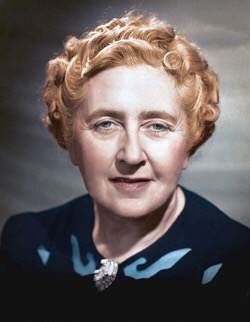
Dogs are wise.  They crawl away into a quiet corner and lick their wounds and do not rejoin the world until they are whole once more.  Agatha Christie

A well written piece in The Huffington Post, Sophie Rosen, writing for divorcedmoms.com, takes her readers through her transformation from a jilted wife railing at her husband’s mistress to knowingly tasting of the same forbidden nectar in How I Came to Identify with my Husband’s Mistress.

The article starts with the confrontation, suppressed rage:  “Are you fucking my husband?”

But then she settles into the reflective tone she adapts to chronicle moving through her thought process.

More than my husband’s actions, what I found most curious was his mistress’ lack of remorse, remorse for her part in a marriage’s end, especially where three young children were involved.


She ponders this idea that sticks in the craws of most who weigh in on the subject. What is the responsibility of the mistress to her lover’s wife? The clear dividing line is between those whose policy it is to never go near a married man and those who do. Rosen enters the nebulous area of those unknowingly lured. What of those who get involved innocently, or blindly? Again, the choice can be as clear as the no-married-men-no-matter-what policy or the struggling or not so struggling cost-benefit analysis of a relationship in those three-way circumstances.   

Some might disqualify a liar on the grounds of failing the integrity test, considering the future-going prospects of someone who starts a relationship with deceit. Others may evaluate the relationship in terms of the state of the marriage, i.e., waning or holding steady, and the aims of the parties. Two may simply share time as they may until it is no longer viable to do so.  Much depends on the parties’ intentions and expectations, which, of course, tend to be as fluid as Rosen’s in the end.


Within every lie there exists its opposite — the truth. In my eyes, this was it. The truth I saw that evening came in the form of a man desperately looking for the attention and appreciation he was obviously not feeling at home, likely why he exuded such warmth when we first met and the chemistry between us was so heated.

Empathically, Rosen “sees” the lonely man, acknowledging her own loneliness, and grows an understanding of why someone might seek comfort in another who can provide it, despite his allegiance or vows to another who no longer does. So much, to me, depends on the honesty of the individual confessing his truth and the self-awareness to do so.

Indeed, if we are not careful, marriage can become the loneliest place on Earth. I know.

Though Rosen spends only one night with someone whom she suspects lied about his marital status, she does earn valuable insight about the complexity of marriage, monogamy and human beings.

Today I question whether my husband’s mistress is the same homewrecker I had once thought.

Putting herself in the position of her husband’s mistress even momentarily or to the degree that she felt appropriate–she is not the same woman as her husband’s mistress, obviously–she concludes that the fault cannot be so easily attached to one person in a triad of lies and need. Though omitted, the underlying foundation of Rosen’s conclusion is the realization of her inattention or unawareness, her own part in the destruction of her marriage

My husband and I seemed to do a pretty good job wrecking the home we had built together without any of her help.

Perhaps I have been too much a subscriber to cause and effect, but my assumption about cheating and divorce has always been that something was wrong whether it was the character of one or both parties, self-delusion, denial, youth, mid-life crisis, incompatibility, unrealistic expectations, the failure of monogamy, fateful accidents or illness or any number of life circumstances providing the impetus.The client who tearfully confessed he or she was blind sided by the cheating, that everything seemed fine was suspect. I could not help but flash on whether the person before me was willfully “blind” in some way. 

Perhaps the cynicism of the job ripened the seeds sown in me at birth.  Or maybe I was to some extent right.

We get caught up in life. We fail to open our eyes wide enough, a self-imposed squint implemented to maintain focus on the daily business of getting through the days. How can we expect to “know” ourselves let alone the other one we have sucked up into the motion and madness, scooped up and absorbed as if two were only one?  We forget our spouses were once human beings we wondered about and ached to discover.    

It is easy to say with conviction that cheating should never happen. Accepting why it often does is what remains a challenge.


She does not excuse behaviors, anyone’s. She stops short of rationalization, only hinting at her own one night allowance and commendable perceptiveness in suspecting a lie when she smells one. The take-away is the understanding that snap judgment, the black and white of it, is an unconsidered stance, too raw. Empathy, compassion and reason gathered her into the grey.

“24 Diagrams to Help You Have Better Sex”

Prowling around the seedier cheap-thrills parts of the internet, as I am wont to do, I came across this numbered list article on Buzzfeed (always fishing for the next best angle ever) entitled 24 Diagrams to Help You Have Better Sex, which is fun, silly, banal and informative, all at once, according to your age or agenda. It offers everything from tips (no pun intended) on how to protect your junk and masturbation to politically correct sexual consent explanations to best positions for pregnancy sex. I particularly enjoyed numbers 15, “25 Things Everyone Should Know About BDSM” and 11, “For Knowing Just Where You Stand,” which were enlightening and confirming, respectively.  Putting sex/identity labels in colored bubbles in flow chart fashion underscores the absurdity of the need for such labels or teaching the labels in the first place, was my initial reaction to 11. While I did not learn what was intended, I was provoked to thought–unlike number 2, which, amazingly to me for its seemingly sheer “duh” factor, I learned something new. I am not confessing what, however. 

Though I am not fond of attempts at ordering enormously dense, complex subjects as easily numbered information pieces that pose as “all there is to it,” this article caught my eye for its eclectic–maybe hodgepodge better matches the tone of the piece–tidbits of information. Who is the target audience of this article? That question came to mind often. Trying to be anything and everything all at once, the anticipated audience seems to be anyone from a novice at sex–here are the erogenous zones for men, here for women–to long married couples who can laugh at recognizing themselves in rather unlovely, unsexy sleeping postures. 

The ambition of the article’s reach and its equally serious and satiric tone amused me. I hope it likewise amuses and informs readers here. Oh, and the forgotten item to number 1’s list:  blown kisses.


“When the Best Sex is Extramarital”


When the Best Sex is Extramarital by Lawrence Josephs, a New York psychotherapist, chronicles the study of one patient, Cynthia, who, though married to a devoted husband and father of their two young children, begins an affair with a co-worker. Sex with her husband is reported as “boring” while she claims to have had the best sex of her life with her lover, Neal. When Neal suddenly dies of a heart attack, she is left to mourn him in secret, which drives her to the therapist, Josephs, who makes her realize that her work is in reinvigorating her sex life with her husband. 

Other than the therapist’s inserted judgment of the deceased Neal, which I found disconcerting, the article drew intriguing insights into that long-perceived dichotomy of good love vs. good sex. Apparently a Freudian, Josephs cites the good father of psychotherapy on love and lust:

Freud claimed that people often split love and lust. It is not uncommon to have great sex with someone who isn’t lovable, or to have a trustworthy loving relationship with someone with whom the sex is boring. Recent empirical research shows that individuals who exhibit high degrees of narcissism, like Neal, have difficulty integrating love and lust in a single relationship. This is also true of individuals, like Cynthia, who are “avoidantly attached” — they can’t tolerate the vulnerability of being intimate with someone on whom they are dependent, and so they create a self-protective distance from their partner.

The latter term “avoidantly attached” is not a phrase with which I am so familiar and since Dr. Josephs does not define his term or discuss how he reached the conclusion that Cynthia was “avoidantly attached,” I had to research.

Avoidant attachment yields two different separate behaviors: “fearful” and “dismissing.” Fearful avoidants have a negative self-image, but are also passive and dependent; they actually want intimacy but they are also desperately afraid of being hurt and distrust others. Fearful avoidants are the hardest category of insecure people to deal with in a relationship since they send out a mixed bag of signals. The dismissing avoidant has a more positive self-image but would agree with the following statement: “ I am comfortable without close emotional relationships, It is very important to me to feel independent and self-sufficient and I prefer not to depend on others and have others depend on me. “ These working models affect individuals in myriad ways.

In the article with the above excerpt, Avoidant Personalities Destroy Relationships, author Peg Streep later notes what we all know: people marry their opposite sex parents. Hearing this early on in my dating days, I thought I was safe in that I married someone so different from my father. But having lived with my father the last few years, I realize I am mistaken.  

My father, when physically present on those rare occasions he was not working or sleeping, was not a warm, accessible guy when I was growing up. As an adult, I was more relatable to him and he showed a very warm, sentimental side amidst his general crankiness and abusive language to not only my mother but all of his five children.

But that overly sentimental side lurched between the nasty brutal cutting side, which later showed me that he is simply incapable of relating to others, incapable of truly attaching. He either loves you or hates you depending on what you have done for him lately. Then again, how could he have learned how to attach when he was one of 9 children of scraping by parents?

So it’s no wonder I married someone devoted yet aloof and emotionally unavailable, he coming from parents who were the same. My mother, at least, was very warm and affectionate, but very busy with five children. I, being the middle child, fashioned my world, my niche in this enclave, as the independent one who needed her least so as to caretake her some. I still do.

All arrows point to the “dismissing avoidant” in the mirror, but the arm chair self-analyzing therapist is a lousy therapist indeed.

What do you do when the best sex of your life is outside of marriage, but you still want the emotional security of a stable long-term relationship with someone you love and trust? I’ve worked with a few couples over the years who have been able to make an open marriage work, but most people, even those who think they might want such an arrangement, are too insecure and jealous to do so.

Interestingly, Josephs does not discount that an open relationship could work, only that most people are too insecure and jealous to succeed. But how about two people forced into honestly engaging with each other about their needs and inability to fulfill them? What about those forced to stay together despite a lousy sex life because they have higher responsibilities to fulfill, like kids and aging parents? 

Cynthia decided to work on her sex life in couples therapy, but how often does that “fix” an ailing sex life? I don’t have the data, but I do have a couple dozen years in divorce story land. My gut and experience tell me that many couples do not work out a sex life even after proper diagnosis and willingness to do so.

Sex is as mysterious as it is natural or primal.The complex of psychological, emotional, intellectual and physical cocktails that make some sex the best and some the worst is rocket science or voodoo to me. Honesty is critical to a healthy sex life but not easy. How do you instruct someone you love how to kiss you or please you, especially if you don’t really know how to instruct or what you need–for example, young teen or twenty something starter couples?  

Sometimes the circumstances are such that two people want to stay together, perhaps at first for the kids, but later for more reasons than that; maybe there is no one out there to go rushing to that’s any better suited or as time tested as their marital partners, despite the dead sex life. Though the two may feel jealous and unwilling, they both know and are open to sex outside the marriage. And when they do so, in time both parties become acclimated. Exigencies make it work at first and time settles everything else afterward.

Freud claimed that children are emotionally possessive and jealous creatures who don’t like sharing their parents’ affection with anyone else. As a clinician I try to keep an open mind about romantic partner sharing, but when it comes to our spouses, it seems most of us never outgrow being fundamentally childlike in our possessiveness. At our best we learn to refrain from doing things that would make our spouses jealous and insecure, despite our temptations, and when they make us jealous we try to restrain our hostility, despite our hurt.

This would describe the majority of people most of the time and some of the people some of the time. I can remember being jealous of my husband’s friends, the coveted time he spent with them. When we separated and I dated someone else, he was jealous. And later when we reunited and then agreed to an open marriage, we were both jealous at times, but knew it had to be this way and so became inured to seeing other people come and go in our communal lives. The other option was divorce, which was clearly unnecessary.

We talk about our lives, but do not open up to each other much emotionally. He has always struggled with articulating what or that he feels. Yet, we provide each other the steadfast support that allows security, safety and adventure too–time tested love and respect–immeasurably comforting.

The best sex of my life has been with those I have been most emotionally connected to, felt the most love for–at that moment of enjoyment. With some, it has been easier to have great sex due to chemistry (scents, voice, hormones) or physical compatibility, similar aims, fantasies and spirit. Those relationships that afforded the greatest sex were firm, committed, yet clearly not forever. Perhaps the attachment avoidant in me has made that so.