
A topical article on the California drought and the politics that piss me off (punny, huh?) behind getting water-less urinals in public facilities throughout the state, please enjoy the entire read in today’s The Mindful Word.

"My mistress' eyes are nothing…"
A topical article on the California drought and the politics that piss me off (punny, huh?) behind getting water-less urinals in public facilities throughout the state, please enjoy the entire read in today’s The Mindful Word.

Published in the Mindful Word, please enjoy an article I contributed to the ongoing conversation about Rachel Dolezal, cultural appropriation and social media.
For those of us who grew up in a Pakistani, Sri Lankan, Bangladeshi, or Nepali household, our struggles to fit in are vastly different in magnitude, but the solidarity exists. So that’s why we are upset when someone wakes up one day and decides to exploit our turbulent identities as a disposable fashion—and by doing so be rewarded as a paragon of globalization and cultural acceptance. How dare they regard Indian fashion as effortlessly cool and chic while we make it look “fobby,” or a stubborn adherence to our culture that purports us to be “fresh off the boat.”
How dare they have a crush when we spent our entire lives trying to love.
Read more here.
Peace,
Gaze
My Eagle (Eastern Washington University Eagle) and I speak most days about her training, school, roommates and life in the Northwest. Her pre-season schedule keeps her wickedly busy, but yesterday we ended the day unwinding to the news of her day and mine.
After reminding me of her class schedule, one class being African American studies, we began a discussion about cultural appropriation, having referenced the class that Rachel Dolezal (former professor at EWU and President of the NCAA who made the news recently by her parents outing her as white) would have taught.
Not surprisingly, she and I differed. She thought social media had gotten it right this time. People should not be consuming cultural artifacts as if unattached to the people who suffered or strove through the badges, persecution or honors of and by those cultural expressional effects.
One example she insisted on was the appropriation of “clueless white girls” adorning themselves with henna though they do not care a whit for Indian culture or people. In fact, she claims, these same young white girls actively discriminate and ridicule cultures different from their own (if whiteness is a culture as well as a position of privilege and power?), including Indians.
Admittedly, my most played role as devil’s advocate annoys my children. But this time I was not baiting. I countered with labeling and generalizing as liable to injure as much as the lack of consciousness of some consumerists. Not all cultural appropriations spell disrespect.
We live in a multicultural world, America being one of the most diversely populated. Adapting the behaviors, clothing, styles and language of other cultures organically arises from living among others. What matters–the same always–are words and actions consciously spoken and taken.
To love another culture so much as to adapt it is not uncommon. People move to other countries more suitable to their natures. Look at Cat Stevens, who left American fame and fortune to live in a culture more nourishing to his spirit. One can question his or anyone’s motives for “abandoning” his or her birthright, but why, what’s the point?
The people my daughter–and her social network–criticize, live inauthentically and thereby injure others, I suspect. To affect the style of another group is an act of honoring, blind imitation, or malicious mockery, depending on the intentions of the adapter.
But all behavior may be measured as moral, immoral or amoral, depending upon the degree to which the actor moves beyond him or herself toward another–and with a conscious intention of producing good or ill will.
Mindfulness is an overused term, quickly turning trite. But in truth, to bring mind to bear on everything we do matters most. Morality is another term that gets maligned in its use, overuse and abuse. But the morality that the philosophers hypothesize about in classrooms, bars and libraries through time immemorial informs the morality I believe defines mindfulness: an ethics of right behavior toward others, which is situationally switched on by a mind and heart likewise opened and active.
I am not foolhearty enough to believe in a “correct” behavior for every situation, but the footpath toward morality starts with a consciousness of the causes and effects of what we do, otherwise known as awareness. Thinking awake and remembering that we belong to a community are two steps in the right direction on that path.
At the conclusion of our call, I asked her what I should write about next, after plastic bags and waterless urinals. She offered sex work and cam girls. Um….wait, what?
credit: socialwork.simmons.edu

Read the full article of the excerpt I posted a few days ago, as it appears at The Mindful Word.
Walking out of the market, it suddenly hit me. Something different. Oh, that’s right. No one asked me if I would like to buy a bag for ten cents, and my two hands carried one plastic food-stuffed bag each. I wondered how long I had been unaware of the … (read more here)

My first piece published as a contributing writer for this wonderful journal, The Mindful Word, came out today. Please enjoy this esssay about writing and teaching students old and young about the craft I attribute as salve for what ails us in the human condition of illusory separateness.
Peace,
the Gaze
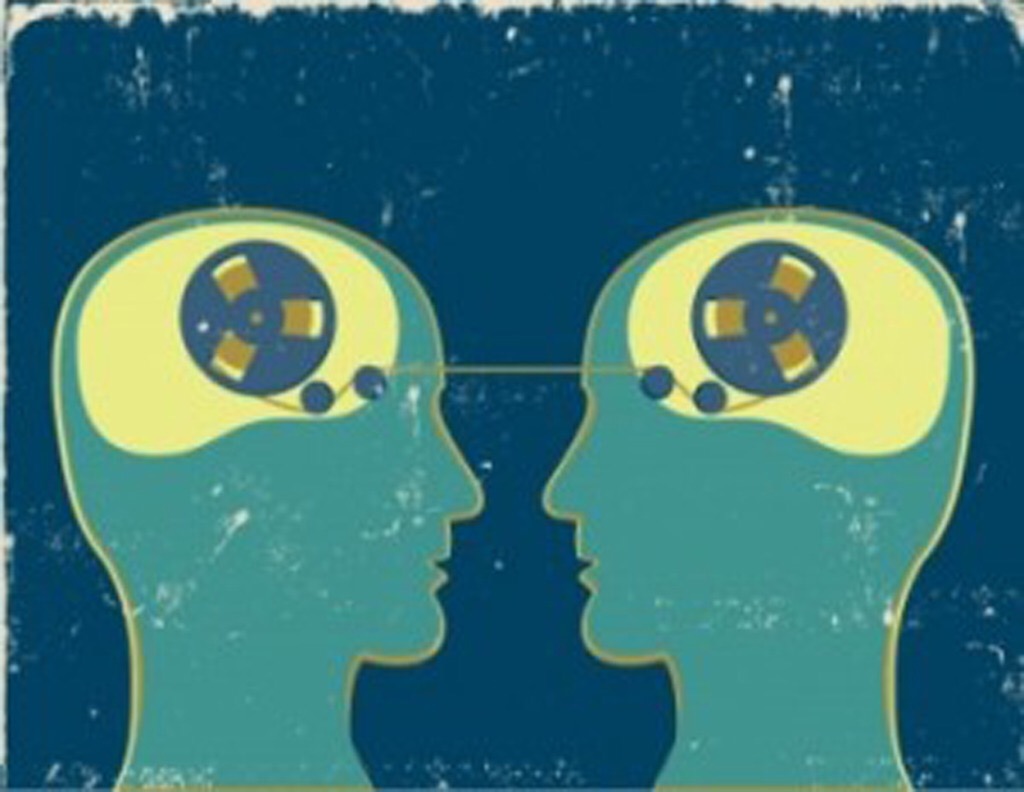
Eternal seekers, humans are also time travelers. Separated by comforting (but illusory) shelters–houses and skin–they journey among others and through others. A simple word, a name called out in a crowd, suddenly connects the speaker and the unsuspecting, in-his-own-world hearer in a moment of communal recognition. This is the magic of language.
But beyond the word, driving the journey of sentences, is the uncoded language neither spoken or written: the language of compassion. Compassion is the foundation of every act of communion, not merely writing. We ‘read’ others with a willingness to believe them if they are true, paint the real of our experiences. Moreover, we empathize in reading and writing, experiencing or anticipating an other’s suffering or success. A story character we have grown to love falters, missteps and fails, and we grieve.
“The state of reading consists in the complete elimination of the ego,” Virginia Woolf wrote, and it is true. To be in the story, we must suspend ourselves to be others for a while.

The therapeutic rewards of writing have long been touted even before Freud and “the talking cure.” Writers write endlessly about writing as compulsion, art, creativity, release, documentation, imitation, recording, reporting and life. But my scouring of the web today yielded very little about writing as a gift. Correction, writing as a gift to the reader. I read plenty advice to write as a gift to the self.
I teach writing. I have often wondered not only what every teacher has wondered (and Kurt Vonnegut wrote about in one smart anecdote he told in the New York Times “Writers on Writing” series), if writing can in fact be taught (which I think it can), but what can teaching writing teach about relationships.
Just like all roads in creative nonfiction lead home to the writer writing about writing, all teaching should lead to life, and what is life but relationships? We live in the world with other people–most of us. Relationships are relevant. Teachers should teach relevant skills, especially in classes teaching craft.
So, I try to impress upon students that grammar is life and writing is a gift, if you write consciously and conscientiously.
Grammar is life. The eight parts of speech comprise the basic elements, the core of the English language. However, what something is, changes in relation to what that something is next to. For instance, when is a noun not a noun? When it is up against another noun, side by side, in a sentence. Often the first noun acts like an adjective such as in the phrase “road runner” or “nurse maid.”
Similarly, a student sits in my class as a human being, perhaps a particular gender identified to that human. Sitting in my class, that human is a student, an enrollee and a peer. At home, he or she may be a sibling, a daughter or son, or spouse. People are defined by their relationships, where they are in the world–just like grammar.
And grammar is the coded order of our language, how we make sense of things. When we write–even for our own health or need–we write to be read by ourselves and others. To be understood is to write for someone else, to paint pictures, to explain something, to teach how to do something or vent, to name a few purposes of writing.
The act of writing is a giving. To do it well, to make it beautiful, clear, precise or illustrative, we must turn our eyes from ourselves to others, see like an other. What will my reader understand? What will it mean for the reader? My great gut-wrenching desire to get “it” right–just the right word–is the desire not only to create something worthy of respect, not merely catering to compulsion, but to connect a mind to another mind in a shared moment of thought or experience.
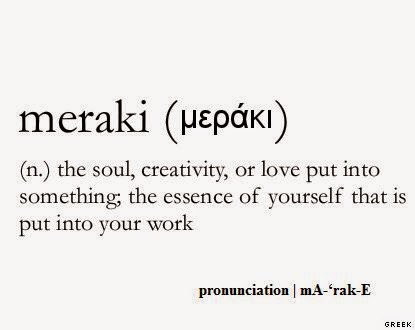
Wanting to transport something from inside the self to another self is a longing to merge with another. The writer and reader are lovers, always longing for being one.
credit:
jarretfuller.com and illuminology.tumblir.com


In the Beginning, There was Stillness is in today’s elephant journal for your reading pleasure. Please enjoy, comment, like, share, email, forward, ignore and/or begrudge me the loss of a good ten minutes of your life–your choice 😉 I hope you do the first–enjoy.
Peace,
Pam

 In the gaze of the other
