Killer Thoughts

It’s been around for a while, but I just saw this delightful Ryan Woodward animation “The Thought of You,” which has made its rounds on Facebook, Vimeo and Youtube ad nauseum. And my fresh look adds yet another interpretation among the hundreds of others mostly fawning observations and applauding. The difference in interpretive tone–positive or negative–is probably affected by the accompanying song. In one version, Nick Lovell’s “Cradle in my Arms” is the backdrop, which is slow, severe and mournful, whereas the other version is accompanied by the Weepies’ “The World Spins Madly On,” a much more upbeat though just as disillusioned song.
 
In the short animation, I see thought, airy nothing, on display. I see the “lost in the world” lyric, with two ideas dancing around each other, illusive in the acting out: he grabs her but she evades him, slips from him but then there she is again, and they dance and she caresses him but he ducks away, also slippery.  
 
And the lyric, “woke up wishing I was dead…the night is here the day is gone,” floats into my consciousness as the scene changes to dream sequence, a longing, where she is an angel, the feathers falling as she flies from him. Is he about to kill her off? When they finally spin together as they and “the world spins madly on,” she suddenly becomes real to him, her clear yearning to touch him, there standing in all of her need–real–and he lets her go.  She is real, depicted with shading and fullness, depth, and he is still an idea. He lets the real go. Dreams and fantasies are far more interesting, full of potential.
 

Nick Lovell’s “Cradle in my Arms”

I don’t mind
Where I wake this morning
I will only be misjudged


You are here
But your mind is elsewhere
You have battled for so long


Just call me when you feel like coming home
Call me when you feel like coming home


Have I changed?
Or do my eyes just see things
So much differently now?


Lay the blame
Only if you have to
But it’s you who brought you here


The animation suggests thought as the figures are mere sketches until the woman acquires shading, a touch of reality, when she is more concretely identifiable as herself and not the projections of the male configuration’s imagination: as angel as the feathers that fall suggest or even a dancer. When she stands there just herself in want of him, not playing chase, at the end, he leaves her. He loses interest or runs in fear or both.


I want to peel off my skin and roll myself in salt when I see this where others–Youtube and Vimeo commenters–look to the beauty of the dance and feel warmth and loveliness. The projection of my own thoughts on someone else, making that person an extension of my own desire and will is a life-long habit and a doom to so many relationships.Too often have I wished another to fill the expectations of my imagination, which is powerfully creative and unrealistic as if totally unleashed from senses.


The result: not actually seeing or finding the person standing before me because I have never been there–present–in the first place to notice. Wrapped up in my mind’s eye, not my physical eye that sees not envisions, causes blindness–and eventual loss.
 
When she is an idea–a thought–it is easier to hurt her. Experiencing another as flesh and blood makes it more difficult to hurt that human being, compassionately and empathically sensed as one senses him or her own self. 
 
That is how genocides or near genocides have been possible in the past–making whole populations an idea, a problem needing a solution, the Jews of pre-War World II Germany as only one example. No human being but the most unfeeling, the sociopathic, could be convinced that the economic solution for a failed economy and the woes attending such is to kill another singular, seething human fleshly being standing right before one’s eyes. No, that person would have to become an idea–the economic drain, the problem, caused by immigration, greed, religious destiny, or some other idea.


For me, fantasy has always been greater than reality and my heart is a painter. Those who show up to be my canvas often cry out, insist on themselves as I sketch and color them brighter, fuller bloom. 
 
The Weepies’ “World Spins Madly On”
 
Woke up and wished that I was dead
With an aching in my head
I lay motionless in bed
I thought of you and where you’d gone
and let the world spin madly on

Everything that I said I’d do
Like make the world brand new
And take the time for you
I just got lost and slept right through the dawn
And the world spins madly on

I let the day go by
I always say goodbye
I watch the stars from my window sill
The whole world is moving and I’m standing still

Woke up and wished that I was dead
With an aching in my head
I lay motionless in bed
The night is here and the day is gone
And the world spins madly on

I thought of you and where you’d gone
And the world spins madly on.

 
“And the world spins madly on…” The world of the imagination is a mad spin, crazy making in its delusional world making.


How many of us do this–imagine what we want rather than experience what we have?

A Touching Tale of Healing Touch


Evan was not my first love. My heart framed in poetry books, I sought love early. By fourteen I had had my first heartbreak and by sixteen, I was initiated to the world of embattled sex my mother fear-burned into me:  woman as fortress and men as invaders.  


It was the 70s and free love was the slogan but not the practice. I was not the only young woman who paid the bodily price of losing what I did not understand I had–self-love, real love. 


So when I fell in love with and married a French man a few years later, love was permeated with heady visions of Romantics like Byron and Wordsworth, but sex was informed by the attitudes of Plath and Sexton, hardened and cynical. 


In my mind, love and sex were distinct and only the former was indispensable.


I loved Jean-Marc, but we were not so much “in love” as we were good friends. To me, that was more important. 


Besides, it was clear I was not his physical type. He had had a girlfriend when I met him in college, a French goddess of natural beauty, as if she emerged from the heather, golden smooth skin delightfully coating her delicate bones and showcasing her eyes of sea blue. 


She was the essence of what I deemed poetic femininity at the time. And I was nothing like her, not delicate, soft, supple, petite or graceful. I wasn’t French. I was New York, bookish and big. 


But several years into our marriage, I grew thinner, more athletic. I struck a lean, tall figure with improved grace and balance from running and tennis. I had transformed the book worm smoker of pubs and diners around New York to an outdoorsy athletic competitor in California.


When I separated from my husband, I was in the best shape of my life, 28 years old with a hard body everyone noticed but me. 


That is when I met Evan.


Evan taught me to love my body. I met him after my husband confessed that he was in love with someone else, a friend he had grown up with in France. Even though that relationship did not pan out, both of us needed time to sort things out. 


In reality, the separation between us occurred long before, had been growing inside me. Jean-Marc’s vision of me affected my own. I was a rebound, the consoler and good friend when the goddess dumped him one New Year’s eve. 


I was no beauty, but I was comfort.


His eye for aesthetics and style were distinguishing features of my attraction to him but also the very features that attracted him to others, beautiful, lean, olive-complected men I later came to find out. 


So why did I choose someone who could not love my body? Over the years, I have considered that question. 


Perhaps the body-mind division I fixed early on, prioritizing the intellectual over the physical sublimated my bodily emotions–etched the picture of an unlovely woman in my mind.


But I imagine, poor body image grew out of many seeds: my parents’ relationship, genetics, cultural dictates, social influences and my own love relationships. 


Though Jean-Marc and I shared a love that made us grow in the comfort and safety of that umbrella love of young adults, he could not love me intimately, the way a lover sighs at the sight of his beloved’s nakedness. And we couldn’t talk about it for the pain and the guilt. But the elephant in the room nearly crushed me. 


Eventually, I was flattened. I no longer had desire–until Evan. 


I fell in love with him in a cafe in New York. He spoke soothingly about presence–being present in each moment–and though I had read my zen and Heidegger, I was witnessing the words rather than thinking about them. 


He warned me beforehand and then he touched my hand and said, “You’re a writer; describe the experience of my hand.” Of course I didn’t know what he meant; I only said I wanted to be a writer, and I was off balance with his touch.  


So I described how I felt uneasy with a near stranger’s touch. To which he asked, “Does it feel warm? soft? rough? Can you feel the arced tips of the nails unforgiving yet pleasantly smooth?”


I hadn’t even thought of the physical sensation. I never did. All passed through my mind first and the physical was always sublimated, denied or ignored. Probably why I rarely saw a doctor, going about my business trying not to think of what ailed me.


Later, his first touch of studied tenderness opened my eyes and aroused passion I buried long before I knew its heat, its colorful flavors. He touched me, what was before his eyes, not a projection of me. 


And then he took me on a tour of the secret vales and rich verdure of my body. It blazed real love.  


Love–true love–is presence in touch; it needs no longing, fantasy, style, grace or poise–merely acceptance in being. 


When I embraced my own beauty, uniquely my biological experience, replete with singular angles and curves, scars and splotches, I learned to be heart-wise loved by someone who could love me–all of me–and confirm I was worthy of another’s hand softly sweeping the hair off my brow. 


My feminine, I learned, was desire—being—in touch.  


How can we ever know how others sense the world? The question should evoke a yearning to find out without the hope of ever doing so. However, it is the practice–the focused being of and with others–that matters. It’s how we connect, avoid loneliness, while maintaining our own integrity.


It is how we find love, real love.


Touch led me from interpreting the world to experiencing it. Getting out of my mind, possessed with others’ formulations of love and sex, and into the moment–breathing presence; it brought me the fullness of acceptance, as a body, my body, with someone else’s.  


No, Evan did not teach me acceptance by his touch; eventually, I was able to receive his touch by my own clarity–of space, moment, nearness of another’s presence becoming my own.  


He taught me to “see” like the scientists and philosophers and lovers we are–empirically, intellectually and emotionally.  


I wasn’t rushing headlong into someone else’s story for me. I had learned to better integrate my body and mind, which took examining inherited perceptions: those of my mother, husband, authors, and culture.  


It took practice to own my body. It still does.


And being in the precise moment recalled by someone’s touch–healing in its grounding.


Evan lies next to me now, his pillowed head in the shadow of mine. I am reading, elbow-propped, turned away. 

We are prone, bare, having just settled into bed for the night. Humid heat of a New England summer makes flannel impossible and silk torturously sticky. We sleep this way most nights four seasons long.

His body is serpent shape mirror of mine with inches of space between us, creating the comfort of a cooling air canal. We are art in symmetry.

His hand, open palmed, smooths across the contours of my hip, waist and shoulder, smearing heat like oil upon the line of curvy seas in the imagination of his hand–port to starboard to port again. The slow rhythm of his caress lulls my lids to half mast as the warmth and tingling skin sensors combine, dance me to lullaby languor. These are the moments.

I stop reading to softly lower my head to the pillow, ever so slowly, avoiding the slightest ripple in the water of his soliloquy wave. I hold my breath the whole way down.

Releasing, exhaling in measured silent wisps of warm air through my teeth and the pebble O my lips make, anchor hits bottom, the sync of his hypnotic oar undisturbed; it continues to brush the still of my anatomy’s ebb and flow.

I breathe just enough air to live, causing not so much as a flutter-by in the sheets. If I fill my lungs too deeply, selfishly, I will signal sleep’s onslaught, killer of this powerfully peaceful moment of breath, body and hand. No dream could be better than this. I own it–to the coral depths of fibrous memory. 

The Only Organ for Pure Pleasure


An interesting short read accompanied by a HuffPost Love & Sex podcast, Carina Kolodny’s The Power of the Clitoris reminds us that this powerhouse of pleasure is not only often overlooked but most unfortunately misunderstood and misplaced. Hey, it was a revelation even to decades old me when I recently read how long that seemingly small pleasure piece actually is and how far it extends into another key erotic zone.

The podcast features the author, Kolodny, and Noah Michaelson, a professed gay man (even he finds this bit amazing) who advocates spreading awareness of the clitoris, the only human organ with its sole purpose as pleasure, by talking openly about if for not only sex education purposes but for reminding us sex is not purely utilitarian and circumscribed, a predisposition this organ’s mere existence challenges:  sex is not just procreation, procured exclusively for marriage, but exists for the pure enjoyment of it. 

While some may scratch their heads in puzzlement wondering why that is notable, there is still a consciousness among some and a subconsciousness among more that sex is confined to those traditional milieus: procreation and marriage.

And then there’s Freud…

A Caged Notion:  Sarcophagal Love 


When a notion, 
a flash, 
becomes flesh, 
enacted, 
the creative act animates, 
wields powerful revelation, 
a reflection of will, 
aching in wistful want, 
the small voice of a wounded child, 
more an intention to reverberate, 
ripple through others and move, 
affect or make them,
inchoate breath.


The containment you imagine me is pure pleasure palladia, 
mutual fantasy of possession and punishment, 
our sado-satisfying masochistic me in it for your admiration, 
a prize for you to paw.  
We dream that cage together, 
get off on it in our sleep, 
its bars of steely glares and grim reproach
spaced wide enough for you to grope your grapey lust, 
take what’s yours to take.  
Inside, 
the space is so small,
almost nil, 
no room to parade or pace, 
just enough to set upon all fours and wait and watch, 
captured in your gaze, 
electroreception,
anticipating your designs. 
A rectangle of caged space 
inside a rectangle of shut in space 
inside a locked staring searing eye is meta murder, 
again and again.  
You slay my spirit with suffocating enclosure, 
arms wrapped around me in my sleep, 
nowhere to avert the sarcophogal stare, 
nailed to a phone pinging and ringing your intentions, 
mind manacled to your roller-coaster moment and measurement. 
The cave of your desire, 
crated me, 
still closes out the bogey man of freedom, 
choice, 
all burden of the untied.


Like the neo-fascist caged desire, 
bully-beaten youth grown cruel, 
craving corrective counterblow, 
bursting from their cells (non-cognitive) of scarred safety, 
pummeling the impenetrable,
un-crumpled equanimous content,
our cage, 
pale to compare, 
private,
keeps out the unwanted. 
Only in those other confines, 
the downtrodden,
the losers at the starting gate 
crawling into empty spaces 
in the walls of ice-just, 
inside homes of the muddled mind-less classes, 
with Cerberus as their keeper, 
ferryman to their burning holes, 
here and there 
in courtrooms and classrooms and barbed wired buses and wanton walls. 
They are safe inside, 
terra firma, 
havens of co-caged meat, 
their fists and teeth, 
sinking in their terror, 
angst, 
despair and connection, 
conjunction, 
a merging of all the shit shared from drug-addled parents,
pimping lovers and duplicitous lawyers, 
witch doctors, 
robed wardens and baton’d judges. 


And one of them shouted at me, 
in chains, 
walking the long hall of dungeoned malice
after the debacle 
after an irreversible sentence to a life’s shackling stain, 
a broken destiny, 
“Why you cry?!! 
Why?!! 
Why you cry for?!!” 
As if shouting, 
commanding could make it so:  
one human being sharing agony with another, 
seeking consolation and empathy from parallel worlds 
sealed off from one another by impenetrable soundless walls. 
Your lips moved but blood splattered the walls of my unending walk
with utterances of the caged, 
the animals you molest and shove and grab and spit on.  
You, 
who just do your job like boot-and-bayonet-brave Nazis.
Your cage
my compassion
their circles
our cells
one DNA
dream.

“55 Rules for Love”

credit:  http://markhanlin.com


I appreciate this list so much I am re-printing all 55 of the 55 Rules for Love in elephantjournal.com gifted by Alex Sandra Myles. I especially love how the list is framed by 1 and 55, cherish love and don’t take it for granted or risk it for mind games, power plays and other gambles to chase love away.

Some of these rules confirm the successful moments of my own daily practices and disposition toward not only loving another or others but self, such as being grateful, aiming for open communication, disagreement as healthy for cherishing and appreciating difference, forgiving easily, admitting fault and accepting criticism.

So many of them, however, are challenges, ones I know I must practice daily but forget, struggle with or get lazy, like 5, 8, 13, 16, 22, 23, 26, 30, 37, 41, 43 and 45. The rest are either instinctual or hard earned by practice or subsumed in other rules: cherishing love is also being grateful and appreciative.

I hope you enjoy this list as much as I do as gentle reminders how to love yourself too.


1. When it arrives, cherish it.

2. Whatever you accept, you will get

3. Understand that love is a mirror—it will show us who we are if we allow it to.

4. Only we can make ourselves happy, it is not the other person’s responsibility.

5. Don’t say words with the intent to hurt.

6. Accept and forgive easily.

7. Don’t be scared to disagree, it is healthy.

8. Never be too busy for each other.

9. Do not punish.

10. Accept honest criticism, it is good for us.

11. Admit when you are wrong, quickly.

12. Support each other when the going gets tough.

13. Live in the moment—be present.

14. Leave the past where it belongs.

15. Leave drama out of it.

16. Don’t try to control.

17. Allow a small amount of jealousy.

18. Don’t use comparisons.

19. Celebrate differences.

20. Communicate openly and honestly.

21. Listen very carefully.

22. Don’t judge.

23. Don’t manipulate to get results.

24. Learn and grow.

25. Don’t try to change each other.

26. Don’t condemn each other’s family and friends.

27. Lines, flaws and imperfections are beautiful.

28. Trust your instincts, but don’t be paranoid.

29. Don’t compromise your morals and values and don’t expect them to either.

30. Instead of power, aim for balance.

31. Space is needed to breathe and to grow.

32. Accept that you are both unique—never compare.

33. Have fun, laugh and play—a lot.

34. Be each other’s best friend.

35. Don’t play mind games.

36. Do not carelessly throw away love.

37. Don’t waste energy with negative thoughts.

38. Compliment often.

39. Discover each other.

40. Be attentive and understand what’s not said.

41. Do at least one romantic and thoughtful thing every day.

42. Take picnics and sleep under the stars.

43. Don’t just speak about it, show love.

44. Walk together, cook together, bathe together, read together.

45. Do not be afraid, love requires surrender.

46. Be loyal and faithful.

47. Trust.

48. Be grateful.

49. Fluidity is good, accept change.

50. Don’t sleep on a fight.

51. Don’t cling to it, know when to let go.

52. Discover what turns you both on and explore it.

53. Make love, but also f*ck (regularly).

54. Give and receive without measure.

55. Never gamble with what you can’t afford to lose.

The Exorcism


Get out–
I let you in
my mistake
in dire need
broken down 
entry open
burgled, thieved
then you stayed
way too long
overslept me
you, us
time to leave
move on
trip the door
see yourself out
prey on him
her, them
leave me be
take my stuff
laugh at me
kick my pride
make me see
the ass
I am
the fool of me
you made
me too
Sorry? See?
clear out
free me be
stomp by
slam the door
take your shit
mine, take more
clear the air
walk on 
drive by
engine on
idling low
moving past
heave silence
sucked in
blown out
beating down
bare floor
ceiling fan hum
dim light
faded paint
shaded pane
dusty sill
gone now
still.


The Curse

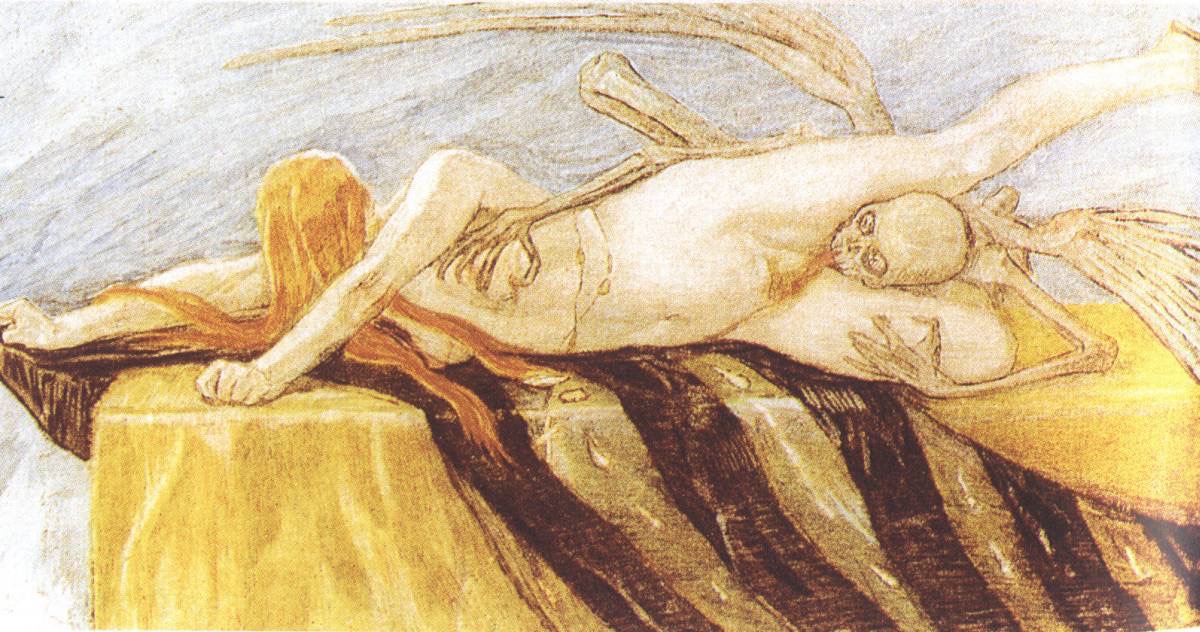
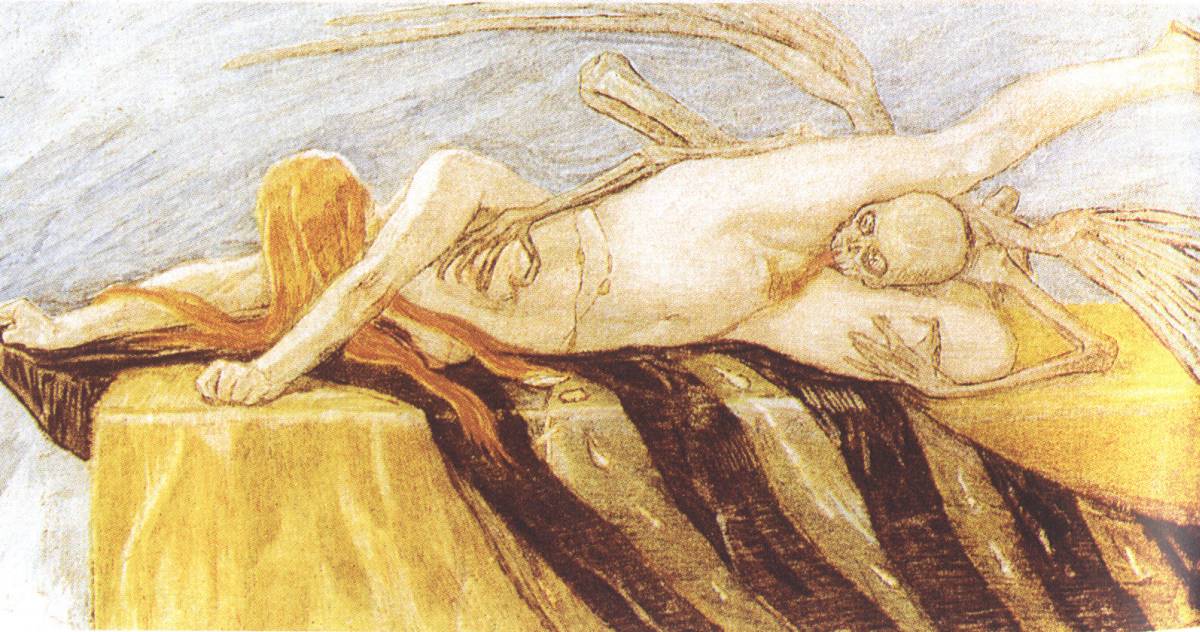
IMG_0388
credit: http://www.modspil.dk/images/l-agonie2.jpg

I was just a girl then,
no street sense at all,
not about boys, sex or love.
My mother warned, “Beware of them;
they just want between your legs.”
My father didn’t say anything;
his voice was my mother’s,
his opinions hers.
He worked all night of 7 days,
so she spoke for both of them.
The aim was not to get pregnant.
Since she had four daughters,
the first at sixteen,
and had to marry then, she knew.
Her drive was singular,
her message the same.
Don’t let them near enough to you,
for temptation is deep and wide.
Once you start, there’s no stopping.
And when I kissed my first boy, I sighed,
his lips were soft,
and my stomach felt a jittery sick,
while his face remained stoic.
I couldn’t tell if he felt the same,
the mystery of he-ness exposed.
My world was closed,
exclusively inside my head.
I had no perspective, no insight.
I was 12 only, then.
Later, with interest running high,
I craved the unknown compelling,
like claws to the depths of me,
ripping up sacred rites of initiation,
summoning darkness before light.
Too much love for the flame,
I slunk too close, singed my wings.
He was 8 years older than I.
A former love, the one that cracked my heart,
for I couldn’t believe he would even look at me,
that he did and was so beautiful,
and I was so flustered,
as we walked along Candlewick Road,
under the moon half lit in the sky,
split by clouds,
when I repeated my mother’s words,
“I am waiting until I get married,”
which didn’t fit, but I had nothing else.
I wanted it to be right, to keep him.
I thought he’d sense a romantic heart,
the sincerity of pure intent.
But he disappeared after that night,
and I tore open, needed to throw down,
discard a piece of me to the gutter.
So when he told his drummer friend,
so much older than us, a man,
“She doesn’t give,”
and that friend took it up,
made it his challenge,
I lay down, no mistake this time,
and he prevailed.
I bled in fear.
Why didn’t she tell me,
arm me with something more,
she with no belief
but the curse?

Venus and Mars

IMG_0384
credit: static1.squarespace.com

Here’s me being you (simply so):
I pull out of you, expelling seed
crash-down heavy, a filled need
with a groan and a sigh of relief
satisfaction of weariness sweet
I croak, “You’re so good to me,”
and then close my eyes to see
the vision still coursing headily
inside you, mouth to your ears
deep in silk skin-soaked tears
licking drops from your cheeks
like swallowing the salty seas
with your joy, your melted glee
all wrapped in arms so lovingly.

Here’s you being me (deftly so):
A hand slides across your spine
as you leave my warmth behind
and lie beside me in heavy sigh
of deep satisfaction and release
in closed eyes; in smiling peace
you rest in muscle soft respiring
in mind less darkness dreaming
of you, me and endless teeming
pant and chuff, a heart pounding
too softly now in brimming chest
a storm passed by, ocean’s rest
calmed to gurgling stream’s lies
unheard above a chasm’s cries.

IMG_0385
credit: http://s3.amazonaws.com

Addendum:

A small voice nags inside persistently some days, pecking at her brain like the woodpecker’s drum, “This cannot go on.”

But then it does: the constancy, the clinging-to-life braided bodies in sweet scented addiction blind, the quelled fiery imagery, soothed, enraptured in repose, all dissolved in calm lines of the heart’s monitor metered in metronomic jive of the universe’s mysterious patterns dancing.

“How do stars live so far from one another and yet reverberate from their mates’ light?” They seem so close and crowded all at once in the blanket black. At least it seems to those far below, minds upwardly poised to glean the wisdom of the sky.

“They just do.” Finding their light, knowing they are there is enough for them, he believes.

Some days the abyss yawns loudly from eons below my ribs. The aches gathered in bits and sounds from all who ever lost and lived creeps in through my ears, slides the canals and permeates the tissue so all that I hear is gaping vacancy inside the hiss and hum of respiring pumps of tedious be.

You toss me up like a rocket launched to space, not by chunky booster hands alone but the aid of my twig arms in slingshot urgency, and the quickness almost kills me, knocks my senses clear removed from silky parachutes’ inevitable return.

And when my feet finally alight upon the earth again, the descent is steady, deliberate and long, my lungs filling fat in measured whiffs of the dirt and stained ammonia air. Hitting me slice-wise along the spine is the reminder that we watch the enemy from opposite sides in distant trenches, staring down perceptions from a line never crossed.

You see me in my blindness. I blind you with my sight.

Luck of the Mistress – Nelly Ternan

IMG_0373
credit: biography.com

“These things cannot be written with a quiet hand or dry eyes.” Nelly Ternan

Sometimes it pays to be the mistress, especially to someone famous. Though the movie is a couple years old now and the biography much older, the Nelly Ternan story is a prime example of the sometimes advantageous position of the mistress–or so it would seem. In reading on the web, the facts vary slightly but all agree that she moved from actress to mistress to the rest of her life and onto fame and history without so much as a hitch. Of course there is so much to flesh out of these bare facts of Ellen Lawless “Nelly” Ternan, Charles Dickens’ mistress. If there is punishment, divine or otherwise, meted out for playing the role of mistress, this one seems to have gone unpunished.

According to Claire Tomalin’s biography, Ternan is born to a family of actors who tour the country even after the father dies in an insane asylum. One day Ternan, later acting in a burlesque show, is spotted by Dickens who casts her and her sister in his production of The Frozen Deep. Dickens, then 45 and married with 9 children (later 10), falls for the 18 year old Nelly, and they end up having a 13 year affair–though biographers differ on the nature of the relationship as Dickens himself took great pains to keep the circumstances of his estranged wife and his contacts with Ternan Victorian scandal proof secret–yielding one still born child from Dickens, who later dies, leaving his mistress money in his will. Ternan then moves on to marry a clergyman ten years her junior, with whom she has two children before he dies and she goes on to join the anti-suffrage movement. She dies of cancer at 75 years old. In 1913, that’s a pretty good long time. Much later, in 2013, a movie about her, The Invisible Woman, airs detailing her affair with Dickens, based on Claire Tomalin’s biography.

She lived 75 years, got married, had children and a long term love affair with a famous author that yielded her money and fame as long lasting if not as ubiquitous as Dickens’. She even got to campaign for her own political beliefs in her retirement. What a great story of American come uppance by being in the right place at the right time. The facts tell the story of a game with the score: Nelly 1, wife Catherine Dickens 0. Mrs. Dickens does not get her own write up and movie. No, her story is told through Dickens’ viewpoint. She goes down as the fat, grumpy woman with whom Dickens had 10 kids and then became dissatisfied for her lack of “ardor,” which is how he characterized his failing marriage at the time of meeting 18 year old Nelly.

Fame, fortune and history are random that way. Nelly’s story seems to reinforce that idea. Although, who can read between the mere hollow facts to see the story beyond the margins of the biography: the strife of being a young mistress to a much older demanding man of fame, his stress and the risk of both their reputations, or even the probable contentment of Mrs. Dickens being set up in her own apartment away from her dissatisfied husband who impregnated her ten times and left her to raise kids who likewise suffered the mortification of this hardly contained, much as Dickens tried, affair. One can only imagine the story behind the story. Unfortunately, the love letters between Dickens and Ternan were destroyed. In those letters lies the real story, I would like to believe, which is the story of passionate, irresistible love.

A Pre-Valentine Meditation on the Language of Love: Advice to ‘S’

LanguageOfLove
credit: api.ning.com

Today I ponder the sentence, “I have your back.” Depending on the source, that sentence can be quite comforting, most probably intended to be so by the speaker. It’s a sentence offered, usually with a wink, a click of the tongue and an assuring smile, as support, shorthand for “I will be your backup in a fight, your second to celebrate the win or console the loss.” Spoken by a tried and true friend, you know the invaluable purchase of the sentiment despite the cliche’d expression. By a lover, the comfort may be dubious.

On the one hand, a lover’s deeper connection and care should inform that assertion with commensurate depth and caliber of worthy comfort. However, given the heart’s investment and volatility of passion, the motivation to employ machinations to keep someone, avoid loss, manipulation being integral to human coveting, is high. As such, a lover’s declaration is far more unstable and somewhat suspect counterintuitively because most would believe the opposite. Of course he has my back. He loves me.

Clichés are dead metaphors, most English teachers and long-suffering students know, but it is astounding to think that the expression, “I have your back” or less grammatically sound, “I got your back”, was once a vivid metaphor that caused a grand éclat at its crispness, a concept derived from an odd literal body position vis a vis another human being. I mean, how does someone actually have your back? My lover is a psychopath, cut me to pieces, saving only my back, maybe just the lower third of my torso in his refrigerator. Seems anatomically impossible, or at least unimaginable.

More likely, and I am probably remembering this from some forgotten space in my vast and sundry tidbit collection eating up all my brain RAM (just don’t want to interrupt the flow to look it up), it is a war reference to protect soldiers while they “go for it” from behind the trenches or the thicket of trees: protective, life preserving–or the attempt–in dangerous situations. The speaker intends to warn you and be your second pair of eyes to ensure your odds against getting picked off by a sniper, a guy with a gun or anyone who is prepared to do physical, emotional or psychological harm (or any combination thereof).

War metaphors seem apt in matters of the heart. The struggle with desire to surrender and need to protect the heart, a part of every love story long or short, feels like goose stepping on a mine field. We want to believe in the truth of words, especially those that contain the universally cherished missive “I love you.” Even as we fear the risk of injury, we want the message and will find it hidden in so many other words, so much so that we miss important cues and clues that language emits to the brain to shape behavior.

When language is abused, words divorced from their communally consensual meaning–an irrevocable breach, is when the battle ensues and treachery flies, innocent lives lost. Children spend many years forming the world through their initiation into language. Accessing the portal to ideas and things is granted only upon the trust in the safety of the vehicle that brings them to that door: words. They learn trust in the great unspoken agreement of humanity that words will mean what they were taught to mean by parents, schools and community. The ensuing savvy acquired through rubbing against other humans in the journey of days is the slipperiness of words and the deviousness of people.

But not all is lies and deception, not all words suspect. A lover, friend or business partner may mean he has your back when he says it but change his mind later. Though true when he said it, even if he said it over a dozen times, repeated it like a lullaby’s refrain, his mind or heart changed and so stopped saying it because he no longer wished to protect.

Or maybe the last time he said it, “I have your back,” the meaning of the expression–so broad and vague, practically incomprehensible–changed imperceptibly (unconsciously, to give him the benefit of the doubt) to reflect a different, newly emerging intention, a slightly different slant or even a total inversion. Maybe his subconscious drew the invisible target on your back for the bullseye knife throw:

Love is war. War is hell. I’ve got your back. It’s in my scope and my finger is on the trigger.

The language of love (and war) exposed in innumerable metaphors and clichés (think: love is blind) is a special case of the general, meaning it partakes of the attributes of language, generally, while nuanced with its own subject-specific idiosyncrasies. Love engenders both lies and truth motivated by intentions and causes distinct from commerce, for instance: lying to spare my husband’s feelings rather than for profit.

To be imperfectly reductive or hopelessly expansive, however, the nature of all language (written, spoken and body) is twofold: communicative and formative. It gets the job done, sends the message, and delivers the goods. At the same time, it gave us the job, the message and the goods in the first place. A cat becomes a four legged furry creature that mews for the child who learns its name. Before that, it is something unknown and out of focus.

Like its inhabitants, language–messenger or maker–is cagey, illusive, illustrative, beautiful, crafted, elusive and mutable. Many more thoughtful and capable before me have doubted the possibility of getting outside of it. But so too, many have escaped its clutches, unthought wordless language in meditation. It takes being both within and without the self to achieve that place that words fail to describe–a place without desire for anyone at your back.