The Missing Art Gene

  
Her reading skills caught up with the other students by the end of second grade, and I was fully indoctrinated in the volunteer life. I first volunteered as the room mom for her classroom admittedly to watch over her–hover. Unwittingly, I also signed up to be the art teacher for her class, though I thought I was signing up to teach about the art masters via books in a program titled, Meet the Masters. Turns out I signed up for is a program where an art teacher came five times a year to teach parents how to teach an art lesson. 

When I found out during the orientation meeting that it was me doing and teaching art to second graders, I freaked out.  Approaching the parent volunteer presiding over the orientation for all of the art volunteers, I uncomfortably sought my release: “Excuse me, but I thought this was something else. I am not an artist. I cannot do art, but I can help out in some other way.” She, a no-nonsense, thin, long-haired blond, small-framed woman only a few years my junior donning serious glasses and a South African accent replied gently but firmly, “Well, you certainly can do better than a 7 year old no matter how bad you think you are. Just try it. If you really can’t do it, we will replace you.” She pinned me. What other excuse or protest could I make? However, I consoled myself with the silent sulky retort,  “I damn well sure can do worse than a 7 year old. Just watch me” as I grabbed my instruction sheets and left.

It turns out the workshops were therapeutic–an hour of focused forms and colors–even if I had to shame-facedly compare my art to the parents who clearly had art backgrounds or natural talent. Some were artists by trade or passion. My art was better, by a hair, than most of the 7 year olds, though some were clearly far more talented.

On Becoming a Lawyer…

  
Had I been able to choose what I did, which cases I would take, I might have loved the practice of law much more. There is a vast ocean of practice areas open to an attorney to use his or her honed skills of critical reasoning and legal knowledge from court room performer/litigator to public sector or non-profit donor to pure researcher/writer mole. I would have loved to have remained that last one. 

When I first started earning money in law, I was a law clerk attending law school. At the first law office to hire me, I performed menial tasks like putting files together and collating large swaths of information for big cases into color coordinated indexes. My first case to organize was a personal injury case involving a young man, a big electric company worker, who fell into a transformer encasement and got electrocuted losing a foot, a hand and his penis. 

The medical records, depositions of experts and parties, as well as the research was an enormous mass of paper that needed parsing, indexing and cross-referencing. That was my first job, and it was terribly trying as I only knew lovely painful struggles with the word before that as a literature student. This was dry, boring and taxing for the medical and legal terminology so foreign to me. Moreover, procedure is so much of the law. Knowing procedures that change daily everywhere from office to office, inside an office, among the various court clerk’s offices, courtrooms, and other attorney’s offices is an ongoing re-training: one of the reasons the practice of law is a practice. There is no way to ever get it nailed once and for all.

Hollywood and Vine

The acid days

  
But before Fred was Randy and the first frozen yogurt store. Randy and I laughed and played well together, so naturally we partied together after work. One time we tripped all night on Hollywood Boulevard. We rode a bus there from work in Century City, swallowing the tiny tabs on the way, but then got separated after de-busing. I don’t recall much of the night other than walking up and down a strip between Hollywood and Vine and the three blocks north and south from Vine, back and forth, stopping each time I came to the open doors to this plush hotel with a sprawling carpet of captivating geometric design, loud and colorful squares and diamonds in endless interchange and contiguity, looming hugely before me in my psychedelic state so as to paralyze my feet and mind into staring just long enough to prick my consciousness that I was being obvious. It seems that I was often in that state throughout my youth: trying to maintain some semblance of normalcy, working hard to blend into the safety of anonymity, working my incognito frame of drug or fantasy addled mind behind a shield of placid indifference that an indecipherably bland, disinterested face shows in the ordinary wading through human streams of passing feet, chests and faces. 

PCP, Guitars and Heather


At Venice Beach, I met the strolling acoustic guitar players, Steve Gibson and his accompaniment Kenny, who called sneakers tenny runners. They sang Dead songs and other tunes I knew, mostly soft folk songs I enjoyed while stoned, The Beatles’ Norwegian Wood and Loggins and Messina baby songs. I followed those two every weekend and ended up naked with Steve on some grass strip embankment edging a public park. Steve, blonde haired curly lead, was the heart throb, but my fondest memory of the two belongs to Tennyrunner Kenny. I somehow found myself in a bathtub naked with Kenny, the shorter, straight haired less confident but sweeter one. He was always high on whites and shaking a bit, shaky handed, but we had the most pleasant bath, I remember, giggling and playing footsie. So sweet and filled with I-don’t-dare-but-I-really-want-to tension teasing the vaporous heat emitted from the bath water. Those two moved on pretty quickly in my life and memory. 

And then there was the day I met Heather on the beach and smoked a joint with Heads she had just met. I showed up late to the gathering and did not know anyone. The joint I learned too late was laced with Angel Dust, and I recall liking neither the lack of warning nor the distortion it produced, as if I were seeing through the wrong end of binoculars. The warped vision disturbed me; I had a hard time maintaining my composure. That may have been the last time I saw Heather. She disappeared. Presumed dead. Thirty-eight years later theories still circulate about murder, escape, serial killers and marriage.

Christine

  
Christine drifted away somehow. Our friendship was brief, maybe just 8th grade–and not all of it. But I remember regarding her with pleasure, feeling the oily warmth in deeply inhaling a thick smokey waft of spicy jasmine incense while listening to something folky on the stereo, putting me in that dreamy edge of sleep and fantasy. Christine distilled the essence of lavender and lovely. 

I was tentative with her, wanting to be her friend too much, not for my loneliness so much as the urge to be near her, in her presence. The incandescent beauty marked by imperfection and perfection in angles; perfect white squares for teeth and the violet of her eyes were like the sheen of sweat on the lean definition, muscles of a lover’s back, sleek liquid–inviting. She made me feel pelvic warmth without sexuality. 

My induction in sexual knowledge was yet to come though the advancement toward it was steaming with chance, sensation, hint, samplings, and, by the end of my days as Christine’s friend, shrapnel. Remnants of longing stayed with me, accumulating in my chest, and by 14, I was full blossom cloistered in my own dreams and sadness. 

I wrote, read, sang and listened to music. Those were the black and gray years, darkened rooms, smoke, incense and fusion rock, endless albums of continuous synthesized pianos and riffing guitars and basses over long trilled scales across the length of the taut strings of the instrumentals and strands that united a heavily rocked out adolescent of the 70s. I felt. The teeming moody years hammocked me.

Love is a Left Handed Lie

  
More curious than the man who desires this life-possessing material, the complete mind-body of another along with other chattel he claims, is the woman who falls for him. A woman who mind-swoons when he says, “I would have devoured you…built ice cream banana splits inside you and made you watch me eat it out of you.” Who is she who yearns to be possessed? She tiptoes the schism of fantasy and reality. How much of fantasy is a defrayal of reality, an inversion of sorts, whereby the ego is both inflated and deflated, while lived existence saunters its hips in between. The fuel of not only the libido but of imagination, creativity and desire resides in that longing and play, to offset the anguish of mortality and suffering small and large in any given thought, moment or action. 

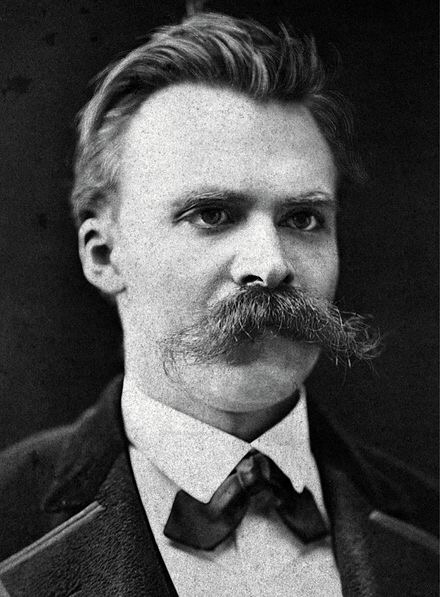
Nietzsche may have written rightly about suffering as the only link to worth, to creativity and substantiation, but no one likes it any more so knowing it is both means and ends, the value to living. To cede to possession is to return cocooned to the womb, protected, oblivious and cushioned in amniotic pre-knowing. The yearning is primal, like the urge to retract blooming petals of the reaching morning roses sun blushed and vital, so as to erase having opened to the world–ever. 

The elementary years

  
I recall the Stet box in fourth grade. Mr. Duhamel, who tortured Danny Stetner, the behavior problem in class, exiled him to a space at the back of the class behind the rest of us who sat at our desks dully and learned. He was sent there so often, Mr. Duhamel called that space of random books and classroom storage, the Stet box, til one spring day, Danny Stetner got up during class, hopped over the barrier to his box and jumped out of the ground level open windows and ran home–I presume. 

Mr. Duhamel left sometime during that year and we had Mr. Ebert who had a red face with a severe acne condition. His face got redder and his voice cracked when he raised it each time the students ran roughshod over him, which was daily. 

I only now wonder whether Mr. Duhamel was too much of a child abuser even for back then when corporal punishment was not outlawed yet and kids could still get a boxed ear or a blackboard eraser thrown at them in class. A far cry from the classroom of today where trigger issues and micro aggressions have entered the vocabulary of students and educators alike on college campuses, cramping the style and free speech of educators with censored words and ideas. Don’t teach about rape crimes in a criminal law class–craziness like that. 

One week 

  
He keeps referring back to school days

And clinging to his child

Fidgeting and bullied

His crazy wisdom holding onto something wild

He asked me to be patient

Well I failed

“Grow up!” I cried

And as the smoke was clearing he said

“Give me one good reason why”

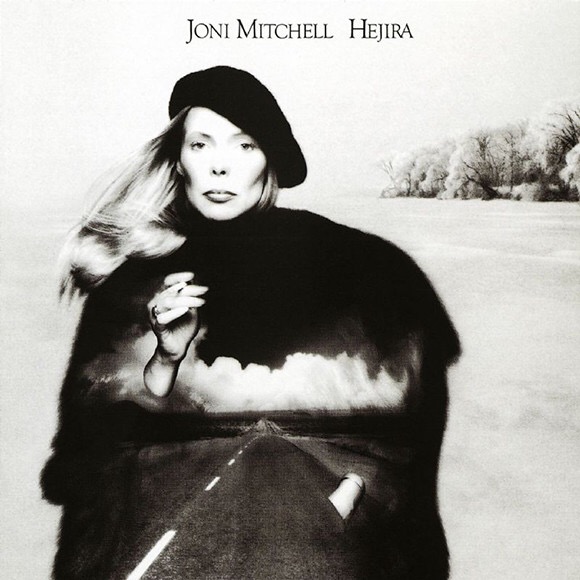
(“Strange Boy” excerpt–Joni Mitchell. Happy Birthday, JM!!)


Day 7

I was never an outcast. If I was, I never noticed. However, something mysterious was apparently amiss in the first grade to warrant seeing the school psychologist a few times. I vaguely remember. Dr. Richardson, a thin, blonde professional-looking woman in a suit, something notable for the year 1966 to even me at my meager six years or so. She was kind, thin with narrow, burnt red lips. She made me feel comfortable as much as possible given that I was ultimately aware that I joined the good doctor for some reason I neither understood nor cared for. What was wrong?

 I only knew that I sat at a desk stationed near the teacher, Mrs. Moynahan, and suffered from the angst of not knowing what to do at times, lost inside myself. Not knowing the way, the code, the proper steps or a place to start always sliced deeply, caused undue distress. Missing information meant I had no control over my environment and fulfilling others’ expectations of me. 

I recall the first day of kindergarten not wanting my mother to leave me, and she having to wait outside the classroom while I was inside knowing she was out there, or thinking she was, and even considering the possibility that she was not actually outside the door but making me believe she was. That latter idea, the fact that I could not know whether she was out there was more distressing, keeping me on the edge of tears more so than the abandonment itself. Abandonment fears were not in my mental vocabulary. Being deceived piqued my radar more than a fear of being left, which rarely occurred to me.

On the first day, kindergarten felt like fear and restrained tears, despite the sweet, slow-moving, wide-girthed, dark-skinned Mrs. Dudley, who cajoled song from us five-year olds, cheery angled songs that induced amnesia, like the distractions any adult relies on to detour a child’s unwanted emotional expression. Do you know the muffin man? 

I knew being left with questions. But that was all I recall–that and my trips to the psychologist in first grade, moving up two classes in the school smarts hierarchy in fourth grade, being teased by Mr. Muller in fifth grade for having the same name as someone in a newspaper clipping who married someone with the same name as a boy in the class, Robert Pitt. I was mortified. I remember having Denise Eccleston back in class with me then after missing her in fourth grade, the year of my upgrade. She was my best pal in third grade; we loved silliness and laughter. She was my one good friend in fifth. I only needed one–one at a time. 

Train of Thought


Mayhem in the morning, it felt like
a kind of dismemberment of the mind from the neck down.
Nothing a silent session of steep stretching would not cure.
 
Sometimes sleep affects the whole day that way,
with a whisper of promise, something more like
a train ride through a New Mexico sweep of pronghorn elk.
 
That trip through the beltways and tracts of the country,
the clacking wheels syncing the spin of my mad days,
in orange rinds left on the porch swing as evidence of hollow thirst.

 
credit: dougwebbart.com

The Gift of Writing in the Mindful Word

  
My first piece published as a contributing writer for this wonderful journal, The Mindful Word, came out today. Please enjoy this esssay about writing and teaching students old and young about the craft I attribute as salve for what ails us in the human condition of illusory separateness.
Peace, 

the Gaze