France Again


Paris

The French. So cool, so unconcerned, yet not really affected. They just do their thing. 

We traveled heavy, 8 huge pieces of luggage on wheels yet wholly unwieldy. And lugging that shit through the train stations, all in a line, cramming the already small corridors even smaller. But confused as we were, a passerby gave as an unsolicited direction or tip, all while zipping along, pace unthwarted by our unsightly clogging of the turnstiles and escalators.

It’s a rapid-fire city, yet I don’t feel the anxiety or aggression I find in my suburban hometown. My country is ravaged with anger and hopelessness. I’m glad to be away to de-steam and gain perspective. 

Food. That’s all there is to say. Even the ordinary corner brasserie offers the finest. I had cod in a buerre-blanc sauce with sautéed spinach after fresh oysters with mignonette sauce, so fresh and gorgeously good, rounded off nicely with pear Creme brûlée. The pinot was soft and lovely, and the espresso brilliant not bitter. Pure coffee.

I dream of French espresso at night in my beach town US home. Small pleasures.

After a bustling, crowded brasserie scene, we ventured on Rue San Michel, passed the Pantheon where Napoleon lies buried spying on his beloved city, the one he masterminded. It’s the Latin Quarter, full of students on their last days before holiday. The night is crisp, probably low 50’s but still and clear. The old gibbous moon casts a striated glow across the tip of Norte Dame’s buttressed topmost spiral. Our lady peers above the city telegraphing disapproval of burgeoning modernity–and us tourists–clear across town to the tomb. I feel her.

And the 16th century church featuring Bach every Saturday stood eerily sandwiched between stone and masonry, dwelling and commerce. On a brisk night, throat to boot warmed by French Pinot, Paris welcomed us aimless wanderers soaking in the hate sanctuary. 


Montpellier

The south threads vineyard to the right to oyster farms to the left as we travel the country road tracking miles of cordoned sea, rhythmic cages to the tide. Down the road thirty to forty minutes from the airport, we stopped at a petit village paper napkin restaurant serving fresh oysters, mussels, cod, clams and conch. Plateau de fruits de mer. Fruits of the sea, so fresh. Farmed local oysters keep the region’s salt locked deep inside the shells. Paris oysters frown upon their peasantry, I’m sure.

We’ll stay in a Spanish red tile roof and white stucco house facing acres of vineyards, dry now in winter. They belong to the nephew now, my children’s great aunt having cuddled up next to her husband’s burial plot. When the children were 3 and 6, we spent a few weeks in summer here when the swimming pool was a chicken coop next to the German Shepherds’ pen. And a pig too. My oldest wondered at a brown pig. Aren’t all pigs pink?

We had fresh laid eggs, brown and imperfect, but full gamey flavor, and we rode bikes and horses along the canals. We opened the loch for one huge sloop half moon house boat of fine resin pine shellacked to shine. An American woman piloted it and invited us on board for a slow-going mile or so. We folded up the stroller and boarded. She was supposed to be spending six months with her husband navigating these canals throughout France after his retirement. But he died instead. The 17th century Canals du Midi persist without him.

The winter before that summer in 2001, we spent a Christmas reunion here, the three brothers together again after twenty years. Three families, the grandchildren from 3 to 21 years old. And mamie cooked a feast as is her wont: oysters and lobster and foie gras and lamb, gratin, frommage, chocolats, table wine unending from the local vineyard, local muscat for the foie gras, and rich, aromatic coffee and creme brule to finish. We laughed and ate. 

I see the pictures around the house from that winter. Everyone smiles broadly into the camera, even the brother who disappeared directly after that event, never to be heard from again. He does that. Just disconnects from the family he loves but mostly hates. No one can explain it so I can understand. My smile, as ever, is only half formed.

And now, looking over the land, lush green as ever, only now it’s punctuated with commerce and industry where only horses and cows peppered the open fields. Now there’s a supermarket walking distance where only a ten minute bike ride away tiny corner market serviced this small stretch of street just inside the borders of Salelles d’aude. It’s rural–but not as isolated.

Inside the house, I smile at the pastel green stools lining the green, blue and white tile counter where I once fed my little one in bib and baby seat gripped to the tile to float that nearly 20 pound near toddler at our first Christmas visit. Her mamie planted a Christmas tree, a sapling then. It towers above us stately now, twenty years later.

And six yeas after her first visit, she and her three year old sister, perched perilously atop those high stools, snacked on la vache qui rit cheese and yoplait yogurt. The house looks the same as it did then, only more cluttered. Because its owner has finally slowed. I thought it would never happen, this whirlwind of endless hyperactive cooking, cleaning and chattering. She’s been dying since I know her, 37 years now, except when I see her. She could outrun me in a foot race, I always imagined. But she’s 82 now, and moves slower, like a 68 year old. 

I’m older too. The travel is no less painful since I don’t sleep on planes, upright and cabined tightly. But now I feel the aftermath of the struggle in my back and neck, having desperately tried to drift at angles suspended in air. I ache. But somehow I’m less grouchy than those other times. Perhaps it’s the growing up, my kids, now adults, and me, seasoned with too much obligation and not enough appreciation. My kids have taken up the grouch mantle. My mother in law blames me for their grouchiness when they’re tired. No one’s good enough for her son. As it should be.

A humble meal of vegetable soup, brown grainy, country bread, ratatouille, lamb cutlet (for the carnivores) and frommage paired with a young Saint Emilion filled us to sleeping, even after our late hours long naps. Hopefully jet lag lags a little less tomorrow. The chef and her son watch Miss France beauty pageant while the children suck up the wireless they’ve been missing for far too long, at least a day.

Judge not: Ten for Today


“I love your cute, little ass,” he always says, and every time he does, I guffaw, snort or giggle just a little. Not a tee hee, coy, embarrassed or flattered giggle either. It’s more disbelieving and cynical than that–way more.
 
Both parents at one time or another measured asses in the family. “Poor Pam. She has no ass,” I’ve heard my father say on more than one occasion. “Not like her sisters.” Nope, I’d silently always confirm the criticism because I’ve heard my mother respond to his remark with, “She has my ass, and I got my mother’s flat ass.”
 
I used to joke to people (still do) that I come from a long line of flat asses. I’d see body type illustrations, animated or real life, of the body labels “pear shape” or “spoon” in Cosmo or some other rag. Spoon, definitely spoon. Spoon has a long torso and convex posture–with a flat ass. Yep, spoon.
 
In my youth and young adulthood (the time when they could get away with that kind of crap), people would comment on my height. “Oh, she’s tall,” they’d say to my mom. “Yes, she takes after her 6’4″ father.” And the first time I met my mother in law at her suburban flat in Garches, just outside Paris, the first words she spoke upon seeing me were, “Elle est grande!” (She’s tall). France is short.
 
I’m 5’8″. I look up to meet the eyes of my 5’11” daughter. She’s tall, relative to other American women. I’m tall relative to the French. And all of this parceling of parts into categories to somehow order ourselves, well, I discouraged it raising my own children.
 
I explained to them how labeling others by body shape, color or size objectified people (in terms they could understand, of course). The brainwashing took, and now they berate my father, who habitually points to people’s fat, skinny, ugly, hairy, bow-legged, shapely, old, young, black, white, “oriental” (and more) selves.
 
More than PC, the de-labeling gives people a chance. It’s lazy and disinterested to sum people up by their parts. You can make snap judgments if you know their “type.” “Oh, she’s insecure and doesn’t date because she’s taller than most guys her age,” I’ve heard tell of my own daughter. And I still carry scars from those who–a la Trump–rated my body parts, a profiling which I swallowed as fact.
 
I know better now. The force-fed, culturally-created body ideals against which others (and I) measured myself bullshitted me for too long. My ass may be flat, cute, small, just right to onlookers. Bottom line (yep, I did that), I couldn’t s(h)it without it. Judge that.
 

Credit: spoon-silverware: pixabay

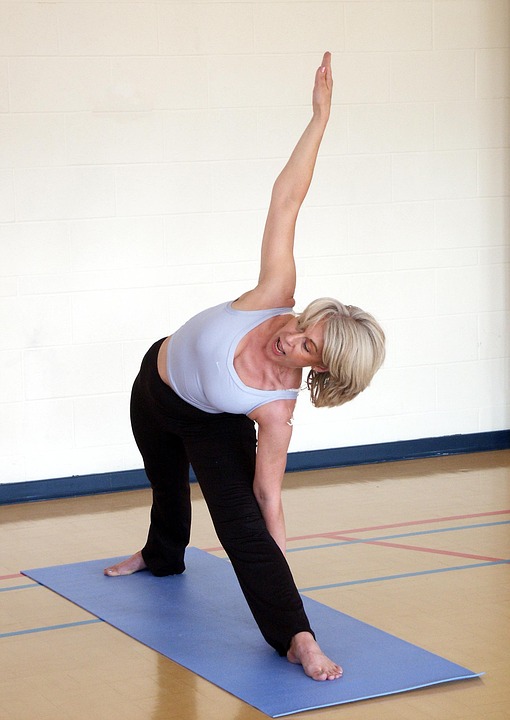
YOGA OVER 50: The journey is in never arriving

over-50-yogini

According to the Yoga Alliance’s 2016 report on yoga in America, “36.7 million Americans or 15% of US adults practice yoga in the US.”

Of course, yoga is great for you. It promotes well-being through strength, flexibility, breathing and meditation. But is yoga good for everyone?

According to William Broad, author of The Science of Yoga, “The soothing practice … can lower blood pressure, spice up sex—and kill you.” He claims…(read the rest here)

Fat Knees: Ten For Thursday


September 8, 2016
 
I’ve always had a rocky relationship with my knees. Maybe it was my mother who first brought notice to the knee knocking. She once remarked that she had fleshy knees. I have the same knees. The surrounding knee flesh on the inner leg side puffs noticeably, like a mutant swollen skin tag.
 
Luckily, my era saw the maxi and midi skirts, either ankle length or below the knee length skirts and dresses. I recently emptied a closet full of midi skirts I wore professionally with a smart suit jacket, the uniform I wore to my law office. Like the law practice itself, those styles belong to a bygone era.
 
Now the mini and maxi remain, the latter my preference of course. The knees.
 
I recently wore a mini-ish dress, a sleeveless, painted, loosely-body-conforming sunset dress I bought in Hawaii a dozen or so years ago. I took a long look at my knees peering out from just under the hem of the midnight blue portion of the dress (sunset waters), and still did not like my fleshy knees, especially now that they’re accompanied by crepe-y skin sliding down to meet them. Aging ain’t pretty.
 
But it could be. While I know I’m perpetuating the cultural lore of youth beauty worship by disliking my knees, hiding them most of my life, I still wore the dress–with only a little trepidation. The beauty of aging lies in Helen Mirren style fuck-its. The gorgeous feeling of not giving a shit. But maybe that trite image–the rebel 50-something–is culturally produced too.
 
I’d like to take my fat knee to the crotch of cultural dictates, the media and marketing agencies. This fifty-something raises her age-spotted middle finger and says, “Fuck you!”

Nothing 


“If you don’t have good intentions, please just leave me alone. I’m tired.”

Right on. My gut reacted that way to these adorned, bordered words on my morning Facebook scroll. At second blush, however, this sounded grumpy. It’s the “leave me alone” part. A command that demands aloneness inevitably appears angry, sad, just a bad decision. I mean, who besides me would want to be alone? Well, many more might be better off if they were. They might not only be okay with it, but crave it after a while.

The world is always too much with us whether we live in the bush on the African plains or in New York city’s heart. We toil. We care. We think about how, what or if we feel from the moment our eyes open upon awakening to their closing in sleep. 

We think of doing. We do. Our minds embalm themselves in constant “voice,” mostly noise. Our sensations form perceptions and the senses are always on, no matter how much we try to shut them down, tune them out or mute them with volume reducers (drugs, alcohol, love, food…). 

We are lost in a thrumming hum of sensate being. How can we ever be alone? There is no alone, no solitude, except for sleep or death, and those only by outside appearance. Who knows who or what accompanies us in either? Our minds are constantly populated with people, thoughts, memories and plans with, about or in avoidance of those we carry. 

We are never alone.

No wonder we’re tired.

So the demand to be alone is necessary. It seems nearly impossible to accomplish without intolerably long, hard dedication to removing thoughts–all of them–in practiced meditation.

And those–people or thoughts–with bad intentions whether direct or indirect, conscious or unconscious, it’s all too much. Each of us is on overload merely in the pace of one moment to the next–the bombardment of living with others, even among nature only. Nature is not benevolent. It too harbors malignancies, intended or not. 

But those who move bent on destruction (think of the fearful-angry vibrations they emit and hit us with like sonar) overburden us beyond our sitting, resting, active capacities and raise our hackles, elevating our hormones with alarm bells. We, poised in self-preservation, fight or flight, consume and are consumed by nothing but the bad intent, defense in crush or aggression, certainly guardedness. Where does that lead? 

Not to equanimity, nor to conditions amenable to hearing the silence, being with solitude, clearing the mind. We become filled with the chatter-ful greed, jealousy, deceit, mischief or envy of another. We endure gossip, lies and other violence. Our skin tingles and tightens with breath, tremor and howl.

We may suffer with our lives momentarily or forever.

It is not an unreasonable request–to hold out a stiff, unbending arm that impedes the onslaught of another–whether that takes the form of someone bumping into us, screaming hate or fear at our eyes, or onrushing our bodies to steal or otherwise injure.

We can act. We can will it, say it: “Leave. Don’t come near. Let me remove you from my mind. I can do it with or without your consent.”

In the end, it–all of it–is in our heads. Nothing. Everything.

So, usher in aloneness. Yes. I’m willing. 

Dear John…Poem 20

Dear John:

You’ve told me a man must have everything.

He must have her love and affection, trust

and cares, woes and fantasies, body and belief.

He must contain and compel her dreams, speak

her mind with her, beside her and be her too.

He must have her body, entirely his own, as she

equally partakes of his, fully accessible any time.

He must give her solace and she his support.

They must build things and break things down,

together, working as a team, united as one.

There must be abundant love everlasting, you say,

and undying even beyond death and delivery.

John, you’ve claimed possession of her opinions,

her bodily secretions, and her style of clothing.

You’ve demanded her attention and hands, her

movements during the day and night, her arms

ever clasping yours, enveloping you enveloping her…

Dear John, my dearest of all, love can’t be swapped

and traded, quantified and qualified, bought and sold.

Love is no cure, can’t fill the gaps, cracks or ailments,

not those inherent or fostered in the care of those who

thought love was power and hurt and discipline and

control, John, mere control that fear spills through you.

Love is not for keeps, never on sale, bundled or peddled.

Especially, love is not had but kindled, like wood fires

warmth and sustenance, dazzling and mysterious, in

properties known and magical too. Love has no rules.

John, let me, if you will, teach you all I know about love.

Love–

Ten Years Ago I Wanted to Pierce My Nose: Poem 14

Ten years ago I wanted to pierce my nose
 
but I joined a firm instead.
 
My partners thought it wild,
 
clashing with the cobalt blue seriousness
 
of our office walls and wisdom.
 
So I waited til I left the firm to pierce my nose.
 
My daughters had theirs pierced by then.
 
Yet I caved to pressure in the last minute:
 
it will jeopardize your reputation, and
 
the outcome of your case
 
may be prejudiced, prejudged, predetermined
 
by another’s preconceived notions
 
about piercings and morals and drugs,
 
noise like that, which I know is just bull shit.
 
But I chickened out, and now my nose
 
has grown long with age, and the piercing
 
would not look right wedged between wrinkled
 
doubt and oily regrets oozing from gaping pores.
 
I’ve made a mess of this decision.
 
Has it been ten years since I wanted to pierce my nose?

Moody Tree: Poem 12


Your name means mountain ebony,
a certain Bauhinia,
common to coastal California,
but I call you moody.
You own my front yard,
dominate passages and pathways,
burgeoning weight of verdure or
leafy reaches for spider’s webby catch to
neighboring anchors–rose bush branch or
car parked side mirrors.
How you please my wispy-boned mother braked still,
the dog leashed to the wheel chair,
under a relenting shade,
cooling an afternoon zephyr.
In spring or autumn, sometimes winter too,
you boom-blossom burbling orchids,
delicate pink and purple hazy bells
that sometimes ring in summer too.
That’s when your leaves burst butterfly hearts
of hunter green fringed in lemon-lime edges, a
hovering, healthy, verdant vibrancy.
But on any given week without reason,
your leaves brown at the edges,
then all the way through,
baring skeletal bramble
like bones of the cancerous,
exposed,
radiated,
burnt
for the winter–or summer complaint,
marring the yard, baring the hidden wreckage behind you.
That’s when the pods hang dry in rusts and reds, seeds
to bake or burst, sturdy uterine drip packets,
like dry, pea pod icicle tears crying,
yet unyielding to the grip.
And the next week,
they’re gone,
replaced by the brilliant buds as
poking penile plants peek through tightly tubed petals,
orchid splendor,
the softer side on a misty Monday.
Until Tuesday.
When the mood strikes.
Which outfit to wear for today?

Under Your Gaze: Poem 11


I live under your gaze
 
in a box
 
by the bus bench
 
in the bushes.
 
Though our eyes
 
never meet,
 
not a glance my way,
 
I feel your shame.
 
Don’t.
 
Judge my story.
 
You’ll find it in my eyes.