Scribus Mundanus Me


Perhaps you have to be a teacher or know one to smile at this article a good friend sent me today, but I enjoyed seeing myself typecast as a certain type of teacher. Though I have taught my share of literature courses and may have been Libris Scholaris, especially in grad school as a Teacher’s Assistant, guest lecturer or contract lecturer at the university, but I am quintessentially Scribus Mundanus all the way these days, as I stare down a pile of ungraded essays beckoning me to my desk even at this late hour. 

John Minichillo on Timothey McSweeney’s blog writes “How to be a Better Teacher-Person Through Apathy: On the Heirarchy of English Professors, a Nonmenclature: Scholar-Type, Teacher-Type and Artist-Type” to illustrate and caricature teachers on this very week of the teacher. I have been all three, but teaching three composition courses this semester and some semesters four or more, I relate to this description:

The second type of English professor is the composition scholar, or teacher-type, Scribis mundanus. They use the word “text” with far less frequency and their obsession lies in “pedagogy,” a word never uttered outside of universities, but a catch-all title that means, broadly, “teaching.” While Libris scholares teach to make a living, so that they can study texts, Scribis mundani have always wanted to teach, and they have a way of resenting other professors who don’t engage in the frequent self-examination of their own teaching practices. They believe in a growth model for teachers, so that they are involved in teacher training and/or disseminating self-assessment tools, and they command their classrooms with a dynamic flair. They are forever pondering goals and outcomes, and will dole out experimental assignments, so that during any given semester the class content, approach, or grading methods of Scribis mundanus may have completely changed from previous semesters. The field of composition developed out of necessity and it’s the new kid on the block. At the beginning of the twentieth century students were interested in literature, and classes were introduced where these students would write “themes” each week, so that these primitive papers became what was graded in the course. Over time, English classes were separated into literature classes and writing classes, and composition was the methodology that grew up around paper writing, which became the subject, whole and entire, of composition classes.

I am a teacher. I am in it to teach. I use the word pedagogy, yes. Reading “texts” and creating art are collateral benefits that go with and develop from the art of teaching. Becoming an expert on others’ writing and teaching others to write, I have improved my own writing. The reciprocity has quite satisfactorily evolved into paid self-enrichment. 

Mundanus? Sure, the comp grind, as it is referred to in the biz, has its mind-numbing moments, for example, that pile on my desk that promises endlessly winding, often pointless poor prose as well as the surprise satisfaction of a well-turned phrase. I’m happy merely to find the few that followed the assignment directions. But then I remember that my own writing, discipline and substance have developed over a life-time, several decades. What can I expect in mere weeks? 

Maybe the next professor down the comp chain will have better luck weeding out the disorganization in this semester’s crop of students’ harried developing minds and the bad habits cemented over the years. In three weeks, my tenancy with them will be up (except for those who choose to try again with me). And then it’s summer school!

 
Image Credit: http://www.edweek.org

I’m a Teacher


I visited my father at the hospital this morning right after teaching my Tuesday morning class. In small talk, he asked me if I enjoyed teaching. When he is not at the hospital, which is always, he lives with me, so we have had this conversation before, I am certain. But this is how it is with him. He idles in conversation, never moving forward nor backward.

I said, “Yes, I love teaching.” To which he replied,

“Maybe that’s what you were born to do.”

I had to think about that for a moment. It’s probably true. I don’t believe he was accusing me of being too pedantic. The context did not warrant it. I’m sure I have been accused of that one before. Sure of it.

But he may be right. I have been a teacher or tutor or coach just about all my life from having younger siblings to helping out the kindergarten kids when I was a sixth grader to tutoring sociology in college for pay to side jobs through college as a Berlitz School of Languages instructor to a high school English department reader to a high school English teacher fresh out of college as my job while I finished law school.

I thought I should be a lawyer (my mother always said I should be), but as it turns out, I was always a teacher and returned to it after practicing law for 12 years and have done so ever since. 

I have had the great good fortune to teach so many classes, so many, many of them from composition and writing, to American and British Literature, to paralegal and law courses, to creative writing and life story writing, to art and cooking. I coached soccer for nearly 20 years.

So yeah, maybe it’s true. Maybe I was born to teach. I certainly do enough of it. After all these years, I have a knack for it, maybe even a certain talent, though I am equally certain that I am not the best. There are far more organized and structured college instructors than I am. And my ratings on ratemyprofessors.com are an average of mixed reviews. I have been accused of being a tough grader. That is true. One reviewer wrote: “If you’re stupid and you know it, don’t take her class.” I’m not sure what to make of that.

But it’s National Teacher Appreciation week. My students aren’t aware of that, and I am not bound to tell them. But I don’t need to. I am still friends in real life and on Facebook with students I taught in their senior year of high school 32 years ago, professors, business owners and lawyers themselves now. Folks I taught writing tips to ten years back in a class entitled “Writing the Story of Your Life”at a few senior citizen centers down the road 45 minutes are still friends. And dozens of students I see from time to time around town who I’ve taught at the local community college in the last fifteen years have popped up in that amount of time. Kids I coached when they were little are now showing up in my college class room.

I know they appreciate what they learned. Somehow I do. But I don’t think teachers are appreciated enough and in fact, are often ridiculed and belittled as the children they are charged with educating. They certainly are not respected given the status and pay afforded to them in this country. Perhaps that is one reason I felt–against my better instincts–that I should become a lawyer rather than “merely” a teacher when I graduated college. And I have vivid memories of teacher friends having to defend themselves from the old “you have summers off and I wish I had your job” patronizing.

Yet how many of us can remember at least one teacher that influenced them, taught them something and gave them stories to pass on to their own children? We take their continued existence for granted. We take them for granted–except for the one obligatory nod mandated by celebrated days of a week each year in May, primarily in grade school, when kids bring in flowers, apples, mugs, cards or chocolate to their teachers, who smile and fuss in return. I remember my years as room mom in my kids’ classrooms, having to coordinate that event each year as well as the holiday gift in winter and the parting gift in summer. 

And I often get Starbucks gift cards or gilded thank you notes at the end of the winter, spring and summer sessions. These are lovely tokens of appreciation. But I also get shorted a class and thus lose my family’s health insurance every five years when the district, state or country suffers budget crises. I’ve been through three of those cycles in fifteen years, sometimes at perilous times in my family’s health history. I am also never guaranteed a class as I do not work under contract, just the good will built over time of performing my job. 

This semester was the first in fifteen years that I was paid for office hours, though I hold them throughout the day and night outside my classroom when it ends, at tables on campus, on my way to my other job via telephone and at night when I return via laptop.  And I am happy to do so. I love my job. I just wish teaching were as respected and well paid as other jobs with comparable education and training. And the more I teach, the better I am at it, though there is always something to learn as a teacher.

Teaching is in my bones. No doubt. I’m fortunate to do what I love. Remember your teachers this week, most all of them givers–in the spirit of the profession. Hugs to all my teachers, good and bad, for helping build my life and teaching me to pay it forward.

The Heart of Empathy Speaks


I fell in love with foreign languages from before I could speak,

From Mother Goose nursery rhymes chanted to childhood,

Singing me through my days in silly lilting jibberish tolling tales–

Mesmerizing wispy wild figures sticking thumbs in plum pies

Or eating mystical morsels named curds and whey on a tuffet.

Then in college, I pined for the secret to unlock the hearts of 

Spanish, French and Russian poets, painters and culture magicians.

I cracked the code to some, forming strained lipped sounds,

Writing winsome words in chipped or open gullet accents  or

Symbols to sounds unmade, unimagined and click ticklish

until I could not remember my own tongue.

But after college, language tore at me, ripped me up

And left me dull, licit and languishing in legal triangles,

Endless geometry of angles, degrees and lines.

The law sandpapered language across imagination’s landscape,

Smoothed my edges in deeper, rounder archetypal paths, pregnancy, 

Until I lost Octavio Paz’s meter sanded out in childrearing recipes

Swapped with Guatemalan nannies.

Pellucid sentences peeled off like shredded wallpaper skin,

Their luster gone with a youthful jaunt, hop, gleam and trigger,

Flashed in skipping stones, falling in love and hopping fences

Round speedways, parks and wood clearings where music moved 

Us, loins and feet to primal noun-less, soundless speech, 

Just to see,  get a glimpse at lip-sung words beyond the barriers, 

Risking liberty and future, impelled by lusty mischief and rush.

Back then, I had to hear them sung in tune-ful missives keyed only to me.

And now, the remaining hash of come and gone, bright and dark, transforms

Acidic intestinal stew to sorcerer’s clairvoyant elixir: my gut tells me.

Among the clamorous hate-filled speeches and cautious creeds non-offending,

Blasted in soldiered lies and political stomps, and on uncivil, anti-social media,

The gurgle steels me listen to us, be your pain, own my heated core as if it were 

The world’s sole lingual ignition; the ravenous merging urge to swallow me up,

The kind you write in erotic type and imagery possessing, owning my pulse–

These are mere smoke signals, the wink-less language of I know you as I am.  

In the aftermath of lived language, word dross, let us, you and me, tutor empathy,

The Esperanza of human kindness,  re-remembered swish and slosh in thickish silent

 womb–connected to another’s rhymes and rhythms, as the song. 


Babies in College


Today a student handed me a note purportedly written by his mother, excusing him for leaving class early a couple of days ago. I teach college English. In the 20 plus years I have taught, this was a first.
 
In the last 2 years teaching at the same college I have taught for 16 years, my plans for at least one class per semester have been interrupted to remind students that they are in college. They don’t have to be in class like they had to in high school by state law, though it is probably a good idea, especially in my class. I do lots each class to justify my existence–that is, graded assignments and answers to eventual final exam questions–and missing a class is not recommended. 
 
However, students who must miss class are assumed to be adults responsible enough to find out what they missed and resourceful enough to recoup their losses. Big assumptions. They still ask me questions like, “Did we do anything while I was gone?”
 
Though less disturbing, I cannot count how many times students ask me permission to leave early, arrive late or miss class altogether. At first I believed they were simply not mentally out of high school, where their attendance was strictly required though their attention to the class while attending was not so strictly required. I can only assume so from the in depth, lengthy text messages I have received from my children while they were in class. Many students have confirmed the same, and judging by the persistent, nearly obsessive habit of texting or gazing into their phones–activity banned in my class–I believe the phone habit is a long-instilled layover from high school, or merely the product of living now.
 
Ironically, high school mandates attendance but not attention while college is just the reverse. Since I teach freshman, their education includes breaking the high school habits and convincing them that they truly are free now, free to succeed or fail–whether I give them permission or not.
 
I’ll admit that my jaw dropped and my face clearly had “wtf?” written all over it when I read the penciled note on a sticky note sized paper that asked to excuse her son for missing class the other day. Have I gotten much, much older recently or have my students gotten much younger? I am now convinced that the number of coddled college kids have increased and they have a tougher time growing up, thus the odd permission requests and absence notes. Or is it simply time for me to retire?
 

Credit: http://www.babiesonline.com

All Good Things…

Opening Night of Thomas Keller's Bouchon
November 16, 2009 – Beverly Hills, CA Environmental Opening Night of Thomas Keller’s Bouchon Photograph By Jacqueline Miccalizzi© Berliner Studio/BEImages

I am fortunate to be a writer. I have worked doing what I love, even if not all writing has been fun. Writing fun quickly withers if you have to do it for a living. My paid writing assignments have varied in scope and subject matter from the mind-curdling banal to the wildly exciting.

One assignment I rather enjoyed for the research I had to do on subjects for which I have passion, food and travel, was writing for the DaringPenguin.com site, which kept me researching and salivating while luxuriating in luscious pictures of gorgeous food, decor and scenery. I loved the job and am sad to see it end as the site is taking a new direction and/or going on hiatus.

Here are five articles I wrote for this site that I hope you enjoy:

For the Finest Dining in Los Angeles, Feast at These 5 French Restaurants

Our Choices for the 5 Finest French Restaurants in Las Vegas


10 Great Things to Do in Seattle for Free


Santa Monica’s Amazing Seafood: Ten Spots to Try


7 Unique Seattle Hotels That Will Truly Amaze You

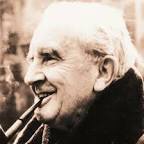
National Tolkien Reading Day

  
Guess I missed it yesterday, the day devoted to reading Tolkien. And while I would not have read any Tolkien, I would have paid honor in some way as he is one of my most influential writers. Not so much for style or even content as timing.

My earliest reading memory is tied to him. In sixth grade, the reading light went on. Somehow it struck me that with a dictionary and determination, I could read just about anything. I had proven it by trudging my way through The Hobbit, an assigned reading by my ambitious sixth grade teacher, Mrs. Allgrove. Though I begrudged that woman many things while sitting long days in her class, reading Edgar Allen Poe stories to us was not one of them–nor assigning us Tolkien.

She was ambitious for us 11 year olds, and I took up the challenge. Reading The Hobbit was painstakingly difficult but I had a profound sense of accomplishment and enlightenment after finishing the book. Not so much for the story, which reached me in mere wispy shadows at the corners of my imagination, thin strands of plot but thick with magical atmosphere and mystery. More so that I had cracked some code or found the secret password and entered the club. I could read hard books.

After that I ventured into many books, too many to count. I am a reader. I attribute that love to Tolkien who lured me with mystery. My attempt to do the same for my own children did not work as well. I found an amazing illustrated text of The Hobbit for kids, drawings that plucked the fright out of the spider scene or the eerie from Gollum. But it bored and frightened my kids. They were not six graders yet. Maybe premature. They did not even see the movie when it came out. I surely did.

Tolkien totally enveloped my world when I was fifteen, the year I read the trilogy. The Lord of the Rings not only captivated my imagination, but yanked at the seams of longing and teenage angst. The darkness of that book was my own darkness, deep and well traveled. The torture of that darkness produced by the most majestically fabulous language spoke everything to me: horror and beauty. 

I lived in Middle Earth, at the edge of Mordor, in the realm of invisibility that was becoming more and more addictive. The landscape was my own insecurities and sorrow as I traveled through the tunnel from sad teenager to savvy teenager. By the time the ring was tossed into the abyss, I had come out of my own cave to see that the world was brighter than I imagined. I lost some of my perpetual glum, which I wore like the makeup other girls wore to make them–in their minds–more socially acceptable and attractive.

I learned to speak Elvish. My best friend and I spent one Halloween in a cemetary drinking Schmidts beer (a little over a buck a six pack back then) and smoking hash scaring the shit out of each other with visions of Mordor. I lived this world not only while I read the books but in the long aftermath of its lingering imaginative aroma. I hated finishing the books, my long, long absorption in the world coming to an abrupt end.

My love for The Lord of the Rings and Tolkien stayed with me like a first love. The untainted visions and preserved excitement of total disappearance into another world were sacred to me, so much so that when the movies came out, I refused to see them. I did not want my own mental creations of the characters to be displaced by someone else’s casting. I wanted nothing to do with that.

Until I entered graduate school for the second time at the age of 43. I went back to school to get a PhD in Comparative Literature at the University of California at Riverside on a fellowship. One professor in the program took a special interest in me and invited me to a small group of three students to do an independent studies course in flash fiction under her tutelage. After I agreed, the course turned out to be a delving into the holocaust and feminism, two subjects I wanted to avoid.

Interestingly, the course reading list included The Lord of the Rings. When I saw that title, I became both excited and anguished. Did I want to spoil the specially preserved place of that book that I read purely for pelasure and out of curiosity by dissecting it until the juices were totally bled out of the words?

The same books from 1975, yellowed with decades of shelf time, came to my aid in 2003. It was like a time warp. I read the books as if for the first time and enjoyed them without critical interference, which was my wont 28 years later with a couple of literature degrees under my belt and several teaching years. As is often the case with acquired analytical expertise, the innocence of a subject under analysis is lost when the invisible lines of creation are exposed.

But that did not happen with The Lord of the Rings. And even after taking some wild bent roller coaster ride of a term paper outlining the underlying sexual tension of the menage a trois between hobbits and gollum-like creatures (Oy, don’t ask), I had fun reading the book even while destroying its innocence with interpretive analysis. It was the easiest paper to write, and I had the most fun writing it, unparalleled to any before or after.

But I still refused to see the movies for months afterward–until I did. I had the director’s cut of all three of them. I sat down in pj’s for the weekend and dove in. And yes, my initial impressions and imagined beings have been displaced but the movies were faithful and enchanting. I admired Jackson’s devotion to the spirit of the text. I was once again immersed in the world with its strange and wonderful journey, mine once again. 

Tolkien has taken me far, stretched me through the years. I am forever indebted to him and his creations far more than I can express in my own plebian words. And though I am not a dedicated fan of fantasy adventure novels (though I have read a fair amount of them), I attribute Tolkien to both my love of reading and my disinterest in most fantasy adventure stories. I had trouble getting through all of the Harry Potter books. In every fantasy story I have read since, I recognize some “borrowing” from Tolkien. 

He was the master after all. He set the prototype. Everything after cannot be but some poor imitation, switch-up or clear avoidance of everything he imagined. The greats do that: pull us along and then intimidate the hell out of us. Thanks J.R.R. I am always reading you, regardless of book in hand or not. Cheers!

Dark Matter, Does it?

“If the multiverse idea is correct, then the historic mission of physics to explain all the properties of our universe in terms of fundamental principles–to explain why the properties of our universe must necessarily be what they are–is futile, a beautiful philosophical dream that simply isn’t true. Our universe is what it is because we are here. ”
Alan Lightman, “The Accidental Universe”

Astronomy week, when the class and I read two essays, one about the relationships of the sun, moon and Earth–and one human to another, and one about the aim of science to figure out who we are, why we came to be, is an exciting week for me.

I wax on about the mysteries of the universe, the idea of the multiverse, Big Bang, Intelligent Design, Newton and the Theory of Gravity, Darwin and the Theory of Evolution, Einstein’s Theory of Relativity, ten or more dimensions of space, quantum theory, quarks, string theory, Inflation theory, dark energy and matter, the complete absence of a theory on how the human brain creates consciousness, and the overall pursuit of a fully coherent cosmos that adds up to us–what scientists had hoped to achieve through speculation, calculation and logic, beginning with observing natural laws, up til recent history when the Hubble deep field experiment revealed the probability of a multiverse.

The project to discover the cause and effect chain to everything had to be abandoned with thrown up arms, seemingly also abandoning the aims of the preceding thousands of years’ work. Alan Lightman writes about this interrupter known as the multiverse in “The Accidental Universe.” And when I ask students, who look at me as if I am on a 70’s psychedelic trip, what this all has to do with them, their reality right now, no one can answer–not even the ones who desperately want to answer something, anything.

Like history, the cosmos is just too far away. They cannot feel it, not even as a dream they may have had and can recall in that hazy sense of remembering a distorted reality deeply imprinted in another realm of consciousness.

“Not only must we accept that basic properties of our universe are accidental and uncalculable. In addition, we must believe in the existence of many other universes. But we have no conceivable way of observing these other universes and cannot prove their existence. Thus, to explain what we see in the world and in our mental deductions, we must believe in what we cannot prove.” Lightman

And so students interpret that faith in the unknown not as the spurs to discover what is out there but as the sigh of futility. It has so little to do with their immediate aims–surviving school, work and social media.

But it is human arrogance to require relevance to the human condition. Or that the multiverse is created in our own image, running round ourselves like the orbiting moon to Earth, Earth to the sun.

“The disposition of the universe–that crazy wheelwright–designates that we live on a wheel, with wheels for associates and wheels for luminaries, with days like wheels and years like wheels and shadows that wheel around us night and day; as if by turning and turning, things could come round right.” Amy Leach, “You Be the Moon”

I miss the eloquence, enthusiasm, sincerity and passion of this scientist to make the real imaginable and the imaginable real:

Fuck Contentment

A moniker for good living, 

this fear of discomfort, 

ever drifting toward ever-comfort,

called contentment. 

Just give me this or that–

this president, 

this career, 

this amount of money, 

this family, 

lover, 

mother, 

neighborhood–

and everything will sail, 

Cadillac shocks across

the fresh asphalt forest floor.

If I can be comfortable,

just end this struggle,

this pain and anguish,

strife, 

this ambitious striving,

I will be content. 

I once knew this

 instinctively. 

“Contentment is death,”

I said at solitary 14.

 The day I am content, 

all juices have dried. 

The day I surrender, 

turn from struggle, 

un-face the tick of the clock, 

is the time to lay down,

take peace to a deep hole,

dug in my own backyard,

or in an abandoned dirt lot.

I am neither hero nor warrior. 

Just thirsty, 

a third rate ecstasy vampire,

seeking small electric bites, 

a taste of the powerful, 

the blissful, 

and the sublime. 

To touch the electrified wire 

to tolerate the charge, 

where it sparks,

risking pain and death,

beats the static hum

sounding the heated surge,

only the pulsing effects,

not the beat itself. 

I remember reading the poet:

“I want to write what marks me,

gets me killed.” 

I wondered if I did too:

stop fearing, I thought,

stop warning safety, 

stop honoring caution 

and forego the refrain,

letting shit fly and scatter, 

roam and bust, 

fling and crust 

and curdle like dying, 

like spoiled cream, 

like decay and wither,

the words, let them

paralyze, plunder and poison,

let them arrest a heart, 

gore truth from a bloody lung,

a festering bullet hole to the brain,

let them burn

and gnaw

and lacerate;

let them disrupt dreams

and torture sleep.

Let them brand flesh,

singe hair and spew bile.

Let them upturn content-

meant to pacify and please.

Let them fist screams

and tear at vacant stares.

Let them drown dun breasts

and poetic gentility.

Let them beat the fuck out of you

–and me too.

Writing to Know Me

writer

I, like many, write to grow myself and grow knowledge not only of all that’s out there but also of all that’s on my mind.

Novelist Judith Guest in the Foreword to Natalie Goldberg’s Writing Down the Bones writes: “It is easy to lose sight of the fact that writers do not write to impart knowledge to others; rather, they write to inform themselves.”

That may seem egocentric, but isn’t that all that anyone can be? I read writing advice daily: write for others, give readers something to chew on; enrich them. Well I, for one, know that I may never sit down to write with my readers’ benefit in mind. That I could not do. I would write not one word (and did not for decades) with so much burden, so much expectation.

Besides, it’s presumptuous to believe I have anything to offer my reader–knowledge, advice, tips, beauty–beyond my human experience. I offer one person’s view of one person’s observations.

After I have sent something out there–to be read–then, that is when I send my hopes and wishes that someone somewhere finds something in my words, something worth the time spent reading them. But if I wrote with that same desire, that my recollections reach a reader, I would not write for fear of disappointing.

Anyone out there? (sound of crickets)

The Poetry of Being

  
The components of being build essences of the all told, acted, sung and noted.

They shake out doings done and yet to come like San Andreas’ fault, not a fault. 

Did we quake? My shoulders shuddered like a surge, a heart murmur or eruption.

No, the inner mechanics of rebellion taking a stand on all things ingest just arose.

When the ear throbbing starts, I know I’m lost to it, going into floated notice din.

My heartbeat declares so loudly inside my ears in its under water muffle-areum.

I doubt creation’s pen then, my mouth moving silently, my hands ripping at keys.

Keyboard fingers fly like the cocaine toad hopping brain’s clicking away at strings.

There’s this word association that bleeds writing, a lapse, slide gurgle into them:

Strung words, the meaning of which is not revealed until they mix and sit together.

They settle in a rhythm and slur, brushed water tinted smears blotting tilted space.

Poetry and being entwine thus: letter, scene, wish, guess all overlaid in blindness. 

Squeezed juice, the nothing of matter becomes me-you, and we polish air’s shine.