Cradle to Grave


One more I honor and pray will not be the last,

This poem, your day, awakenings to more days

Filled with complaints, facts, lies, jokes and sighs

Those last with mortal grimace and existential pain–

And celebrations.

No one fills your place, not before or after,

None who sits just where you do in my house,

Or my car, no one quite like you who inherited and grew

status, class, gender, race, trait, stance and ethnicity.

You made me.

One day you will unmake me just like the sun and earth,

My fiery Death whose smoke will awaken the ravens

Loosen charred Regret and Steam, neither life companions

On my walk, my rise and fall, blossom and decay, my stain

After you.
 

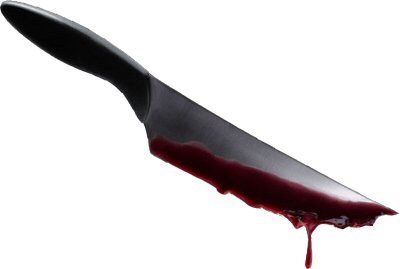
You’re the knife

Eavesdropping snippet of the day:

“I don’t why it is, but every time I see you I picture the blade carving into bloody flesh.”

Silence (enough said).


Credit:creepy pasta.wikia.com

The Heart of Empathy Speaks


I fell in love with foreign languages from before I could speak,

From Mother Goose nursery rhymes chanted to childhood,

Singing me through my days in silly lilting jibberish tolling tales–

Mesmerizing wispy wild figures sticking thumbs in plum pies

Or eating mystical morsels named curds and whey on a tuffet.

Then in college, I pined for the secret to unlock the hearts of 

Spanish, French and Russian poets, painters and culture magicians.

I cracked the code to some, forming strained lipped sounds,

Writing winsome words in chipped or open gullet accents  or

Symbols to sounds unmade, unimagined and click ticklish

until I could not remember my own tongue.

But after college, language tore at me, ripped me up

And left me dull, licit and languishing in legal triangles,

Endless geometry of angles, degrees and lines.

The law sandpapered language across imagination’s landscape,

Smoothed my edges in deeper, rounder archetypal paths, pregnancy, 

Until I lost Octavio Paz’s meter sanded out in childrearing recipes

Swapped with Guatemalan nannies.

Pellucid sentences peeled off like shredded wallpaper skin,

Their luster gone with a youthful jaunt, hop, gleam and trigger,

Flashed in skipping stones, falling in love and hopping fences

Round speedways, parks and wood clearings where music moved 

Us, loins and feet to primal noun-less, soundless speech, 

Just to see,  get a glimpse at lip-sung words beyond the barriers, 

Risking liberty and future, impelled by lusty mischief and rush.

Back then, I had to hear them sung in tune-ful missives keyed only to me.

And now, the remaining hash of come and gone, bright and dark, transforms

Acidic intestinal stew to sorcerer’s clairvoyant elixir: my gut tells me.

Among the clamorous hate-filled speeches and cautious creeds non-offending,

Blasted in soldiered lies and political stomps, and on uncivil, anti-social media,

The gurgle steels me listen to us, be your pain, own my heated core as if it were 

The world’s sole lingual ignition; the ravenous merging urge to swallow me up,

The kind you write in erotic type and imagery possessing, owning my pulse–

These are mere smoke signals, the wink-less language of I know you as I am.  

In the aftermath of lived language, word dross, let us, you and me, tutor empathy,

The Esperanza of human kindness,  re-remembered swish and slosh in thickish silent

 womb–connected to another’s rhymes and rhythms, as the song. 


Babies in College


Today a student handed me a note purportedly written by his mother, excusing him for leaving class early a couple of days ago. I teach college English. In the 20 plus years I have taught, this was a first.
 
In the last 2 years teaching at the same college I have taught for 16 years, my plans for at least one class per semester have been interrupted to remind students that they are in college. They don’t have to be in class like they had to in high school by state law, though it is probably a good idea, especially in my class. I do lots each class to justify my existence–that is, graded assignments and answers to eventual final exam questions–and missing a class is not recommended. 
 
However, students who must miss class are assumed to be adults responsible enough to find out what they missed and resourceful enough to recoup their losses. Big assumptions. They still ask me questions like, “Did we do anything while I was gone?”
 
Though less disturbing, I cannot count how many times students ask me permission to leave early, arrive late or miss class altogether. At first I believed they were simply not mentally out of high school, where their attendance was strictly required though their attention to the class while attending was not so strictly required. I can only assume so from the in depth, lengthy text messages I have received from my children while they were in class. Many students have confirmed the same, and judging by the persistent, nearly obsessive habit of texting or gazing into their phones–activity banned in my class–I believe the phone habit is a long-instilled layover from high school, or merely the product of living now.
 
Ironically, high school mandates attendance but not attention while college is just the reverse. Since I teach freshman, their education includes breaking the high school habits and convincing them that they truly are free now, free to succeed or fail–whether I give them permission or not.
 
I’ll admit that my jaw dropped and my face clearly had “wtf?” written all over it when I read the penciled note on a sticky note sized paper that asked to excuse her son for missing class the other day. Have I gotten much, much older recently or have my students gotten much younger? I am now convinced that the number of coddled college kids have increased and they have a tougher time growing up, thus the odd permission requests and absence notes. Or is it simply time for me to retire?
 

Credit: http://www.babiesonline.com

All the king’s horses


She loved horses. 

Everything about them 

from their velvety lips 

to the wisdom burnt black into their eyes. 

Her childhood memories of horses never left her until…

He told her that night he left 

with only a duffle bag and a tennis racket, 

he was not one of the king’s horses or men, 

and she was no Humpty Dumpty, 

though she surely needed fixing.

Number 36

  
Tonight I raise a glass to you my long time mate on our 36th.

The reels we’ve spun can replay for decades to come, still

If we have them, for the lottery winnings pile in daily, you,

Me and this old house, decaying like two old yard cats, long

After the children have sought their own, riches strewn to 

The wind of fates, our progeny spinning their own records.

So let us look in the eyes of cheer and sound a resounding 

Reidel clink to another year’s pantomime time bound 37th

(Hurry home; the Insignia’s in the cooler heavy-breathing).


Feeling no burn

20160418_165841.jpg
Always astounded by the lack of historical fluency of college students, I once again found myself defining terms like ‘conservative’ and ‘progressive’ and giving history lessons on the Constitutional context–revolution, tyranny and power. Most students did not even know from whom America gained its independence judging by the quiz on the first day of class. It’s always a big job to explain the story of America.

But now it’s research paper time and the readings turn political, especially advantageous in an election year: essays on gun control, torture, colonialism, free speech, economics (subprime mortgage debacle) and poverty, to name a few. My hope is that students will attach history to current events, find relevance in the story behind the polarization of just about every issue: guns-no guns, pro-life/pro-choice, as well as examine the apologists for just about everything from torture during the second Iraq war to complaints of reverse discrimination in school admissions policies. 

But after my history and vocabulary lessons, I asked my students about voting. Very few said they would vote this election on the grounds of apathy and disengagement from the process. None felt it made a difference. Where were all the enraged college students riled by the rogue candidates on both sides of the political spectrum? I was hoping to find a few Bernie Sanders enthusiasts in particular to question. From newscasters and social media accounts of his popularity, I was certain I would find a few supporters among college students. I did find one.

She liked his free college and single payer universal health care solutions and felt he was for the people and not big corporations nor Wall Street. Unfortunately, she did not stand up to gentle questioning about how she thought congress would vote regarding free college and universal health care. But she had reached the end of her thoughts on the subject and so I was on my own to speak on behalf of revolution, which is how Bernie Sanders’ words and ideas have been characterized. 

In the end, I worked myself into a lather detailing some of the best known revolutions in American history from independence to unionization to the Vietnam War’s end. They all took people getting hurt, risking life and liberty. They took numbers on foot, in the streets. Short of that, revolutions do not happen, just gradual shifts by attrition, erosion, desensitization and devolution or evolution. The pendulum keeps swinging. But Bernie’s revolution, as inviting as it sounds, is one for the streets, not the ballot. 

I am skeptical about what will happen should he get to the White House and meet with an intransigent congress as has been the trend in recent years. Will he disappoint those youth who came out to get him elected and thereby give them reason to stay home next election? I suppose that is the risk of any campaign’s success–failure to make good on promises.

We read Garrett Keizer’s “Loaded” about guns for today. Keizer is a gun-toting progressive by his own admission. After outlining the traditional camps and characterization of the two sides as either NRA gun violent nuts or tree hugging pacifists, he decries the lack of revolutionary fervor in defending rights, ideas and the Constitution. His last paragraph segued nicely into my drifting English, history and political lecture:

The harvest is great but the laborers are few. Still, if asked to choose between an urban guerrilla armed with an Ak-47 and a protester armed with a song sheet and a map showing how to get to the designated ‘free speech zone,’ I would decline on the grounds of insufficient faith and negligible inspiration. Rather, give me some people with very fanatical ideas about the sanctity of habeas corpus and the length of time an African American or any other American ought to have to wait on line to vote. Give me some people who are not so evolved that they have forgotten what it is to stand firm under fire or even to squat near the fire in a cave. Give me an accountant who can still throw a rock.

Polari and all that jazz


Just as African American slaves from the 17th century onward crafted a language and music of coded words, phrases and drum beats before them, gay men in the 50s and 60s spoke a secret language to one another. Polari, the spoken language of made up words known only to gay men subverting the laws against homosexuality, was prevalent until homosexuality in England became legal (at leastin the privacy of the home). Unlike jazz and blues, the music and language derived from slavery and segregation of black Americans, polari disappeared.

Learn about and listen to polari in this intriguing article in Atlas Obscura titled “The Forgotten Secret Language of Gay Men” here. The seven minute film at the end features spoken polari.

Butterfly wise

wp-1460852760274.jpg
In the days of our illusions

A certain shadow passes like a cloud momentarily obscuring the sun,

Its ray-beams struggling to burst free.

That darkness backlights the rolling images,

Reels of grass, sun and bare feet

Spliced with grimaces and shouts,

Cheers of hurray and way to go and not this time

Flash like solar flares boring holes in memory’s crust.

Dual reality of being here and gone, I

Split-watch now and leave this, then and thereafter–all behind, all ahead–

Like spinning wishes for days like these already gone in nostalgic longing,

While breathing the day’s passing–now–before future eyes.

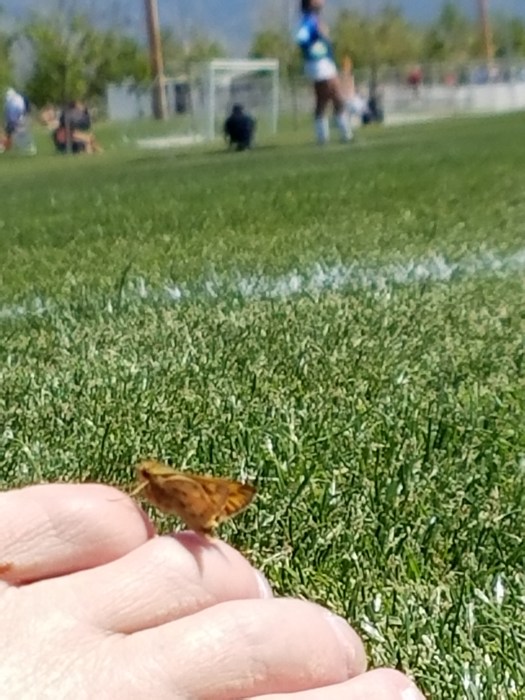
Lazy time, lazy mind, the butterfly blinks and I am wise.

And then I am the grass, sun and bare feet–once again as never before.