One for the Bees

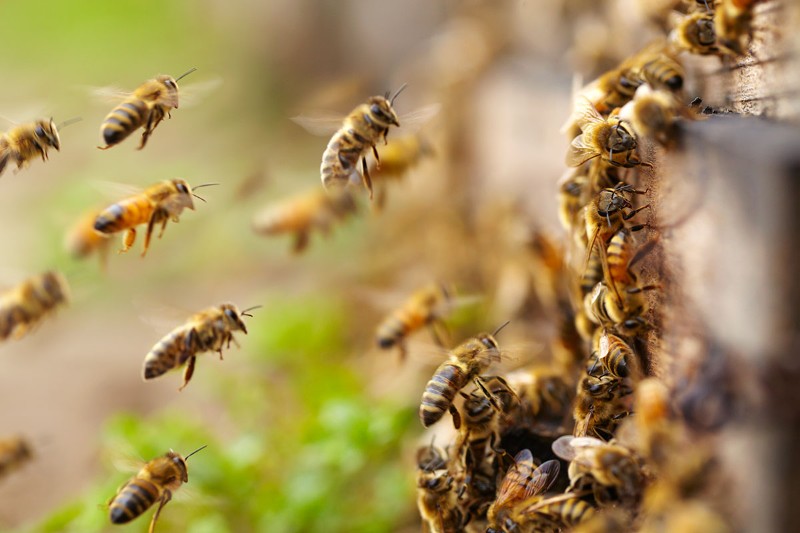
Victory, most probably pyrrhic, for the bees last week in a San Francisco Court that ruled against the EPA’s approval of neonicotinoid pesticides, specifically sulfoxaflor, a Dow chemical product that confuses bees flight patterns, according to the New Scientist. Apparently succumbing to “public pressure” (Dow’s money and agricultural lobby?), the EPA approved the use of the chemical without enough viable support, tactfully stated as “flawed data.” This despite the known harm to not only bees but all pollinators, other insects and even birds.

The upshot: Fuck the bees. There’s money to be made.

But can we live without the bees?

They are critical pollinators: they pollinate 70 of the around 100 crop species that feed 90% of the world. Honey bees are responsible for $30 billion a year in crops.

The battle for the bee is not won, however. Though one of these nenicotinoids have been banned in the U.S., they have not been banned in Europe or elsewhere. Bees do not stay in one place. And other harmful pesticides are still in use–just not sulfoxaflor.

And while pesticides are only one of the causes for the dwindling bee population, they are a big contributor, one that can be controlled by human intervention. So hooray for the court’s decision last week, but so much more needs to be done.

Who will speak for the bees?

dn28167-1_800

Workhorses of a seething-bustling, 
strange, 
misunderstood 
and alien world that we barely see
its glory and gore
acidic stew of swallow
and cilia claws 
burrowed below
but for the infrequent frightful protrusion,
intrusion,
extrusion, 
threatening a sting, 
a bite 
or a siphon
sipping the living juices of us,
savagery in the encounter.
 
And yet they sustain those who would crush them,
self-defense or not, 
fill the undergirding of our world with germinating life, 
exchange and commerce in wildflowers of the fields, 
manicured gardens of urban rooftops 
and edges of the sand dunes. 
They nourish us with sweet meats 
of the trees 
and gifts of the earth’s panoply of gallant beauties
pageantry of roses, peonies and daffodils,
and green godly goodness of cabbage cool,
beans of the vine
and broccoli floret 
walnuts
almonds
Brazils
the browns of nutty seas.
You, pinpoint friend, swap the day away, 
flitting from one sweet hollow to the next 
wearing, 
ingesting, 
carrying 
and dusting yourself with your wares, 
plying your trade 
and all we breathe better for it
and eat 
and expire
respire by your daily toil, 
though your armies are micro
populated,
though thinning, 
smallest of the small, 
and most benign. 
Some will warn
look away
not to watch,
not to near 
or interfere
or swat 
our swelling flesh worse for the encounter.
Carpenters of the Carribbean, 
homed amid the yuccas 
and woods 
while others gnaw at our backyard decks right here. 
Crow swims in sunflowers and black-eyed Susans, 
carpeting himself the golden sun, 
while sumptuous sand specialists 
hang in the hills of North Carolina 
or the Eastern Shore dunes, 
skimming the edges for life. 
Affable-bliss, 
drunkard, 
drinks from his nose of a tongue, 
buzzing about the Badlands, 
sucking up sweets from the wells of bells, 
trumpet trollops of honey delight, 
a piña colada of rum and pineapple pollen bits.  
But big old bombus and Metallica and modest-us, 
modest in size, 
half a rice grain wide, 
who carries her goods inside, 
a vomitous gift 
her babies survive
or they die
too sick
sparse
poisoned
murdered
by un-notice
unseen
unheard
unfelt
turnaway.
Health of heart, 
health of earth, 
home to hordes
4000 kinds strong
all native North American
only 40 left home
to honeycomb here
home to homo-cides
ignorants
polluters
stung-greedy
core-less
suicides
who
deny
if they are we are.

“How Open Marriages Really Work”

im-with-them “I feel that the biggest benefit to having a relationship that allows for others is that you never have to worry about being everything for someone,” said Skye. “We get to love each other and be with each other, and we get to love other people who are special and important to us in other ways.

Salon’s article “How Open Marriages Really Work” is refreshingly candid about choice and the nature of relationships–that monogamy is not for everyone. Though polyamory is tossed about quite a bit, I think that label imposes a false sheen over the article that aims to shatter the accepted notion that people who do not do monogamy fall into another label, namely polyamory.

Always one to shun labels, I felt a little compartmentalized by that term, even while the article indulged many scenarios where open marriages were either fallen into after initial monogamy or chosen at the outset. In all cases, the catchwords are honesty, openness and love. However, brave is the overall impression I get.

Yes, it takes honesty and ability to articulate jealousies, desires and needs. Some couples felt jealous of the outsiders but later located the source as something missing in the primary relationship that caused the jealousy. If they spent quality time together, either or both were okay to go off on a date with others. But speaking up and facing fears–of loss, jealousy–takes guts.

I was pleased about the mention of some open marriages that are not acknowledged but known by both parties as well as all shades in between complete openness and shadowy closeted. Having enjoyed monogamy for many years before my relationship opened up, I appreciated the nod to necessity as well as choice. Some couples cannot complete one another intimately and so rely on others to do so. And if both agree to any given arrangement, it works, for however long it works. I suspect child rearing years are different from before and after those times. Once again, fluidity.

Monogamy is tough. It is what most of us believe we want, but in truth, most of us do not, not always. I love the options open to the mature who can agree on their relationships from phase to phase, time to time. We are not static beings and neither are our relationships. But more importantly, it is rare to find someone who can be all things at all times for another. Not even the Stepford Wives worked out so well.

Now, if people could just stop being threatened by others doing it differently than they do…what a wonderful world.
 

credit: polysingleish.files/wordpress.co

Gaslighting: Who knew?


Appearing in Medium, Shea Emma Fett’s 10 Things I Wish I Knew About Gaslighting, though not edited as well as I would have liked, is informative about a ubiquitous phenemenon with a great name. Not merely attributed to abusive relationships but to a culture or society that is duped and bullied–manipulated–into adopting beliefs and “norms” about self and socially acceptable behaviors, gaslighting is elusive but treacherous. Citing Wikipedia’s definition below, she uses her own story to demonstrate how gaslighting works.
 
Gaslighting or gas-lighting is a form of mental abuse in which information is twisted or spun, selectively omitted to favor the abuser, or false information is presented with the intent of making victims doubt their own memory, perception, and sanity.

She claims the drive behind gaslighting, which goes beyond the natural manipulating we do to get what we want in others, is ownership and its aim is to change someone. Detecting it early in destructive relationships is critical as sustaining such a relationship leads to psychological erosion, a growing disbelief and mistrust in one’s own instincts, values and understandings of one’s motives, behaviors and actions. Getting captured in another’s subtle web of growing intricacy will leave the victim eviscerated like the fly whose guts the spider sucks out for dinner.

But the most enlightening passage is this one:

Gaslighting tends to follow when intimidation is no longer acceptable. I believe that gaslighting is happening culturally and interpersonally on an unprecedented scale, and that this is the result of a societal framework where we pretend everyone is equal while trying simultaneously to preserve inequality. You can see it in the media constantly. For instance, every time an obvious hate crime is portrayed as an isolated case of mental illness, this is gaslighting. The media is saying to you, what you know to be true, is not true. Domestic violence wasn’t seen as a serious crime until the 1970s. So, did we, in the last 40 years, address the beliefs that cause domestic violence? No. But now if you beat your wife you’re usually considered to be a bad guy. So what do you do, with all the beliefs that would lead you to violence, if violence is no longer an acceptable option? You use manipulation, and you use gaslighting.

When our government redefines words and re-classifies behaviors, say, calling terrorism, just good old frat house abuse (Think Abu Ghraib photos of U.S. soldiers “abusing” prisoners–to death–under George W. Bush administration) or interprets waterboarding as acceptable investigative techniques, not toruture, then you have manipulation of reality to accommodate an agenda, a form of gaslighting, I propose. This is not the only example of government dissemination of manipulated ideas, i.e., acceptable, sanctioned practices.

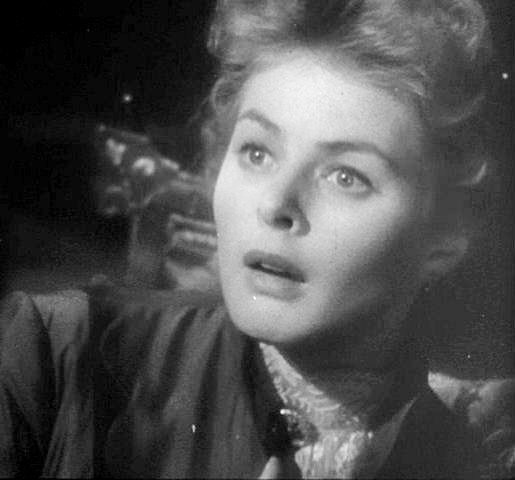
I had heard the term before and remembered it was the title of a movie, but I had not realized the precise definition. It’s a term of explosive imagery for such a subtle power.

Speak Up!


I am all over this video, which captures the gist of a sticky issue. Freedom of speech means some will take a hit, get their feelings hurt, even re-live traumatic experiences by someone’s words. Better some take the hit than an important freedom for all be jeopardized.

Censorship belongs least on a college campus.

Perhaps we need to project ourselves on to the bloody battle fields and lie among bleeding out bodies of those who fought for that freedom in the American Revolution, or maybe we just need to think about this logically for a moment.

Teaching about human civilizations, i.e., becoming educated, entails learning about the hideous as well as the glorious. Do we stop studying the Civil War because some students identify as Southerners and may be offended by that period in history? Do we forget entire courses like criminal justice in law school because some students come to class as former crime victims? How have we become such boorish cowards that we fear our beliefs and values are so thin that they cannot withstand challenge, fine-tuning or amendment?

The Kentucky City clerk who refuses still to issue same sex marriage licenses even after a court decision denying her “right” not to issue them in accordance with her beliefs is emblematic of this mentality that “it’s my world and everyone else should live according to my rules” mentality–make me comfortable. Get another fucking job if you cannot perform this one in good conscience! Don’t go to college if you are not psychologically prepared to do so, being “triggered” by mocroaggressions.

The Constitution protects free speech. It’s the first amendment, a very brief, uncomplicated, simply worded two lines that most people can read if they are educated beyond the fourth grade. It does not protect sensibilities. I challenge anyone to find that Constitutional protection, not even in the “penumbras” of the Bill of Rights, where the right to privacy was extracted.

While I am a full supporter of sensitivity–mindful of the grand diversity of beliefs and experiences–education, particularly beyond K through 12, just like comfort is not a right, just as any given job is not a right guaranteed by the Constitution. They are privileges. Necessities, but privileges nonetheless, the same as a driver’s license.

Rights vs. privileges: it’s important to know the difference.

Sure, some people will use their words as weapons, spew hate speech, but that is not the speech that is protected under the Constitution, out of which the Supreme Court has carved exceptions. The violation is one of human respect, decency and citizenship, as well as codified laws.

Eleanor Roosevelt, or whomever the sentiment is attributed to, said it best when recalling that no one can insult you without your consent: you know, sticks and stones and all that. Behaviors–like refusing people their legal rights to be married (not to mention be happy) because you happen to be in a position to do just that by your job title–are another matter.

As a civilized, democratic nation, we fight disagreeably offensive speech with more speech, counter and other speech.

First world problems are so wacky, the taken-for-granted privilege of living in a country where the luxury of sensibilities are even considered a topic of discussion. Crazy.

White Afros

  
Succinct and powerful while not too patronizing, today’s Huffpost article by Zeba Blay entitled “4 ‘Reverse Racism Myths’ that Need to Stop,” dispels four myths, really erroneous convictions that discomfited white people have about an historically discriminated population’s unique struggle. 

She targets this specific population of social media shouters, most probably, who apparently need education I’m guessing from her approach. Her point: To deny that blacks have been systematically shut out of ‘privileges’ white people have enjoyed unfettered by racial discrimination such as education, jobs and safety is to deny history. To believe that all is well is to choose ignorance. 

She begins with distinguishing racism from prejudice or bigotry, which is an important distinction, the former including that systematic exclusion while the latter two may refer to specific instances of hate or preference. But the upshot undergirding all four myths is like it or not, being born white is still hitting the lottery in this country because of its history that to date has not been erased, rectified or reconstituted. 

White people have no standing to complain. And trying to catch up to white society is not privilege. 

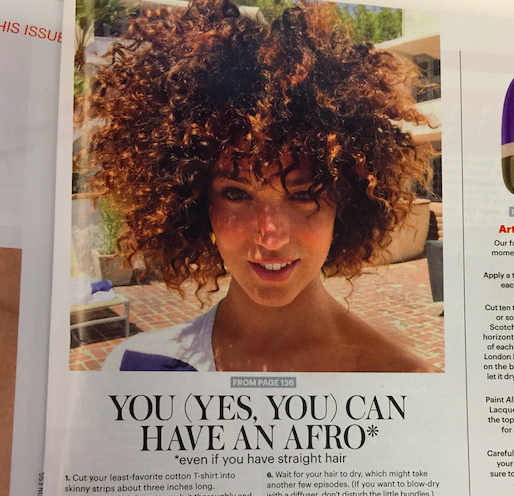
But while I respect the author’s opinion about cultural appropriation, white girls wearing Afros, for instance, I disagree that doing so is always unmindful theft or disregard of a people’s cultural strife. Systemitized thinking–labeling and generalizing as a means to exclude–is the core of oppression. While I would not say it is reverse discrimination to object to white afros, I maintain that there is a difference between respectful emulation and mindless appropriation.

Besides, some of us have hair that does nothing else but ‘fro. The seventies were good to me.


Pratyahara and Pencils: teaching writing is about seeding awareness in students

  
This was exactly what Professor Yip meant by being detached — not being without emotion or feeling, but being one in whom feeling was not sticky or blocked. Therefore in order to control myself I must first accept myself by going with and not against my nature.

Bruce Lee 

Pratyahara and pencils populate my thoughts today. Back to school, I can smell the freshly sharpened pencils—not that anyone sharpens pencils in my college classes so much. The sensory memory recalls the time of year: fall, school, endings, beginnings and lifelong learning. Cycles that inspire.

Inspiration arises in peculiar places. During a particularly dry creativity spell, I sat through the annual English department meeting last week at school, my employer, and felt a sudden spark. It was midway through a workshop on workshopping (silly sounding but fruitful) when I began to write about…

Continued here

Wild, Weird and Wonderful: Trip inside my vagina

Okay, so it’s not my vagina, much to the disappointment or relief of my readers.

So much to be said here but the video says it all. What every growing girl should know, beginning with honest names about body parts, celebrated not shamed. Had I been taught about orgasm as a child, or at least exposed to the concept  pre-understanding, I would not have had to go through unnecessary anxiety and sexual misgivings affecting my relationships.

Why is this such a difficult matter, educating ourselves and our children about their bodies so that they may be more responsible and responsive adults? Why must the idea of a “love your body” explicit video be so revolutionary?

Huffpost’s Poussy Draama’s Mobile Doctor’s Office is Challenging Sex Ed Norms in America merits a reading even if only for the video and colorful pictures injected into an investigative journalism piece on wacky personalities with the right message.

Author Priscilla Frank introduces Poussy Draama, a performance artist, gyno specialist and educator who roams the country introducing those ready to learn to love the beloved female body (enough loving of men’s has been the story of HIStory, she claims), not the one that merely makes babies but the one that has so much more power and pleasure.

She enlightens youngsters through her bizarre videos and also appears live to help groups of women take pictures of their cervixes when she is not celebrating all of the names for vagina. Hey, why wasn’t my personal favorite, twat, on that list? Must be a French thing.

 The bizarro TV show, aimed to teach kids about sexuality and consent, features tripped out vagina suits, lots of rainbows and even more body positivity. Poussy Draama — the babe on the right, in the video above — is a performance artist, a sexologist, an alter-gynecologist and a witch. Not witch, like, black hat and broomstick, though. Witch like witch doctor or healer. “What I do hasn’t much to do with magic,” Draama explained to The Huffington Post. “It’s witchcraft, in the way of empiric, experimental and politically engaged healing.” 


Although in medium and technique Draama’s work is all over the map, her subject matter consistently revolves around educating others on sexuality in an un-authoritative, open-minded and, duh, feminist manner. “Womxn are overrepresented and underrepresenting,” Draama said. “You know what I mean? And as an artist, I don’t wanna play the ‘male-gaze game’ so I have to be careful, cause everything tends to drive you to do so.” (Note: The spelling of “womxn” is intentional, per Draama’s choice.)

The risk takers who challenge the “norm” by exposing sedimented attitudes expose themselves to ridicule even as they gather fame. You know those insecure ones (you know who you are) who do not like to be discomfited will doff off old Poussy as a whack rather than appreciate her creativity and spirit for a good cause.

Fingers crossed for her (riffing on the article opener there).

Ashley Madison and American Hypocrisy 


What do I think about the Ashley Madison come Josh Duggar (a name I first heard yesterday) “scandal”? Not too much. Surprising coming from someone whose blog is themed on the mistress in that word’s narrowest and broadest sense. But I have written a lot on the subject of infidelity from all sides, and much boils down to the same recurring ideas:

People get hurt–are hurt–and that saddens me. Luckily, counseling resources for the infidelity-wounded exist. Some have called those hurt by infidelity, victims, like the wife of this Duggar, publicly humiliated by someone who apparently spoke out in defense of “family values.” A shame, but the story often unfolds as more complicated than good guys and bad guys, abusers and victims.

People are not honest. Relationships survive on honesty, an ongoing practice that most are not dedicated to but expect from others.

America’s hypocrisy and sexual dysfunction fosters dysfunctional relationships. It is no secret that what we say what we want is not what we want–or do. I featured this article from The Daily Beast before, but it reports the unsurprising facts and bears repeating:


As Pew reports, extramarital affairs are generally condemned worldwide but the U.S. still seems to be uniquely moralistic about them. In fact, most major developed nations in the world are more accepting of infidelity than the U.S., including Australia, Britain, Canada, Germany, Spain, and Japan.

In France, a mere 47 percent of adults find extramarital affairs unacceptable, which is less an endorsement of their practice and more a reflection of a widespread refusal to think of it as “a moral issue.” In America, sex is a moral language by default; abroad, less so…
 

All this being said, Americans’ sexual words do match up with their sexual actions in some special cases. Fifty-seven percent of men and 65 percent of women approve of having babies outside of marriage, although CDC estimates show that only 40 percent of all births are to unmarried women. Divorce rates appear to be on their way down in the 21st century while acceptance of divorce has been steadily increasing.

But these are some of the only realistic moral attitudes in a country where sexual attitudes and sexual behavior tend to be dissonant. And although this mismatch might be mystifying in and of itself, the probable reasons behind it are not: the United States has the largest population of Christians of any country and is one of the only deeply religious wealthy nations in the world. That math—like most Americans—does itself.

Ashley Madison? Only in America.
 

credit: johnmbecker.com

Cultural Appropriation or Emulation: Does it Matter?

  
Published in the Mindful Word, please enjoy an article I contributed to the ongoing conversation about Rachel Dolezal, cultural appropriation and social media. 

For those of us who grew up in a Pakistani, Sri Lankan, Bangladeshi, or Nepali household, our struggles to fit in are vastly different in magnitude, but the solidarity exists. So that’s why we are upset when someone wakes up one day and decides to exploit our turbulent identities as a disposable fashion—and by doing so be rewarded as a paragon of globalization and cultural acceptance. How dare they regard Indian fashion as effortlessly cool and chic while we make it look “fobby,” or a stubborn adherence to our culture that purports us to be “fresh off the boat.”


How dare they have a crush when we spent our entire lives trying to love.

Read more here.

Peace, 

Gaze