
Though this subject has been parsed on this blog in a number of writings, this article by goodinbed.com is very light fare (thinking of someone else during sex is taboo fantasy?), readable and succinct, even though questionable as to its definition of both taboo and fantasy. There is nothing earth shattering but it is an assuring read for those of us with a host of tools to accomplish our sexual goals. Enjoy.
“Famous Mistresses in the History of Seduction”
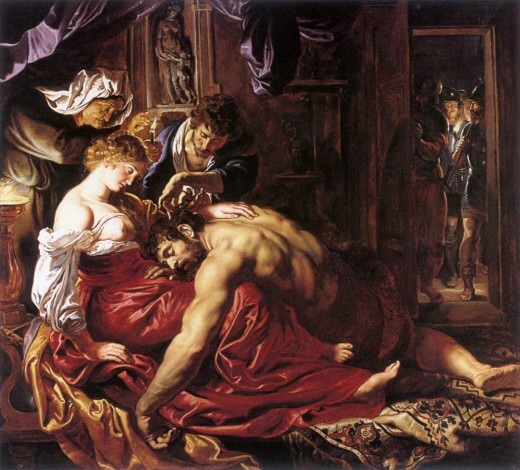
This article on silentreed.hubpages.com is an interesting read with well-selected art, poetry and facts, not so much a how-to (though a little bit of that too) as an observational history. Enjoy
Guest Post: Revisiting Shame and the Mistress
A regular contributor of comments to this blog, MPM, shared with me the rumination below in context of an ongoing discussion about the historical and modern day role and conceptualization of the mistress. It bears reproduction here in its entirety for another perspective and invitation for response.
Ruminations on “King Charles II of England and His Mistresses”
Everyone – and I mean everyone, including me – should have a mistress or be one. You can tell a mistress things that you can’t tell your so called life partner and vice-versa. For some it provides emotional stability. For others perhaps an emotional release. It’s obvious that the need for mistresses (and ‘misters’) has endured throughout human time, perhaps as long as the oldest profession. That is not to equate the two, but to state that the need for one or the other seems to be intrinsic. Perhaps even those who do not participate in such activity at least have the thought of taking on one or the other, if only in passing sometimes. The human mind is probably too complicated for some to burden a single person with all that it contains. Perhaps engaging with one or the other relieves a partner of a burden too heavy to endure.
But then again, perhaps I am wrong.
Earlier I posted this comment to the blogger’s article, “King Charles II of England and His Mistresses”. That the comment is full of “perhaps-es” is a clear indication of my own self-doubt regarding the certainty – no, the validity – of what I was stating. After rereading my reply I felt compelled to expand upon it in an attempt to answer, for myself, the questions I openly asked.
So that the reader may better understand the questions I raised in my initial reply I will share with you my current situation.
I am currently a “mister” to a married woman who is herself a mistress to a married woman. I have met her husband and we appear to get along fine. I only use the word ‘appear’ because I am ‘fine’ with it, but obviously I cannot vouch for nor ascertain his true hidden feelings. Indeed, no one else can be aware of the feelings all of us have decided to keep secret. The circumstances of their marriage allow each to have this type of open relationship. I will not divulge why this is so to protect their privacy, although admittedly this certainly opens the door for one to peer into. Why I chose this particular woman knowing about the circumstances she was in shall also remain private except to say that we genuinely are compatible. Interestingly, each of us has been involved in non-monogamous relationships in our pasts and are so now. When I asked her how she felt about the wife in those circumstances she provided different answers for each situation. Some were because the wife no longer desired to have sexual relations with her spouse. Others were for more personal reasons. However, the answer to one of those situations surprised me a bit. Although the initial intent of involving herself in this relationship was not to do so, she stated that she was certain that doing so saved his marriage. He is in fact still married to his wife yet maintains a fond and friendly bond with his one-time tryst mate. I have not been as fortunate. Each of my circumstances has ended with a bang or a whimper and I have “lost” all – partners and mistresses – I have been involved with except one. I’ll conclude this backstory by stating (admitting?) that, going back some 40 odd years to junior high school days, I have never had a completely monogamous relationship. In some it took me longer to stray than others. But the constant has been that I always have strayed.
In my original comment in reply to the article I declared that, “everyone … should have a mistress or be one”, and I gave my reasons why I believe this. But upon reflection I decided to take a step back to observe the issue with more focus from a distance. I realized I was only speaking for my narcissistic self. My grandparents had been married for over 67 years and neither of them ever strayed. Ironically, I always set my sights on finding someone with whom I could strive to match their record of monogamous longevity. Why then have I never been able to commit to a single partner? Why does anyone allow themselves to play this way or even stray but once? Is it really an intrinsic need as I suggested in my reply or is it more than that? Perhaps (there’s that word again) the “intrinsic need” idea is a vain and selfish rationalization proffered to attempt to assuage feelings of guilt and shame (see this blogger’s article “Shame, Shame on You–and Me” for more on this topic) for branching outside of society’s accepted standards. After all, if the hidden relationship is discovered there are always feelings of hurt, anguish, and betrayal felt by the one who has been deceived, and we are the reason, and suffer the burden of destroying or altering the course of another’s life, as well as our own.
But then I took a further step back and was faced with examining the reality that some of the world’s best known and most followed religions now have, or once had, traditions of allowing plural marriages. Although it was never an original part of Western culture, Islam is the most obvious example as polygamy is still practiced today. And even though it has been outlawed (and to be fair discredited by), the Mormon Church also preached and encouraged polygamy. And is it more than simply interesting to note that both Islam and Mormon allowed the male to have wives younger than what (our) society has deemed to be a legal age for such unions? Doesn’t our society and culture view these versions of polygamy to be child abuse and rape? I’ll save the reader the tedium of reviewing every instance of child sexual abuse perpetrated by priests and simply go straight to the top – the Pope – and cite but a few that have been historically documented to not only have had mistresses but children they fathered with these concubines: Pope John X; Pope John XII; Pope Benedict IX; Pope Paul II. And Pope Leo X had a homosexual mistress relationship.
There is also the circumstances of hut dwelling tribal cultures still extant throughout remote areas of the world today. Their communities of miniscule populations probably, in some cases we can at least speculate, allow for not only polygamy but also a fair degree of incest simply to keep the tribe alive.
With these examples in mind it seems logical to question why our culture decries the mistress. It appears it could be argued that our culture is actually an aberration for doing so.
Then I began walking backwards to take a closer look at and examination of “our culture”. In keeping with the blogger’s theme of political figures with mistresses, most historians now accept that Thomas Jefferson, our third president, had as his mistress a slave he owned named Sally Hemings. This fact was established in 1998 with DNA evidence. It immediately discredited all the historians who had denied it for the previous 200 years. In modern times we now know that JFK had Marilyn Monroe as his mistress. We know that William Jefferson Clinton had Monica Lewinsky as his, and before that Jennifer Flowers. We also know that presidential aspirant John Edwards fathered a child out of wedlock.
Turning now to sports figures, no one can provide an accurate account of the number of athletes who have had or still have a mistress in every town their team visits, and let’s not even try to imagine the number of children born of these couplings.
At this point I felt I no longer had to seek or cite examples of the mistress in culture, politics, religion, or in any aspect of man’s contrivance. It is indisputably obvious that mistresses have been around “forever” and will continue to be a part of being human. Although my own grandparents demonstrate that there may not be an intrinsic need for everyone to have or be a mistress, history demonstrates that the opposite is equally true; which, I feel, at least partially validates my declaration that everyone should have or be a mistress.
What to do, then, with the guilt and shame?
“King Charles II of England and His Mistresses”
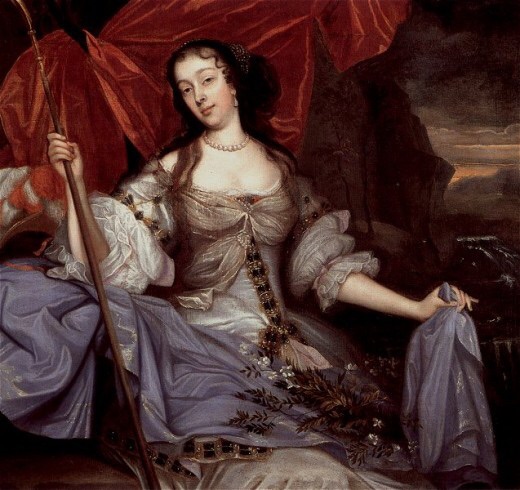
Ah, the good old days when kings had mistresses openly, mistresses who were showered with titles and wealth and, for the more savvy, had the wherewithal to convert their sway (and swagger) into political power. All they had to do was attract the king’s eye, have sex with him, bear and raise his children.
In an interesting article, entitled, “King Charles II of England and His Mistresses,” on a well-groomed, professional-looking blog site called Hubpages by case1worker, I was reminded that the life of a mistress, at least with respect to Charles II, was a very good life indeed, and really one of mere practicality, an escape for a king encumbered with kingly duties as well as a chance at a relationship that would be deemed closer to “normal” in terms of modern day’s marriages: love, passion, shared wealth and children. Charles II, like many kings, married for political purchase and not for love. However, there is no need to feel sorry for him. He pursued his love interests where he found them–and he found many.
One of his several mistresses, according to the above-referenced article, maximized her position, admirably: earned wealth, title, influence, kids with same, and lovers too. After Charles married, Lady Portsmouth was installed in a convenient location relative to the palace where he lived with his barren wife, to carry on his affair, but Portsmouth eventually moved out so Charlie could pursue other women.
Old Charlie II sired more than 15 illegitimate children, all who were placed in decorous positions, pensions, and/or titles, and all of whom were present at his death, over which his wife presided while Charlie professed his life-long love to his mistress.
Wacky times, yes, but very practical. I enjoyed the article for its clarity and succinctness. However, I wish there were references–at least conveniently located because I could not find them–for the information so nicely collected and reported on this smart-looking page. The pictures are lovely too. Enjoy.
Playing at Gender: Wonder Woman, Lady Gaga and Mr. Rogers

Despite what you may think, a real friend is not someone who will stand by you in hard times or beside you in good times or even your dog. A real friend sends you stuff to read, knowing what you like. Well, maybe that isn’t entirely true, but I do appreciate when someone pays attention to my ideas and tastes. Take, for example, the article a friend sent me by Jill Lepore entitled “The Man Behind Wonder Woman Was Inspired by Both Suffragettes and Centerfolds,” appearing on NPR three days ago that starts off this way:
The man behind the most popular female comic book hero of all time, Wonder Woman, had a secret past: Creator William Moulton Marston had a wife — and a mistress. He fathered children with both of them, and they all secretly lived together in Rye, N.Y. And the best part? Marston was also the creator of the lie detector.
Only someone fixated on the subject of the “mistress”–all we own and are enslaved to–as I am, would not only find that opener giggle-in-excitement enticing, but would find the hallmarks of a true friend in sending me such a tasty morsel. Unfortunately, that was really the best part of the write up until the end, when the writer mentions Lady Gaga. The in-between was information-light on Wonder Woman, her story, and the author’s influence by First Wave feminism and Vargas pin-ups in creating the character. Anyone who has seen her knows that she is, in part, an early feminist cultural production (freeing others and herself from the chains of bondage in the name of justice and truth) while socially palatable as traditional object of fantasy female–the voluptuous dominatrix (but sometimes submissive) with American good looks.
Despite my disappointment, the subject did inspire a meditation, once again, on gender performativity and camp, especially after the ending citation of modern day’s most notorious, campy pop gender-sexuality blender–the Lady G. Of course, for me, all roads lead back to Judith Butler. Gender role playing and displaying–what Lady Gaga capitalizes on–with its concommitant effects is Butler’s preoccupation in much of what she writes. In her book Gender Trouble, Butler posits that gender is not merely a biological category and gendered behaviors are not natural; gender is a learned performance of the role female or male in a given culture that has been repeated and imitated throughout a society, performed roles passed down from prior generations. Gender is performativity, not a binary–male or female–but a fluid space on a spectrum of culturally produced notions of the “norm.”
In other words, if you take Barbie, on one extreme of the scale of “girlness” and Superman as the opposite extreme, of “boyness,” most people fall somewhere in between those apogees, closer to or farther from society’s picture of the ideal girl or boy. There are Barbie doll models and there are androgynous indecipherables walking among us. I remember reading in graduate school this passage, which struck me with its truth:
The act that one does, the act that one performs, is, in a sense, an act that has been going on before one arrived on the scene. Hence, gender is an act which has been rehearsed, much as a script survives the particular actors who make use of it, but which requires individual actors in order to be actualized and reproduced as reality once again.” (“Performative” 272)
Until today, years after graduate school, I respect her concerns with the politicalization of gender, the reiteration of gender norms that marginalizes those outside the “norm” and her advocacy for counteraction through exposing the nature of gender as an inherited role. Getting folks to realize that gender is produced, not fate, is the first step to understanding it as arbitrary and a choice, neither a prison nor a target for shame and isolation if performed “incorrectly” by society’s standards, i.e., girls who are too much like boys and vice versa. Butler believes that to allow for an inclusiveness of those traditionally marginalized from the heteronormative gender actualizations–homosexuals and transgendereds–alternative performances need to be disseminated in the population, ones that perform alternative gender iterations.
Here’s where Lady Gaga comes in. She mixes up the gender space with non-normative gender depictions. Whereas Wonder Woman is the straight laced asexual power house “feminist” constrained by imagination and norms of her time (created in the 40’s) and those of her creator, thus her bondage to men (See Lepore’s article), Lady Gaga is a shotgun approach to blasting traditional notions of gender and sexuality in her outrageous meant-to-shock live and video performances of vixen lover, lesbian or straight, mistress or chained submissive, engaged in violent or passive poses of gestured gender and sexuality.
Wonder Woman’s feminism is one focused on proving that a woman, in her mixed portrayal–beauty, chastity, submission, virtuosity, strength, domination–is powerful and worthy of respect, can even save society. She competes with men on a man’s level, physical powers, though hers are emitted from material adornments and tools, her bracelets and lasso, harkening bedroom S&M exploits.
Lady Gaga, on the other hand, is a mesh of exaggerated, contradictory blends of the classic and “aberrant” imagery, the socially “non-normative” gender performances such as gay, lesbian, and transexuals. She thematizes gender as a performance. Camp productions such as those of Lady Gaga in her live and video performances do not merely challenge and expose–something Butler might nod to–gender stereotypes, but they also question heteronormative performances of more sedimented institutions such as monogamy, in addition to alluding to the political history of violence against women. Her Telephone video is a gala explosion of deployed gender, sex and violence.
Whereas Wonder Woman as precursor served as the mixed-gendered asexual icon of the truth about gender and role playing, Lady Gaga overplays and performs a cacophony of gender, sexuality and feminist history.
Exposing the inherited cultural reproduction of gender as well as the strategy to deploy alternative social productions of gender is important not only for little girls who want to grow up to be paid equally to their male counterparts and for anyone who wants to love freely and openly without fear of homophobic hate crimes, but also for breaking up the binary that gender has been, historically produced and transmitted from generation to generation. Wonder Woman needs to break those chains, invisible and hard to grasp. Or perhaps we need a man to do it, someone like Mr. Rogers, who, on one of his shows, exposes the Wicked Witch of the North as mere costumed grandma–a performed role; nothing to be afraid of kids (click on the link to view). And just in time for Halloween.
So, who kicks ass, Wonder Woman as suffragette foremother or Lady Gaga (click on the link to find out) living off the capital of her inherited legacy?

“Five Studies that Offer Fascinating Conclusions About Human Sexuality”
I cannot vouch for the validity or weight of the studies in this article, but the findings range from “duh” to “really?” “Five Studies That Offer Fascinating Conclusions About Human Sexuality”
Christopher Ryan, co-author of Sex at Dawn in this summary of a TED talk discusses the origins of sexual behaviors and patterns growing out of an agricultural society and notes that the monogamy outgrowth of the Victorian era succeeded a more open sexual model based on needs and dictates of a more flexible community. I have excerpted a key passage below:
Ryan explains that our sexual patterns are an outgrowth of agricultural models—which accounts for only about five percent of human history. For the other 95 percent, human sexuality was “a way of establishing and maintaining the complex flexible social systems, networks, that our ancestors were very good at.” In hunter-gatherer societies, there were overlapping sexual relationships between members of a community—a more fluid system than the Victorian model we’re wedded to today. In fact, several contemporary societies around the world argue against the sexual myth we’ve built up, too.
“My hope is that a more accurate updated understanding of human sexuality will lead us to have greater tolerance for ourselves, for each other, greater respect for unconventional relationship configurations like same-sex marriage or polyamorous unions, and that we’ll finally put to rest the idea that men have some innate instinctive right to monitor and control women’s sexual behavior,” Ryan says. “And we’ll see that it’s not only gay people that have to come out of the closet: we all have closets we have to come out of.”
Another interesting data point about bisexuality as a transitional phase or an identity in its own is detailed in question and answer format below:
Question: Is bisexuality a sexual orientation, something that’s temporary or an outgrowth of the sexual fluidity we all exhibit?
.
Research: In a 2008 study, Lisa M. Diamond of the University of Utah presented the results of a decade-long assessment of nearly 70 women who identified as lesbian, bisexual, or sexually unlabelable. Five times over the course of the study, the women detailed their sexual identities, attractions, behaviors, and their social and familial relationships.
.
Results: Based on Diamond’s findings, bisexuality is not a “transitional stage that women adopt ‘on the way’ to lesbian identification” or an “experimental phase” for heterosexuals. Her results, instead, supported that, “Bisexuality may best be interpreted as a stable pattern of attraction to both sexes in which the specific balance of same-sex to other-sex desires necessarily varies according to interpersonal and situational factors,” she writes.
.
And finally, another point of interest for me was the question of the sequential order of arousal and desire in humans:
Question: Which comes first—desire or arousal?
.
Research: In a study from 2004, described in this New York Times article, Ellen Laan, Stephanie Both and Mark Spiering of the University of Amsterdam examined participants’ physical responses to sexual images.
.
Results: The research indicates that we respond physically to highly sexual visuals before our mind even engages with them. In other words, desire doesn’t precede arousal—it’s the other way around. And we aren’t even aware it’s happening.
It’s a brief but interesting read and something a little more substantial than a five reasons for sexuality or six steps to a better sex life article.
Sexism, Exploitation, Celebration or Empowerment?
Two views of the female body in the gaze, society’s and men’s, from a Second Wave and Third Wave perspective are provided for your viewing and comment. Are Playboy bunnies exploited or celebrated and empowered? Should young girls grow up in a culture that reinforces reliance on their bodies for their power? Click on the words “Second Wave” and “Third Wave” above to see the vimeo and article.
Below are definition excerpts from an informative essay entitled “The Three Waves of Feminism” by Martha Rampton of Pacific University of Oregon, October 23, 2014, outlining the history of feminism in a very readable composition:
The first wave of feminism took place in the late 19th and early 20th centuries, emerging out of an environment of urban industrialism and liberal, socialist politics. The goal of this wave was to open up opportunities for women, with a focus on suffrage. The wave formally began at the Seneca Falls Convention in 1848 when 300 men and women rallied to the cause of equality for women. Elizabeth Cady Stanton (d.1902) drafted the Seneca Falls Declaration outlining the new movement’s ideology and political strategies.
The second wave began in the 1960s and continued into the 90’s. This wave unfolded in the context of the anti-war and civil rights movements and the growing self-consciousness of a variety of minority groups around the world. The New Left was on the rise, and the voice of the second wave was increasingly radical. In this phase, sexuality and reproductive rights were dominant issues, and much of the movement’s energy was focused on passing the Equal Rights Amendment to the Constitution guaranteeing social equality regardless of sex.
The third phase of feminism began in the mid-90’s and is informed by post-colonial and post-modern thinking. In this phase many constructs have been destabilized, including the notions of “universal womanhood,” body, gender, sexuality and hetreronormativity. An aspect of third phase feminism that mystifies the mothers of the earlier feminist movement is the readoption by young feminists of the very lip-stick, high-heals, and cleavage proudly exposed by low cut necklines that the first two phases of the movement identified with male oppression. Pinkfloor expressed this new position when she said; “It’s possible to have a push-up bra and a brain at the same time.”
http://nymag.com/thecut/2014/10/playboy-pinups-on-meeting-the-male-gaze.html?n_play=54497db6e4b07c050d48983d
Time’s “Top 10 Mistresses”
This is an older list but an interesting selection also.
“4 Mistresses Who Changed History”
Another mistress list, this one more obscure and interesting.
 In the gaze of the other