Who’s that Knocking at my Door?


A shadow slumps in the doorway, a darkness hollowed by blazing corners

where the light exhales, squeezing past the hulking figure that is my father.

“What are we having for breakfast?” Code for make me something to eat.

Desires, requests, pleas, all are puzzles to a man who knows no direct say.

“Sure, go ahead and eat without me. You don’t give a shit about me anyway.”

Read: I want to be loved, appreciated and acknowledged as a human being.

He knows no direct. His sentences scrape the underside of a mirror, inverted.

An uneducated master of language manipulates impulses, inherited relations

to move, respond, act, resist and surrender–a force of father-thinned twining.

 
Mother instilled the love of words in those of us who shone in penning letters.

She idled hours in solving crosswords, leafing magazines, and correcting him.

“‘Don’t got’ is a double negative and makes you sound like an illiterate moron.”

Her words sliding by as if unspoken, he ignored her, she, his virtual dictionary,

until Scrabble time, where strategy schooled the unwary wordsmith defensed.

A board game master, card player extraordinaire and pathological liar, he waits.

Convinced long ago she filled me with philologist love, I glance upon his notion;

my words form around the blankness in the doorway, the gamesman stares me

while the muse I wrestled to the ground, a slutty run-around, scampers past him.

 
credit: i2.wp.com

Just Until…

  
Just until I am 10, then I will almost be a teenager and can do more things, and not be treated like a baby.

Just until I am 16 and can drive, then I will be free…to work, earn money, and buy my own clothes.

Just until I am 18, when I can get the hell out, be on my own.

Just until I am 21 and can drink–legally. 

Just until I am 28 and will finally graduate from bull shit schooling, start a life.

Just until I am 35 and can finally give in to the urge to procreate.

Just until I am 40, when I can stop having kids.

Just until I am 45, when the kids are in school and I can work more, go back to school.

Just until I am 48 and get my PhD finished, I can teach locally.

Just until I am 50, I will give myself permission to have a mid-life crisis, go away, learn to surf, dye my hair.

Just until I am 55, when I can make a plan, hold on long enough to finish growing up my kids, get them through college, just another 5 years or so, until I am 60 when I can begin to wait out my term, be on my own watch, do my own thing.

I wait. As we all do. We abide biding time as if time could be had. We are had by time and its illusion. Desire is the expression of suffering we live to fill space with all things but ourselves. There really is no time–just inhale and exhale.

 
credit: edge.neocha.com

Something Itching to Come

  
The angst is biting mites today, 

leaving blazing sores, 

small but cumulatively painful, raging.

Yet, the promise unknown …looming.

A gift encircled in the inverted telescope?

My bones marrow in distant headlights.

A missive, visitor or opportunity,

Something approaches.

Ah, but absorption sucks it dry,

sponged back in the dull hum lethargy.

Only a fleeting prick of moment.

 
credit: img.wonderhowto.com

Gaslighting: Who knew?


Appearing in Medium, Shea Emma Fett’s 10 Things I Wish I Knew About Gaslighting, though not edited as well as I would have liked, is informative about a ubiquitous phenemenon with a great name. Not merely attributed to abusive relationships but to a culture or society that is duped and bullied–manipulated–into adopting beliefs and “norms” about self and socially acceptable behaviors, gaslighting is elusive but treacherous. Citing Wikipedia’s definition below, she uses her own story to demonstrate how gaslighting works.
 
Gaslighting or gas-lighting is a form of mental abuse in which information is twisted or spun, selectively omitted to favor the abuser, or false information is presented with the intent of making victims doubt their own memory, perception, and sanity.

She claims the drive behind gaslighting, which goes beyond the natural manipulating we do to get what we want in others, is ownership and its aim is to change someone. Detecting it early in destructive relationships is critical as sustaining such a relationship leads to psychological erosion, a growing disbelief and mistrust in one’s own instincts, values and understandings of one’s motives, behaviors and actions. Getting captured in another’s subtle web of growing intricacy will leave the victim eviscerated like the fly whose guts the spider sucks out for dinner.

But the most enlightening passage is this one:

Gaslighting tends to follow when intimidation is no longer acceptable. I believe that gaslighting is happening culturally and interpersonally on an unprecedented scale, and that this is the result of a societal framework where we pretend everyone is equal while trying simultaneously to preserve inequality. You can see it in the media constantly. For instance, every time an obvious hate crime is portrayed as an isolated case of mental illness, this is gaslighting. The media is saying to you, what you know to be true, is not true. Domestic violence wasn’t seen as a serious crime until the 1970s. So, did we, in the last 40 years, address the beliefs that cause domestic violence? No. But now if you beat your wife you’re usually considered to be a bad guy. So what do you do, with all the beliefs that would lead you to violence, if violence is no longer an acceptable option? You use manipulation, and you use gaslighting.

When our government redefines words and re-classifies behaviors, say, calling terrorism, just good old frat house abuse (Think Abu Ghraib photos of U.S. soldiers “abusing” prisoners–to death–under George W. Bush administration) or interprets waterboarding as acceptable investigative techniques, not toruture, then you have manipulation of reality to accommodate an agenda, a form of gaslighting, I propose. This is not the only example of government dissemination of manipulated ideas, i.e., acceptable, sanctioned practices.

I had heard the term before and remembered it was the title of a movie, but I had not realized the precise definition. It’s a term of explosive imagery for such a subtle power.

Autophony: The sound of living inside a mother’s dementia


I scrapped together a few writings I blogged over the year and produced this piece that was published yesterday.

Tripping on sounds, I hear birds outside my window, muffled, over the swish-throb of a heartbeat in my ears, a pulsing slightly alarming and soothing all the same. I also hear a dish clanking outside the closed door of my room, emanating from the kitchen where I imagine my mother is sitting, skeletal and serene in her wheelchair, gazing off through the filmy stare that inhabits her face now. The cataracts of her mind’s eye reaches some unknown space outside or inside her head that swirls and lulls the cerebral juices to twitching stillness, her jerking to and from that space in split-second recognition of a face, idea, song slice or voice. I imagine her waiting like the baby bird with beak wide open in anticipation of its mother’s nurturing tongue, depositing the meaty worm of egg or pear. She is spoon-fed…continue here.

Speak Up!


I am all over this video, which captures the gist of a sticky issue. Freedom of speech means some will take a hit, get their feelings hurt, even re-live traumatic experiences by someone’s words. Better some take the hit than an important freedom for all be jeopardized.

Censorship belongs least on a college campus.

Perhaps we need to project ourselves on to the bloody battle fields and lie among bleeding out bodies of those who fought for that freedom in the American Revolution, or maybe we just need to think about this logically for a moment.

Teaching about human civilizations, i.e., becoming educated, entails learning about the hideous as well as the glorious. Do we stop studying the Civil War because some students identify as Southerners and may be offended by that period in history? Do we forget entire courses like criminal justice in law school because some students come to class as former crime victims? How have we become such boorish cowards that we fear our beliefs and values are so thin that they cannot withstand challenge, fine-tuning or amendment?

The Kentucky City clerk who refuses still to issue same sex marriage licenses even after a court decision denying her “right” not to issue them in accordance with her beliefs is emblematic of this mentality that “it’s my world and everyone else should live according to my rules” mentality–make me comfortable. Get another fucking job if you cannot perform this one in good conscience! Don’t go to college if you are not psychologically prepared to do so, being “triggered” by mocroaggressions.

The Constitution protects free speech. It’s the first amendment, a very brief, uncomplicated, simply worded two lines that most people can read if they are educated beyond the fourth grade. It does not protect sensibilities. I challenge anyone to find that Constitutional protection, not even in the “penumbras” of the Bill of Rights, where the right to privacy was extracted.

While I am a full supporter of sensitivity–mindful of the grand diversity of beliefs and experiences–education, particularly beyond K through 12, just like comfort is not a right, just as any given job is not a right guaranteed by the Constitution. They are privileges. Necessities, but privileges nonetheless, the same as a driver’s license.

Rights vs. privileges: it’s important to know the difference.

Sure, some people will use their words as weapons, spew hate speech, but that is not the speech that is protected under the Constitution, out of which the Supreme Court has carved exceptions. The violation is one of human respect, decency and citizenship, as well as codified laws.

Eleanor Roosevelt, or whomever the sentiment is attributed to, said it best when recalling that no one can insult you without your consent: you know, sticks and stones and all that. Behaviors–like refusing people their legal rights to be married (not to mention be happy) because you happen to be in a position to do just that by your job title–are another matter.

As a civilized, democratic nation, we fight disagreeably offensive speech with more speech, counter and other speech.

First world problems are so wacky, the taken-for-granted privilege of living in a country where the luxury of sensibilities are even considered a topic of discussion. Crazy.

You Can’t Always Get

152701

It’s a familiar trap, a pattern many recognize–getting caught between wanting to do the “right” thing for someone else or for the self.

The conflict pits ahimsa, or non-harm in thought or deed, against satya, truthfulness in the Yamas.

Trying today to unwind my thinking, past my feelings, habits and impulses, to identify my needs. I am caught up in the should’s. And I dislike it.

Yes, I grew up with a mother who attended co-dependents anonymous and that may explain why, in the past, I instantly responded to calls for volunteers for the school, sports organizations, non-profits, family and friends whenever I could. I built habits for some need I had to fulfill to help. But what about now?

The balance of helping others and helping myself is the challenge. Getting it right is not always easy, but I am more interested today in examining these knee-jerk reactions and judgments that come with “I should help this guy out” compulsion.

I give a lot of time and attention to a long-time friend who cannot reciprocate, and I am becoming resentful and disinclined to see this friend any more. This would seem like a no-brainer, dump the freeloader, but it is not that simple. I don’t want to (thinking) be beholden to a give to get something or quid pro quo value system. The impulse to give irrespective of gain is in line with my values.

Resentment (feelings) arises for sure in this equation, but the more important question, if I give myself time to respond the next time my friend, who I will call Ash for convenience, calls and asks to go out to lunch to talk (read: monopolize the conversation), is why I feel compelled to be the sympathetic ear, ignoring my own therapeutic need to be heard and share thoughts and feelings.

Mind you, this friend does not always take but often enough where the obligatory “should’s” hit me whenever I see that text or telephone number on my screen. The first reaction is a tiny wince and inaudible sigh. I have known Ash a long time and spent countless hours being a friend. Is it habit?

I wrestle with passive-aggressive responses too–unavailability, calling back much later, too late, and just plain ignoring. That is not a good friend, I chide myself. Feeling guilty is not helpful, either. The spiral of internal chain reactions is exhausting…I shouldn’t ignore…just say what I feel…don’t want to hurt someone for what I perpetuated…time I cannot afford and don’t want to give…others who need it more…giving unconditionally…compassion…

…and on and on.

How to get past the stuff, the gunk (too much thinking or not enough), to the discerned need, my real need in this relationship, occupies my day today. Being truthful.

I know the answer–for me, anyhow. Time. Give myself time to decipher my need–for that moment, any given moment–before saying yes to engaging with Ash. Examining the relationship a bite at a time may lead to the larger answer that I sought today, too overwhelming, as to what I need in this relationship, not want, project, hope or atone for in it.

The Stones got it right: You can’t always get what you want, but if you try sometimes, you might find you get what you need.

Given enough precious time.

credit:  goodreads.com/MickJagger

White Afros

  
Succinct and powerful while not too patronizing, today’s Huffpost article by Zeba Blay entitled “4 ‘Reverse Racism Myths’ that Need to Stop,” dispels four myths, really erroneous convictions that discomfited white people have about an historically discriminated population’s unique struggle. 

She targets this specific population of social media shouters, most probably, who apparently need education I’m guessing from her approach. Her point: To deny that blacks have been systematically shut out of ‘privileges’ white people have enjoyed unfettered by racial discrimination such as education, jobs and safety is to deny history. To believe that all is well is to choose ignorance. 

She begins with distinguishing racism from prejudice or bigotry, which is an important distinction, the former including that systematic exclusion while the latter two may refer to specific instances of hate or preference. But the upshot undergirding all four myths is like it or not, being born white is still hitting the lottery in this country because of its history that to date has not been erased, rectified or reconstituted. 

White people have no standing to complain. And trying to catch up to white society is not privilege. 

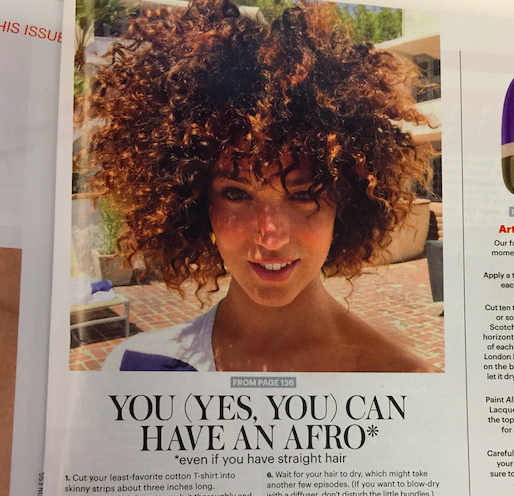
But while I respect the author’s opinion about cultural appropriation, white girls wearing Afros, for instance, I disagree that doing so is always unmindful theft or disregard of a people’s cultural strife. Systemitized thinking–labeling and generalizing as a means to exclude–is the core of oppression. While I would not say it is reverse discrimination to object to white afros, I maintain that there is a difference between respectful emulation and mindless appropriation.

Besides, some of us have hair that does nothing else but ‘fro. The seventies were good to me.


Pratyahara and Pencils: teaching writing is about seeding awareness in students

  
This was exactly what Professor Yip meant by being detached — not being without emotion or feeling, but being one in whom feeling was not sticky or blocked. Therefore in order to control myself I must first accept myself by going with and not against my nature.

Bruce Lee 

Pratyahara and pencils populate my thoughts today. Back to school, I can smell the freshly sharpened pencils—not that anyone sharpens pencils in my college classes so much. The sensory memory recalls the time of year: fall, school, endings, beginnings and lifelong learning. Cycles that inspire.

Inspiration arises in peculiar places. During a particularly dry creativity spell, I sat through the annual English department meeting last week at school, my employer, and felt a sudden spark. It was midway through a workshop on workshopping (silly sounding but fruitful) when I began to write about…

Continued here