
Though this subject has been parsed on this blog in a number of writings, this article by goodinbed.com is very light fare (thinking of someone else during sex is taboo fantasy?), readable and succinct, even though questionable as to its definition of both taboo and fantasy. There is nothing earth shattering but it is an assuring read for those of us with a host of tools to accomplish our sexual goals. Enjoy.
“Famous Mistresses in the History of Seduction”
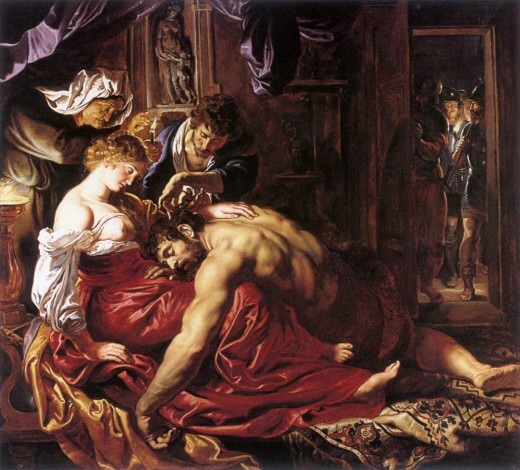
This article on silentreed.hubpages.com is an interesting read with well-selected art, poetry and facts, not so much a how-to (though a little bit of that too) as an observational history. Enjoy
“King Charles II of England and His Mistresses”
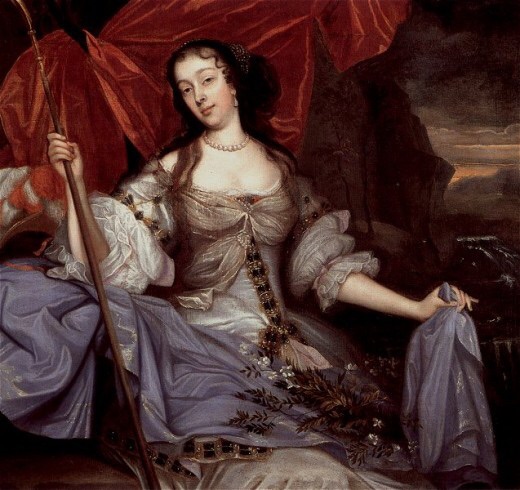
Ah, the good old days when kings had mistresses openly, mistresses who were showered with titles and wealth and, for the more savvy, had the wherewithal to convert their sway (and swagger) into political power. All they had to do was attract the king’s eye, have sex with him, bear and raise his children.
In an interesting article, entitled, “King Charles II of England and His Mistresses,” on a well-groomed, professional-looking blog site called Hubpages by case1worker, I was reminded that the life of a mistress, at least with respect to Charles II, was a very good life indeed, and really one of mere practicality, an escape for a king encumbered with kingly duties as well as a chance at a relationship that would be deemed closer to “normal” in terms of modern day’s marriages: love, passion, shared wealth and children. Charles II, like many kings, married for political purchase and not for love. However, there is no need to feel sorry for him. He pursued his love interests where he found them–and he found many.
One of his several mistresses, according to the above-referenced article, maximized her position, admirably: earned wealth, title, influence, kids with same, and lovers too. After Charles married, Lady Portsmouth was installed in a convenient location relative to the palace where he lived with his barren wife, to carry on his affair, but Portsmouth eventually moved out so Charlie could pursue other women.
Old Charlie II sired more than 15 illegitimate children, all who were placed in decorous positions, pensions, and/or titles, and all of whom were present at his death, over which his wife presided while Charlie professed his life-long love to his mistress.
Wacky times, yes, but very practical. I enjoyed the article for its clarity and succinctness. However, I wish there were references–at least conveniently located because I could not find them–for the information so nicely collected and reported on this smart-looking page. The pictures are lovely too. Enjoy.
“Five Studies that Offer Fascinating Conclusions About Human Sexuality”
I cannot vouch for the validity or weight of the studies in this article, but the findings range from “duh” to “really?” “Five Studies That Offer Fascinating Conclusions About Human Sexuality”
Christopher Ryan, co-author of Sex at Dawn in this summary of a TED talk discusses the origins of sexual behaviors and patterns growing out of an agricultural society and notes that the monogamy outgrowth of the Victorian era succeeded a more open sexual model based on needs and dictates of a more flexible community. I have excerpted a key passage below:
Ryan explains that our sexual patterns are an outgrowth of agricultural models—which accounts for only about five percent of human history. For the other 95 percent, human sexuality was “a way of establishing and maintaining the complex flexible social systems, networks, that our ancestors were very good at.” In hunter-gatherer societies, there were overlapping sexual relationships between members of a community—a more fluid system than the Victorian model we’re wedded to today. In fact, several contemporary societies around the world argue against the sexual myth we’ve built up, too.
“My hope is that a more accurate updated understanding of human sexuality will lead us to have greater tolerance for ourselves, for each other, greater respect for unconventional relationship configurations like same-sex marriage or polyamorous unions, and that we’ll finally put to rest the idea that men have some innate instinctive right to monitor and control women’s sexual behavior,” Ryan says. “And we’ll see that it’s not only gay people that have to come out of the closet: we all have closets we have to come out of.”
Another interesting data point about bisexuality as a transitional phase or an identity in its own is detailed in question and answer format below:
Question: Is bisexuality a sexual orientation, something that’s temporary or an outgrowth of the sexual fluidity we all exhibit?
.
Research: In a 2008 study, Lisa M. Diamond of the University of Utah presented the results of a decade-long assessment of nearly 70 women who identified as lesbian, bisexual, or sexually unlabelable. Five times over the course of the study, the women detailed their sexual identities, attractions, behaviors, and their social and familial relationships.
.
Results: Based on Diamond’s findings, bisexuality is not a “transitional stage that women adopt ‘on the way’ to lesbian identification” or an “experimental phase” for heterosexuals. Her results, instead, supported that, “Bisexuality may best be interpreted as a stable pattern of attraction to both sexes in which the specific balance of same-sex to other-sex desires necessarily varies according to interpersonal and situational factors,” she writes.
.
And finally, another point of interest for me was the question of the sequential order of arousal and desire in humans:
Question: Which comes first—desire or arousal?
.
Research: In a study from 2004, described in this New York Times article, Ellen Laan, Stephanie Both and Mark Spiering of the University of Amsterdam examined participants’ physical responses to sexual images.
.
Results: The research indicates that we respond physically to highly sexual visuals before our mind even engages with them. In other words, desire doesn’t precede arousal—it’s the other way around. And we aren’t even aware it’s happening.
It’s a brief but interesting read and something a little more substantial than a five reasons for sexuality or six steps to a better sex life article.
Sexism, Exploitation, Celebration or Empowerment?
Two views of the female body in the gaze, society’s and men’s, from a Second Wave and Third Wave perspective are provided for your viewing and comment. Are Playboy bunnies exploited or celebrated and empowered? Should young girls grow up in a culture that reinforces reliance on their bodies for their power? Click on the words “Second Wave” and “Third Wave” above to see the vimeo and article.
Below are definition excerpts from an informative essay entitled “The Three Waves of Feminism” by Martha Rampton of Pacific University of Oregon, October 23, 2014, outlining the history of feminism in a very readable composition:
The first wave of feminism took place in the late 19th and early 20th centuries, emerging out of an environment of urban industrialism and liberal, socialist politics. The goal of this wave was to open up opportunities for women, with a focus on suffrage. The wave formally began at the Seneca Falls Convention in 1848 when 300 men and women rallied to the cause of equality for women. Elizabeth Cady Stanton (d.1902) drafted the Seneca Falls Declaration outlining the new movement’s ideology and political strategies.
The second wave began in the 1960s and continued into the 90’s. This wave unfolded in the context of the anti-war and civil rights movements and the growing self-consciousness of a variety of minority groups around the world. The New Left was on the rise, and the voice of the second wave was increasingly radical. In this phase, sexuality and reproductive rights were dominant issues, and much of the movement’s energy was focused on passing the Equal Rights Amendment to the Constitution guaranteeing social equality regardless of sex.
The third phase of feminism began in the mid-90’s and is informed by post-colonial and post-modern thinking. In this phase many constructs have been destabilized, including the notions of “universal womanhood,” body, gender, sexuality and hetreronormativity. An aspect of third phase feminism that mystifies the mothers of the earlier feminist movement is the readoption by young feminists of the very lip-stick, high-heals, and cleavage proudly exposed by low cut necklines that the first two phases of the movement identified with male oppression. Pinkfloor expressed this new position when she said; “It’s possible to have a push-up bra and a brain at the same time.”
http://nymag.com/thecut/2014/10/playboy-pinups-on-meeting-the-male-gaze.html?n_play=54497db6e4b07c050d48983d
Time’s “Top 10 Mistresses”
This is an older list but an interesting selection also.
“4 Mistresses Who Changed History”
Another mistress list, this one more obscure and interesting.
Cosmo’s “Mistress Mania – 8 ‘Other Women’ Who Make Life Less Boring”
“In the Name of Love: Shame and Love”

Credit: bleedingcool.com
Trying to find some clues as to the usefulness of shame in love, I came across this article, “In the Name of Love” by philosopher Aaron Ben Zeev, that quite frankly did not help me at all. Maybe I am missing the point, not reading well. I did find some portions of the article interesting but I did not understand much more than shame and love are both powerful emotions that can either build or destroy. Am I missing something? Does this article clarify the relationship between love and shame? It’s short, so feel free to read and comment, educate me.
Sex and Shame, How Hot is That?
Felix Clay of Cracked writes “5 Bizarre Ways the Brain Links Sex With Shame” more to amuse than inform, and I was amused. He has the art of entertainment writing, spinning facts through his own voice and vision to create something fun, kind of like the way Bill Nye the Science Guy made science fun, or David Eagleman makes theoretical science entertaining or Carl Sagan made the cosmos an approachable mystery.
Nothing earth shatteringly revelatory about this article, but the writer really is funny. In light of the article I previously posted about public humiliation, violence and revenge of the mob wives/girlfriends publicly beating and stripping the mistress, the reminder of the close relationship between shame and arousal, sprinkled with lightly touched upon biological origins, gives one pause to question whether this seemingly newly-arisen form of justice in China (merely re-fashioned stockades and pillories) is just an orgy of masquerading arousal. Maybe it’s time we bring back drawing and quartering for some real group sexual participatory fantasizing.
 In the gaze of the other